

Tantra and the Alchemy of Desire

Introduction
Tantra, often misunderstood as merely a spiritual approach to sexuality, is actually an intricate science of transformation. It perceives every human emotion, sensation, and experience—including desire—as a gateway to higher consciousness. The alchemy of desire in Tantra is the process of transmuting raw sexual or worldly craving into a refined state of awareness and divine union. Instead of suppressing desire, Tantra invites the practitioner to embrace it consciously, transforming the very energy that binds into the energy that liberates.
In the modern world, desire is one of the most misunderstood aspects of human life. It is often associated with attachment, greed, or suffering. Yet in Tantric philosophy, desire is not inherently negative. It is the life force itself—the Shakti—that moves the universe. When understood deeply and channelized with awareness, it becomes the fire of awakening. This exploration of Tantra and the alchemy of desire offers insight into how human longing can become a sacred pathway toward liberation.
Understanding Desire in Tantra
Desire, or “Kama,” is one of the four fundamental aims of human life according to the ancient Indian tradition: Dharma (righteousness), Artha (material prosperity), Kama (desire), and Moksha (liberation). Tantra does not reject any of these but seeks balance and integration. In the Tantric view, desire is the creative pulse of the cosmos. Every manifestation arises from the desire of the Divine to know itself.
In the human context, desire appears in many forms—sexual attraction, ambition, creative longing, or spiritual yearning. Tantra teaches that these are all expressions of the same energy. Suppressing desire creates inner conflict and fragmentation, while indulging unconsciously leads to entrapment in cycles of craving and dissatisfaction. The Tantric path offers a third way: neither suppression nor indulgence but transformation through awareness.
The Nature of Desire and Energy
In Tantra, energy is everything. What we call desire is simply energy seeking expression. This energy can flow upward or downward, depending on one’s level of awareness. When the energy of desire is rooted in unconscious craving, it moves downward and outward, leading to attachment and loss of vitality. When guided by awareness, the same energy moves upward through the chakras, nourishing creativity, compassion, and spiritual insight.
The base of the spine, or Muladhara chakra, is the seat of primal energy. As it rises through the subtle body, it passes through various centers—each transforming desire into higher expressions. At the sacral chakra, it becomes pleasure and creativity; at the heart, it transforms into love and empathy; at the crown, it becomes pure consciousness. Thus, the journey of desire mirrors the journey of human evolution itself.
Desire as a Path to Self-Realization
In many spiritual traditions, desire is seen as an obstacle. Tantra reverses this notion, teaching that when one meets desire consciously, it becomes a mirror. Through observing the movement of desire, one learns about one’s conditioning, attachments, and the illusions of the ego. Every longing points to a deeper absence or incompleteness within. By meditating on desire, one can trace it back to its source—the innate longing for union with the Divine.
For instance, the desire for another person is often a projection of one’s inner longing for wholeness. Tantra teaches to use that desire as a tool for introspection. When the practitioner becomes fully present with the energy of longing without grasping or judging, a transformation occurs. The energy that was once outwardly directed returns inward, awakening higher consciousness.
Tantric Practices to Transform Desire
Tantra offers many practices to work with desire consciously. These practices are not about denying pleasure but cultivating presence within it. Some of the key methods include:
- Breath Awareness (Pranayama): Breath connects body and mind. By slowing and deepening the breath during moments of desire or excitement, one can remain grounded and aware rather than consumed by impulse.
- Energy Circulation (Microcosmic Orbit): This involves channeling sexual energy through the spine and the entire body, allowing it to nourish every cell rather than being dissipated through release.
- Sacred Union (Maithuna): In advanced Tantra, sexual union becomes a ritual of consciousness. The partners become mirrors for each other, transforming physical passion into meditation and devotion.
- Visualization and Mantra: Using sound and imagery, practitioners can transmute desire into light and awareness, elevating the vibration of the energy.
- Meditation on Sensation: Instead of resisting or indulging sensations, one observes them as waves of energy, dissolving the boundary between the observer and the observed.
Through these methods, the practitioner learns to retain the energy of desire, refine it, and use it for awakening rather than depletion.
The Role of Awareness in Transformation
Awareness is the key ingredient in Tantric alchemy. Without awareness, desire becomes addiction; with awareness, it becomes liberation. The transformation does not lie in changing the object of desire but in changing the quality of consciousness behind it.
When one observes desire without acting on it impulsively, the energy begins to purify. The intensity of the feeling is no longer threatening; it becomes luminous. The same fire that once burned with craving now glows with love and clarity. In this way, awareness transforms poison into nectar.
The Balance of Masculine and Feminine Energies
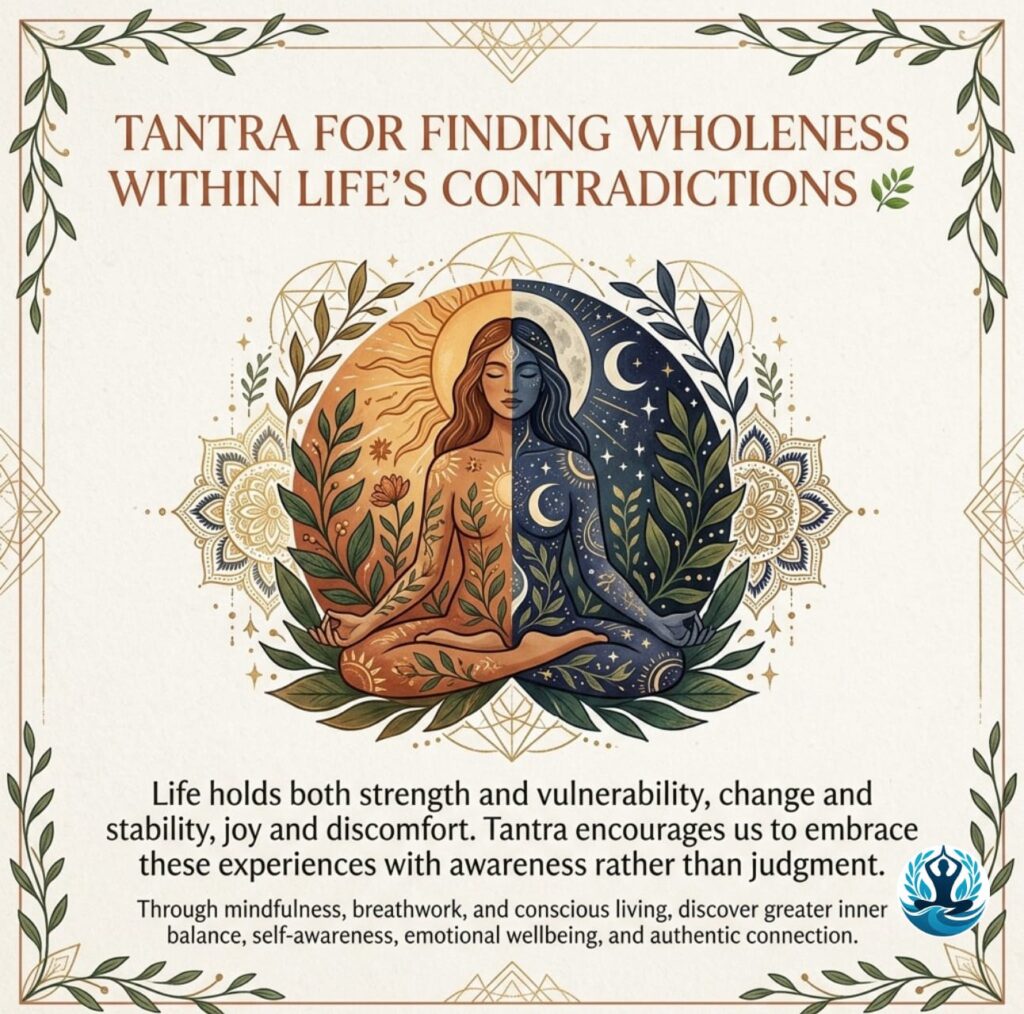
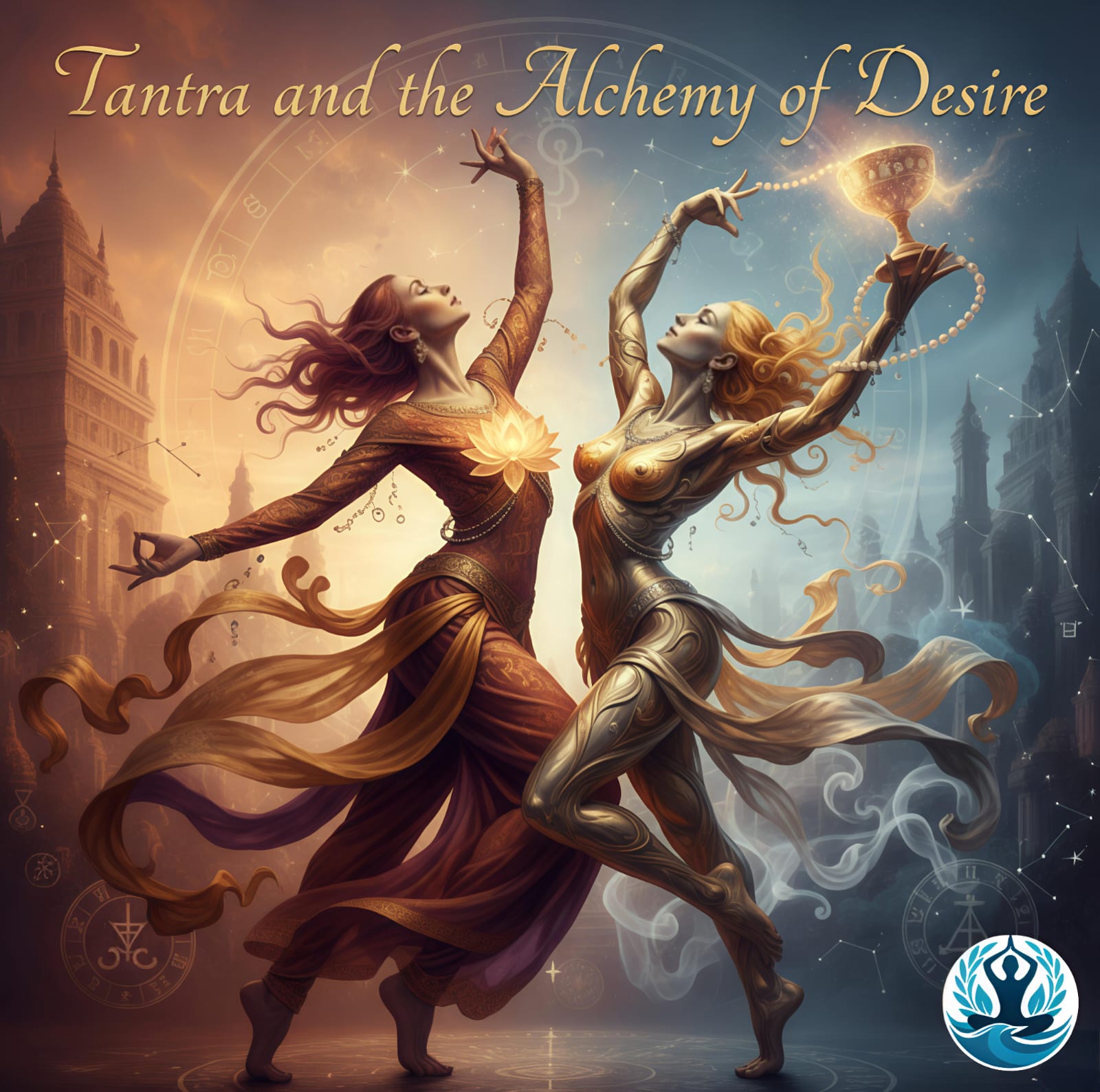
In Tantra, the universe is the interplay of Shiva (pure consciousness) and Shakti (creative energy). Desire is the dance of these two principles. Every human being carries both energies within. The masculine aspect represents stillness and awareness, while the feminine represents movement and expression. When these forces are in harmony, desire becomes sacred.
However, when one dominates the other, imbalance arises. Excess Shakti without Shiva leads to uncontrolled passion and chaos; excess Shiva without Shakti leads to detachment and lifelessness. The alchemy of desire requires the union of these two within the self. This inner marriage gives birth to a state of blissful completeness where external desire dissolves naturally.
The Shadow Side of Desire
While Tantra celebrates desire, it also warns against its unconscious expression. When desire becomes obsession or dependency, it binds the soul to suffering. The Tantric practitioner must therefore cultivate discernment. Every desire must be examined—does it lead to expansion or contraction, freedom or bondage?
Unconscious desire feeds the ego; conscious desire serves the soul. The transformation occurs when one no longer seeks fulfillment outside but recognizes that the source of all desire lies within. What we chase in the outer world is merely a reflection of our inner yearning for unity.
Desire and Creativity
Tantra recognizes that sexual energy is not limited to physical intimacy; it is the root of all creativity. The same energy that creates life can create art, music, poetry, or compassion. When desire is sublimated, it becomes inspiration. Many great artists, mystics, and visionaries have experienced this transformation, where personal passion turns into universal expression.
Through creative acts, one channels the Shakti within, giving it form and beauty. In this way, creativity becomes a spiritual practice—a way of celebrating existence itself.
Liberation through Desire
Ultimately, Tantra teaches that liberation is not achieved by escaping desire but by transcending it through understanding. When one experiences desire fully and consciously, without attachment, it naturally dissolves. What remains is pure awareness—free, radiant, and complete.
This is the alchemy of desire: turning the base metal of craving into the gold of consciousness. Every longing becomes a teacher, every attraction a doorway to the Divine.
Conclusion
Tantra and the alchemy of desire reveal a profound truth—that the energy we often fear or repress is the same energy that can awaken us. Desire is not the enemy; ignorance is. When met with awareness, desire becomes a sacred flame illuminating the path to self-realization.
The Tantric approach invites us to live fully, to embrace every sensation and emotion as part of the divine play. By transforming desire through awareness, we reclaim our wholeness and discover that what we seek outside has always been within. In this union of opposites, the human and the divine merge, and life itself becomes a meditation—a dance of love, consciousness, and eternal bliss.