

Tantra and the Journey Beyond Duality

Introduction
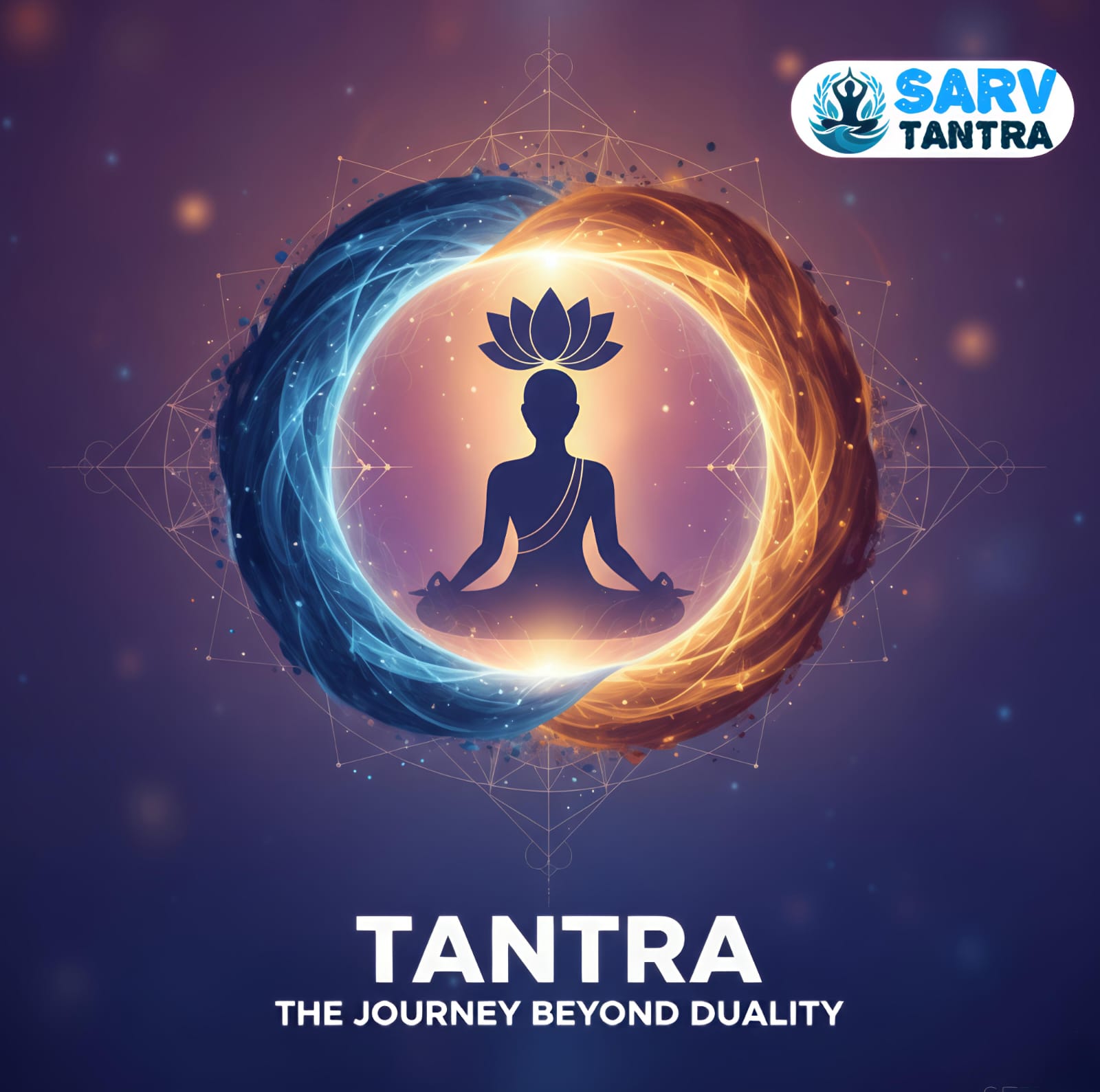
Tantra, as a spiritual science, is a vast exploration into the essence of existence, transcending the conventional boundaries of the mind. One of its most profound teachings is the dissolution of duality—the realization that all opposites are merely reflections of the same ultimate reality. The human mind naturally divides everything into pairs: light and dark, male and female, good and bad, love and fear. Tantra, however, invites us to step beyond these opposites, to experience the unity that underlies them. The journey beyond duality is not about rejecting opposites, but embracing them so completely that they dissolve into oneness.
Understanding Duality
Duality is the very framework through which human consciousness perceives the world. It creates the sense of separation between subject and object, self and other. The entire fabric of human experience is woven from this dual perception. Tantra begins with an acknowledgment of this polarity, seeing it not as a mistake, but as a divine play—an expression of consciousness exploring itself through contrast. Without darkness, light cannot be known; without silence, sound has no meaning. Yet, the Tantric understanding goes further—it sees these opposites as two sides of the same coin, both essential to the completeness of existence.
The Origin of Duality in Consciousness
In Tantric cosmology, duality arises the moment the One becomes aware of itself. This awareness creates the illusion of two—the observer and the observed. This is the beginning of manifestation. From this initial polarity emerges the entire universe: Shiva and Shakti, stillness and movement, masculine and feminine, consciousness and energy. The apparent separation between these forces allows creation to unfold. However, this separation is not real—it is an appearance within the infinite unity of consciousness. The human spiritual journey, therefore, becomes a process of remembering this unity, dissolving the illusion of separation.
The Play of Shiva and Shakti
Shiva and Shakti are the primordial dual aspects of existence, representing consciousness and energy. Tantra does not see them as opposing forces but as complementary expressions of one truth. Shiva is the silent witness, pure awareness beyond form. Shakti is the creative power, the dynamic dance of life. Every experience, every thought, every feeling arises from their union. The journey beyond duality is the return to the sacred union of Shiva and Shakti within oneself. When the inner masculine and feminine energies are balanced, the being enters a state of inner harmony, where division disappears, and wholeness is revealed.
Embracing Polarity Instead of Rejecting It
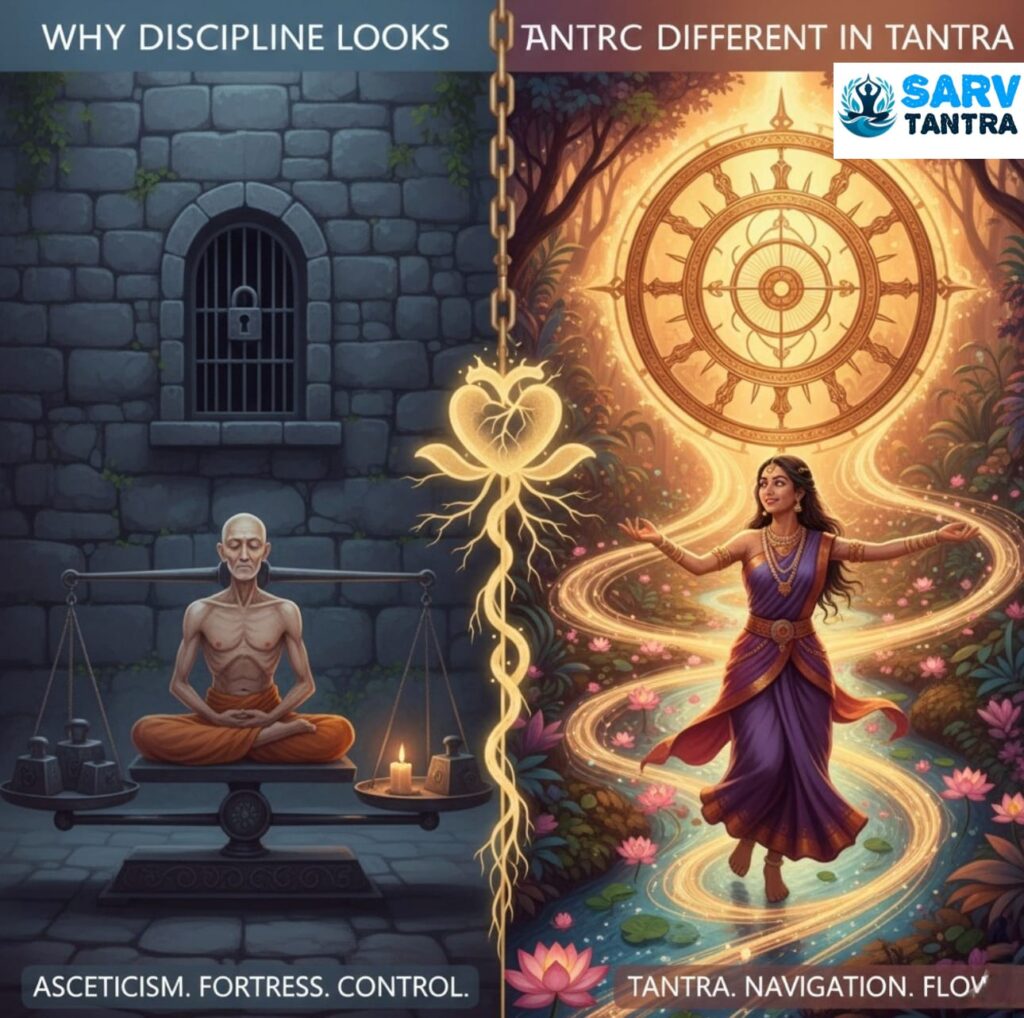
Many spiritual paths teach renunciation or suppression of one side of polarity in favor of another—light over dark, spirit over body, purity over passion. Tantra, on the other hand, embraces both. It teaches that only by fully experiencing and accepting both poles can we transcend them. By honoring both pleasure and pain, strength and vulnerability, joy and sorrow, one sees that these experiences are not separate—they are movements within the same field of awareness. When both sides are equally welcomed, they merge, and duality loses its power to divide.
The Mind as the Root of Separation
The human mind thrives on distinction and categorization. It labels, compares, and divides the flow of life into fragments of meaning. In doing so, it creates a false sense of self—an “I” separate from the world. Tantra reveals that this separation is an illusion sustained by thought. When the mind becomes silent, the boundary between self and other disappears. Meditation, therefore, is not about controlling the mind but about seeing its mechanisms clearly. Once the division-making process is witnessed, its hold naturally dissolves, revealing the underlying unity of all experience.
Body as a Bridge Beyond Duality
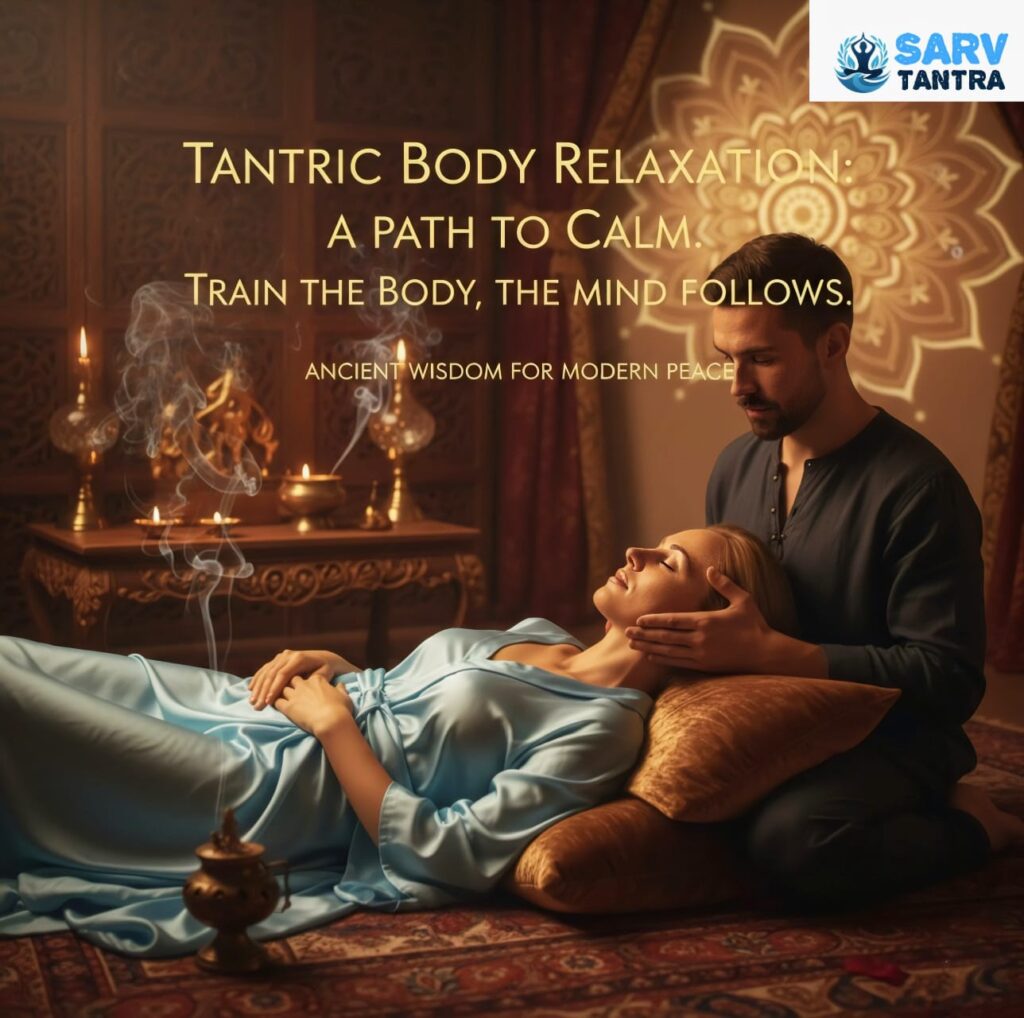
Tantra honors the body as a sacred vessel, not as an obstacle to spirituality. The body itself embodies duality—left and right, masculine and feminine, active and receptive. Through awareness of the body, one begins to experience the interplay of these opposites. Tantric practices such as breathwork, touch, movement, and sacred sexuality are ways of harmonizing these polarities. When body and awareness meet in total presence, the experience becomes non-dual. The body no longer feels separate from consciousness—it becomes an expression of it.
Transcending Duality Through Sensual Awareness
Sensuality, often misunderstood as indulgence, is in Tantra a gateway to transcendence. When one engages the senses with full awareness—seeing, hearing, touching, tasting—without judgment or craving, the experience becomes sacred. Each sense becomes a doorway to the divine. Pleasure and pain, attraction and aversion dissolve when awareness deepens. In that depth, one realizes that it is not the object or the sensation that matters, but the pure consciousness in which it arises. Thus, sensual awareness becomes a path beyond duality.
Union Through Love and Intimacy
Tantra views love as the most profound expression of unity. In true intimacy, the boundary between self and other softens and disappears. Love is not an emotional exchange but a merging of energies, a remembrance of oneness. Through conscious relationship, one can experience the divine play of duality and the ecstasy of its dissolution. The beloved becomes a mirror, reflecting the infinite back to itself. The journey of love, therefore, becomes the journey beyond duality—where two become one, and one becomes everything.
Non-Dual Awareness and Stillness
At the heart of Tantra lies the realization of non-dual awareness—the silent space in which all opposites arise and subside. This awareness is neither masculine nor feminine, neither pleasure nor pain. It is the eternal witness, the untouched essence. When one rests in this stillness, the world continues to dance in polarity, but the seeker is no longer bound by it. There is an effortless acceptance of all that is. This is liberation—not in escaping duality, but in realizing that it never truly existed.
Integration into Daily Life
The journey beyond duality does not end in meditation or ritual—it extends into every moment of life. Tantra teaches integration, not escape. Every action, every interaction, can become a Tantric practice when done with awareness. Whether working, speaking, loving, or resting, one can remain rooted in the awareness of unity. Duality may still appear, but it is seen as a play of consciousness rather than a source of conflict. This integration transforms ordinary living into sacred living, where every breath becomes a remembrance of oneness.
The Role of the Guru or Guide
In the Tantric tradition, a realized teacher plays an essential role in guiding the seeker beyond duality. The Guru is not merely a person but a mirror reflecting the seeker’s own true nature. Through presence, transmission, and guidance, the teacher helps dissolve the illusions that bind the mind. Yet, ultimately, the outer Guru leads the seeker to the inner Guru—the consciousness within that knows no division. The true realization dawns when one sees that the teacher, the teaching, and the self are one and the same.
Challenges on the Path
Transcending duality is not an easy journey. The mind resists dissolution because its existence depends on separation. Emotional attachments, fears, and desires continually pull the seeker back into polarity. The key is awareness—gently observing the movement of duality without identifying with it. Patience, humility, and devotion are essential. Each time duality arises, it becomes an opportunity to deepen understanding. Gradually, the oscillations between opposites slow down, and the seeker begins to rest in the still center of being.
Tantric Symbols of Non-Duality
Tantric scriptures use rich symbolism to express the transcendence of duality. The Sri Yantra, for example, represents the interpenetration of Shiva and Shakti through interlocking triangles—an image of perfect balance and unity. Similarly, the union of the sun and moon, or the merging of breath in the heart, are metaphors for the dissolving of opposites. These symbols are not mere art; they are meditative tools designed to awaken non-dual consciousness. By meditating upon them, the seeker enters the living experience they represent.
Living in Oneness
When duality dissolves, life becomes a seamless flow. There is no longer a doer, only doing; no longer a seeker, only being. Joy and sorrow, gain and loss, success and failure are seen as waves upon the same ocean. The realized one moves through the world in deep simplicity, unaffected yet fully alive. Compassion arises naturally, for in oneness, the suffering of another is one’s own. This is the true fruit of Tantra—a life lived in wholeness, rooted in awareness, beyond the illusion of separation.
Conclusion
The journey beyond duality is the essence of Tantra. It is not about rejecting life but embracing it so fully that all divisions dissolve. Through awareness, love, and presence, the seeker comes to see that everything—light and dark, spirit and matter, self and other—is a manifestation of the same divine consciousness. In that realization, the play of duality continues, but the illusion of separation ends. What remains is pure existence, infinite and eternal—the silent bliss of oneness that Tantra calls liberation.