

Tantra and the Path of Conscious Love


Introduction
Tantra, in its deepest essence, is not a philosophy confined to rituals or exotic practices; it is a way of life that embraces awareness in every experience. Among its many teachings, the concept of conscious love holds a special place. Conscious love is not merely emotional attachment or romantic desire; it is an awakened form of connection rooted in presence, vulnerability, and mutual growth. In the Tantric view, love is the divine energy that binds all existence. It transcends personal needs and becomes a sacred path of realization. This form of love teaches us to move beyond ego-driven relationships into divine communion.
The Foundation of Conscious Love in Tantra
In Tantra, every relationship is seen as an opportunity for spiritual awakening. The path of conscious love begins with self-awareness. One must first understand their inner nature — their fears, desires, and patterns of attachment. Without self-knowledge, love becomes unconscious and reactive. Tantra teaches that love should not arise from lack but from completeness. When two whole beings come together, love becomes a flow of energy that expands consciousness.
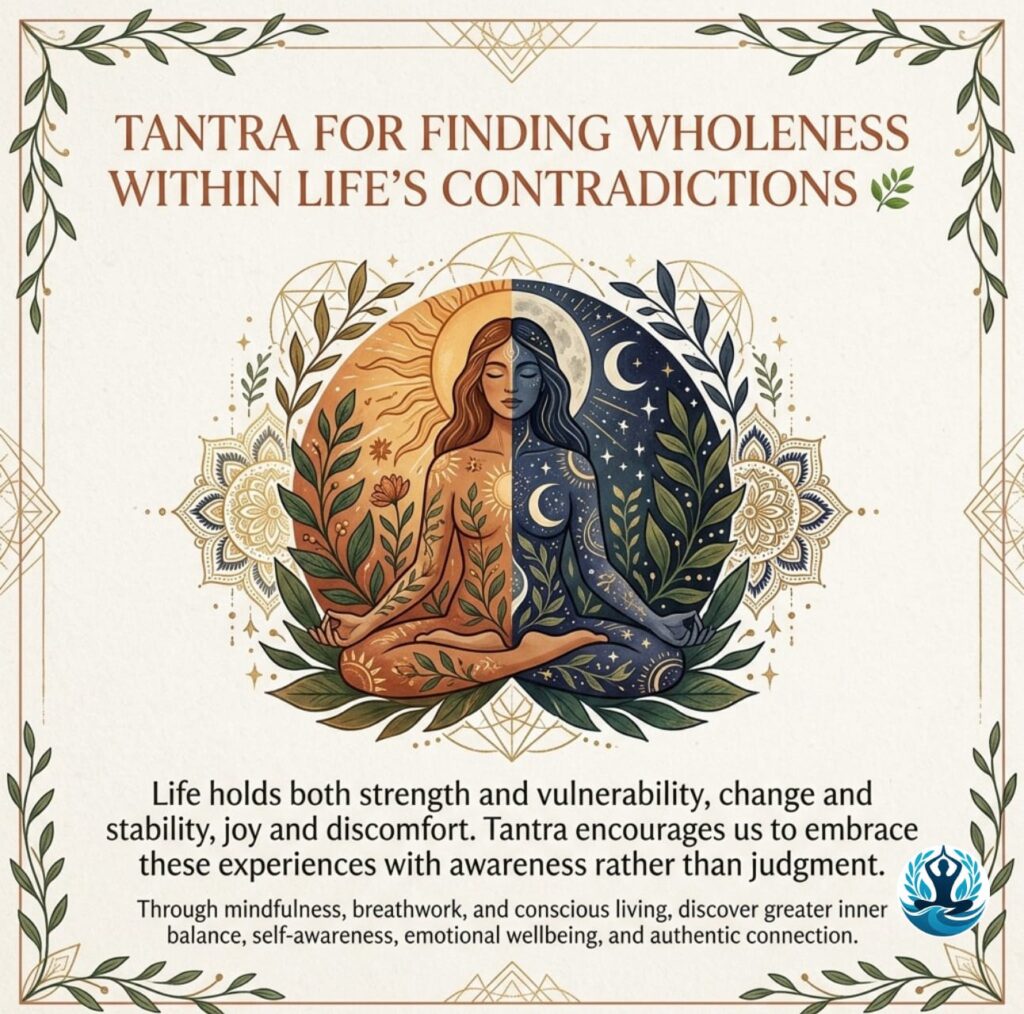
Tantra emphasizes the union of Shiva and Shakti — the masculine and feminine principles present within every individual. Conscious love emerges when these energies are harmonized within. This inner union allows one to meet another person from a place of wholeness rather than need. In this sense, love becomes a reflection of inner balance, not an escape from loneliness.
The Shift from Possession to Presence
Ordinary love often seeks to possess, control, or define. It is rooted in fear — fear of loss, fear of rejection, or fear of change. Conscious love, in contrast, invites presence. It does not seek to hold but to honor. It recognizes that every being is a universe in motion and cannot be owned. Tantra teaches lovers to be present with one another without trying to fix or change. Presence itself becomes the purest expression of love.
When two individuals share presence, their connection deepens naturally. Words become secondary; silence becomes sacred. Every gaze, touch, or breath turns into meditation. This presence dissolves the boundaries of separation, allowing love to reveal its true nature — boundless awareness.
Healing Through Conscious Relationships
In Tantric practice, relationships are mirrors. They reflect our unresolved wounds, insecurities, and patterns. Conscious love does not avoid these reflections; it welcomes them as opportunities for healing. Through awareness, we can observe our reactions without judgment. Instead of projecting blame onto our partners, we take responsibility for our emotions.
This form of love invites radical honesty and compassion. It encourages both partners to share their truth while remaining open to the truth of the other. The aim is not to avoid conflict but to transform it into understanding. When love is conscious, even pain becomes a doorway to growth. Tantra teaches that through the fire of awareness, love purifies everything it touches.
Sacred Sexuality as a Path to Union
One of the most misunderstood aspects of Tantra is its approach to sexuality. In conscious love, sexuality is not separate from spirituality; it is an extension of divine energy. Sacred sexuality transforms physical union into a meditative experience. It is not driven by lust or goal-oriented pleasure but by presence, breath, and energy awareness.
Through slow and mindful intimacy, lovers learn to channel sexual energy upward through the chakras. This process awakens higher states of consciousness and deepens emotional connection. Sexual energy, when purified through awareness, becomes a bridge between the human and the divine. It teaches that true ecstasy arises not from climax but from continuous flow and unity.
The Role of Trust and Vulnerability
Conscious love cannot exist without trust. Trust is the soil in which intimacy grows. In Tantra, vulnerability is seen as strength, not weakness. It means opening oneself fully — emotionally, mentally, and spiritually — without the armor of defense. When both partners allow themselves to be seen completely, love becomes a sacred mirror of truth.
Vulnerability invites authenticity. It creates a safe space where both can express without fear. This transparency dissolves illusions and deepens the connection. Trust is not built overnight; it is cultivated through consistent honesty, compassion, and awareness. Tantra teaches that when trust blooms, love becomes fearless.
The Balance of Freedom and Togetherness
Conscious love is a dance between freedom and union. It honors individuality while celebrating togetherness. In many relationships, people lose themselves in the other, leading to dependency and loss of self. Tantra reminds us that true love enhances individuality rather than diminishes it.
When partners allow each other space to grow, evolve, and explore, the relationship remains alive. Freedom does not mean distance; it means respect for the other’s path. Just as the sun and moon coexist in harmony without interfering with each other’s light, conscious lovers support one another’s evolution while maintaining their own center.
Emotional Alchemy in Love
Every relationship faces emotional storms. Anger, jealousy, and fear are part of the human experience. In Tantra, emotions are not rejected but transformed. Conscious love teaches emotional alchemy — the art of turning dense emotions into awareness. Instead of suppressing feelings, one learns to observe them as energy in motion.
When two partners practice awareness together, emotions become pathways to deeper connection. Anger turns into clarity, fear into compassion, and desire into devotion. Love becomes the crucible where transformation happens. Through conscious communication and empathy, relationships become temples of awakening rather than arenas of conflict.
Meditative Practices for Conscious Love
Tantra offers numerous practices to cultivate awareness within relationships. One powerful method is eye gazing, where partners sit facing each other and maintain gentle eye contact without speaking. This simple practice dissolves mental barriers and awakens a sense of unity.
Breath synchronization is another technique — breathing together consciously creates energetic harmony and builds intimacy. Loving touch, practiced with mindfulness, becomes a form of healing rather than desire. Meditation, mantra chanting, and sacred rituals can also strengthen the bond by aligning both partners with the divine essence within.
The Role of Self-Love in Conscious Relationships
True conscious love begins with self-love. Without inner acceptance, relationships become attempts to fill internal voids. Tantra teaches that the heart must overflow before it can truly share. Self-love is not vanity but reverence for the divine within. When one honors their own being, they naturally extend that reverence to others.
Practicing self-love involves embracing one’s shadows, forgiving oneself, and nurturing inner balance. When we accept ourselves fully, we no longer seek validation from others. Love then becomes an offering rather than a demand. Conscious lovers uplift each other because they have already found their own center.
Tantra and the Divine Dimension of Love
At its core, Tantra sees love as a divine force that transcends duality. The ultimate aim of conscious love is not just harmony between two individuals but the realization of unity with existence itself. In the Tantric view, when two beings unite in awareness, they mirror the cosmic union of Shiva and Shakti — consciousness and energy.
Through this sacred union, the lovers glimpse the eternal truth: that love is not something one gives or receives, but something one is. Every breath, every heartbeat, becomes a reminder of divine interconnectedness. Conscious love thus becomes a spiritual path, guiding one from personal attachment to universal compassion.
Challenges on the Path of Conscious Love
While the vision of conscious love is profound, the journey is not easy. It demands constant awareness, humility, and courage. Old patterns, ego conflicts, and societal conditioning often create resistance. Tantra teaches patience and compassion toward these obstacles.
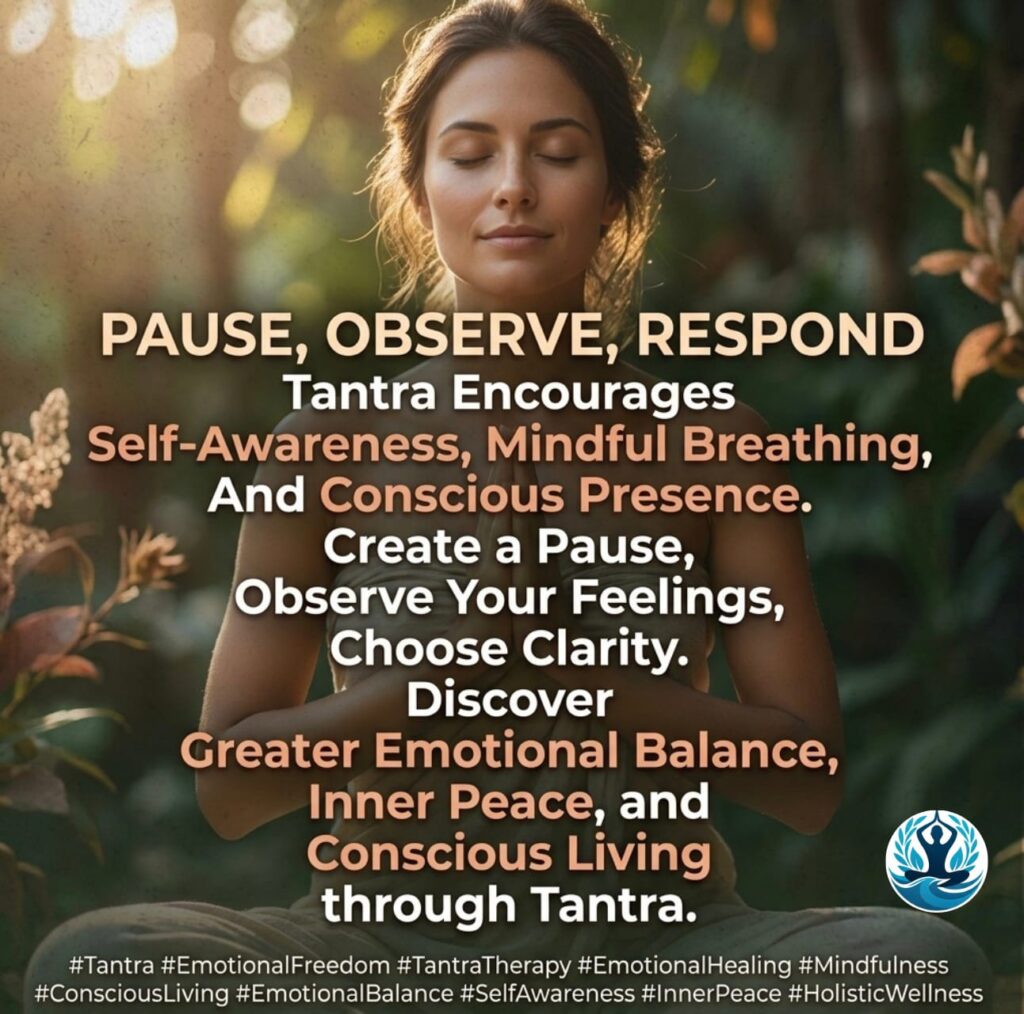
The key is to see every challenge as part of the awakening process. When conflicts arise, instead of reacting, one pauses and witnesses. This witnessing dissolves unconscious patterns and brings clarity. Conscious love is not about perfection but authenticity — showing up as you are, again and again, with awareness.
The Evolution of Love in Modern Relationships
In today’s fast-paced world, relationships often suffer from disconnection and superficiality. The Tantric path of conscious love offers a remedy — it invites us to slow down, listen deeply, and be fully present. Technology and distractions may have made communication easier, but true intimacy requires stillness and attention.
Integrating Tantric principles into modern relationships means cultivating mindfulness, emotional honesty, and sacred sexuality. It means remembering that love is not about possession but participation in the divine dance of life. As humanity evolves, conscious love can become the foundation for a more compassionate and awakened world.
Conclusion
Tantra and the path of conscious love offer a timeless teaching — that love is not merely an emotion but a state of awareness. Through presence, vulnerability, and spiritual intimacy, love becomes a doorway to divine realization. Conscious love is not about finding the perfect partner but awakening the divine within oneself and meeting another from that sacred space.
In this journey, love ceases to be a fleeting feeling and becomes the very essence of being. Tantra reminds us that every relationship, when lived consciously, is a temple — and within that temple, every heartbeat, every touch, and every breath becomes a prayer to the divine mystery of existence.