

Tantra vs Mindfulness: What Makes It Different?

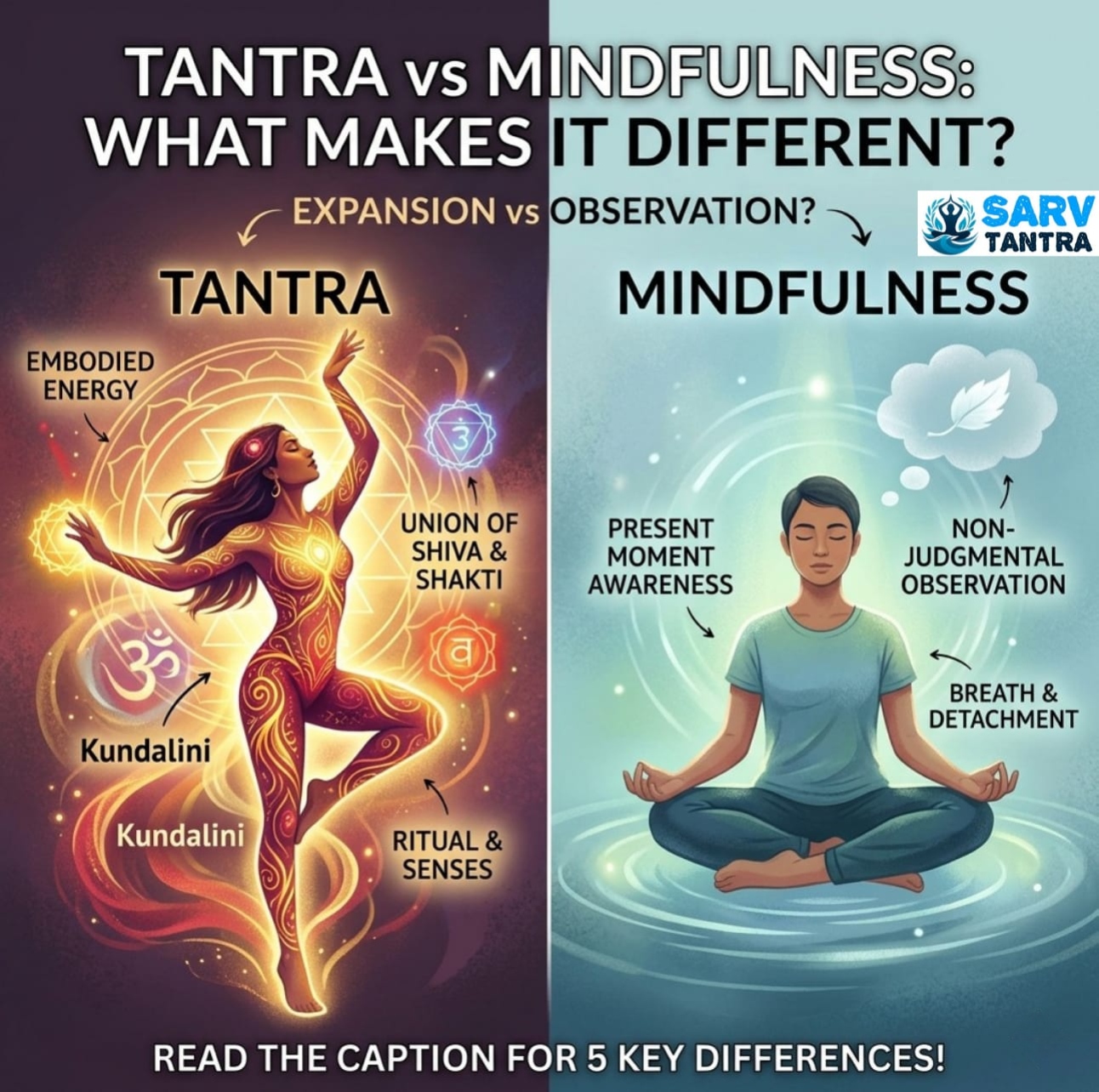
In today’s fast-paced, digitally overwhelmed world, people are actively seeking practices that bring peace, clarity, and deeper meaning to life. Two approaches that have gained immense popularity are Tantra and mindfulness. While both aim to enhance awareness and inner well-being, they are often misunderstood—or even assumed to be the same.
But are they really similar?
The truth is, Tantra and mindfulness share a common goal—presence—but differ significantly in philosophy, depth, and application. Understanding these differences can help you choose the practice that aligns best with your personal growth journey.
In this guide, we’ll explore Tantra vs mindfulness, breaking down their origins, techniques, benefits, and key distinctions.
What is Mindfulness?
Mindfulness is the practice of being fully present and aware of the current moment without judgment. Rooted in ancient meditation traditions, it has been modernized and widely adopted in psychology, wellness, and even corporate environments.
Core Principles of Mindfulness
- Awareness of thoughts, emotions, and sensations
- Non-judgmental observation
- Focus on the present moment
- Acceptance of what is
Common Mindfulness Practices
- Breath awareness meditation
- Body scan meditation
- Observing thoughts without attachment
- Mindful walking and eating
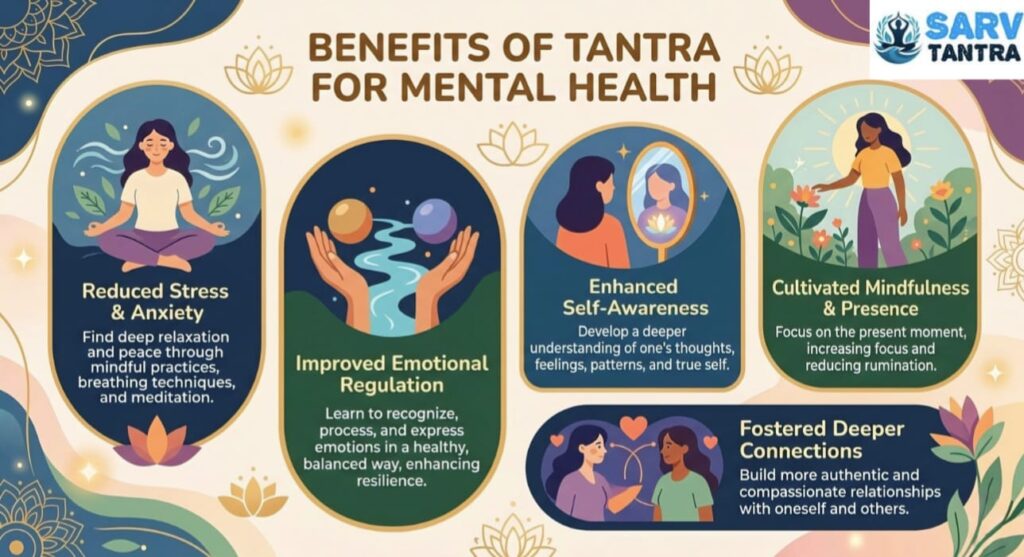
Benefits of Mindfulness
- Reduces stress and anxiety
- Improves focus and concentration
- Enhances emotional regulation
- Promotes mental clarity
Mindfulness is often seen as a simplified, accessible entry point into awareness practices.
What is Tantra?
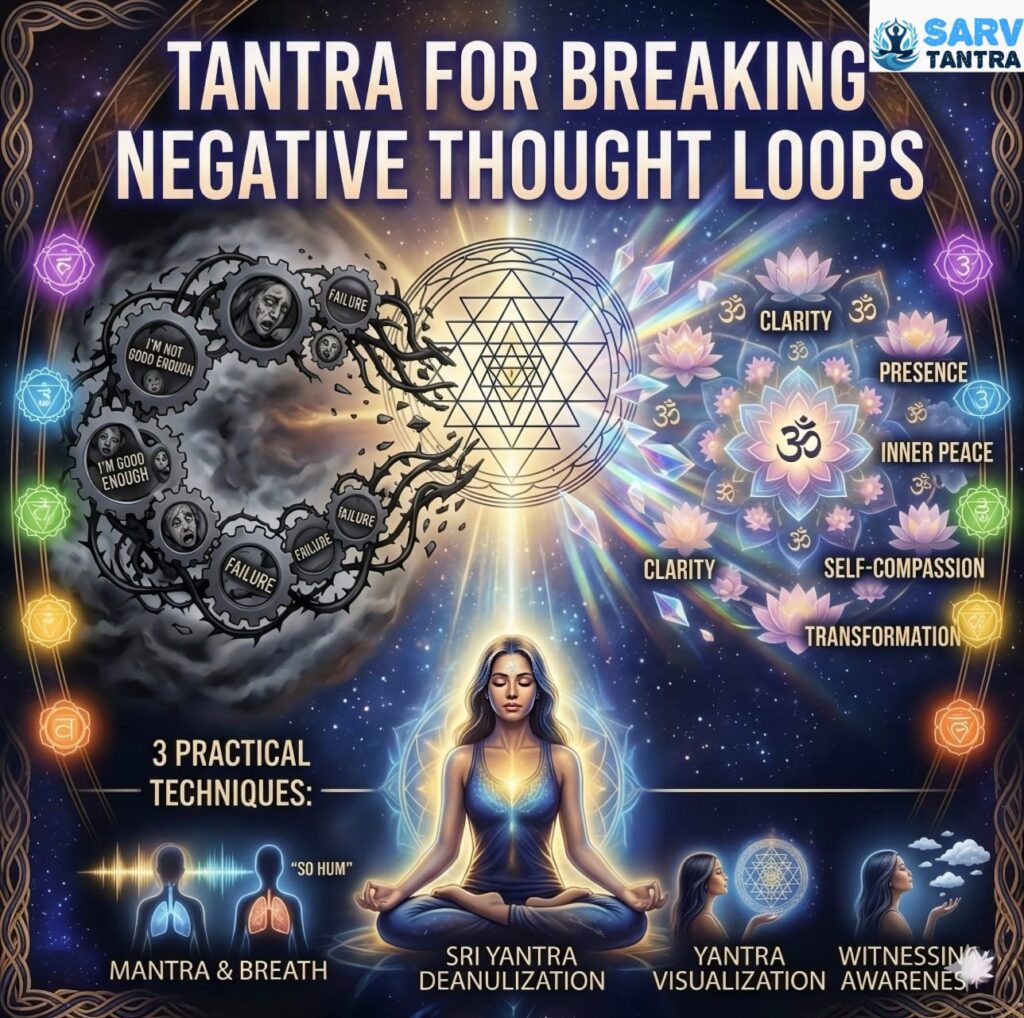
Tantra is a much broader and deeper spiritual system that originated thousands of years ago. It goes beyond meditation and includes rituals, energy work, breathwork, and conscious living.
Unlike mindfulness, Tantra is not just about observing life—it’s about fully experiencing and transforming it.
Core Principles of Tantra
- Everything is sacred
- Energy (life force) is central
- Awareness through experience, not detachment
- Integration of body, mind, and spirit
Common Tantric Practices
- Breathwork (pranayama)
- Energy circulation techniques
- Mantra chanting
- Rituals and conscious movement
- Sensory awareness practices
Benefits of Tantra
- Deep emotional healing
- Increased vitality and energy
- Enhanced connection with self and others
- Spiritual awakening and expansion
Tantra is often described as a holistic path to transformation, rather than just a mental practice.
Tantra vs Mindfulness: Key Differences
Let’s break down the core differences between Tantra and mindfulness in a clear, practical way.
1. Approach to Awareness
Mindfulness:
Focuses on observing thoughts and feelings without getting involved. It encourages detachment.
Tantra:
Encourages full engagement with experiences. Instead of stepping back, you move deeper into the moment.
👉 Key Difference:
- Mindfulness = Observation
- Tantra = Participation
2. Relationship with the Body
Mindfulness:
The body is observed (e.g., body scan meditation).
Tantra:
The body is actively used as a tool for transformation and awareness.
👉 Key Difference:
- Mindfulness = Awareness of the body
- Tantra = Activation of the body
3. Energy vs Attention
Mindfulness:
Primarily works with attention and awareness.
Tantra:
Works with energy systems within the body.
👉 Key Difference:
- Mindfulness = Mind-based
- Tantra = Energy-based
4. Emotional Processing
Mindfulness:
Encourages observing emotions without reacting.
Tantra:
Encourages feeling emotions fully and transforming them.
👉 Key Difference:
- Mindfulness = Acceptance
- Tantra = Transformation
5. Spiritual Depth
Mindfulness:
Often secular and used for stress reduction.
Tantra:
Deeply spiritual, aiming for higher consciousness and self-realization.
👉 Key Difference:
- Mindfulness = Practical tool
- Tantra = Spiritual path
6. Daily Life Integration
Mindfulness:
Practiced in specific moments (meditation sessions, mindful eating, etc.).
Tantra:
A way of life—every action can become a meditative experience.
👉 Key Difference:
- Mindfulness = Practice
- Tantra = Lifestyle
Similarities Between Tantra and Mindfulness
Despite their differences, Tantra and mindfulness do share some important similarities:
1. Focus on Presence
Both emphasize living in the present moment.
2. Awareness as the Foundation
Awareness is the core of both practices.
3. Stress Reduction
Both help reduce stress and improve mental health.
4. Personal Growth
Both encourage self-discovery and transformation.
Which One is Better for You?
The answer depends on your goals and personality.
Choose Mindfulness If You Want:
- A simple, structured practice
- Stress relief and mental clarity
- Easy integration into daily routine
- A secular, science-backed approach
Choose Tantra If You Want:
- Deep emotional and energetic transformation
- A holistic lifestyle approach
- Spiritual growth and expansion
- A more immersive, experiential practice
Can You Combine Tantra and Mindfulness?
Absolutely—and this is where the real magic happens.
Mindfulness builds the foundation of awareness, while Tantra expands it into a full-body, energetic experience.
Example of Integration:
- Start with mindful breathing
- Add Tantric breathwork techniques
- Observe emotions (mindfulness)
- Then consciously feel and release them (Tantra)
This combination creates a balanced path of awareness and transformation.
Modern Relevance: Why This Comparison Matters in 2026
In 2026, wellness is evolving beyond basic stress relief. People are looking for:
- Deeper emotional healing
- Authentic self-connection
- Holistic transformation
Mindfulness meets the need for calm and clarity, while Tantra answers the desire for depth and expansion.
This is why Tantra is increasingly being seen as the next evolution of mindfulness in the wellness space.
Common Misconceptions
Myth 1: Tantra is only about intimacy
Reality: Tantra is a complete spiritual system, not limited to relationships.
Myth 2: Mindfulness is shallow
Reality: Mindfulness can be deeply transformative when practiced consistently.
Myth 3: You must choose one
Reality: Both can complement each other beautifully.
Practical Tips to Get Started
Begin with Mindfulness
- Practice 10 minutes of breath awareness daily
- Observe your thoughts without judgment
Introduce Tantra Gradually
- Try conscious breathing techniques
- Practice sensory awareness (touch, sound, sight)
- Engage fully in daily activities
Stay Consistent
Consistency matters more than complexity.
Conclusion
Tantra and mindfulness are both powerful paths to awareness—but they offer different experiences.
- Mindfulness teaches you to observe life
- Tantra teaches you to fully live it
If mindfulness is about finding stillness in the moment, Tantra is about awakening the energy within that moment.
Rather than choosing one over the other, consider exploring both. Together, they can create a balanced path toward clarity, connection, and transformation.