

What is Tantra and Its Benefits: A Complete Guide

Introduction
Tantra is one of the most profound yet misunderstood spiritual systems in the world. For many people, the word “Tantra” immediately brings to mind ideas related to sexuality or exotic rituals. However, this narrow interpretation barely scratches the surface of what Tantra truly represents.
In reality, Tantra is a complete life science—a path of awareness that integrates the body, mind, emotions, and energy into a unified experience of consciousness. It is not about escaping life but about fully experiencing it with presence, depth, and clarity.
Originating thousands of years ago in India, Tantra has influenced multiple spiritual traditions, including Hinduism and Buddhism. Over time, it has evolved into various forms, yet its core essence remains the same: expansion of awareness and transformation of energy.
In this comprehensive guide, we will explore Tantra in depth—its meaning, principles, practices, misconceptions, and the wide-ranging benefits it offers for modern life.
What is Tantra?
The word Tantra is derived from two Sanskrit roots:
- “Tan” meaning expansion
- “Tra” meaning tool or method
Together, Tantra means a method for expanding consciousness.
Unlike traditional spiritual paths that often emphasize renunciation, discipline, and withdrawal from worldly pleasures, Tantra takes a radically different approach. It teaches that everything in existence—including the body, senses, emotions, and relationships—can be used as a path to awakening.
Tantra does not reject life; it embraces it fully.
It invites you to:
- Experience rather than suppress
- Be aware rather than reactive
- Transform rather than escape
At its core, Tantra is about living with total awareness in every moment.
The Historical Roots of Tantra
Tantra originated in ancient India around 500–1500 CE, although some of its elements are believed to be even older. It developed as a spiritual movement that challenged rigid religious structures and brought spirituality into everyday life.
Tantric teachings can be found in:
- Shaiva traditions (focused on consciousness)
- Shakta traditions (focused on energy or divine feminine)
- Buddhist Tantra (Vajrayana)
Ancient Tantric texts, known as Tantras, describe a wide range of practices including meditation, mantra chanting, rituals, breathwork, and energy activation techniques.
Unlike purely philosophical systems, Tantra is experiential. It is meant to be practiced, not just studied.
Core Philosophy of Tantra
1. Everything is Divine
Tantra teaches that the entire universe is an expression of divine consciousness. Nothing is separate or impure. Every experience—joy, pain, desire, stillness—is part of the same universal energy.
2. The Body is a Sacred Temple
Instead of rejecting the body, Tantra honors it as a vehicle for awakening. The body holds intelligence, memory, and energy that can be accessed through awareness.
3. Awareness is Transformation
In Tantra, awareness itself is the key to transformation. By observing your thoughts, emotions, and sensations without judgment, you begin to dissolve limitations.
4. Energy Can Be Transformed
Human beings are energetic systems. Tantra works with life force energy (prana or kundalini) and teaches how to refine and elevate it.
5. Union of Opposites
Tantra emphasizes the balance between:
- Masculine (consciousness, stillness)
- Feminine (energy, movement)
True harmony comes from integrating both within oneself.
Understanding Energy in Tantra
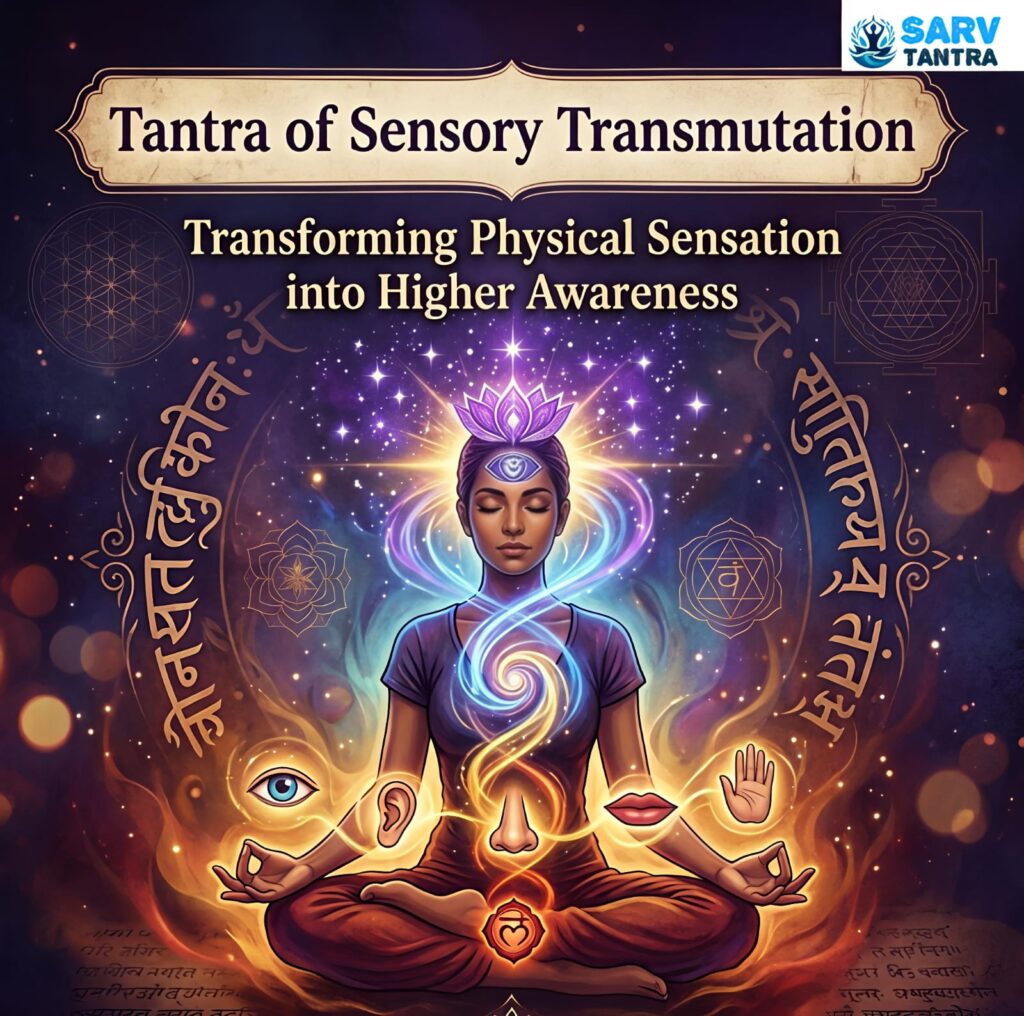
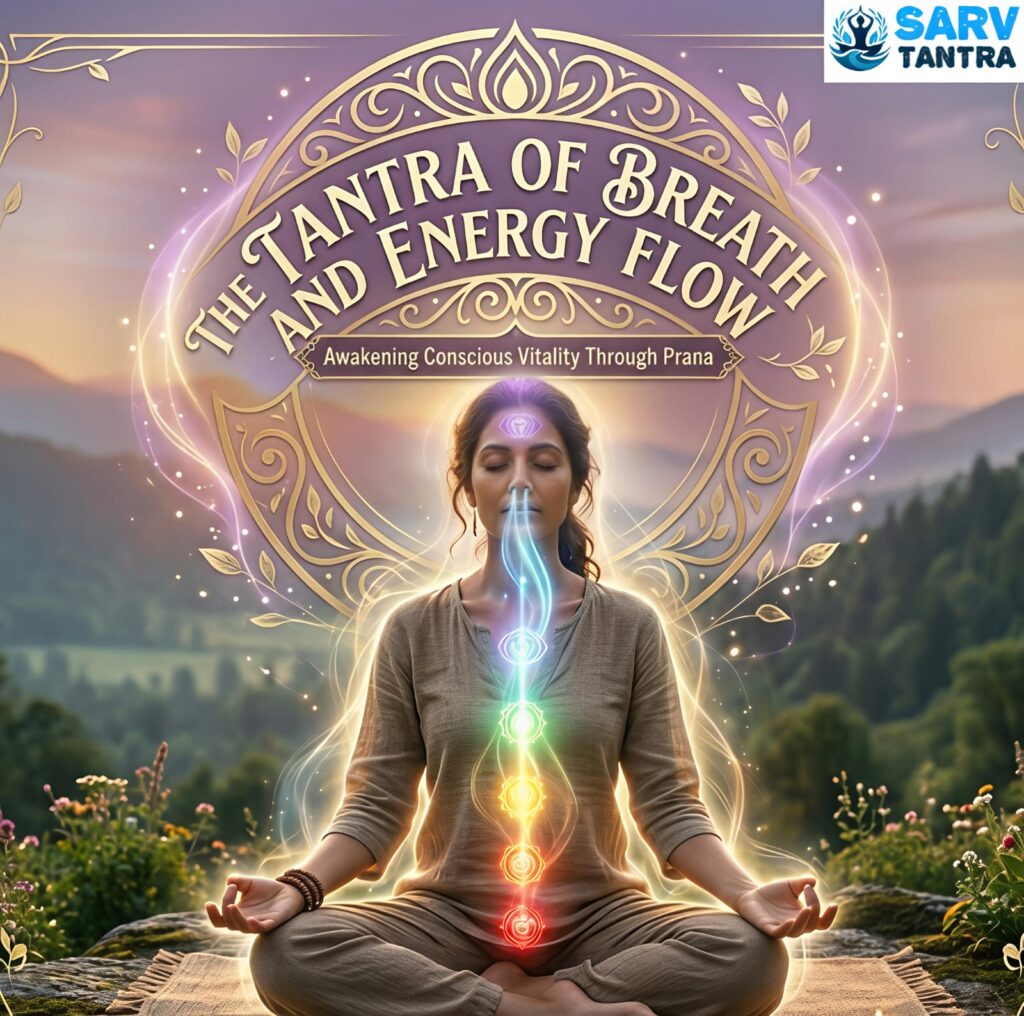
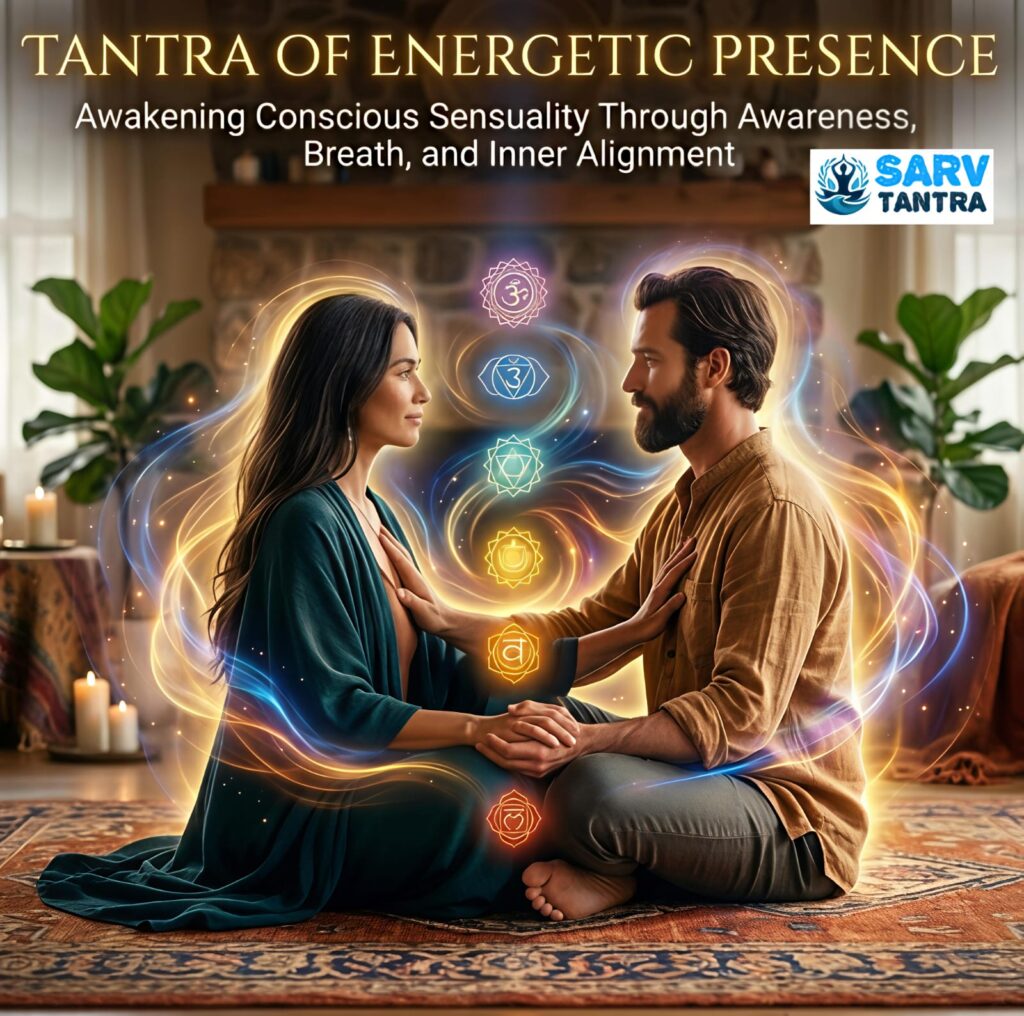
Energy is central to Tantra. It is believed that life force energy flows through subtle channels in the body.
Key Concepts:
- Prana: Vital life force
- Nadis: Energy channels
- Chakras: Energy centers
When energy flows freely, a person experiences vitality, clarity, and emotional balance. When blocked, it can lead to stress, confusion, and discomfort.
Tantric practices aim to:
- Activate dormant energy
- Clear blockages
- Balance the system
- Expand awareness
Types of Tantra
1. White Tantra
Focused on meditation, purity, and spiritual growth. It avoids physical expressions and emphasizes inner transformation.
2. Red Tantra
Includes practices involving relationships, intimacy, and emotional connection. It works with desire as a path to awareness.
3. Black Tantra
Often misunderstood, this involves ritualistic practices aimed at specific outcomes. It is less common and not typically recommended for beginners.
4. Neo-Tantra (Modern Tantra)
A contemporary interpretation focusing on:
- Emotional healing
- Conscious relationships
- Mindful intimacy
- Personal growth
Common Misconceptions About Tantra
Misconception 1: Tantra is only about sex
Reality: Sexual practices are only a small part of Tantra. The majority of Tantric teachings focus on meditation, awareness, and energy.
Misconception 2: Tantra is indulgent
Reality: Tantra is not about uncontrolled indulgence. It is about conscious experience and mastery over impulses.
Misconception 3: Tantra is a religion
Reality: Tantra is a spiritual system, not a religion. It can be practiced by anyone regardless of belief.
Benefits of Tantra
Tantra offers a holistic transformation across all dimensions of life.
Physical Benefits of Tantra
Improved Body Awareness
Tantric practices help you reconnect with your body, increasing sensitivity and presence.
Better Energy Flow
Breathwork and movement improve circulation and vitality.
Stress Reduction
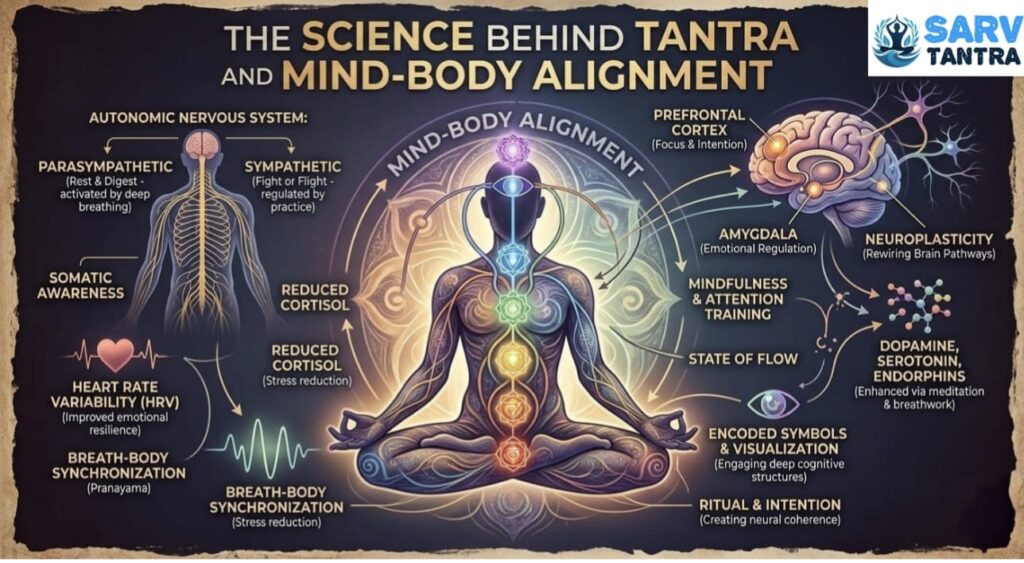
Deep relaxation techniques calm the nervous system and reduce stress hormones.
Enhanced Sleep
A relaxed body and mind naturally improve sleep quality.
Hormonal Balance
Reduced stress and improved awareness support better hormonal regulation.
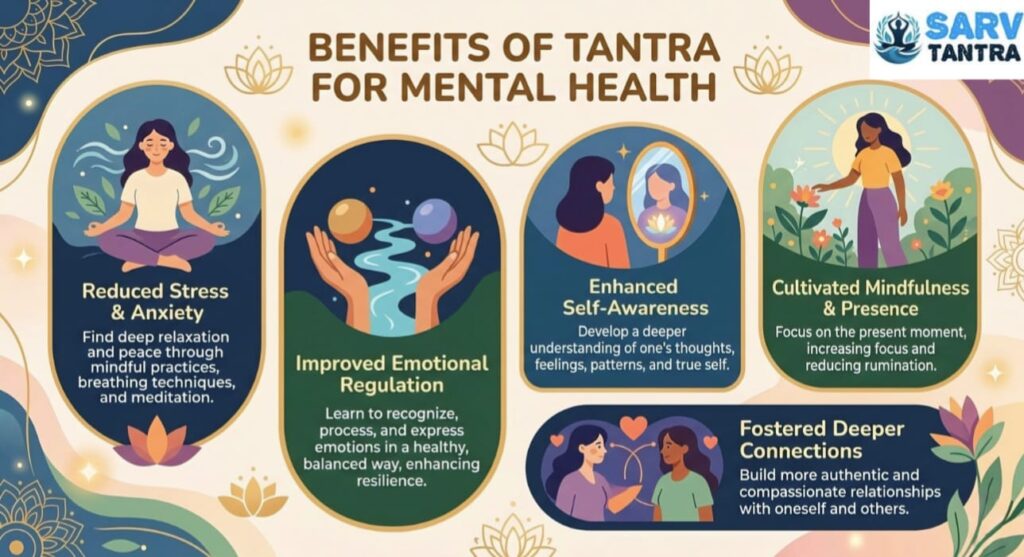
Mental Benefits of Tantra
Increased Focus
Mindfulness practices sharpen concentration.
Clarity of Thought
Awareness reduces mental clutter and confusion.
Reduced Anxiety
Breathing techniques calm the mind.
Enhanced Creativity
A relaxed and aware mind allows creativity to flow naturally.
Emotional Benefits of Tantra
Emotional Healing
Tantra allows suppressed emotions to surface and release.
Self-Acceptance
You learn to accept all aspects of yourself without judgment.
Better Relationships
Awareness improves empathy and communication.
Trauma Release
Stored emotional patterns can gradually dissolve.
Spiritual Benefits of Tantra
Expansion of Consciousness
You begin to experience life beyond limited identity.
Inner Peace
Acceptance and awareness lead to deep calmness.
Connection with Universal Energy
You feel a sense of unity with existence.
Kundalini Awakening
Advanced practices can activate powerful spiritual energy.
Tantra and Relationships
Tantra transforms relationships from unconscious patterns to conscious connections.
Deeper Intimacy
Partners connect emotionally, mentally, and energetically.
Presence
Being fully present enhances bonding.
Trust and Openness
Communication becomes more authentic.
Tantra and Sexual Energy
Tantra views sexual energy as a powerful creative force.
Instead of quick gratification, it emphasizes:
- Awareness
- Slowness
- Connection
- Energy circulation
This leads to deeper satisfaction and emotional bonding.
Daily Tantra Practices for Beginners
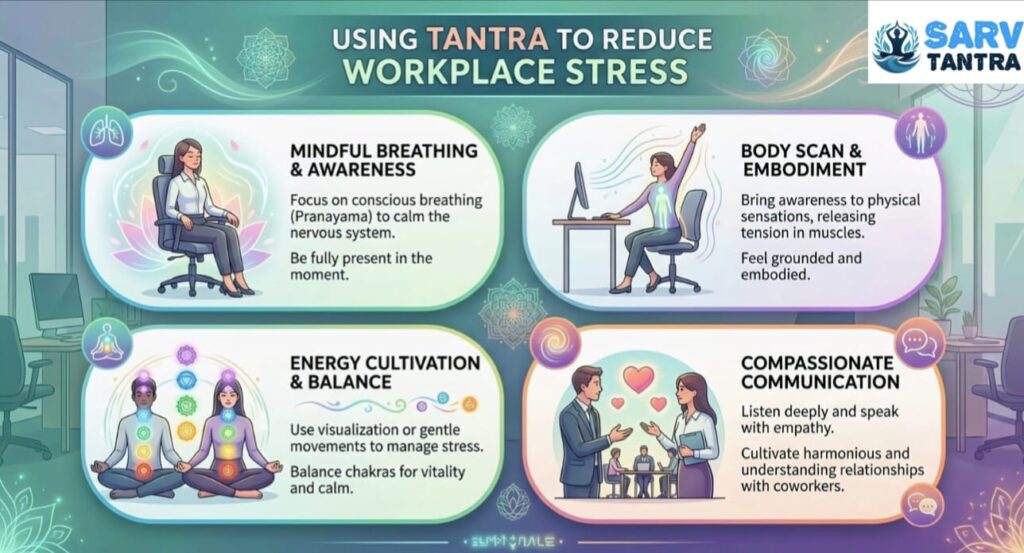
1. Conscious Breathing
Spend a few minutes observing your breath.
2. Body Awareness
Feel sensations in different parts of your body.
3. Mindful Living
Be fully present in daily activities.
4. Meditation
Practice stillness for 10–20 minutes daily.
5. Gratitude Awareness
Appreciate simple moments.
Advanced Tantra Practices
Energy Circulation
Moving energy through the body consciously.
Chakra Activation
Balancing energy centers.
Mantra Meditation
Using sound vibrations for transformation.
Partner Practices
Conscious connection exercises.
How to Start Your Tantra Journey
- Begin with awareness
- Practice daily meditation
- Learn from authentic sources
- Be patient and consistent
- Avoid rushing into advanced techniques
Tantra in Modern Life
In today’s fast-paced world, Tantra offers:
- Stress relief
- Emotional balance
- Better relationships
- Increased productivity
- Inner fulfillment
Challenges in Tantra Practice
Misinterpretation
Many people misunderstand its purpose.
Emotional Release
Facing inner emotions can be intense.
Lack of Guidance
Proper learning is important for deeper practices.
Is Tantra Right for You?
Tantra is suitable for anyone who:
- Seeks self-awareness
- Wants emotional healing
- Desires deeper relationships
- Is open to spiritual growth
Conclusion
Tantra is not just a practice—it is a way of life. It invites you to live with awareness, embrace every experience, and transform your energy into higher consciousness.
By integrating body, mind, and spirit, Tantra helps you unlock your full potential and live a more connected, peaceful, and fulfilling life.
It is not about escaping the world—but about experiencing it fully, consciously, and beautifully.