

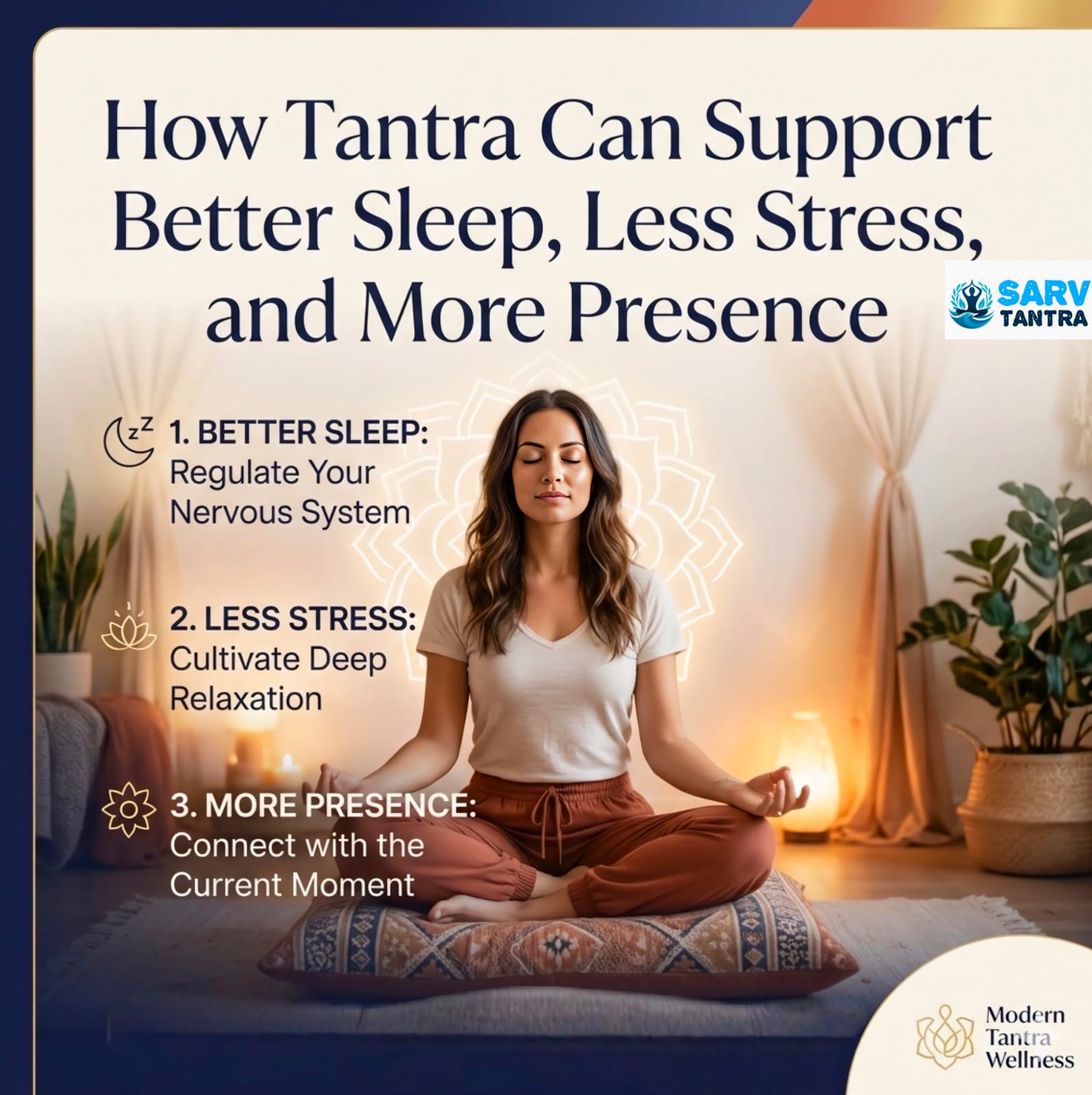
In today’s fast-moving world, many people feel overwhelmed, mentally exhausted, and disconnected from their bodies. Stress builds quietly through busy schedules, screen time, emotional pressure, and lack of rest. Over time, this can lead to poor sleep, anxiety, tension, and a constant feeling of being “switched on.”
Many people are now turning toward ancient wellness practices for support—and tantra is one of them.
Tantra offers a holistic approach to healing that combines breath, awareness, movement, meditation, and presence. While often misunderstood, tantra is fundamentally about connection: connection to your breath, your body, your emotions, and the present moment.
When practiced mindfully, tantra can become a powerful tool for improving sleep, easing stress, and helping you feel grounded in everyday life.
This guide explores how tantra supports the nervous system, improves sleep quality, reduces stress, and helps cultivate more presence and wellbeing.
What Is Tantra?
Tantra is an ancient spiritual practice rooted in traditions from India. It focuses on awareness, breath, embodiment, and energy.
At its core, tantra invites us to slow down enough to truly feel.
Rather than escaping the body or silencing emotion, tantra encourages us to become deeply present with sensation, breath, movement, and experience.
Tantra can include:
- Breathwork
- Meditation
- Mindful movement
- Sound
- Ritual
- Visualization
- Body awareness
- Energy practices
Modern wellness tantra often focuses on nervous system regulation, emotional healing, mindfulness, and connection.
Tantra and the Nervous System
One of the most important ways tantra supports better sleep and less stress is through nervous system regulation.
When stress becomes chronic, the body often stays in fight-or-flight mode.
This may feel like:
- Racing thoughts at night
- Tight jaw or shoulders
- Trouble falling asleep
- Shallow breathing
- Feeling emotionally reactive
- Restlessness
- Waking during the night
- Difficulty relaxing even when tired
Tantric practices help activate the rest-and-digest response.
Through slow breathing, awareness, and grounding, the body receives signals of safety.
When the nervous system feels safe:
- Heart rate slows
- Muscles soften
- Breathing deepens
- Thoughts quiet down
- Sleep becomes easier
- Presence increases
This is why tantra can feel deeply calming and restorative.
How Tantra Supports Better Sleep
1. Tantra Encourages Slowing Down Before Bed
Many people move directly from work, phones, or stimulation into sleep.
The body doesn’t always know how to switch off instantly.
Tantra creates a transition ritual.
Instead of “crashing” into sleep, you begin unwinding intentionally.
Examples:
- candlelight meditation
- breath awareness
- body scan
- slow stretching
- mindful touch
- silence
These rituals signal to the body:
“You are safe now. You can rest.”
That shift can improve both falling asleep and staying asleep.
2. Breathwork Calms the Mind
Breath is central to tantra.
When stress rises, breath becomes short and tight.
Tantric breathing invites longer, softer breathing patterns.
This helps release tension physically and mentally.
Simple breath practice before sleep:
4–6 Breath Practice
- inhale for 4 counts
- exhale for 6 counts
Repeat for 5–10 minutes.
Longer exhales help calm the nervous system.
Many people notice:
- fewer racing thoughts
- reduced anxiety
- easier sleep onset
3. Tantra Brings Awareness Back Into the Body
Sleep problems often happen when attention is trapped in the mind.
Thought loops can sound like:
- “What do I need to do tomorrow?”
- “Why did that happen today?”
- “Did I say the wrong thing?”
Tantra gently redirects awareness from thought to sensation.
You begin noticing:
- your breath in your belly
- your heartbeat
- warmth in your hands
- contact with the mattress
- softness in the jaw
This sensory awareness grounds you in the present moment.
The mind softens.
Sleep can arrive naturally.
Tantra for Stress Relief
Stress is stored not only mentally—but physically.
The body holds tension.
Common storage areas include:
- neck
- shoulders
- chest
- hips
- stomach
- jaw
Tantric practices allow stored stress to move.
Helpful practices include:
Breath
Deepens relaxation and reduces nervous system activation.
Movement
Releases tension trapped in muscles and fascia.
Sound
Humming, sighing, or chanting can regulate the vagus nerve.
Stillness
Creates space to process emotion.
Awareness
Builds capacity to feel emotions without becoming overwhelmed.
Over time this can reduce chronic stress symptoms.
Tantra and Presence in Everyday Life
One of tantra’s greatest gifts is presence.
Presence means fully inhabiting the current moment.
Without rushing ahead.
Without replaying the past.
Without dissociating from the body.
Modern life often pulls us away from presence through:
- multitasking
- phones
- notifications
- pressure
- overthinking
Tantra offers a return.
Simple practices can transform ordinary moments into meditation.
For example:
Drinking Tea
Feel the warmth in your hands.
Notice the aroma.
Take one slow sip.
Pause.
Walking
Feel your feet on the ground.
Notice the rhythm.
Breathe with your steps.
Showering
Feel water against the skin.
Notice temperature.
Stay present with sensation.
These moments may feel small—but they are powerful.
Presence reduces stress because the nervous system exits constant anticipation.
Emotional Benefits of Tantra
Poor sleep and stress are often linked with emotional overwhelm.
Tantra can support emotional wellbeing by creating space for feelings.
Instead of suppressing emotions, tantra invites witnessing.
This might look like:
- breathing with sadness
- noticing anger in the chest
- allowing tears
- softening around fear
- welcoming joy fully
This creates emotional resilience.
Many practitioners report feeling:
- lighter
- clearer
- calmer
- more emotionally balanced
- less reactive
When emotions move through the body, they often stop disrupting sleep.
A Simple Tantra Bedtime Practice for Better Sleep
Try this 10-minute evening ritual:
Step 1 — Dim the lights
Reduce stimulation.
Put away your phone if possible.
Step 2 — Sit or lie comfortably
Support your body with pillows.
Let shoulders soften.
Step 3 — Breathe slowly
Inhale through the nose.
Exhale slowly through the mouth.
Repeat 10 breaths.
Step 4 — Body scan
Bring awareness to:
- forehead
- jaw
- throat
- chest
- belly
- hips
- legs
- feet
Relax each area.
Step 5 — Place a hand on heart and belly
Feel movement under your hands.
Stay here for several breaths.
Step 6 — Set an intention
Silently say:
“I release today.”
or
“I allow rest.”
or
“I return to presence.”
Then allow sleep to come naturally.
Benefits You May Notice Over Time
Consistent tantra practice may support:
- deeper sleep
- easier relaxation
- reduced anxiety
- less muscle tension
- improved emotional awareness
- greater self-connection
- increased presence
- better mood
- improved resilience to stress
- more grounded energy throughout the day
Benefits often build gradually.
Even 5–10 minutes daily can create meaningful change.
Tantra as a Lifestyle Practice
Tantra isn’t only something you “do.”
It can become a way of living.
It asks:
- Can I breathe more deeply?
- Can I slow down here?
- Can I feel this moment fully?
- Can I be present with myself?
This mindset shifts everyday experience.
Sleep becomes ritual.
Breathing becomes meditation.
Movement becomes awareness.
Rest becomes sacred.
Life becomes more embodied.
Final Thoughts
Tantra offers something many people deeply need right now:
permission to slow down.
In a culture that rewards busyness, productivity, and constant stimulation, tantra reminds us that healing often happens in softness.
By reconnecting with breath, body, and awareness, tantra can help support:
- better sleep
- less stress
- nervous system regulation
- emotional wellbeing
- greater presence
You don’t need elaborate rituals or hours of practice.
You can begin with one breath.
One pause.
One moment of awareness.
From there, everything begins to soften.
And in that softness, rest becomes possible.
Presence becomes natural.
And wellbeing becomes something you feel—not just something you chase.