

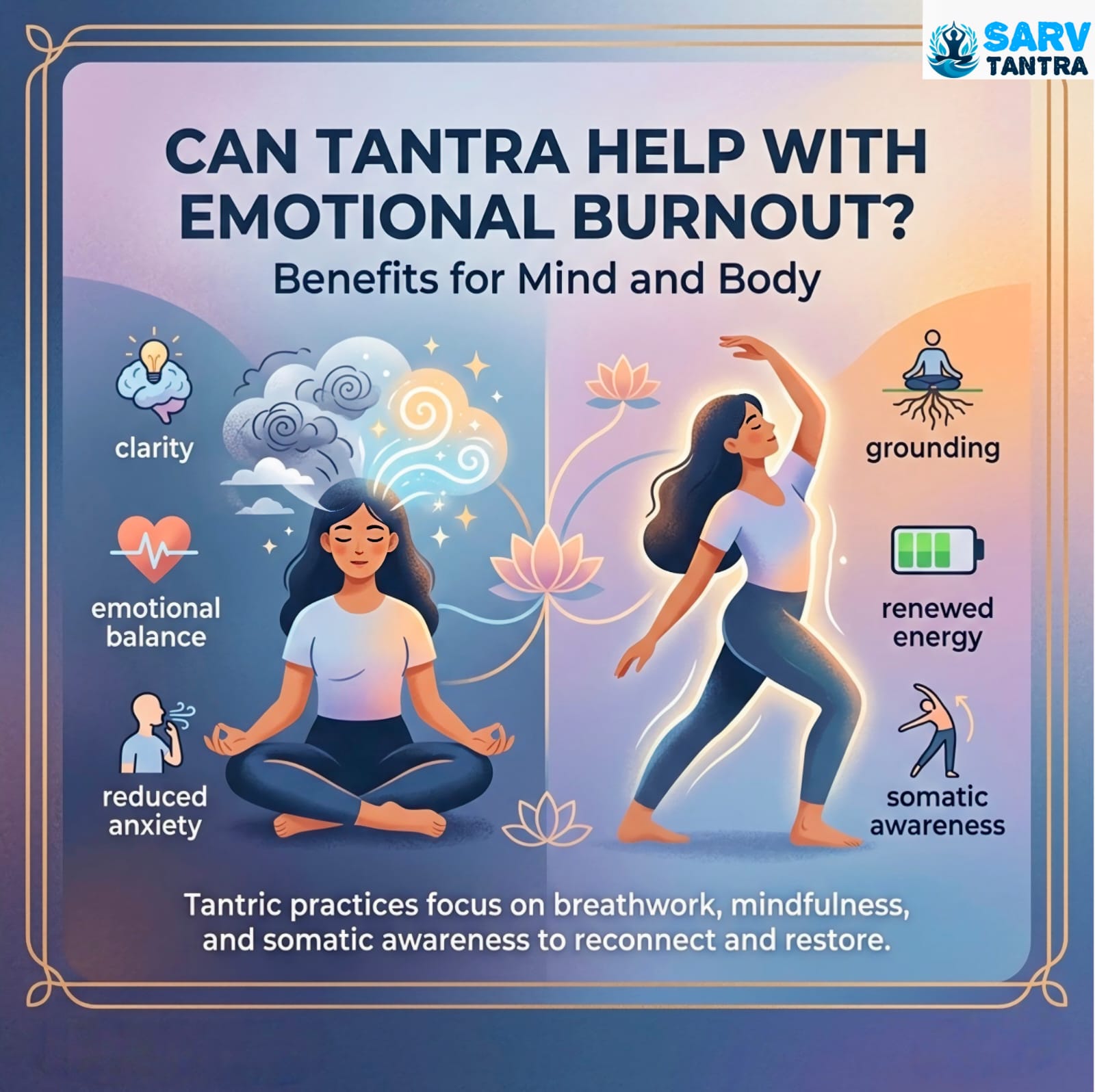
Can Tantra Help with Emotional Burnout? Benefits for Mind and Body

Emotional burnout can feel like carrying an invisible weight through daily life. Even after sleep, the exhaustion remains. Your mind keeps racing, your body feels heavy, and even simple tasks can feel overwhelming. In a world that encourages constant productivity, many people find themselves disconnected from rest, joy, and their own inner rhythm.
This is where tantra can offer something meaningful.
When people hear the word tantra, it is often misunderstood or reduced to only one part of the practice. But tantra is much broader. At its core, tantra is about awareness, presence, breath, connection, and learning how to return to the body.
So, can tantra help with emotional burnout?
For many people, yes. Tantra can become a gentle path back to the nervous system, the breath, and the present moment. It can support emotional wellbeing by helping release tension, reconnect with the body, and create space for rest and healing.
In this article, we’ll explore how tantra may support emotional burnout and the benefits it offers for both mind and body.
Understanding Emotional Burnout
Emotional burnout is more than feeling tired after a long week. It often builds slowly over time through chronic stress, emotional overload, lack of rest, or constantly caring for others without enough space to care for yourself.
Common signs of emotional burnout can include:
- Feeling emotionally drained most of the time
- Difficulty relaxing
- Trouble sleeping or waking tired
- Irritability or emotional numbness
- Feeling disconnected from your body
- Anxiety or racing thoughts
- Low motivation
- Reduced joy or pleasure in daily life
- Feeling overwhelmed by small tasks
- Difficulty being present
Burnout affects both the mind and the body.
Stress doesn’t stay in thoughts alone. It often lives in tight shoulders, shallow breathing, tension in the jaw, digestive discomfort, fatigue, and nervous system overload.
This is why body-based practices can feel especially supportive.
What Is Tantra?
Tantra is an ancient practice centered around awareness, embodiment, breath, energy, and conscious connection.
Rather than escaping the body, tantra invites you into it.
Rather than forcing healing, tantra often begins by slowing down enough to notice what is already present.
Tantric practice can include:
- Breath awareness
- Meditation
- Mindful movement
- Conscious touch
- Stillness
- Energy awareness
- Ritual
- Presence practices
- Partner connection or solo self-connection
Tantra doesn’t require perfection.
It asks for attention.
And for someone experiencing emotional burnout, attention can be deeply healing.
How Tantra Can Help with Emotional Burnout
1. Tantra Helps Slow Down the Nervous System
Burnout often keeps the body in a constant state of activation.
You may feel alert even when exhausted.
Your body may feel tired while your mind refuses to switch off.
Tantric breathwork and meditation practices help interrupt this cycle.
By focusing on slower breathing and conscious awareness, the body receives signals of safety.
This can support:
- Lower stress response
- Slower heart rate
- Deeper breathing
- Relaxation
- Emotional settling
Even a few minutes of conscious breath can shift how the body feels.
Tantra creates permission to pause—and often that pause is where healing begins.
2. Tantra Reconnects You with the Body
Burnout often creates disconnection.
You keep moving but stop noticing what your body needs.
You may ignore hunger, tension, fatigue, or emotional signals simply to get through the day.
Tantra brings awareness back to sensation.
You begin noticing:
- Your breath
- Muscle tension
- Fatigue
- Emotions
- Areas of holding
- Pleasure
- Comfort
- Rest
This awareness helps rebuild trust with the body.
Instead of pushing through exhaustion, you begin listening.
And listening can be transformative.
3. Tantra Supports Emotional Release
Stress and emotion are often stored physically.
Unprocessed sadness may feel heavy in the chest.
Anxiety may live in the stomach.
Tension may settle into the jaw or shoulders.
Tantric practices often encourage safe emotional awareness without needing to “fix” anything immediately.
Through breath, movement, and presence, people may feel emotions begin to move rather than remain stuck.
This can support the release of:
- Stress
- Grief
- Frustration
- Emotional numbness
- Mental pressure
Emotional release can sometimes look like tears.
Sometimes it feels like laughter.
Sometimes it feels like deep stillness.
Sometimes it simply feels like exhaling fully for the first time all day.
4. Tantra Encourages Rest Without Guilt
One of the hardest parts of burnout is feeling like you should keep going even when you’re depleted.
Tantra offers a different message:
Rest is productive.
Stillness has value.
Presence matters.
Instead of measuring worth through output, tantra invites a relationship with being.
That shift can feel powerful for anyone recovering from emotional exhaustion.
Rest becomes practice.
Breathing becomes enough.
Doing less becomes healing.
5. Tantra Can Bring Back Joy and Pleasure
Burnout can flatten experience.
Things that once felt enjoyable may feel distant.
Food feels rushed.
Music becomes background noise.
Touch feels absent.
Even beauty can go unnoticed.
Tantra reconnects us with sensation and pleasure—not performance, but simple sensory pleasure.
This might mean noticing:
- Warm sunlight on skin
- The texture of fabric
- Breath moving through the chest
- The taste of tea
- A moment of silence
- Gentle movement
- Relaxation in the body
These small moments can begin rebuilding aliveness.
And joy often returns quietly.
Benefits of Tantra for Mind and Body During Burnout
Many people practicing tantra for emotional wellbeing report benefits such as:
Mental benefits
- Reduced stress
- Greater emotional awareness
- Increased calm
- Less mental overactivity
- Better focus
- Improved presence
- More emotional resilience
Physical benefits
- Deeper relaxation
- Better sleep quality
- Reduced muscle tension
- Improved breathing patterns
- More body awareness
- Increased energy over time
- Support for nervous system regulation
Emotional benefits
- Feeling more grounded
- Feeling less emotionally numb
- Increased self-compassion
- Better connection to feelings
- Improved relationship with rest
- Greater sense of inner safety
Simple Tantric Practices for Emotional Burnout
You do not need hours of practice to begin.
Small rituals can be powerful.
Breath Awareness Practice (5 minutes)
Sit or lie down comfortably.
Place one hand on the chest and one on the belly.
Slowly inhale through the nose.
Slowly exhale through the mouth.
Notice the rise and fall of the body.
No changing.
No fixing.
Just noticing.
This can help bring the nervous system back toward calm.
Body Scan Practice
Close your eyes.
Move attention through the body slowly.
Notice:
- forehead
- jaw
- neck
- shoulders
- chest
- belly
- hips
- legs
Ask:
Where am I holding tension?
Breathe into that space.
Allow softening.
Pleasure Awareness Ritual
Choose one simple daily activity:
- drinking tea
- showering
- walking
- stretching
Do it slowly.
Notice every sensation.
Tantra teaches that presence itself can be medicine.
Tantra Is Not About Perfection
You do not need to feel calm immediately.
You do not need to be spiritual.
You do not need experience.
Burnout recovery is not linear.
Some days may feel lighter.
Some may feel heavy.
Tantra doesn’t ask you to become someone new.
It simply asks you to arrive as you are.
Tired.
Overwhelmed.
Tender.
Present.
And begin there.
Final Thoughts: Can Tantra Help with Emotional Burnout?
Can tantra help with emotional burnout?
For many people, it can offer meaningful support.
Tantra may not remove every source of stress in life—but it can change your relationship to stress.
It can help you:
- slow down
- breathe deeper
- feel more grounded
- reconnect with your body
- release emotional tension
- experience rest without guilt
- rebuild connection with pleasure and presence
Emotional burnout often asks for more than a quick fix.
It asks for reconnection.
Tantra offers a path toward that reconnection—through breath, awareness, embodiment, and presence.
Sometimes healing doesn’t begin with doing more.
Sometimes it begins with pausing long enough to feel.
And tantra creates space for exactly that.