

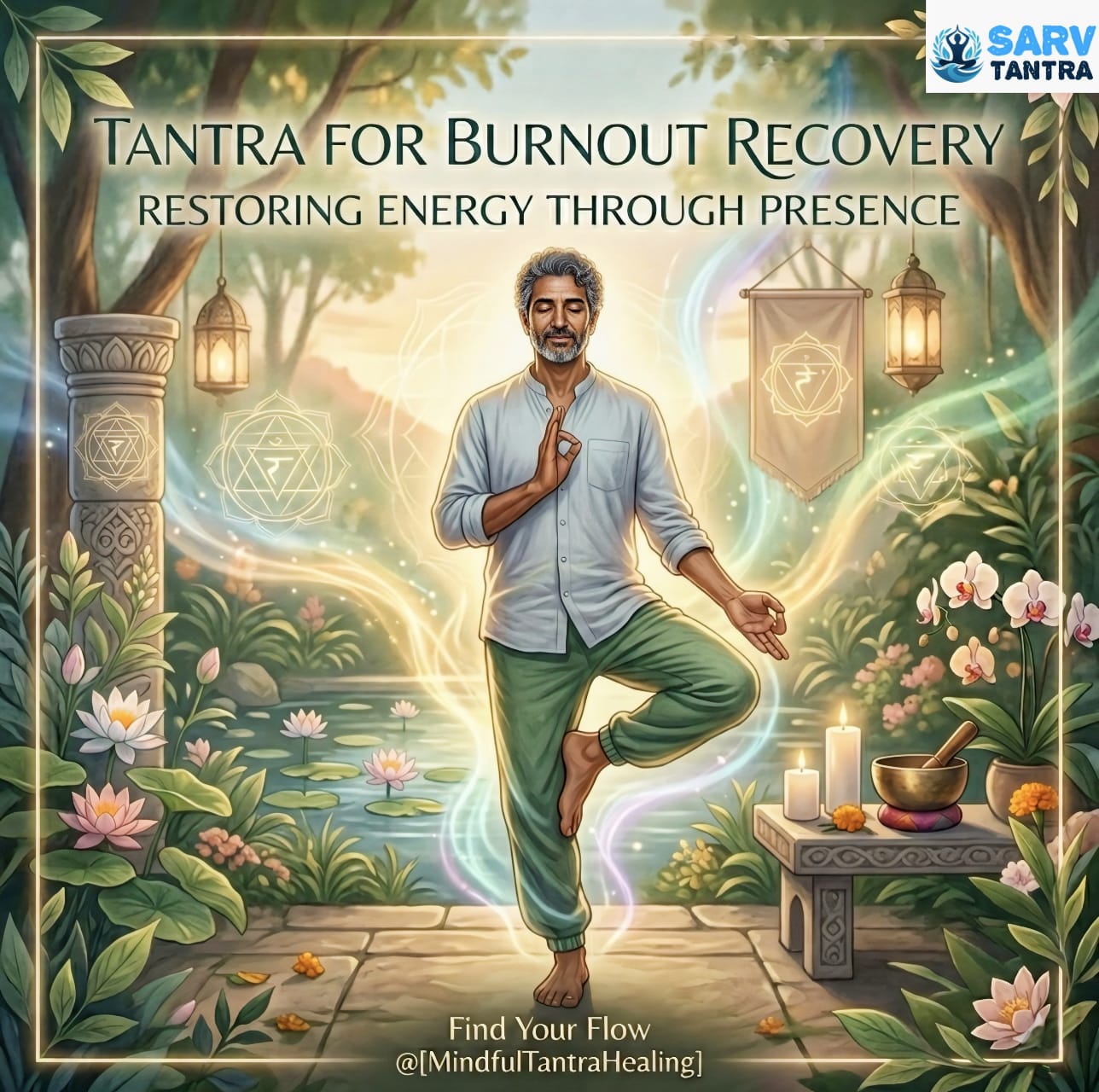
Tantra for Burnout Recovery: Restoring Energy Through Presence

Burnout has become one of the most common experiences of modern life. Between demanding work schedules, constant notifications, emotional responsibilities, and the pressure to always stay productive, many people feel mentally drained, emotionally exhausted, and physically disconnected from themselves. Burnout can feel like running on empty—where rest doesn’t fully restore you and even small tasks feel overwhelming.
While burnout is often treated as something that can be solved through sleep, time off, or better time management, deeper healing often requires more than rest alone. It requires reconnection. Reconnection with the body. Reconnection with breath. Reconnection with emotion. Reconnection with presence.
This is where tantra can offer meaningful support.
Tantra for burnout recovery is not about pushing harder or fixing yourself. It is about slowing down enough to listen. It invites you to move away from constant doing and return to being. Through awareness, breathwork, embodiment, and mindful presence, tantra creates space for the nervous system to soften and for energy to begin flowing again.
For many people, burnout is not just exhaustion. It is disconnection. Tantra offers a path back.
Understanding Burnout Beyond Exhaustion
Burnout is often described as emotional, physical, and mental fatigue caused by prolonged stress. But it often feels deeper than simply being tired.
Burnout may look like:
- Feeling exhausted even after sleeping
- Emotional numbness or irritability
- Lack of motivation
- Brain fog or inability to focus
- Feeling disconnected from your body
- Difficulty relaxing
- Reduced desire for connection or intimacy
- Feeling overwhelmed by simple daily tasks
- Anxiety mixed with exhaustion
- A sense that you are “always on”
Burnout impacts the nervous system. It keeps the body stuck in stress mode for too long. Over time, this can create tension patterns, shallow breathing, emotional shutdown, and energetic depletion.
You may continue functioning on the outside while feeling disconnected on the inside.
This is why burnout recovery often needs more than productivity hacks or surface-level wellness routines. It needs restoration at a nervous system and body level.
What Is Tantra?
Tantra is an ancient practice rooted in awareness, embodiment, breath, energy, and conscious connection.
Although tantra is often misunderstood, it is fundamentally a path of presence.
At its core, tantra teaches us how to:
- Slow down
- Become aware of the body
- Breathe consciously
- Feel emotions without resisting them
- Expand presence
- Connect to life energy
- Create intimacy with ourselves and with the present moment
Tantra is less about performance and more about sensation.
Less about forcing and more about allowing.
Less about achieving and more about experiencing.
For someone experiencing burnout, this shift can feel deeply healing.
Why Tantra Supports Burnout Recovery
1. Tantra Helps You Slow Down
Burnout often develops in environments of constant speed.
You move quickly.
Think quickly.
Respond quickly.
Work quickly.
Eventually, the body stops feeling safe inside that pace.
Tantra invites intentional slowness.
Slowing down is not laziness. It is regulation.
Through slower movement, slower breath, and mindful awareness, the nervous system receives a powerful message:
You are safe enough to pause.
This pause is often where healing begins.
2. Tantra Reconnects You With the Body
Burnout often pulls awareness into the mind.
You may spend hours:
- thinking
- planning
- worrying
- solving
- performing
Meanwhile, awareness leaves the body.
You stop noticing:
- tight shoulders
- clenched jaw
- shallow breath
- exhaustion
- emotional tension
Tantric practice gently brings attention back to physical sensation.
You begin noticing:
- where you hold stress
- where breath feels blocked
- where emotions live in the body
- where tension is asking to release
Body awareness creates healing because it allows stored stress to become visible.
And once it becomes visible, it can begin softening.
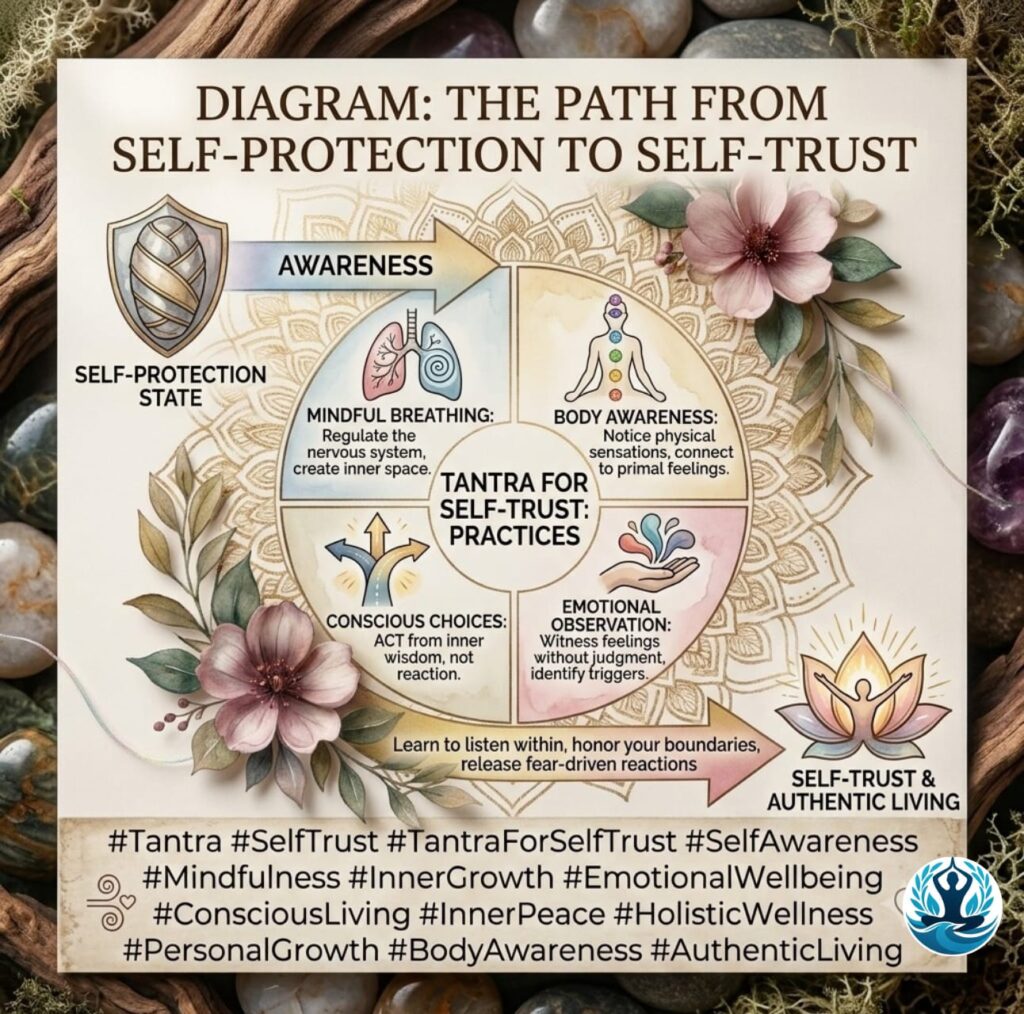
3. Breathwork Supports Nervous System Recovery
Breath is central to tantra.
Burnout often creates short, shallow breathing patterns.
When stressed for long periods, breathing can become restricted without you realizing it.
This signals to the nervous system that danger is still present.
Tantric breathwork helps interrupt this pattern.
Slow breathing can:
- reduce stress hormones
- lower heart rate
- increase relaxation
- improve oxygen flow
- release tension
- create emotional regulation
- support deeper rest
Even five minutes of conscious breathing can shift your internal state.
Breath becomes a bridge between stress and recovery.
4. Tantra Restores Energy Through Presence
Burnout often feels like depletion.
Tantra doesn’t ask you to manufacture energy.
It invites you to stop leaking it.
Energy is often drained through:
- overthinking
- emotional suppression
- chronic tension
- multitasking
- disconnection from needs
- constant stimulation
Presence interrupts those drains.
When you become fully present—even briefly—energy stops scattering in many directions.
Attention gathers.
Breath deepens.
The body softens.
Energy begins returning.
Not through force.
Through awareness.
5. Tantra Creates Space for Emotional Release
Burnout often includes unprocessed emotion.
Stress accumulates.
Pressure accumulates.
Responsibility accumulates.
Feelings get pushed aside because there is no time to feel them.
Eventually the body carries what the mind avoided.
Tantric practices make room for emotional experience without judgment.
This may include:
- grief
- sadness
- frustration
- exhaustion
- numbness
- anger
- loneliness
Presence allows emotion to move instead of stay trapped.
This movement can feel incredibly relieving.
Sometimes healing begins simply by allowing yourself to feel what has been waiting beneath the surface.
Simple Tantra Practices for Burnout Recovery
You do not need hours each day.
Small consistent practices can create powerful change.
1. Conscious Breath Practice
Sit comfortably.
Close your eyes if that feels safe.
Place one hand on your chest and one on your belly.
Inhale slowly through the nose for 4 counts.
Pause.
Exhale gently for 6 counts.
Repeat for 5–10 minutes.
Notice:
- the belly rising
- the chest softening
- tension leaving the jaw
- shoulders dropping
No goal.
Just breath.
This practice supports immediate grounding.
2. Body Scan Awareness
Lie down or sit comfortably.
Move awareness slowly through the body:
- feet
- legs
- hips
- belly
- chest
- shoulders
- neck
- face
Ask:
Where am I holding tension?
Notice without needing to fix anything.
Breathe into that area.
Simply witnessing tension can begin releasing it.
3. Slow Movement Practice
Burnout often disconnects people from movement that feels nourishing.
Try:
- stretching
- gentle swaying
- intuitive movement
- slow yoga
- walking meditation
Move slowly.
Let the body lead.
Ask:
What feels supportive right now?
Tantra values sensation over performance.
4. Eye-Closed Presence Meditation
Set a timer for 5 minutes.
Sit in silence.
Notice:
- breath
- body sensations
- sounds
- emotional texture
Allow everything to be present.
No changing.
No improving.
No analyzing.
Just noticing.
This teaches the nervous system that stillness can feel safe again.
5. Self-Connection Ritual
Place both hands over the heart or belly.
Take slow breaths.
Say silently:
“I am here.”
“I am listening.”
“I do not need to perform right now.”
This small ritual can feel incredibly grounding during burnout recovery.
Tantra and Rest Without Guilt
Many people struggling with burnout find rest difficult.
Even when resting, the mind remains active.
Thoughts continue:
“I should be working.”
“I should be productive.”
“I’m behind.”
“I need to do more.”
Tantra offers another perspective.
Rest becomes practice.
Rest becomes sacred.
Rest becomes participation in healing.
Presence reminds us that worth is not measured by output.
You do not need to earn rest.
Burnout recovery often requires learning how to rest without apology.
Tantra supports exactly that.
Burnout Recovery Is Not Always Linear
Healing from burnout rarely happens all at once.
Some days you feel energized.
Some days you feel heavy.
Some days presence feels easy.
Some days even breathing deeply feels difficult.
That is okay.
Tantra does not demand perfection.
It asks for awareness.
Even noticing exhaustion is awareness.
Even noticing numbness is awareness.
Even noticing resistance is awareness.
Every moment of noticing is already part of healing.
How Tantra Can Change Your Relationship With Energy
One of tantra’s greatest gifts is changing how we relate to energy itself.
Instead of asking:
“How can I push through?”
You begin asking:
“What restores me?”
Instead of:
“How much can I get done?”
You ask:
“What feels nourishing?”
Instead of:
“How do I stay productive?”
You ask:
“How do I stay connected?”
This changes everything.
Energy becomes relational rather than transactional.
You stop treating yourself like a machine.
You begin treating yourself like a living system that needs breath, rest, care, space, and presence.
Who Can Benefit From Tantra for Burnout Recovery?
Tantra can be supportive for many people experiencing:
- work burnout
- caregiver fatigue
- emotional exhaustion
- creative burnout
- relationship burnout
- stress-related fatigue
- nervous system dysregulation
- chronic overwhelm
It can be especially meaningful for people who feel:
- disconnected from their body
- emotionally numb
- overstimulated
- unable to relax
- deeply tired but unable to rest
Tantra offers practices that are gentle, accessible, and deeply body-centered.
Final Thoughts: Restoring Energy Through Presence
Burnout recovery is not simply about getting your energy back.
It is about rebuilding your relationship with yourself.
Tantra offers a reminder that healing does not always arrive through effort.
Sometimes it arrives through slowing down.
Through breathing.
Through feeling.
Through listening.
Through becoming present enough to hear what the body has been trying to say.
Tantra for burnout recovery is not about escaping life.
It is about returning to it with awareness.
Returning to your breath.
Returning to sensation.
Returning to your nervous system.
Returning to your energy.
Returning to yourself.
And often that return begins with something very simple:
One breath.
One pause.
One moment of presence.