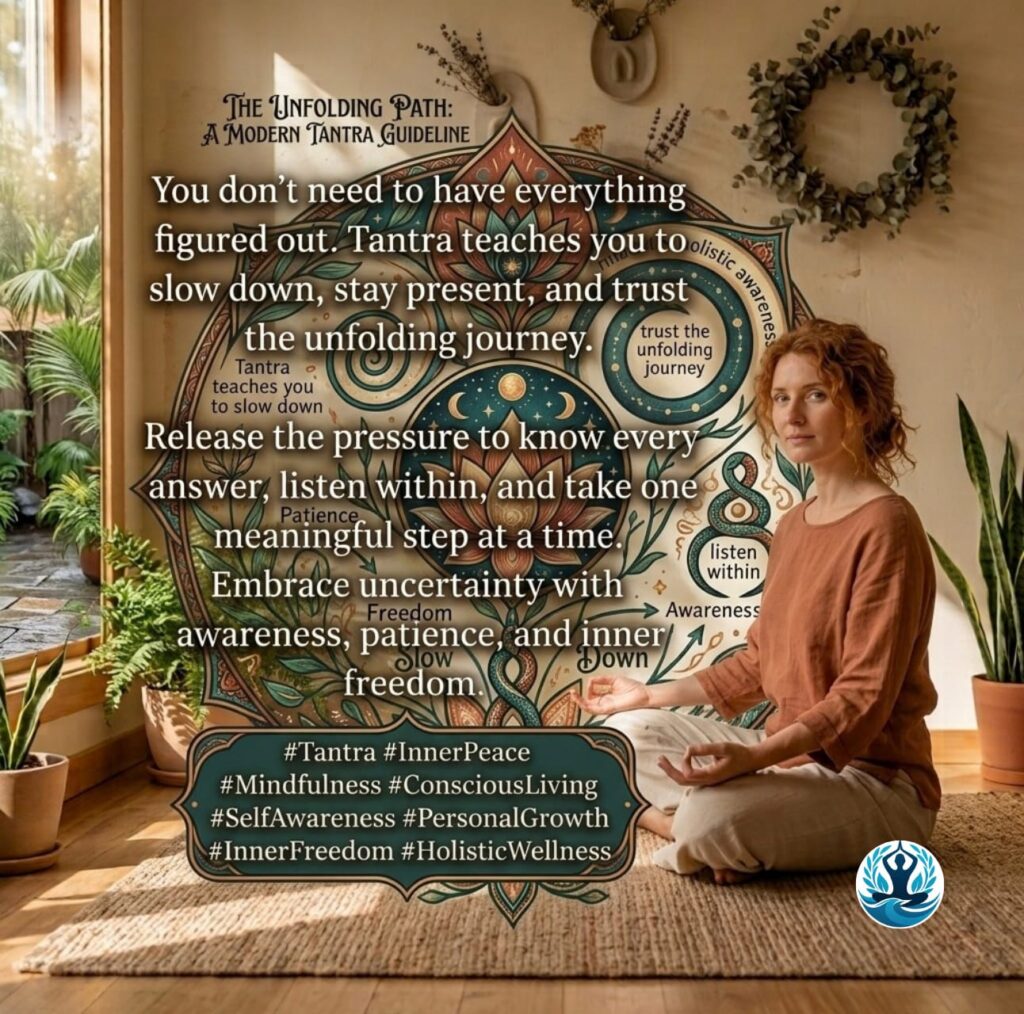


Tantra for Finding Freedom From the Habit of Comparing Life Journeys


In today’s fast-paced world, comparing our lives with others has become an almost automatic habit. We compare careers, relationships, financial achievements, lifestyles, personal growth, and even our emotional wellbeing. Social media makes this habit more frequent by showing us carefully selected moments from other people’s lives, often creating the impression that everyone else is moving forward faster than we are.
One person may appear to have achieved professional success early, while another seems to enjoy a perfect relationship or a peaceful lifestyle. Meanwhile, we may begin questioning our own progress, wondering whether we are falling behind or missing important opportunities. Over time, these comparisons can weaken confidence, create dissatisfaction, and distract us from appreciating our own journey.
Tantra offers a mindful approach to understanding ourselves, embracing the present moment, and developing a healthier relationship with our individual life experiences. Rather than encouraging competition or perfection, a contemporary wellness-oriented approach to Tantra can invite greater body awareness, conscious breathing, self-acceptance, and attention to the life we are actually living.
Finding freedom from comparison does not mean losing interest in other people’s achievements. It means learning to appreciate their success without turning it into a judgment of our own worth.
Every person has a different background, set of responsibilities, opportunities, challenges, and pace of development. Recognizing this truth can help us move away from unnecessary competition and toward a more meaningful, authentic, and balanced life.
Understanding the Habit of Comparing Life Journeys
Comparison is a natural human tendency. We often evaluate our experiences by looking at the people around us. Sometimes, this helps us learn, identify goals, and understand new possibilities. However, comparison becomes unhelpful when it repeatedly makes us feel inadequate or dissatisfied with our own circumstances.
For example, someone might feel proud of a professional accomplishment until they discover that a friend has reached a higher position. A person may enjoy their relationship until they see another couple sharing apparently perfect moments online. Someone making steady progress toward a personal goal may suddenly feel unsuccessful after comparing their timeline with someone else’s.
In each case, attention moves away from personal experience and toward external measurement.
Instead of asking, “Am I growing in a way that feels meaningful to me?” we begin asking, “Am I doing as well as everyone else?”
This shift can make life feel like a race with no finish line. There will always be someone who appears more successful, more confident, more accomplished, or more fulfilled in a particular area.
A mindful approach begins by noticing this pattern without criticizing ourselves for having it. We can acknowledge comparison as a learned habit and gradually practice responding to it with greater awareness.
How Tantra Can Help Us Understand Comparison
Tantra is a diverse spiritual and philosophical tradition with historical roots in several Indian religious traditions. It should not be reduced to a single relaxation technique or modern wellness method. In a contemporary personal-growth context, selected practices inspired by Tantra can encourage greater awareness of the body, breath, senses, emotions, and present experience.
When applied thoughtfully to the habit of comparison, this approach encourages us to become curious about our inner responses rather than automatically believing every judgment that arises.
For example, when we see someone else’s success, we might notice tension in the chest, shallow breathing, or thoughts about being left behind. Instead of immediately reacting by criticizing ourselves or trying to prove our worth, we can pause, breathe naturally, and observe what is happening.
This moment of awareness creates an opportunity to choose a different response.
Tantra-inspired mindfulness does not require us to eliminate ambition or stop learning from others. Instead, it invites us to pursue growth without abandoning ourselves in the process.
The aim is not to become better than someone else. It is to become more conscious of how we live, what matters to us, and how we want to move forward.
Why Do We Compare Our Lives With Others?
To overcome comparison, it helps to understand what drives it. The habit rarely develops from one cause alone. It may emerge from social expectations, fear, insecurity, past experiences, or the desire to feel accepted.
1. Social Expectations and Cultural Pressure
From an early age, many people are encouraged to measure progress through external milestones. Academic achievements, career advancement, marriage, financial stability, property ownership, and social recognition can become standards against which we evaluate ourselves.
When life does not follow the expected timeline, we may assume that something is wrong.
However, these milestones do not have the same meaning or importance for everyone. A fulfilling life may look different depending on personal values, circumstances, and priorities.
Tantra-inspired self-awareness encourages us to question whether our goals reflect our genuine desires or simply the expectations we have absorbed from others.
2. Social Media and Selective Visibility
Social media often presents the most attractive parts of people’s experiences. We see celebrations, holidays, professional achievements, beautiful homes, and exciting opportunities. We rarely see the uncertainty, difficult decisions, disappointments, or ordinary routines behind these moments.
Comparing our complete lives with someone else’s carefully selected highlights creates an unfair standard.
Conscious living encourages us to recognize the difference between what we observe and what we actually know. A photograph cannot reveal someone’s complete emotional experience, and a professional achievement cannot tell us everything about their happiness.
Reducing unnecessary exposure to comparison-triggering content can help restore attention to our own lives.
3. The Fear of Falling Behind
Sometimes, comparison comes from the fear that time is running out. We may believe we should have achieved more by a certain age or reached a particular stage of life by now.
These beliefs can create urgency even when no genuine deadline exists.
We may rush decisions, pursue goals that do not suit us, or overlook meaningful experiences because we feel pressured to catch up.
Mindful awareness encourages us to distinguish between real responsibilities and imagined deadlines. We can take practical steps toward our goals without treating every difference in timing as a personal failure.
4. The Need for External Validation
When self-worth depends heavily on recognition, other people’s achievements may feel threatening. Their success can seem to reduce our own value, even though the two are unrelated.
We may seek praise, approval, or visible accomplishments to reassure ourselves that we are doing well.
Tantra-inspired reflection can help us notice when we are seeking validation instead of acting from our own values. Over time, this awareness may support a steadier sense of self-worth that is less dependent on constant comparison.
The Emotional Cost of Constant Comparison
Comparison can appear harmless at first, but repeated negative comparisons may influence our emotions, decisions, and relationships.
Reduced Self-Confidence
When we repeatedly focus on what others have achieved, we may overlook our own progress. Accomplishments that once felt meaningful can begin to seem ordinary or insufficient.
We might forget how much we have learned, how many challenges we have faced, or how far we have come.
Developing awareness means learning to acknowledge our own efforts without needing them to exceed someone else’s achievements.
Dissatisfaction With the Present
Comparison often shifts attention from the life we have to the life we believe we should have.
Instead of enjoying a peaceful evening, we might worry about career advancement. Instead of appreciating a supportive relationship, we might compare it with idealized relationships online.
The present becomes a waiting room for a supposedly better future.
Mindfulness helps us reconnect with the experiences already available to us. Appreciation does not require us to stop improving our circumstances; it simply allows us to experience life while we work toward change.
Stress and Emotional Exhaustion
Repeatedly evaluating ourselves against others can create a cycle of pressure. We may feel motivated briefly, then discouraged when progress seems slower than expected.
This pattern can contribute to frustration, self-doubt, and emotional fatigue.
Conscious breathing and body awareness can provide a pause in which we recognize these feelings rather than allowing them to determine every decision. These practices are supportive tools, not guaranteed treatments for anxiety or other mental health conditions.
Difficulty Celebrating Others
When comparison becomes a competition, another person’s happiness may trigger discomfort instead of genuine appreciation.
We might congratulate someone while privately feeling inadequate or resentful. This can create unnecessary distance in friendships, families, and professional relationships.
Freedom from comparison allows us to recognize that another person’s success is not evidence of our failure. We can celebrate others while remaining committed to our own goals.
Tantra and the Practice of Returning to Yourself
A central theme in mindful self-exploration is learning to observe experience without immediately judging it. When we apply this principle to comparison, we begin to recognize that thoughts about success, failure, and worth are experiences we have—not complete definitions of who we are.
Consider the following situation.
You discover that a former classmate has achieved a milestone you have been working toward. Your first response may be disappointment, jealousy, or a sense of falling behind.
Rather than condemning yourself for this reaction, pause and observe it.
-
What thought appeared first?
-
What emotion followed?
-
Where do you notice the response in your body?
-
Are you comparing similar circumstances, or are important differences being ignored?
-
What would you choose if you were not trying to prove anything to anyone?
These questions transform comparison from an automatic reaction into an opportunity for self-understanding.
Tantra-inspired awareness invites us to meet our actual experience with curiosity. We do not need to pretend that difficult emotions do not exist. We can acknowledge them, understand what they reveal, and decide what to do next.
Five Tantra-Inspired Practices for Releasing Comparison

1. Practice Conscious Breathing
When comparison triggers discomfort, pause for a few moments. Let your shoulders soften and notice your natural breathing. Avoid forcing deep breaths or trying to suppress your emotions.
Allow yourself to observe the feeling before responding to it. Even a brief pause can help you make a more considered choice.

2. Develop a Daily Self-Reflection Practice
At the end of the day, write down one thing you learned, one challenge you handled, and one experience you appreciated.
This practice redirects attention toward your actual life rather than an imagined ranking of achievements. It also helps you recognize forms of progress that are not visible to other people.

3. Reconnect With Your Body
Comparison often keeps attention trapped in thoughts about appearance, performance, and achievement. Gentle mindful movement, a comfortable body scan, or a quiet walk can bring attention back to physical sensations.
Notice your posture, the ground beneath your feet, and the rhythm of your movement. Let the experience be about connection rather than performance.

4. Spend Time in Silence
Set aside a few minutes without notifications, entertainment, or external demands. Observe the thoughts that arise without needing to solve every one of them.
Silence can help you recognize which ambitions feel personally meaningful and which are driven mainly by pressure, imitation, or the desire for approval.

5. Define Success According to Your Values
Write down what a meaningful life means to you. Consider relationships, health, creativity, contribution, learning, stability, freedom, or spiritual development.
Choose a few priorities that reflect your real circumstances. Use these as your personal reference points rather than adopting someone else’s definition of success.
Learning to Appreciate Your Own Timeline
One of the most important steps toward freedom from comparison is accepting that life does not unfold according to one universal schedule.
People begin careers at different ages, discover meaningful relationships at different stages, change professions, return to education, recover from setbacks, and redefine their goals throughout life.
A slower period does not necessarily mean a lack of progress. Sometimes, it is a period of learning, rebuilding, caregiving, rest, or reassessment.
A contemporary Tantra-inspired approach to personal growth encourages greater attention to the reality of the present moment. Instead of forcing ourselves to match another person’s pace, we can ask what our current circumstances require.
Perhaps we need to develop a skill, establish healthier boundaries, seek support, or simply acknowledge that we have been demanding too much of ourselves.
Accepting our timeline does not mean becoming passive. It means taking action from a place of greater clarity rather than panic.
Your journey can be meaningful without being identical to anyone else’s.
How to Stop Comparing Yourself on Social Media
Social media can be useful for learning, inspiration, connection, and discovering new possibilities. The challenge is how we use it and how it affects our relationship with ourselves.
A mindful approach can help us engage with digital platforms more intentionally.
Notice Your Emotional Responses
Pay attention to how you feel after viewing particular accounts or types of content. Do you feel encouraged, curious, and inspired, or do you consistently feel inadequate and pressured?
Your response provides useful information about your digital habits.
Curate Your Digital Environment
Consider unfollowing or muting accounts that repeatedly trigger unhealthy comparisons. Follow people and communities that offer practical knowledge, authentic perspectives, and encouragement without making you feel that your worth depends on constant achievement.
Create Screen-Free Moments
Begin the morning with a few minutes of quiet before checking notifications. Take breaks from your phone during meals, walks, or personal conversations.
These small changes help you reconnect with experiences that do not require an audience.
Use Inspiration Without Self-Criticism
When someone else’s accomplishment inspires you, identify what you genuinely admire about it. Is it their creativity, discipline, courage, or contribution?
You can learn from these qualities without assuming that your own life is inadequate.
The goal is not to avoid other people’s success. It is to engage with it without losing your connection to yourself.
Transforming Comparison Into Inspiration
Comparison does not always have to become a source of suffering. With awareness, we can change our relationship with it and use certain comparisons as opportunities for learning.
The key is to move from judgment to curiosity.
Instead of thinking, “They are ahead of me, so I must be failing,” try asking, “What can I learn from their experience that genuinely supports my goals?”
This small shift changes the purpose of comparison.
Separate Learning From Self-Worth
You may admire someone’s confidence, communication skills, creative ability, or professional discipline. These qualities can inspire your development without becoming a measure of your value.
Someone else’s strengths do not cancel your own. You can learn a new skill while appreciating the qualities you already possess.
Choose Goals That Reflect Your Needs
Before adopting a goal because someone else has achieved it, consider whether it suits your values and circumstances.
A prestigious position may appeal to one person, while another may prioritize flexibility, family time, meaningful work, or creative freedom. Neither choice is automatically better.
Conscious self-reflection helps you identify goals that are personally relevant instead of pursuing milestones simply because they receive social recognition.
Measure Progress Against Your Past Self
One useful alternative to comparison is personal progress.
Ask yourself whether you have become more patient, developed a skill, improved a habit, communicated more honestly, or responded to difficulties with greater awareness.
Progress may be subtle and gradual. It does not always produce visible rewards, but it can still meaningfully improve the quality of everyday life.
Tantra, Self-Acceptance, and Authentic Living
Self-acceptance means acknowledging your current reality without treating it as proof that you are unworthy. It includes recognizing your strengths, limitations, feelings, needs, and opportunities for growth.
In a Tantra-inspired approach, awareness begins with meeting your experience as it is rather than immediately trying to make it conform to an ideal image.
You might notice that you feel jealous when a friend succeeds. Instead of pretending to be completely unaffected, you can acknowledge the emotion and explore what lies beneath it.
Perhaps you want greater recognition. Perhaps you feel uncertain about your direction. Perhaps you have neglected a goal that matters to you.
These feelings can provide useful information.
Self-acceptance does not mean approving of every habit or avoiding responsibility. It means responding to yourself with enough honesty and compassion to make meaningful changes.
When you stop spending all your energy trying to appear successful, you create more space to discover what success genuinely means to you.
Authenticity grows when your choices increasingly reflect your values rather than your fear of being judged.
Building Healthier Relationships Without Competition
Comparison can affect relationships when we begin measuring our lives against the achievements of friends, siblings, colleagues, or partners.
We may feel pressure to keep up with a friend’s lifestyle, become uncomfortable when a colleague receives recognition, or judge our relationship against someone else’s public image.
These reactions can turn connection into competition.
A healthier approach begins by recognizing that relationships are not scoreboards. Another person’s progress does not reduce the value of your own experiences.
Try celebrating other people’s achievements without using them to judge yourself. When feelings of envy appear, acknowledge them privately and explore what they might reveal about your own desires.
You can also establish boundaries around conversations that repeatedly turn life into a competition. It is reasonable to step away from environments where personal worth is constantly measured through income, appearance, status, or milestones.
Healthy relationships allow people to develop at different speeds while offering encouragement, honesty, and mutual respect.
A Simple Daily Tantra-Inspired Routine for Comparison-Free Living
You do not need to change your entire lifestyle to begin building a healthier relationship with comparison. Small, consistent practices can help you develop greater awareness.
A 10-minute daily self-awareness routine
Minutes 1–2: Arrive in the present
Sit comfortably and notice your surroundings, posture, and natural breathing. Let your attention settle before beginning the day’s activities.
Minutes 3–4: Check in with yourself
Ask, “How am I feeling today, and what do I need?” Notice your emotions without immediately labeling them as good or bad.
Minutes 5–7: Set a personal intention
Choose one action that supports your own values. It could be completing a meaningful task, spending time with someone you care about, or taking a necessary break.
Minutes 8–10: Reflect and appreciate
Identify one thing you appreciate about your life and one small step you can take toward a meaningful goal. Let this be a personal reflection, not another performance standard.
You can practice this routine in the morning or evening. Adapt it to your comfort and schedule; the purpose is to build awareness, not to create another rule you must follow perfectly.
Common Myths About Comparing Life Journeys
Myth 1: Successful People Never Compare Themselves With Others
Even confident people may experience envy, insecurity, or doubt. The difference is not necessarily that they never compare, but that they can learn to recognize these reactions without allowing them to define every decision.
Myth 2: Accepting Yourself Means Giving Up on Ambition
Self-acceptance and ambition can coexist. You can work toward a promotion, develop your talents, improve your financial circumstances, or pursue personal goals without believing that your present self is inadequate.
Myth 3: You Must Avoid Successful People to Find Inner Peace
Avoidance is not always necessary. Learning from others can be valuable when it inspires realistic action rather than constant self-criticism. The aim is to build a more balanced response to other people’s achievements.
Myth 4: Everyone Should Reach Major Milestones at the Same Age
There is no single timeline that defines a meaningful life. Personal circumstances, responsibilities, interests, resources, and opportunities differ. A more useful approach is to evaluate your progress in relation to your own priorities.
Myth 5: Mindfulness Will Eliminate All Feelings of Envy
Mindfulness is not about never experiencing difficult emotions. It is about noticing them with greater clarity and choosing how to respond. Some comparison may still occur, but it does not have to control your self-image or behavior.
Overcoming Comparison During Difficult Life Transitions
Comparison can become especially intense during periods of uncertainty. A career change, financial challenge, relationship transition, relocation, or period of personal reassessment may make other people’s apparent stability seem difficult to tolerate.
During these times, remember that your immediate circumstances do not represent your entire future.
You may need to rebuild confidence, reconsider priorities, develop new skills, or allow yourself time to adapt. These processes are not always visible to others, but they can be important parts of growth.
Rather than asking whether you are ahead or behind, ask what the next realistic step looks like.
Perhaps it is seeking advice, establishing a healthier routine, making a practical plan, or giving yourself permission to reconsider a goal that no longer fits.
If comparison is contributing to persistent distress, low mood, or significant anxiety, speaking with a qualified mental health professional can provide additional support.
A conscious approach to life includes knowing when reflection is helpful and when outside assistance may be needed.
Finding Freedom in Your Own Definition of a Meaningful Life
A meaningful life does not need to resemble a popular image of success. It can include ambition and rest, achievement and uncertainty, independence and connection, or periods of visible progress and quieter personal development.
The challenge is learning to recognize what matters to you beneath the pressure to keep up.
You might discover that you value meaningful relationships more than social recognition, creative freedom more than status, or emotional steadiness more than constant productivity. Your priorities may also change as you gain experience.
Tantra-inspired self-awareness encourages you to remain curious about these changes instead of forcing yourself to maintain an identity that no longer feels authentic.
You can appreciate another person’s journey without abandoning your own direction. You can learn from their achievements without turning them into evidence of your shortcomings. You can pursue improvement while respecting the life you are living today.
Freedom from comparison is not a single achievement. It is a practice of returning to yourself whenever attention becomes consumed by external standards.
With patience, reflection, and conscious living, it becomes easier to recognize that your worth is not determined by how quickly you reach a milestone or how your life appears beside someone else’s.
Your journey deserves attention because it is yours.
Conclusion: Embrace Your Unique Life Journey Through Tantra
Finding freedom from the habit of comparing life journeys begins with a simple realization: you do not need to live according to someone else’s timeline to create a meaningful life.
Tantra offers a perspective rooted in awareness and a deeper connection with present experience. Through conscious breathing, mindful reflection, body awareness, and intentional living, you can begin recognizing the thoughts and expectations that fuel comparison.
Instead of constantly measuring your progress against others, you can learn to appreciate your individual strengths, understand your needs, and pursue goals that reflect your genuine values.
There will always be people whose lives look different from yours. Some may achieve certain milestones earlier, while others may follow entirely different paths. Their experiences do not determine your worth or diminish your opportunities.
At Sarv Wellness, a holistic approach to wellbeing can encourage people to explore greater self-awareness, emotional balance, and a more conscious relationship with everyday life.
Remember, personal growth is not about winning a race against the world. It is about developing a deeper understanding of yourself and making choices that support a life of greater meaning, authenticity, and fulfilment.
Stop measuring your journey against someone else’s destination. Return to the present, honor your own pace, and allow your life to unfold with awareness.