

Tantra for Creating Inner Spaciousness Amid Life’s Demands

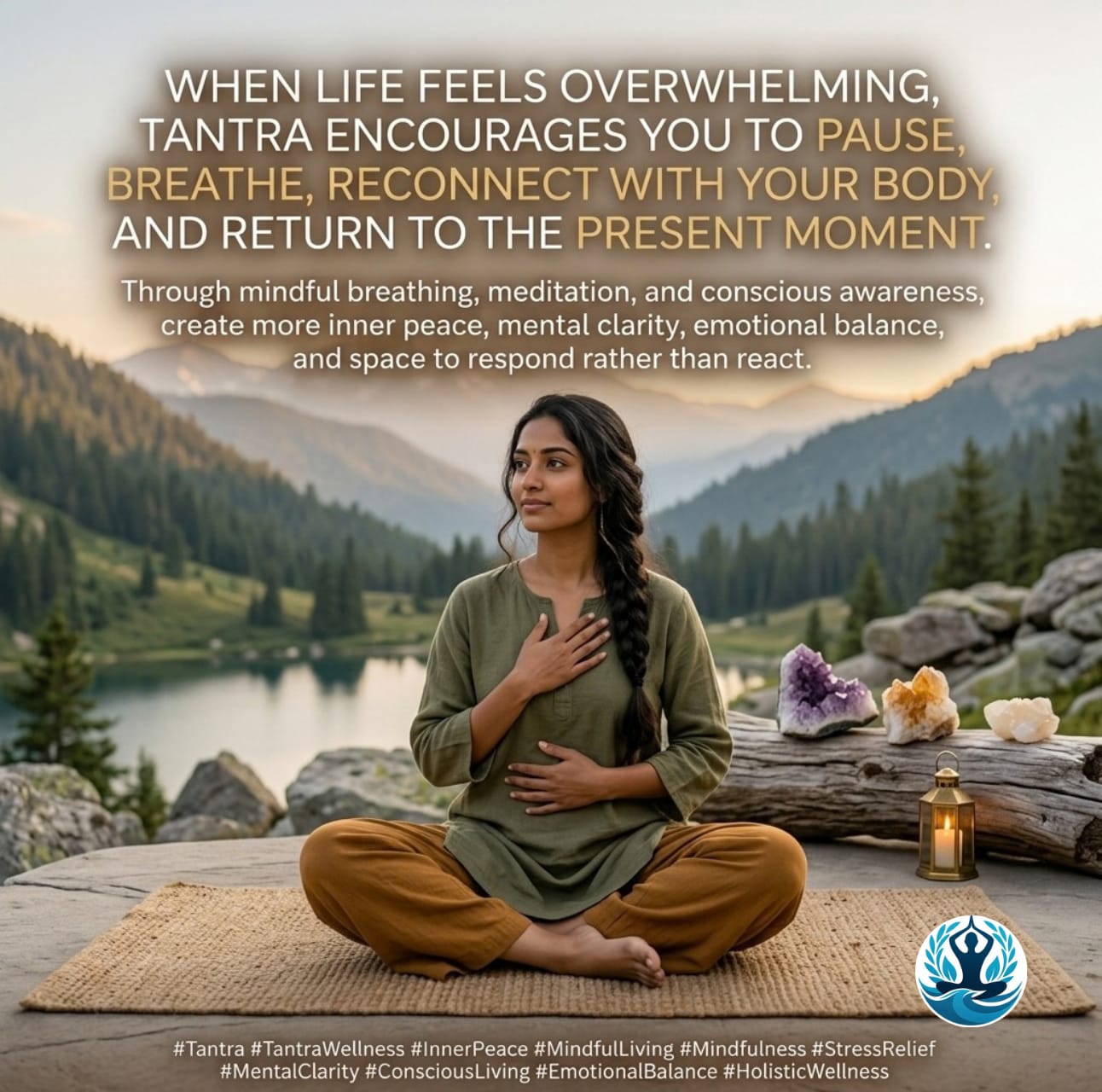
Modern life often feels full before the day has even begun. Notifications, responsibilities, deadlines, relationships, financial concerns, social expectations, and an endless stream of information can leave little room for simply being present. Even when the body is resting, the mind may continue planning, remembering, worrying, comparing, and anticipating.
This constant mental activity can create a feeling of inner congestion. There may be plenty happening externally, yet very little sense of space internally.
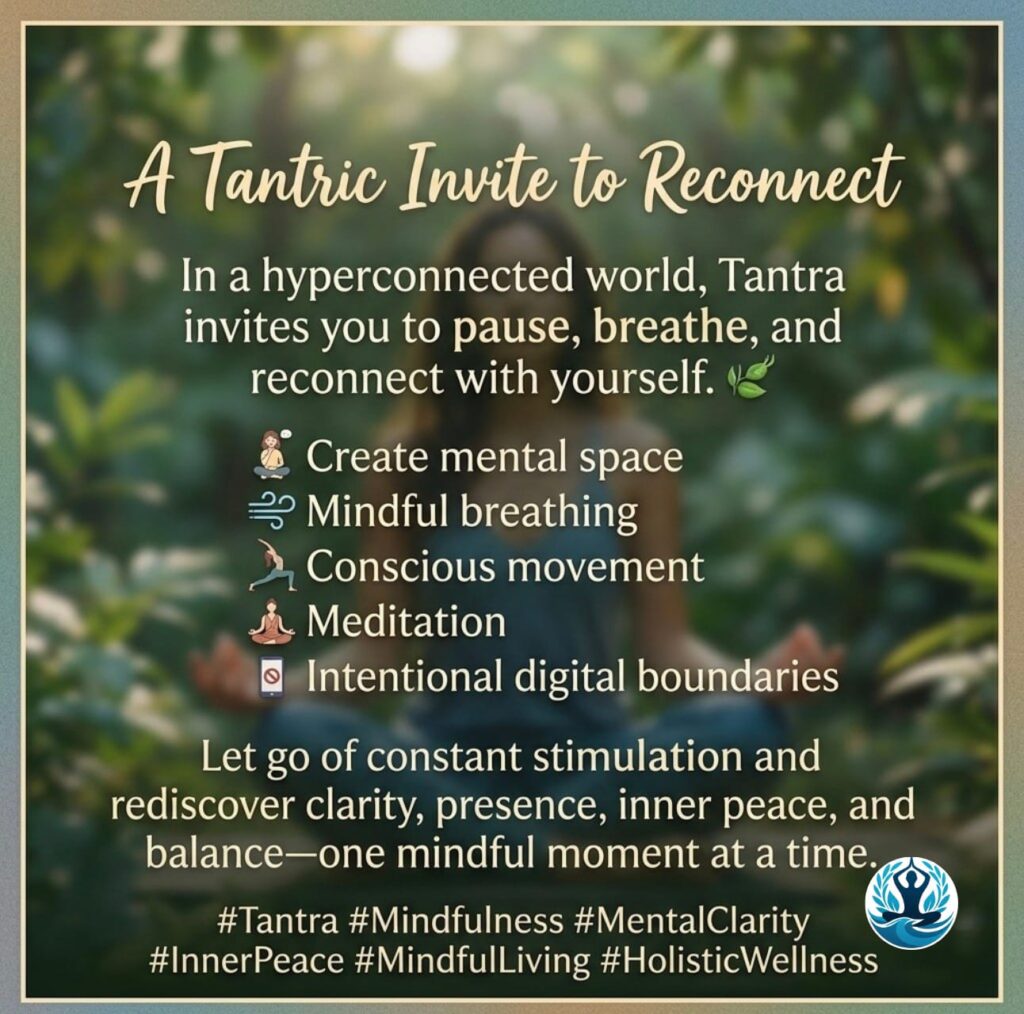
Tantra for creating inner spaciousness offers a different approach. Rather than encouraging people to escape ordinary life, Tantra can be understood as a path of awareness that invites greater presence within everyday experiences. Through conscious breathing, meditation, sensory awareness, mindful movement, and deeper self-observation, individuals can learn to create a greater sense of inner room.
Inner spaciousness does not necessarily mean having fewer responsibilities. It means developing the capacity to experience responsibilities without allowing every demand to occupy the entire mind.
This article explores how Tantra can support inner spaciousness, emotional balance, self-awareness, mindful living, and a more conscious relationship with life’s demands.
What Is Inner Spaciousness?
Inner spaciousness refers to a subjective sense of mental, emotional, and physical room within oneself.
It can feel like:
- Having a pause before reacting
- Being able to observe thoughts without immediately following them
- Feeling present rather than mentally scattered
- Allowing emotions without becoming completely overwhelmed by them
- Experiencing moments without constantly rushing toward the next task
- Having greater awareness of the body and breath
- Creating room for reflection and conscious choices
Inner spaciousness does not mean an empty mind. Thoughts will continue to arise. Emotions will continue to change. Responsibilities will remain part of life.
The difference is in the relationship we develop with them.
Instead of experiencing every thought as an instruction or every emotion as something that must immediately be acted upon, awareness can create a small but meaningful space between experience and response.
This is one reason Tantra and mindful living can complement each other.
How Modern Life Can Reduce Inner Space
The modern lifestyle rewards constant activity.
Being busy can sometimes be interpreted as being productive, successful, or important. As a result, people may move from one responsibility to another without consciously transitioning between them.
A typical day might involve checking a phone immediately after waking, responding to messages, working for several hours, switching between tasks, managing family responsibilities, consuming social media, and thinking about tomorrow before today’s activities have even finished.
The body may be physically present in one location while the mind is somewhere else.
Over time, this pattern can contribute to:
- Mental clutter
- Difficulty focusing
- Emotional tension
- Restlessness
- Constant anticipation
- Reduced body awareness
- Difficulty relaxing
- Feeling disconnected from the present moment
Tantra offers practices that encourage a different quality of attention.
Instead of continuously adding more stimulation, the practice can involve learning to experience what is already happening with greater awareness.
Tantra and the Concept of Inner Space
Traditional Tantra encompasses diverse philosophical and spiritual traditions, practices, and interpretations. It should not be reduced to a single technique or a modern wellness trend.
In a contemporary wellness context, however, certain Tantric principles can be explored through awareness of the body, breath, senses, thoughts, emotions, and present-moment experience.
The underlying idea is not necessarily to reject ordinary life.
Instead, awareness can be brought into ordinary life.
Eating, walking, breathing, resting, communicating, moving, and observing emotions can all become opportunities to develop greater presence.
From this perspective, creating inner spaciousness does not require leaving everyday responsibilities behind.
It involves changing how we meet them.
1. Tantra Encourages Conscious Breathing
Breathing is one of the simplest ways to reconnect with the present moment.
When attention becomes scattered, conscious breathing can provide an immediate point of awareness.
A simple practice is to pause for a few moments and notice:
- The natural rhythm of the breath
- The movement of the abdomen or chest
- The sensation of inhalation
- The sensation of exhalation
- The brief transitions between breaths
There is no need to force the breath or achieve a particular state.
The purpose is simply to notice.
This practice can create a psychological pause during a demanding day.
Before opening another email, beginning another meeting, or responding to a difficult message, taking a few conscious breaths can help create a moment of awareness.
That moment can become a small doorway into inner spaciousness.
2. Tantra for Creating Space Between Thought and Reaction
One of the most valuable aspects of awareness is the ability to observe thoughts.
The mind naturally produces thoughts throughout the day.
Some thoughts are useful.
Others are repetitive.
Some are memories.
Others are predictions about the future.
When we identify completely with every thought, mental activity can feel overwhelming.
Tantric-inspired mindfulness practices can encourage observation rather than immediate identification.
For example, instead of thinking:
“I am overwhelmed.”
you might observe:
“I am noticing a feeling of overwhelm.”
This subtle change creates distance without denying the experience.
The emotion is still acknowledged.
The thought is still present.
But awareness becomes larger than the individual thought.
This can be an important part of developing mental spaciousness through Tantra.
3. Bringing Awareness Into the Body
Many people spend much of their day thinking rather than sensing.
They may be physically sitting at a desk while mentally moving through dozens of problems.
Tantra places significant importance on embodied awareness in many contemporary interpretations and practices.
A simple body-awareness practice can involve slowly noticing different parts of the body.
Ask:
- What sensations are present?
- Where does the body feel relaxed?
- Where is there tension?
- Is the jaw tight?
- Are the shoulders raised?
- Is the breathing shallow or relaxed?
- What happens when attention rests on these sensations?
The goal is not to judge the body.
It is to listen.
Developing body awareness through Tantra can help reconnect attention with direct experience instead of allowing the mind to remain constantly occupied with abstract concerns.
4. Tantra and Conscious Movement
Movement does not always need to be intense to be meaningful.
Slow, conscious movement can become an opportunity to develop presence.
Walking, stretching, gentle yoga-inspired movement, or simple body movements can be performed with attention to sensation and breathing.
Rather than thinking about completing the movement as quickly as possible, notice:
- Weight
- Balance
- Breath
- Muscle sensation
- Posture
- Rhythm
- Movement through space
This changes movement from another task into an awareness practice.
For people who find seated meditation difficult, conscious movement may offer another way to explore Tantra for mindfulness and inner peace.
5. Creating Space Through Sensory Awareness
Modern environments often overload the senses.
Screens constantly display information.
Phones generate notifications.
Background noise competes for attention.
Advertisements and social media continuously stimulate the mind.
Tantra can encourage a more conscious relationship with sensory experience.
Instead of constantly consuming stimulation, pause and notice one sensory experience at a time.
For example:
Listen to surrounding sounds without labeling them.
Notice the temperature of the air.
Observe natural light.
Taste food slowly.
Feel the texture of an object.
Notice the movement of the body while walking.
This can transform ordinary experiences into moments of presence.
The objective is not to eliminate sensory experiences but to experience them consciously.
6. Tantra for Releasing the Pressure to Always Be Productive
A major source of inner congestion is the belief that every moment must be productive.
Rest can begin to feel wasteful.
Silence can feel uncomfortable.
Doing nothing can create guilt.
Even leisure may become another activity to optimize.
Tantric approaches to awareness can invite a different perspective.
A moment does not necessarily need to produce an achievement to have value.
Sitting quietly.
Breathing.
Watching the sunset.
Walking without a destination.
Listening to music.
Drinking tea mindfully.
These ordinary experiences can become opportunities to reconnect with presence.
Creating inner spaciousness may therefore involve learning that being present is itself meaningful.
7. Tantra and Emotional Spaciousness
Inner space is not only about thoughts.
Emotions can also occupy significant psychological space.
When anger, sadness, frustration, fear, or disappointment appears, people may either suppress the emotion or become completely identified with it.
Awareness offers another possibility.
Instead of immediately trying to eliminate an emotion, observe it.
Where does it appear in the body?
Does the sensation change?
What happens to the breath?
What thoughts accompany it?
Does the intensity rise and fall?
This approach does not mean ignoring serious emotional difficulties or avoiding professional support when needed.
It simply encourages greater awareness of the emotional experience.
With practice, emotional awareness can become less about fighting feelings and more about understanding them.
8. Creating Inner Spaciousness Through Silence
Silence can be surprisingly powerful in a noisy world.
Even a few minutes without external stimulation can reveal how active the mind has become.
Instead of immediately reaching for a phone during a quiet moment, experiment with staying present.
Sit comfortably.
Relax the body.
Notice the breath.
Listen to surrounding sounds.
Observe thoughts.
Allow silence to exist without needing to fill it.
Over time, these small periods of silence can become valuable moments for reflection.
Tantra meditation for inner peace can incorporate this quality of intentional stillness.
9. Tantra for Creating a Pause During Busy Days
Inner spaciousness does not require hours of meditation.
It can be practiced through small pauses.
Consider creating three conscious pauses during the day:
Morning Pause
Before beginning work, spend one or two minutes noticing your breath and setting a conscious intention for the day.
Midday Pause
Step away from your screen. Relax your shoulders. Take several natural breaths and notice your surroundings.
Evening Pause
Before transitioning into the evening, take a moment to acknowledge the day without immediately moving into the next responsibility.
These pauses can create transitions between different parts of life.
Without transitions, one activity can mentally follow another.
With conscious pauses, there is room to reset attention.
10. Tantra and the Practice of Non-Judgmental Awareness
Another important aspect of creating inner space is reducing unnecessary self-judgment.
The mind may constantly evaluate:
“Am I doing enough?”
“Am I successful enough?”
“Why am I feeling this way?”
“Why can’t I focus?”
“Why am I not more relaxed?”
Constant self-evaluation can become another source of mental pressure.
Awareness can instead begin with curiosity.
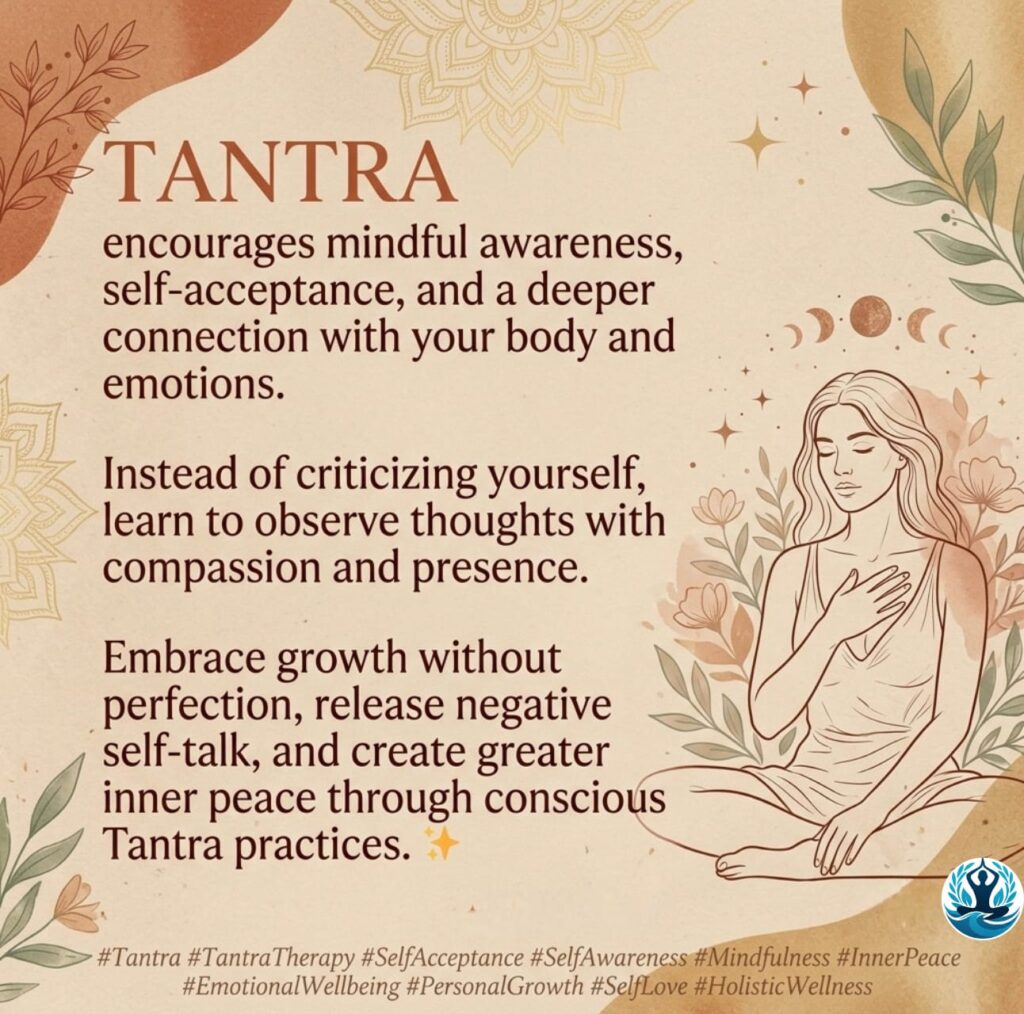
Rather than judging an experience, observe it.
Rather than demanding immediate transformation, understand what is happening.
This creates a gentler relationship with personal growth.
11. Tantra for Simplifying Mental Clutter
Mental clutter often develops when too many unresolved concerns remain active.
Writing can be a simple complementary practice.
At the end of the day, write down:
- What is currently occupying my mind?
- What needs action?
- What can wait?
- What is outside my control?
- What do I want to release before resting?
This practice can help separate actual responsibilities from repetitive mental processing.
Tantra does not require every thought to disappear.
The goal is greater awareness of which thoughts deserve attention.
12. Creating Space in Relationships
Inner spaciousness can also influence relationships.
When people feel mentally overloaded, communication may become reactive.
A small pause before responding can change the quality of an interaction.
Before answering, notice:
- What am I feeling?
- What is the other person actually saying?
- Am I reacting to the present moment or to an older experience?
- Can I listen before preparing my response?
Conscious communication can create more room for understanding.
In this sense, Tantra and conscious relationships can involve presence rather than automatic reaction.
13. Tantra and Digital Boundaries
Technology can be useful, but constant digital engagement can make inner stillness difficult.
Consider creating simple boundaries:
- Avoid unnecessary notifications.
- Take screen-free breaks.
- Keep meals free from unnecessary scrolling.
- Create a short technology-free period before sleep.
- Avoid immediately checking your phone during every quiet moment.
These practices are not about rejecting technology.
They are about deciding when technology receives your attention.
Attention is one of the most valuable resources involved in creating inner spaciousness.
14. A Simple Tantra-Inspired Daily Practice
A practical daily routine can be simple.
Step 1: Arrive
Sit comfortably and notice your body.
Step 2: Breathe
Observe several natural breaths.
Step 3: Sense
Notice sounds, physical sensations, temperature, and the surrounding environment.
Step 4: Observe
Allow thoughts to arise without immediately following them.
Step 5: Feel
Notice your emotional state without judging it.
Step 6: Pause
Remain still for a few moments.
Step 7: Return
Continue with your day while maintaining some awareness of the body and breath.
The practice may take only five to ten minutes.
Consistency can be more useful than making the practice unnecessarily complicated.
Benefits of Creating Inner Spaciousness Through Tantra
A regular awareness practice may support several aspects of wellbeing.
Potential benefits include:
Greater Present-Moment Awareness
You may become more aware of what is happening rather than continuously replaying the past or anticipating the future.
Improved Self-Awareness
Observing thoughts, emotions, and bodily sensations can help you understand personal patterns.
Greater Emotional Awareness
Creating space around emotions can make it easier to notice feelings without immediately reacting.
Better Stress Management
Short pauses and conscious breathing may provide opportunities to step out of automatic patterns during demanding moments.
Improved Focus
Reducing unnecessary stimulation can help attention return to the activity in front of you.
Greater Body Connection
Body awareness can help you recognize tension, fatigue, and other sensations earlier.
More Intentional Living
When there is space between stimulus and response, daily decisions can become more conscious.
Tantra for a More Spacious Approach to Everyday Life
The purpose of inner spaciousness is not to create a life without challenges.
Life will continue to include deadlines, relationships, responsibilities, uncertainty, change, and unexpected events.
The goal is to develop a different relationship with those experiences.
Instead of asking:
“How can I remove every demand from my life?”
we can also ask:
“How can I create more awareness while meeting life’s demands?”
This shift is important.
Inner spaciousness does not necessarily come from having an empty calendar.
It can emerge from learning to inhabit the present moment more fully.
How to Make Inner Spaciousness a Long-Term Practice
Consistency is important.
Rather than trying to completely transform your lifestyle overnight, begin with manageable practices.
You might choose:
- Five minutes of conscious breathing each morning
- One screen-free meal each day
- A short mindful walk
- Three conscious pauses during work
- Five minutes of evening reflection
- One quiet period before sleep
- Regular body-awareness practices
Over time, these small practices can become part of everyday life.
The emphasis should be on awareness rather than perfection.
Missing a practice does not mean failure.
Simply return to the present moment.
Tantra and the Art of Living With More Inner Room
Inner spaciousness is ultimately about how we relate to our experience.
A crowded schedule does not automatically require a crowded mind.
A difficult emotion does not have to become our entire identity.
A demanding day does not have to consume every moment of our awareness.
Through conscious breathing, embodied awareness, meditation, sensory attention, mindful movement, silence, and intentional pauses, Tantra can provide a framework for exploring a more spacious way of living.
The modern world will continue moving quickly.
There will always be messages to answer, tasks to complete, decisions to make, and responsibilities to manage.
But within that movement, there can also be moments of stillness.
There can be a breath.
There can be a pause.
There can be awareness.
And within awareness, there can be space.
Conclusion
Tantra for creating inner spaciousness amid life’s demands is not about escaping responsibilities or attempting to eliminate every thought and emotion. It is about developing greater awareness while participating fully in everyday life.
Through conscious breathing, meditation, sensory awareness, mindful movement, emotional observation, digital boundaries, and intentional pauses, individuals can explore a calmer and more present relationship with their daily experiences.
Inner spaciousness does not require a perfect life.
It begins with creating a little more room within the life you already have.
When attention becomes less scattered and awareness becomes more consistent, ordinary moments can feel more meaningful. A breath can become a pause. A pause can become awareness. Awareness can create choice.
And that choice can gradually support a more conscious, balanced, and meaningful way of living.