

Tantra for Finding Balance in an Achievement-Driven World

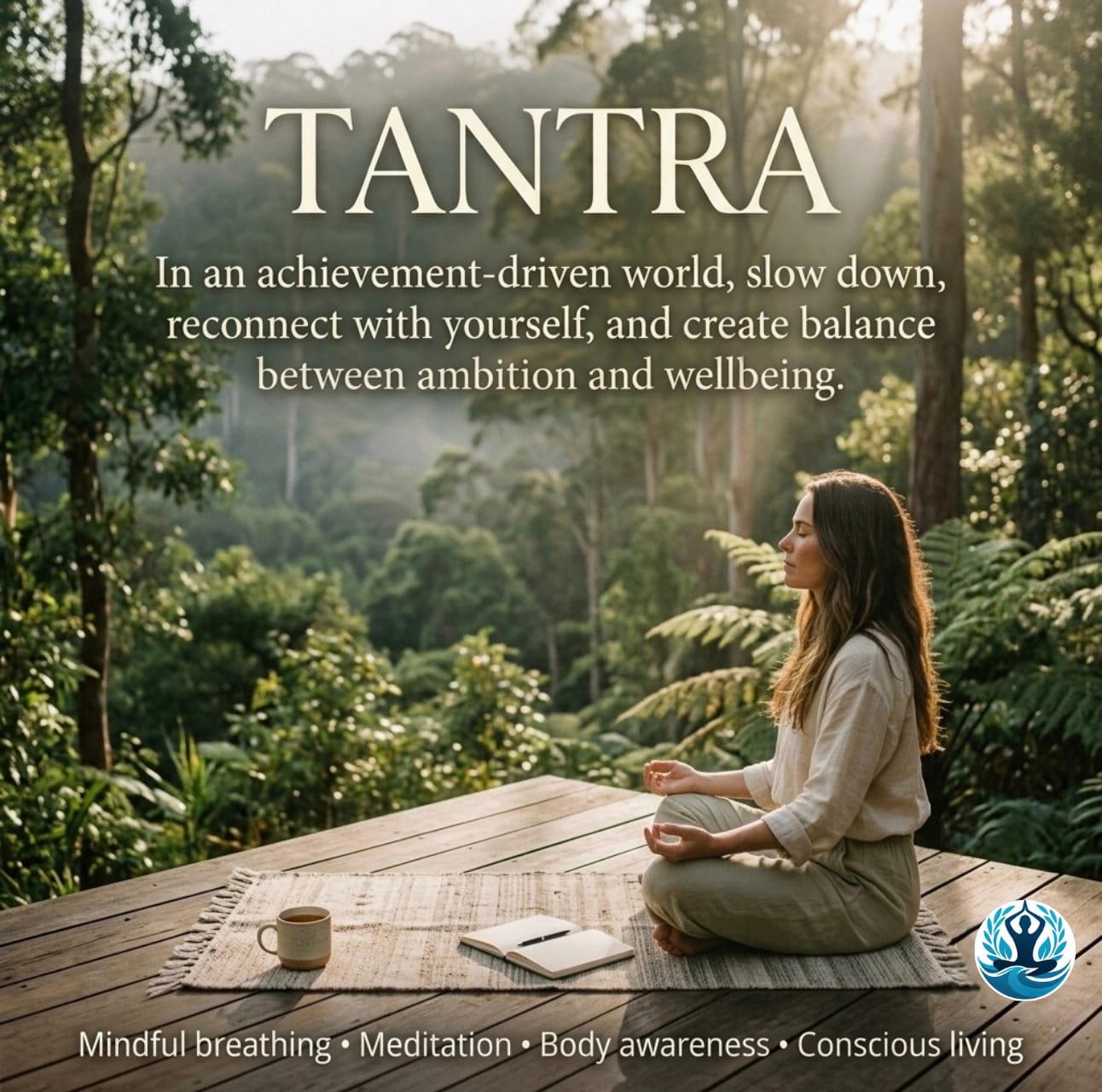
Modern life often encourages us to measure ourselves through achievement. Career growth, financial success, productivity, social recognition, personal goals, and constant improvement can become important parts of everyday life. Ambition itself is not a problem. The challenge begins when achievement becomes the primary measure of personal worth.
Many people spend their days moving from one responsibility to another without taking enough time to pause, breathe, or reconnect with themselves. Even after reaching an important goal, the mind may immediately begin searching for the next target. This continuous cycle can make life feel productive on the outside while leaving a person disconnected from their inner experience.
This is where Tantra for finding balance in an achievement-driven world offers an interesting perspective.
Tantra encourages greater awareness of the body, breath, thoughts, emotions, energy, and present experience. Rather than asking people to abandon ambition or withdraw from ordinary life, a mindful approach to Tantra can encourage a more conscious relationship with goals and success.
The purpose is not to stop achieving. Instead, it is to explore whether achievement can exist alongside presence, rest, self-awareness, connection, and inner wellbeing.
By developing awareness, conscious breathing, mindful movement, meditation, and intentional pauses, individuals may begin to recognize when ambition is supporting their wellbeing and when constant striving is creating unnecessary pressure.
Understanding the Achievement-Driven Lifestyle
An achievement-driven lifestyle is one in which success, productivity, and progress become central priorities.
There can be many positive aspects to ambition. Goals can provide direction, motivation, discipline, and a sense of purpose. Working toward something meaningful can be deeply satisfying.
However, an excessive focus on achievement can create an internal pattern where a person feels that they must constantly do more.
Thoughts may sound like:
- “I should be doing more.”
- “I need to achieve this before I can relax.”
- “I will feel successful when I reach the next goal.”
- “Other people are moving faster than me.”
- “Taking a break means I am falling behind.”
- “My value depends on how productive I am.”
Over time, these beliefs can make relaxation difficult.
A person may physically stop working but continue mentally planning, comparing, worrying, or evaluating. The body may be sitting still while the mind remains occupied.
This is one reason balance is becoming increasingly important in modern wellness conversations.
What Does Balance Really Mean?
Balance does not necessarily mean dividing every part of life equally.
Instead, balance can mean recognizing what you need at different moments.
Sometimes you may need focused action. At other times, you may need rest. There may be moments for social connection, moments for solitude, moments for ambition, and moments for simply being present.
From a mindful Tantra perspective, balance begins with awareness.
Instead of automatically following every demand, you can pause and ask:
What is happening within me right now?
You might notice physical tiredness, emotional tension, mental restlessness, excitement, fear, or genuine enthusiasm.
Awareness creates an opportunity to respond consciously rather than automatically.
How Tantra Can Support a Balanced Approach to Success
Tantra is traditionally associated with expanded awareness and the integration of different aspects of human experience. In a modern wellness context, selected practices inspired by Tantra can be approached as tools for mindfulness, body awareness, meditation, breath awareness, and conscious living.
1. Tantra Encourages Present-Moment Awareness
Achievement-focused thinking often keeps attention directed toward the future.
You may constantly think about:
- the next project
- the next promotion
- the next financial milestone
- the next personal goal
- the next problem that needs solving
Future planning has value, but living almost entirely in the future can reduce awareness of the present.
Tantric mindfulness encourages noticing what is happening now.
You can bring attention to your breathing, posture, physical sensations, surroundings, and emotional state.
Even a few moments of conscious awareness can create a pause between constant activity and genuine presence.
2. Tantra Helps Reconnect With the Body
In an achievement-focused culture, people often pay more attention to what the mind is accomplishing than what the body is experiencing.
You may continue working despite fatigue, ignore tension in your shoulders, sit for long periods, skip meals, or postpone rest because there is always something else to accomplish.
Body awareness offers another perspective.
Through mindful movement, breathing, meditation, and intentional pauses, you can begin noticing physical signals earlier.
For example, you might recognize:
- shallow breathing
- muscular tension
- restlessness
- heaviness
- fatigue
- physical discomfort
- difficulty relaxing
The goal is not to judge these sensations. The goal is to become aware of them.
This awareness can encourage healthier decisions about rest, movement, workload, and daily routines.
3. Tantra Can Change the Relationship With Productivity
One of the most useful ideas for an achievement-driven lifestyle is that productivity does not have to define identity.
You can accomplish something without believing that the accomplishment determines your worth.
A mindful approach allows you to appreciate achievement while maintaining a sense of self beyond achievement.
For example, instead of thinking:
“I am successful because I accomplished this.”
you might develop the perspective:
“I accomplished something meaningful, and I can appreciate it without making it the definition of who I am.”
This distinction can create psychological space.
Success becomes something you experience rather than something you must constantly use to prove your value.
4. Conscious Breathing Creates a Pause
Breathing is one of the simplest ways to reconnect with the present moment.
During periods of pressure, people may unconsciously change their breathing patterns. Breathing may become faster, shallower, or less noticeable.
A simple conscious-breathing practice can help you interrupt automatic activity.
Sit comfortably.
Relax your shoulders.
Notice your natural breathing without trying to force it.
Observe the movement of the abdomen or chest.
Take several slow, comfortable breaths.
Then return to your normal breathing.
The purpose is not to achieve a particular state. It is simply to become aware.
This type of pause can be incorporated before starting work, between meetings, after completing a demanding task, or before going to sleep.
5. Tantra Encourages Conscious Rest
In an achievement-oriented culture, rest can sometimes feel like wasted time.
Tantra-inspired mindfulness challenges this assumption by encouraging greater awareness of the whole human experience.
Rest is not necessarily the opposite of growth.
It can create space for recovery, reflection, creativity, and reconnection.
Conscious rest means resting intentionally rather than collapsing into exhaustion.
Instead of waiting until you are completely depleted, you can build small moments of recovery into your day.
This could include:
- sitting quietly for five minutes
- practicing mindful breathing
- taking a slow walk
- disconnecting from unnecessary notifications
- practicing gentle movement
- spending time in nature
- enjoying a meal without multitasking
Small pauses can help create a healthier rhythm between effort and recovery.
6. Tantra Supports Self-Awareness
Achievement can sometimes distract people from understanding what they actually want.
A person may pursue a goal because society considers it successful rather than because it is personally meaningful.
Self-awareness creates an opportunity to examine motivation.
Ask yourself:
Why do I want this?
Is the goal connected to your values?
Are you pursuing it because it genuinely matters to you?
Or are you seeking approval, comparison, status, or validation?
There are no universally correct answers.
The value lies in becoming conscious of the motivation behind your actions.
7. Tantra Can Help You Notice Comparison
Comparison is common in modern life.
Social media, professional networks, advertising, and constant exposure to other people’s achievements can create the impression that everyone else is progressing faster.
This can generate unnecessary pressure.
Mindful awareness does not require eliminating comparison completely. Instead, it encourages recognizing comparison when it arises.
You can notice:
“I am comparing myself with someone else.”
Then return attention to your own experience.
Your journey does not need to follow another person’s timeline.
A more conscious approach to achievement focuses on personal values rather than external competition.
8. Tantra and the Practice of Doing Less With More Awareness
Modern productivity culture often celebrates doing more.
But doing more does not always mean living better.
Multitasking, constant notifications, endless meetings, and overloaded schedules can fragment attention.
Tantra-inspired mindfulness can encourage a different approach: doing fewer things with greater awareness.
When you eat, eat.
When you work, work.
When you speak with someone, listen.
When you rest, allow yourself to rest.
This simple shift can transform ordinary activities into opportunities for presence.
Creating a Daily Tantra-Inspired Balance Practice
You do not necessarily need a complicated routine.
A simple daily structure can include several small practices.
Morning Awareness
Before immediately checking your phone, sit quietly for a few moments.
Notice your breathing.
Observe how your body feels.
Set an intention for the day.
Your intention might be:
“Today I will work with focus while remembering to remain present.”
Conscious Work Periods
During work, focus on one meaningful task at a time whenever possible.
Take short pauses between demanding activities.
Notice whether your body is becoming tense.
Relax your jaw and shoulders.
Take a few comfortable breaths.
Then continue.
Mindful Transitions
Transitions are powerful opportunities for awareness.
Before moving from work to personal time, pause.
Take a few breaths.
Notice what you are carrying mentally from the previous activity.
Then consciously shift your attention.
This can help create clearer boundaries between different areas of life.
Evening Reflection
At the end of the day, reflect on more than what you accomplished.
Ask:
- What did I learn?
- When did I feel most present?
- What gave me energy?
- What drained my energy?
- Did I make space for rest?
- What can I approach differently tomorrow?
This turns the day into an opportunity for self-understanding rather than simply a productivity scorecard.
Tantra, Ambition, and Inner Fulfillment
There is nothing inherently wrong with ambition.
Goals can inspire meaningful action.
The important question is whether ambition is being guided by awareness.
A conscious approach to achievement allows you to pursue goals without becoming completely consumed by them.
You can want professional growth while protecting your personal wellbeing.
You can appreciate financial success while maintaining meaningful relationships.
You can work toward excellence while accepting that perfection is not necessary.
You can be ambitious without constantly feeling inadequate.
This is where Tantra’s emphasis on awareness can become relevant to modern life.
Moving Beyond the “Never Enough” Mindset
One of the biggest challenges of achievement-driven living is the feeling that nothing is ever enough.
One accomplishment immediately becomes another target.
One milestone becomes the starting point for a bigger milestone.
Without awareness, satisfaction may always remain somewhere in the future.
Mindfulness invites you to experience accomplishment in the present.
When you complete something meaningful, pause.
Acknowledge the effort.
Allow yourself to experience satisfaction before immediately moving forward.
This does not mean becoming complacent.
It means learning to appreciate progress while continuing to grow.
The Role of Acceptance
Balance also requires accepting that energy, motivation, and capacity naturally change.
You will not feel equally productive every day.
Some days may bring inspiration and enthusiasm.
Other days may require slower movement and greater rest.
Instead of treating every low-energy period as a personal failure, you can observe it with curiosity.
Acceptance does not mean giving up.
It means recognizing reality before deciding how to respond.
This can create a healthier relationship with personal expectations.
Tantra and Meaningful Success
Success can be defined in many ways.
For one person, it may mean career development.
For another, it may mean family connection, creativity, freedom, service, learning, health, or inner peace.
The important question is:
What does success mean to you?
Tantra-inspired self-awareness encourages individuals to look beyond external definitions.
A meaningful life may include achievement, but it can also include presence, relationships, curiosity, compassion, rest, and personal growth.
When these dimensions are included, success becomes more holistic.
Simple Tantra-Inspired Practices for Everyday Balance
Here are several accessible practices that can be incorporated into everyday life.
Conscious Pause
Stop for one minute.
Notice your breathing and physical sensations.
Allow yourself to simply observe.
Mindful Movement
Move slowly and pay attention to how the body feels.
The objective is awareness rather than performance.
Breath Awareness
Spend several moments observing the natural rhythm of your breathing.
Avoid forcing or excessively controlling the breath.
Digital Pause
Create short periods without unnecessary notifications or screens.
Use the time for quiet, movement, reflection, or connection.
Gratitude Awareness
Before ending the day, identify a few things you genuinely appreciated.
These do not need to be major achievements.
Body Check-In
Ask:
“What is my body communicating right now?”
Notice tension, tiredness, comfort, or restlessness without judgment.
Conscious Eating
Eat without simultaneously working or scrolling whenever possible.
Notice taste, texture, smell, and physical sensations.
Simple activities can become mindfulness practices when approached consciously.
Building a Healthier Relationship With Achievement
Finding balance does not require rejecting ambition.
Instead, consider transforming the relationship you have with achievement.
Rather than:
Achievement → validation → temporary satisfaction → new pressure
you can move toward:
Awareness → meaningful goals → conscious action → appreciation → continued growth
This approach creates room for ambition and wellbeing to coexist.
You can still set challenging goals.
You can still pursue professional success.
You can still improve yourself.
But you do not have to sacrifice your entire inner life in the process.
Common Mistakes When Seeking Balance
Trying to Become Perfect at Mindfulness
Ironically, mindfulness can become another achievement project.
You may start judging yourself for not being calm enough or consistent enough.
Remember that awareness is not a competition.
Treating Rest as a Reward
Rest should not always be something you earn after completing everything.
There will almost always be another task.
Rest can be part of a sustainable lifestyle.
Ignoring the Body
Mental determination cannot replace physical needs.
Pay attention to fatigue, discomfort, hunger, sleep, and other basic signals.
Comparing Your Wellness Journey
There is no single correct pace for personal growth.
What works for another person may not work for you.
Expecting Immediate Transformation
Mindfulness and self-awareness develop through practice.
Small consistent steps can be more useful than dramatic short-term efforts.
Frequently Asked Questions
What is Tantra for finding balance in an achievement-driven world?
It refers to using Tantra-inspired principles such as awareness, conscious breathing, meditation, mindful movement, and present-moment attention to develop a healthier relationship with achievement, ambition, rest, and personal wellbeing.
Can Tantra help people become less focused on productivity?
A mindful approach to Tantra can help people become more aware of their relationship with productivity. The goal is not necessarily to become less productive but to avoid allowing productivity to completely define personal identity and wellbeing.
Does Tantra mean giving up ambition?
No. Tantra does not have to mean abandoning ambition. A modern wellness-oriented approach can encourage pursuing meaningful goals while remaining connected to the body, emotions, relationships, and present moment.
How can I practice Tantra in a busy lifestyle?
Begin with simple practices such as conscious breathing, short pauses, mindful movement, body awareness, meditation, and intentional transitions between work and personal time.
Can Tantra support work-life balance?
Tantra-inspired mindfulness may support greater awareness of personal needs and habits. This can encourage more conscious decisions about boundaries, rest, attention, and daily priorities.
How long should I practice Tantra each day?
There is no universal duration. Beginners can start with a few minutes of mindful breathing or meditation and gradually develop a consistent routine that fits their lifestyle.
Conclusion
Living in an achievement-driven world does not mean you have to choose between success and inner wellbeing.
The deeper challenge is learning how to pursue meaningful goals without becoming disconnected from yourself.
Tantra for finding balance in an achievement-driven world offers a perspective centered on awareness. Through conscious breathing, mindful movement, meditation, body awareness, intentional pauses, and self-reflection, everyday experiences can become opportunities to reconnect with the present.
Achievement can be valuable.
Ambition can be inspiring.
Growth can be meaningful.
But none of these needs to come at the cost of constantly abandoning yourself.
True balance may begin when you stop asking only, “What can I accomplish?” and start asking, “How do I want to experience my life while I am accomplishing it?”
That shift—from constant striving toward conscious living—can create a more sustainable, meaningful, and connected approach to success.