

Rediscovering Your Inner Voice Beneath Everyday Noise: A Complete Guide to Tantra and Self-Awareness


Modern life is full of noise. Notifications, work responsibilities, social expectations, endless information, and the pressure to meet personal and professional goals can make it difficult to understand what we genuinely feel and want. Even when we have a quiet moment, our minds may continue thinking about unfinished tasks, future plans, and other people’s opinions.
Amid this constant activity, we can gradually lose touch with our inner voice.
Our inner voice represents our personal feelings, values, needs, preferences, and deeper understanding of ourselves. It helps us recognise what matters, make thoughtful decisions, and live in a way that feels meaningful rather than simply following expectations.
Rediscovering your inner voice does not mean eliminating every thought or avoiding the responsibilities of everyday life. Instead, it means creating enough awareness and mental space to notice your experiences without being completely controlled by external distractions.
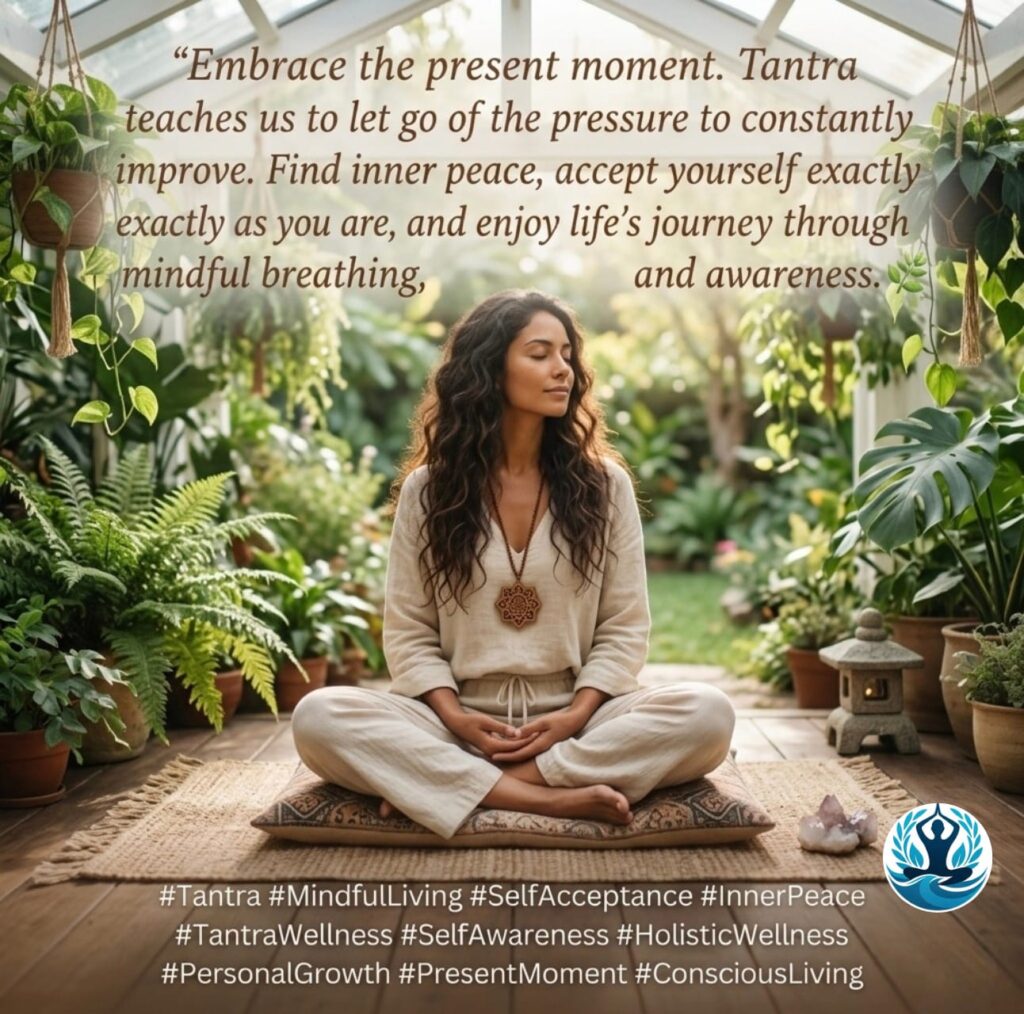
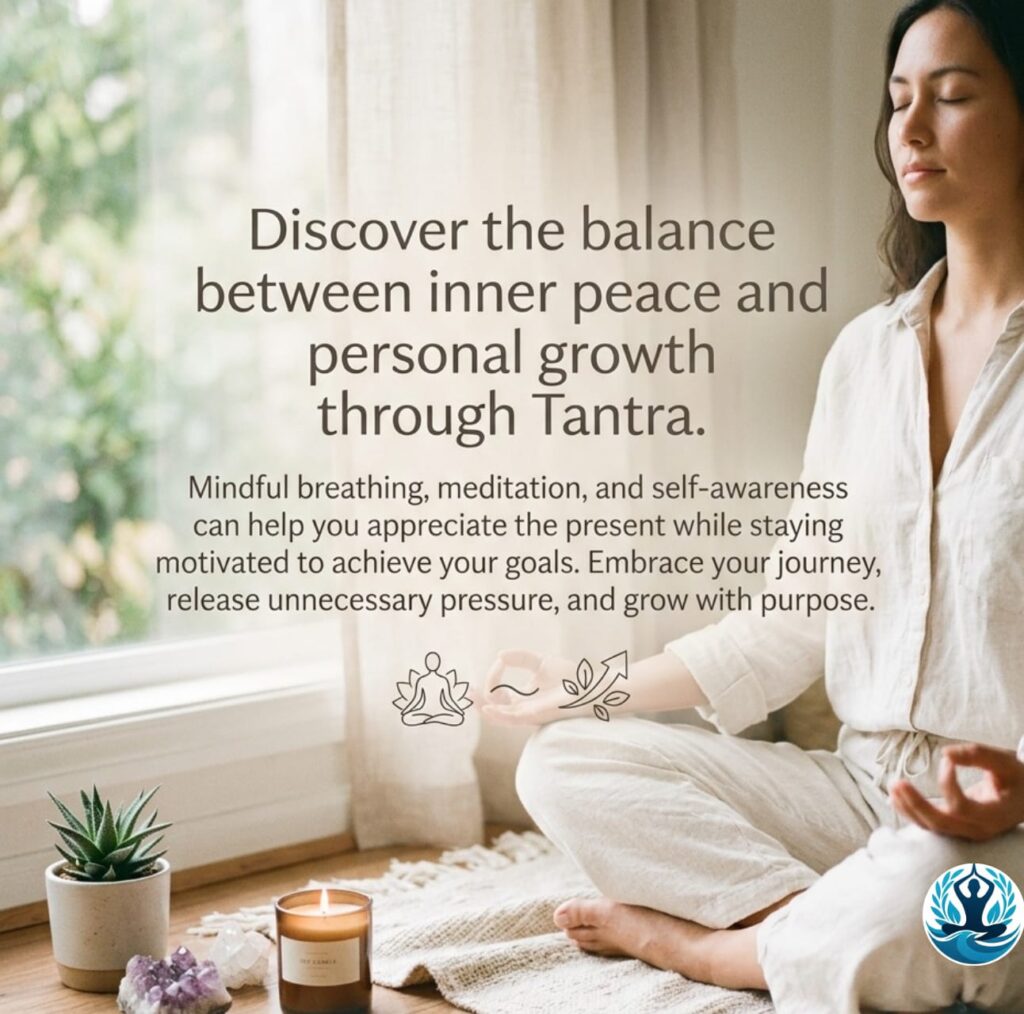
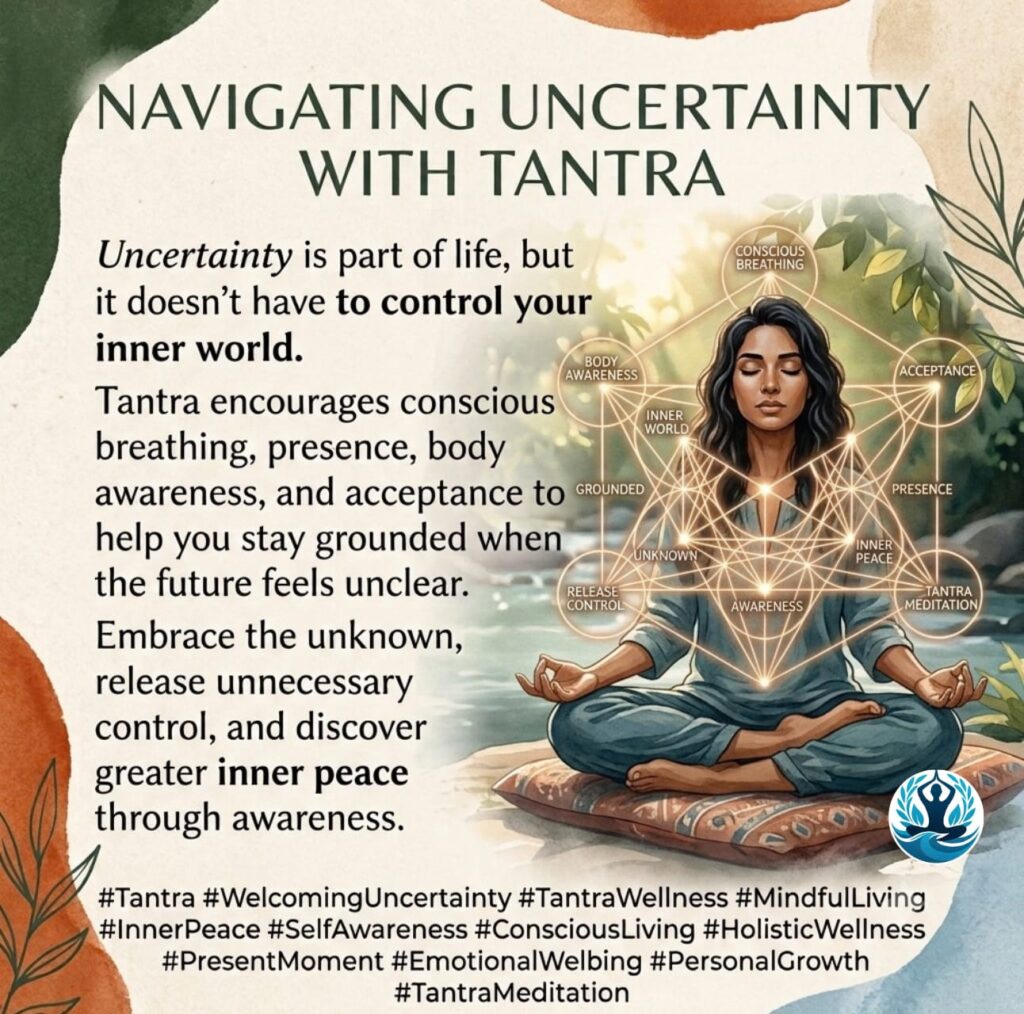
Tantra offers a perspective on this journey through awareness, conscious breathing, meditation, body awareness, and a deeper connection with the present moment. Rather than treating ordinary life as something to escape, many contemplative Tantric practices encourage a more conscious relationship with the experiences we already have.
By slowing down, observing our thoughts, and listening to our physical and emotional responses, we can begin to understand ourselves more clearly.
This guide explores how Tantra-inspired mindfulness practices may help you reconnect with your inner voice, recognise your authentic needs, and develop a more balanced relationship with everyday life.
1. Understanding Your Inner Voice
Your inner voice is the personal awareness that helps you recognise your feelings, beliefs, needs, and intentions. It is not necessarily a literal voice or a mysterious source of knowledge. It can appear as a quiet realisation, a feeling of discomfort, a sense of clarity, or the recognition that something no longer aligns with your values.
For example, you might accept additional work because you want to satisfy everyone around you, even when you are already exhausted. Your inner experience may signal that you need rest, but the desire to please others can make that need difficult to acknowledge.
Similarly, you may follow a particular career path because it appears successful to others, even though another direction feels more meaningful to you.
These situations illustrate the difference between living automatically and living consciously.
When everyday noise dominates our attention, we may respond according to habits, expectations, and immediate pressures. We can become so focused on what we should do that we forget to ask what we genuinely need.
Rediscovering your inner voice begins with asking simple questions:
- What am I feeling right now?
- What do I need in this moment?
- Am I making this decision because it reflects my values or because I fear disappointing someone?
- Which activities make me feel engaged and fulfilled?
- What am I ignoring because I am too busy to pay attention?
These questions are not intended to produce immediate answers. Their purpose is to encourage honest self-observation.
Through consistent awareness, you can become more familiar with your emotional patterns and personal priorities.
2. How Everyday Noise Disconnects Us From Ourselves
Everyday noise includes more than physical sounds. It also includes mental distractions, emotional pressure, social comparison, digital overload, and the constant demand to remain productive.
These influences can make it difficult to recognise what is happening within us.
Digital distractions
Smartphones, social media, and constant notifications encourage frequent shifts in attention. Checking messages throughout the day can leave little uninterrupted time for reflection.
When attention is repeatedly directed outward, noticing subtle emotions and personal needs may become more difficult.
Social expectations
Family, friends, colleagues, and society can influence how we define success, happiness, and personal worth. Their expectations may sometimes be helpful, but problems arise when we follow them without considering our own values.
Over time, we may become more familiar with the person others expect us to be than with our own preferences.
Overthinking and mental repetition
Replaying conversations, worrying about possible outcomes, and analysing every decision can fill the mind with repetitive thoughts.
Reflection can help us learn, but endless mental repetition may leave us feeling confused rather than clear.
Constant productivity
When every moment is dedicated to achieving something, rest and reflection can begin to feel unproductive.
We may postpone activities that bring us joy because they do not appear useful or measurable.
Recognising these sources of noise is an important first step. The goal is not to remove every distraction but to understand how distractions influence our attention and choices.
3. What Tantra Can Teach Us About Inner Awareness
Tantra encompasses diverse philosophical and spiritual traditions, with different teachings and practices across historical lineages. It should not be reduced to a single relaxation technique or a modern wellness routine.
Some Tantric traditions emphasise awareness, meditation, ritual, mantra, and the relationship between consciousness and lived experience. In contemporary wellness settings, selected practices inspired by these ideas may be used to encourage mindfulness and body awareness.
For someone seeking to rediscover their inner voice, a useful starting point is the practice of becoming more attentive to the present moment.
Instead of constantly trying to change your thoughts, you can observe them. Instead of ignoring bodily discomfort, you can notice it. Instead of immediately reacting to an emotion, you can create a moment to understand it.
This approach can encourage a more thoughtful relationship with yourself.
For example, imagine that you feel frustrated after a demanding day. Rather than immediately distracting yourself with your phone, you might pause and notice the experience.
You may discover that the frustration is connected to fatigue, an unspoken boundary, or the feeling that your time has not been respected.
The situation may not change immediately, but your understanding of it can become clearer.
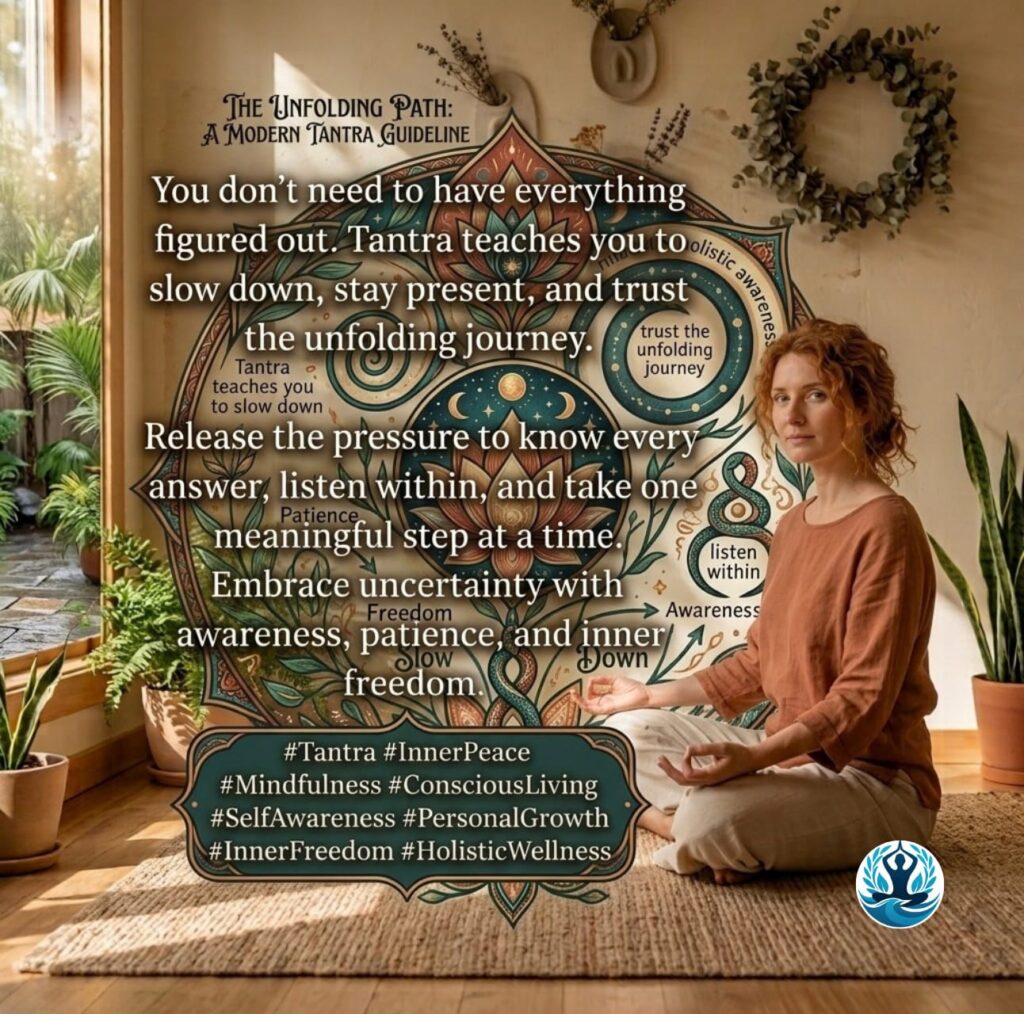
Tantra-inspired self-awareness is not about discovering one perfect answer hidden inside you. It is about developing the patience to observe your experiences and respond more consciously.
4. Conscious Breathing: Creating Space for Inner Listening
Breathing is a natural process that continues throughout the day, often without our attention. Bringing awareness to the breath can provide a simple way to pause and reconnect with the present moment.
When your attention is scattered between tasks, worries, and expectations, a short breathing practice may help you interrupt the automatic flow of activity.
A simple conscious breathing practice
- Find a comfortable seated position.
- Allow your shoulders and jaw to relax.
- Notice the natural movement of your breath without trying to control it.
- Observe the sensations of inhaling and exhaling.
- When thoughts appear, acknowledge them and gently return your attention to breathing.
- After a few minutes, notice how you feel physically and emotionally.
Practise for two to five minutes, adjusting the duration to your comfort.
You do not need to empty your mind. Thoughts will naturally arise, and noticing them is part of the practice.
Afterwards, ask yourself what you are experiencing. You might feel calmer, unchanged, restless, or more aware of a particular concern. Every response provides information about your present experience.
The purpose of conscious breathing is not to force a particular emotional state. It is to create an opportunity to pay attention.
If focusing on your breath feels uncomfortable, you can instead notice your feet touching the floor or the sounds around you.
5. Body Awareness: Learning to Recognise Your Needs
Sometimes, we recognise our needs through physical sensations before we can explain them in words.
A tense jaw, tired eyes, shallow breathing, or a sense of restlessness may prompt us to notice that we need a break. These sensations do not always have one specific meaning, but they can encourage us to investigate how we are feeling.
Body awareness involves noticing these sensations without immediately judging them.
In a Tantra-inspired mindfulness practice, the body is not treated merely as a tool for completing daily tasks. It becomes an important part of understanding present experience.
Practising body awareness
Sit or lie comfortably and bring your attention gradually to different parts of your body.
Notice your forehead, jaw, shoulders, hands, stomach, legs, and feet. Observe sensations such as warmth, tension, movement, or relaxation.
Avoid forcing your body to feel a particular way.
Then ask yourself:
- Am I tired or physically uncomfortable?
- Have I been ignoring the need to eat, rest, or move?
- Does a particular situation leave me feeling tense?
- What would help me feel more comfortable right now?
Body awareness can support better recognition of personal needs, although physical sensations alone cannot reliably explain every emotion or situation.
By including the body in self-reflection, you can develop a more complete understanding of your experiences.
6. Distinguishing Your Inner Voice From Fear and Self-Doubt
One challenge in rediscovering your inner voice is distinguishing personal values from fear, insecurity, and learned expectations.
For example, you might want to try a new opportunity but feel anxious about making a mistake. You might interpret that anxiety as proof that you should not proceed.
Alternatively, you might feel pressure to accept an opportunity because you fear being judged if you decline.
Emotions deserve attention, but they do not always provide complete instructions.
A useful approach is to observe the feeling, understand its context, and consider your options before making a decision.
Ask yourself:
- What am I afraid might happen?
- Is this concern based on a realistic risk or an assumption?
- What matters most to me in this situation?
- What information do I still need?
- Which choice best reflects my values while respecting practical responsibilities?
Your inner voice becomes easier to understand when you can acknowledge fear without allowing it to make every decision.
This does not mean that intuition is always correct. Personal impressions can be influenced by past experiences, biases, stress, and incomplete information.
The goal is to combine self-awareness with thoughtful reasoning.
7. Letting Go of Constant External Validation
Many people look for reassurance that their choices, appearance, achievements, and lifestyles meet other people’s expectations.
Seeking feedback is natural and can be valuable. However, depending entirely on external approval may make it difficult to trust your own judgement.
You might choose activities because they appear impressive rather than because you enjoy them. You might hide your honest opinions to avoid disagreement or feel disappointed when your efforts go unnoticed.
Over time, these habits can create distance between your outward behaviour and your internal experience.
Mindfulness offers an opportunity to notice when approval becomes the primary reason behind a decision.
Before seeking reassurance, pause and consider what you think and feel about the situation yourself.
You might ask:
- Would I still value this choice if nobody praised me?
- Am I expressing my genuine opinion or trying to avoid disapproval?
- Does this commitment fit my priorities?
- Can I accept that someone may disagree with my decision?
Learning to value your own perspective does not mean rejecting advice. It means allowing your judgement and values to participate in the decision.
With practice, you may become more comfortable making choices that reflect your authentic priorities.
8. Meditation as a Practice of Listening Within
Meditation can help create a regular opportunity to observe thoughts, emotions, and sensations without immediately reacting to them.
For beginners, meditation does not need to be complicated. A few minutes of quiet attention can be a useful starting point.
A simple inner-awareness meditation
Begin by sitting comfortably in a quiet place.
Close your eyes if that feels comfortable, or keep them softly open. Notice your breathing and the sensations of your body.
Allow thoughts to appear naturally. You do not need to fight them, follow every thought, or judge yourself for becoming distracted.
When you notice that your attention has wandered, gently return to the present moment.
After a few minutes, reflect on one question:
What has been asking for my attention lately?
The answer may relate to work, relationships, physical rest, creativity, or a decision you have postponed.
If no answer appears, that is perfectly acceptable. Meditation is not a test, and every session does not need to produce a realisation.
Consistency matters more than achieving a particular experience.
Practised regularly, meditation may support attention and emotional awareness. Its effects differ between individuals, and it should not be treated as a guaranteed solution to every difficulty.
9. Reconnecting With Your Personal Values
Your inner voice becomes more meaningful when you understand the values that guide your life.
Values are the qualities and principles that matter to you, such as honesty, creativity, compassion, freedom, connection, learning, or stability.
Without awareness of these values, it is easy to follow goals simply because they are popular or socially rewarded.
For example, someone may pursue professional advancement while overlooking the importance they place on family time. Another person may prioritise keeping everyone happy while neglecting honesty and personal boundaries.
Neither achievement nor helping others is inherently a problem. The difficulty arises when daily choices repeatedly conflict with what matters most to you.
A practical values exercise
Write down five qualities that you want your life to reflect.
Next, consider how much space each quality receives in your everyday routine.
If connection is important to you, do you make time for meaningful conversations?
If health matters, do you give yourself opportunities for rest and movement?
If creativity is valuable, do you have time to explore ideas without worrying about productivity?
Choose one small action that brings your daily life closer to your values.
This exercise helps transform self-awareness into practical change.
Your values may evolve as you gain experience. Reviewing them regularly can help you remain attentive to what feels meaningful in your current stage of life.
10. Creating Mental Space in a Hyperconnected World
Constant access to information can make it difficult to remain attentive to one experience at a time.
You might begin the day checking messages, move between work tasks, browse social media during breaks, and finish the evening consuming more information.
Even moments intended for rest can become opportunities for additional stimulation.
Creating mental space means allowing yourself periods when your attention is not constantly demanded by digital devices or external responsibilities.
Consider introducing a few simple habits.
Begin the morning slowly. Spend the first few minutes noticing your body, breathing, and intentions before opening social media.
Create technology-free intervals. Put your phone aside while eating, walking, or spending time with someone important to you.
Complete one task at a time. Whenever practical, give a single activity your attention rather than switching repeatedly between tasks.
Make room for silence. Sit quietly, observe nature, or enjoy a short walk without feeling obligated to fill every moment.
Reflect before sleeping. Consider what felt meaningful during the day and what you would like to approach differently tomorrow.
These habits are not about rejecting technology. They are about using it intentionally instead of allowing it to occupy every available moment.
When your attention has more room to settle, you may find it easier to recognise your own thoughts and priorities.
11. Learning to Honour Your Emotional Needs
Emotional awareness is an important part of understanding yourself.
Sometimes, we dismiss emotions because they appear inconvenient. We may ignore sadness because we need to work, suppress frustration because we want to avoid conflict, or conceal disappointment because we think we should always remain positive.
However, ignoring an emotion does not necessarily resolve the situation that produced it.
A mindful approach encourages you to acknowledge what you feel without treating the emotion as a personal failure.
If you feel frustrated, consider what happened and whether a boundary was crossed. If you feel lonely, reflect on whether you need meaningful connection. If you feel exhausted, consider whether your routine allows enough recovery time.
These questions can help you identify possible needs behind an emotional experience.
At the same time, emotions can have multiple causes. Avoid assuming that every feeling has one obvious explanation.
You can acknowledge an emotion, give yourself time to understand it, and choose a response that respects both your needs and the circumstances.
If emotional difficulties are persistent, overwhelming, or interfere significantly with daily life, support from a qualified mental health professional may be helpful.
Self-awareness and professional support can complement one another.
12. Setting Boundaries Without Losing Connection
Rediscovering your inner voice may reveal situations in which you regularly ignore your own limits.
Perhaps you agree to commitments despite having insufficient time. Perhaps you answer work messages during every break or feel responsible for resolving everyone’s problems.
When these patterns continue, frustration and exhaustion may develop.
Healthy boundaries help you recognise what you can reasonably offer while respecting the needs of other people.
Start by noticing situations in which you frequently feel resentful, overwhelmed, or pressured.
Then consider what change might make the situation more manageable.
You could communicate your availability more clearly, request additional time before accepting a commitment, or decline a request when you genuinely cannot accommodate it.
For example, you might say, “I would like to help, but I don’t have enough time today. Can we discuss another option?”
Setting boundaries does not require hostility or withdrawal. It can involve calm, respectful communication.
A more conscious relationship with your needs can also improve your relationships because you are less likely to rely on unspoken expectations or accumulated resentment.
13. Bringing Tantra-Inspired Awareness Into Everyday Activities
Self-awareness does not need to remain limited to meditation sessions.
Ordinary activities provide opportunities to practise attention and presence.
Mindful eating
Notice the colours, textures, aromas, and flavours of your food. Eat at a comfortable pace and pay attention to hunger and fullness cues.
Conscious walking
During a walk, notice your steps, breathing, surroundings, and the feeling of movement. Allow yourself to experience the walk without constantly planning your next task.
Mindful communication
When someone speaks, listen without immediately preparing your response. Notice your reactions and give yourself time to understand what the other person is communicating.
Intentional transitions
Before moving from one task to another, pause briefly. Relax your shoulders, take a comfortable breath, and identify what requires your attention next.
Evening reflection
At the end of the day, ask yourself what gave you energy, what felt difficult, and what you learned about your needs.
These activities can make awareness part of daily life rather than another responsibility to complete.
The intention is not to perform every activity perfectly. It is to return to the present whenever you notice that your attention has drifted.
14. A Seven-Day Practice for Rediscovering Your Inner Voice
Building a stronger relationship with yourself takes time. A simple seven-day routine can help you begin without making the process overwhelming.
Day 1: Observe your attention. Notice when your mind is most distracted and which situations interrupt your focus.
Day 2: Practise conscious breathing. Spend three to five minutes observing your natural breath.
Day 3: Listen to your body. Take a few moments to notice physical tension, fatigue, comfort, and the need for movement or rest.
Day 4: Identify your emotions. Pause during the day and name what you are feeling without judging the emotion.
Day 5: Explore your values. Write down three values that matter to you and one action that reflects each value.
Day 6: Create a healthy boundary. Identify one commitment or habit that needs adjustment and consider a respectful way to address it.
Day 7: Reflect on your experience. Review the previous six days. What did you notice about your habits, needs, or priorities?
You can repeat this routine, adapt it to your schedule, or focus on the practices that feel most useful.
The purpose is not to transform yourself in one week. It is to establish a regular habit of listening to your own experience.
15. Common Challenges When Reconnecting With Yourself
The process of rediscovering your inner voice can feel unfamiliar, particularly when you have spent years prioritising external demands.
“My mind never becomes quiet.”
A quiet mind is not a requirement for self-awareness. You can notice thoughts without needing to eliminate them.
Begin with short periods of practice and gently return your attention to a chosen point, such as breathing or the sensations of your feet.
“I don’t know what I really want.”
You do not need to discover all your preferences immediately. Start with smaller questions about what you enjoy, what drains you, and which activities feel consistent with your values.
Clarity often develops through reflection and experience.
“I feel guilty when I prioritise myself.”
If you are accustomed to pleasing others, setting boundaries may initially feel uncomfortable. Remind yourself that caring for your needs and caring about other people are not mutually exclusive.
“I keep returning to old habits.”
Habits are influenced by routine, environment, and circumstances. Rather than treating setbacks as failures, identify what made the habit difficult to change and adjust your approach.
“I am unsure whether to trust my intuition.”
Listen to your impressions while also considering evidence, practical consequences, and alternative explanations. Self-awareness works best when paired with thoughtful decision-making.
Progress is rarely a straight line. Patience and consistency are more useful than expecting yourself to achieve perfect clarity.
16. The Benefits of Rediscovering Your Inner Voice
Developing greater self-awareness may influence several areas of daily life.
Improved decision-making: Understanding your priorities can help you evaluate options according to your values instead of relying entirely on external approval.
Greater emotional awareness: Recognising your feelings may help you identify what needs attention before responding to a situation.
Healthier relationships: Understanding your limits and communicating your needs can support clearer, more respectful interactions.
More intentional use of time: Awareness of your priorities may help you reconsider habits and commitments that do not serve your goals.
A stronger sense of authenticity: When your choices reflect your values more consistently, you may experience a greater sense of alignment between your internal experience and outward behaviour.
More meaningful daily experiences: Paying attention to ordinary moments can help you appreciate activities and relationships that might otherwise pass unnoticed.
These benefits are possibilities rather than guaranteed outcomes. They depend on individual circumstances and how consistently awareness is translated into everyday choices.
17. Rediscovering Your Inner Voice Is an Ongoing Journey
Your inner voice is not necessarily a single, permanent answer that you must uncover.
Your needs, beliefs, priorities, and understanding of yourself can change as you move through different stages of life.
What matters today may become less important in the future. A decision that once felt right may need to be reconsidered when your circumstances change.
Self-awareness helps you remain open to these changes without automatically abandoning your values.
Through practices inspired by Tantra, including meditation, conscious breathing, and body awareness, you can create regular opportunities to notice what is happening within you.
You can also develop this awareness by asking honest questions, reflecting on your experiences, spending time in nature, and making space for meaningful conversations.
The process does not require withdrawing from modern life. It involves learning to participate in it more consciously.
You can work toward your goals while recognising when you need rest. You can listen to other people’s opinions without allowing them to determine your entire identity. You can experience difficult emotions without treating them as proof that something is wrong with you.
Most importantly, you can learn to approach yourself with curiosity instead of constant criticism.
Conclusion: Listening Within to Live More Consciously
Rediscovering your inner voice beneath everyday noise begins with a simple but meaningful shift: making time to notice your own experience.
The demands of modern life can draw attention toward work, technology, social expectations, and future concerns. When these demands dominate every moment, recognising your personal needs and values may become more difficult.
Tantra-inspired mindfulness offers practical ways to reconnect with the present through conscious breathing, meditation, body awareness, and intentional daily activities.
These practices do not promise instant answers or remove every challenge. Instead, they encourage you to slow down, observe your experiences, and make choices with greater awareness.
Start small. Spend a few minutes breathing consciously. Notice what your body is communicating. Reflect on the values that matter to you. Give yourself permission to question expectations that no longer feel appropriate.
Over time, these moments of attention can help you develop a more thoughtful relationship with yourself.