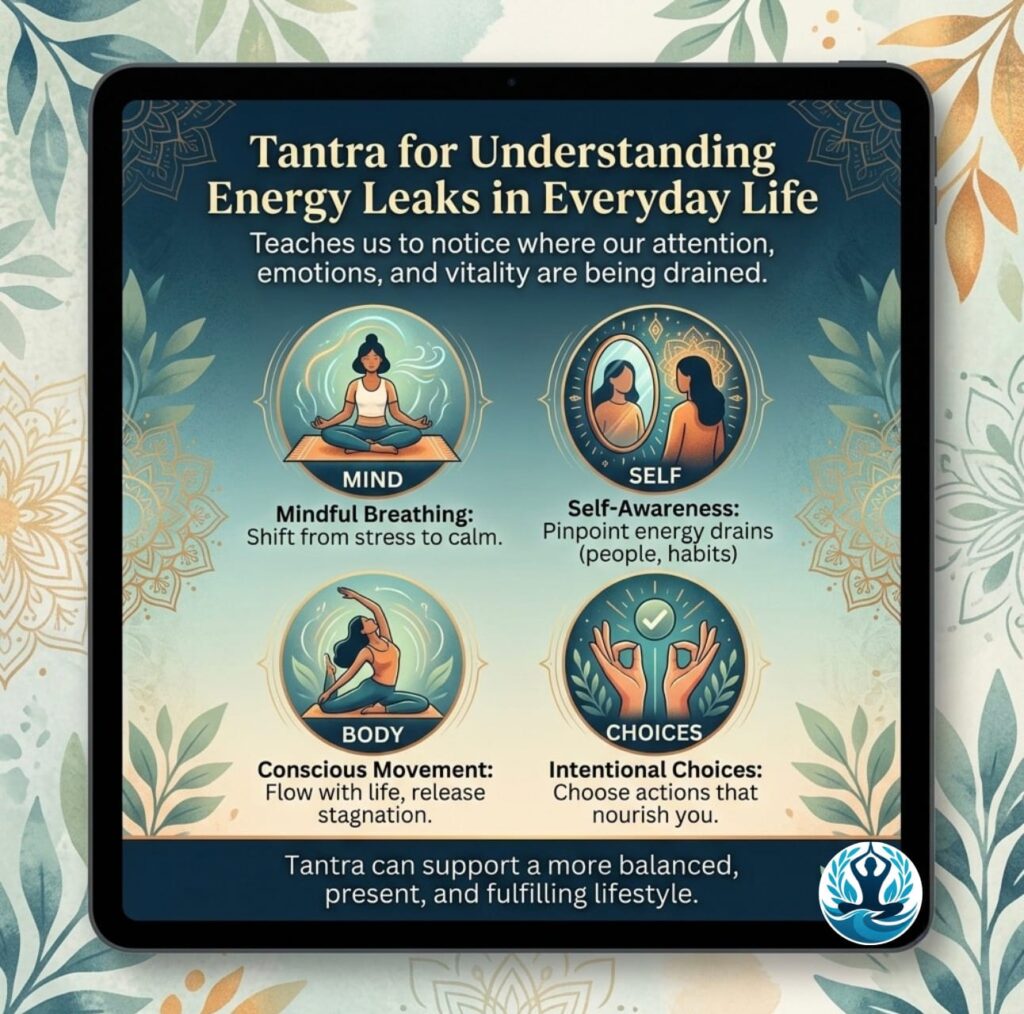


Tantra for Finding Clarity When You Feel Lost

There are moments in life when everything can appear uncertain. You may have responsibilities, goals, relationships, and routines, yet still feel disconnected from yourself. You might wonder what direction to take, what truly matters to you, or whether the choices you are making reflect the person you want to become.
Feeling lost does not always mean that something is wrong. Sometimes, it is a sign that an old way of living no longer feels meaningful. When external expectations become louder than your inner voice, clarity can become difficult to access.
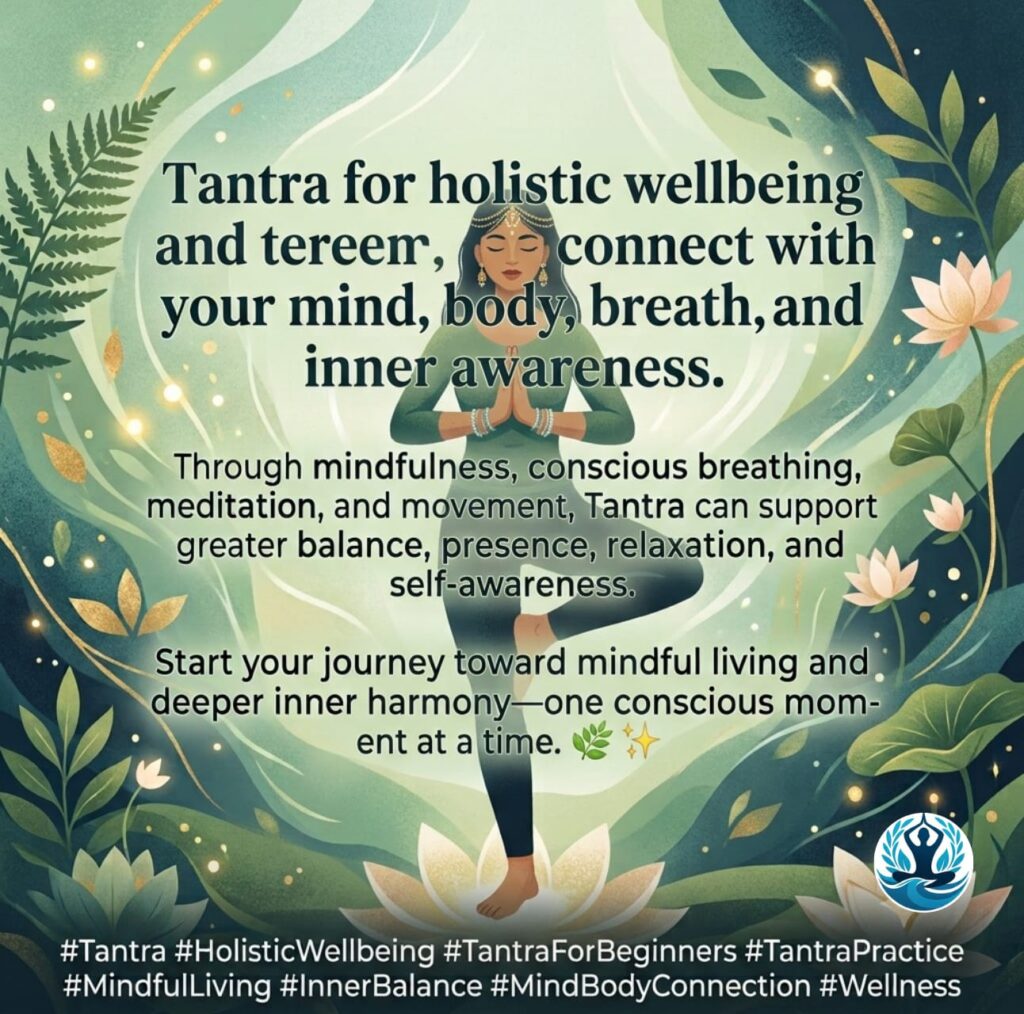
Tantra for finding clarity when you feel lost offers a holistic approach to reconnecting with yourself through awareness, presence, breath, body consciousness, and mindful observation. Rather than forcing immediate answers, Tantra encourages you to slow down and become aware of what is happening within you.
Tantra is traditionally a broad spiritual and philosophical path with diverse practices and interpretations. In a modern wellness context, selected contemplative practices inspired by Tantra can be used to cultivate greater self-awareness and presence. The goal is not to escape everyday life but to experience it more consciously.
When you feel lost, clarity does not always come from thinking harder. Sometimes it emerges when you create enough inner space to listen.
What Does It Mean to Feel Lost?
Feeling lost can take many forms.
You may feel uncertain about your career, relationships, personal goals, or future. You may have achieved things that once seemed important but no longer feel fulfilling. You may feel emotionally tired, mentally overwhelmed, or disconnected from your own needs.
Sometimes the feeling is subtle. You continue your daily routine but experience a sense that you are simply moving from one task to another.
Other times, feeling lost can be more intense. You may struggle to make decisions, constantly question yourself, compare your life with others, or feel anxious about choosing the wrong direction.
These experiences often become more difficult when we demand immediate certainty.
Tantra approaches uncertainty differently. Instead of treating confusion as something that must immediately be eliminated, awareness allows you to observe it.
You can begin asking:
- What am I actually feeling?
- What do I genuinely want?
- Which expectations are mine, and which belong to others?
- What is draining my energy?
- What brings me a sense of aliveness?
- What am I avoiding?
- What do I need right now?
These questions can create the foundation for meaningful clarity.
How Tantra Can Support Clarity
The modern idea of Tantra is sometimes reduced to sexuality, but Tantra encompasses much broader traditions of meditation, ritual, embodiment, awareness, and spiritual practice.
One important principle relevant to self-discovery is presence.
When the mind constantly moves between the past and future, it becomes difficult to recognize what is happening in the present. You may replay previous mistakes or imagine countless future scenarios.
Tantric-inspired awareness practices encourage you to return attention to your current experience.
This can involve:
- Conscious breathing
- Meditation
- Body awareness
- Mindful movement
- Sensory awareness
- Contemplation
- Observing thoughts without immediately reacting
- Developing greater awareness of emotions
These practices do not necessarily provide instant answers. Instead, they can help reduce mental noise and create a clearer relationship with your inner experience.
1. Slow Down Before Making Major Decisions
When you feel lost, your first instinct may be to make a dramatic change.
You might think:
“I need to figure everything out now.”
But decisions made from panic, exhaustion, or emotional overload may not reflect your deeper needs.
Tantra encourages slowing down.
Slowing down does not mean becoming passive. It means creating enough awareness to distinguish between an impulsive reaction and a conscious choice.
Before making an important decision, take a few moments to breathe and notice your physical and emotional state.
Ask yourself:
“Am I choosing this because it feels aligned, or because I am afraid?”
That simple question can reveal a great deal.
2. Use the Breath as an Anchor
The breath is one of the simplest tools for returning attention to the present moment.
When you feel mentally scattered, your attention may move rapidly between different concerns. Conscious breathing can provide an anchor.
Try this simple practice:
Sit comfortably and relax your shoulders.
Take a slow, comfortable breath in.
Then allow the exhalation to be gentle and unforced.
Continue for several minutes while observing the natural rhythm of breathing.
Instead of trying to eliminate thoughts, simply notice when your attention moves away and gently return to the breath.
The purpose is not to force the mind to become completely empty.
The purpose is to practice returning.
Over time, this repeated return can strengthen present-moment awareness.
3. Listen to the Body
When people feel lost, they often search exclusively for answers through intellectual thinking.
But your body can provide useful information about your current experience.
Notice how different situations affect you physically.
Does a particular environment make you tense?
Does a certain conversation leave you exhausted?
Do you feel lighter when discussing a particular subject?
Does an activity create a sense of engagement and vitality?
Body awareness does not mean treating every physical sensation as a definitive answer. Instead, it gives you another source of information to consider alongside reasoning and practical circumstances.
Tantra places significant emphasis on embodied awareness, making the body an important part of self-exploration.
4. Observe Your Thoughts Without Becoming Them
Feeling lost often produces repetitive thoughts.
“What if I fail?”
“What if I make the wrong choice?”
“Everyone else seems ahead.”
“What should I be doing with my life?”
The more you engage with these thoughts, the more convincing they can feel.
A mindfulness-based approach inspired by Tantric traditions can encourage you to observe thoughts rather than automatically accepting them as facts.
For example:
Instead of saying, “I am a failure,” notice, “I am having a thought that I have failed.”
This small shift creates psychological space.
You are no longer completely identified with the thought.
You are observing it.
That distinction can help you approach uncertainty with greater calm.
5. Separate Your Own Desires From External Expectations
One reason people feel lost is that they have spent years pursuing goals based primarily on external expectations.
Family, culture, society, education, social media, and professional environments can all influence our definitions of success.
You may believe you should have a particular career, relationship, lifestyle, income, appearance, or social status.
But the question is:
Do these goals genuinely matter to you?
Tantra for self-discovery encourages deeper examination of your experience.
Write down five things you believe you “should” achieve.
Then ask:
“Who taught me that this is important?”
Next, write five things that genuinely make you feel present, engaged, peaceful, or alive.
The contrast can be revealing.
Clarity often begins when you recognize the difference between what you are expected to want and what you actually value.
6. Practice Self-Acceptance
Feeling lost can create self-judgment.
You may think you should already know your purpose.
You may compare your progress with friends or colleagues.
You may believe uncertainty means weakness.
But life does not always develop according to a fixed timeline.
Self-acceptance means allowing yourself to acknowledge where you are without turning your current situation into a negative identity.
You can say:
“I am uncertain right now.”
That is different from:
“I will always be uncertain.”
The first statement describes a present experience.
The second creates a permanent identity.
Tantric awareness can help you remain present with your current experience without immediately labeling it as good or bad.
7. Explore What Gives You Energy
Clarity is not only about identifying what you dislike.
It is also about discovering what nourishes you.
Pay attention to experiences that create genuine engagement.
Perhaps you feel energized when learning, creating, helping others, spending time in nature, practicing movement, having meaningful conversations, or working on something personally significant.
Energy here does not have to mean excitement.
Sometimes nourishing experiences feel quiet.
Peace, curiosity, connection, and a sense of meaningful engagement can also be signs that something matters to you.
Create an “energy awareness” journal.
At the end of each day, write:
What gave me energy today?
What drained my energy?
When did I feel most present?
After several weeks, patterns may become visible.
These patterns can contribute to greater self-understanding.
8. Embrace the Present Instead of Waiting for a Perfect Future
A common reason people feel lost is that they believe clarity will arrive after they achieve a certain goal.
“I will feel better when I get the right job.”
“I will feel complete when I find the right relationship.”
“I will be peaceful when everything is settled.”
But life rarely becomes permanently settled.
Tantra emphasizes presence—the capacity to engage consciously with life as it is happening.
This does not mean abandoning goals.
You can have ambitions while still appreciating the present moment.
Instead of asking only:
“Where am I going?”
also ask:
“How am I living today?”
That question can transform the process of self-discovery.
9. Use Mindful Movement to Reconnect With Yourself
Clarity does not always emerge while sitting still.
Sometimes movement can help reconnect attention with the body.
Try a slow, mindful movement practice.
Walk without constantly checking your phone.
Notice the contact between your feet and the ground.
Observe your breathing.
Relax unnecessary tension.
Pay attention to your surroundings.
The objective is not athletic performance.
It is awareness.
Conscious movement can interrupt repetitive mental patterns and help you experience your body as part of your present reality.
10. Create Space for Silence
Modern life provides constant stimulation.
Notifications, conversations, advertisements, entertainment, news, and social media can make silence feel unusual.
Yet silence can provide an opportunity to notice thoughts and feelings that are normally hidden beneath constant activity.
Set aside a few minutes each day without your phone, music, television, or other distractions.
Sit quietly.
Breathe naturally.
Notice what appears.
You may initially experience boredom or restlessness.
That is okay.
You are not trying to create a special experience.
You are practicing the ability to remain present.
Over time, silence can become a valuable space for reflection.
11. Transform Confusion Into Curiosity
Instead of asking:
“Why am I so lost?”
try asking:
“What is this period of uncertainty showing me?”
This changes the relationship you have with confusion.
You stop treating uncertainty only as a problem.
You begin seeing it as information.
Perhaps it is showing you that an old goal no longer fits.
Perhaps you need rest.
Perhaps you have been ignoring an important relationship.
Perhaps you have been living according to expectations that do not reflect your values.
Perhaps you simply need time.
Curiosity allows you to explore without immediately judging the answer.
12. Tantra and the Search for Life Purpose
Many people believe that finding purpose means discovering one perfect mission.
Life may be more flexible than that.
Purpose can evolve.
Different periods of life can bring different priorities.
Instead of asking:
“What is my one true purpose?”
consider asking:
- What matters to me now?
- What kind of person do I want to become?
- What values do I want to embody?
- What contribution feels meaningful?
- What experiences make life feel worthwhile?
Tantric approaches to awareness can encourage you to experience life directly rather than trying to solve your entire existence intellectually.
Purpose can become clearer through living consciously.
13. Build a Daily Tantra-Inspired Clarity Practice
A simple daily routine can help turn awareness into a consistent habit.
Morning: Three Minutes of Breath Awareness
Before checking your phone, sit quietly.
Take several comfortable breaths.
Notice your body.
Set one intention for the day.
For example:
“Today I will pay attention to what genuinely matters.”
Afternoon: One Conscious Pause
During the day, stop for one minute.
Relax your shoulders.
Take a slow breath.
Notice what you are doing.
Ask:
“Am I present right now?”
Evening: Reflective Awareness
Before sleeping, write down:
- What did I feel today?
- What gave me energy?
- What drained me?
- When did I feel most connected to myself?
- What did I learn about myself?
This practice can gradually reveal patterns.
14. What Can You Learn From Feeling Lost?
Feeling lost can sometimes become a turning point.
It can encourage you to question assumptions you previously accepted without examination.
It may lead you toward greater self-awareness.
You may discover that:
- Success means something different to you now.
- Certain relationships need healthier boundaries.
- Rest is important.
- You want more meaningful experiences.
- You have been ignoring your emotions.
- Your goals need to change.
- You need greater balance between achievement and wellbeing.
In this way, uncertainty can become a doorway to transformation.
15. Common Mistakes When Searching for Clarity
Trying to Find Every Answer Immediately
Clarity often develops gradually.
Constantly Comparing Yourself
Another person’s timeline cannot define yours.
Ignoring Emotional Experience
Emotions may contain useful information, even when they should not be treated as absolute instructions.
Overthinking Instead of Experiencing
Reflection is valuable, but excessive analysis can become another form of avoidance.
Looking Outside Yourself for Every Answer
Advice from others can help, but your own values and lived experience matter too.
Expecting a Perfectly Clear Future
You rarely need to know the entire path.
Often, you only need to identify the next conscious step.
Tantra for Finding Clarity: A Holistic Perspective
The deeper value of Tantra for finding clarity when you feel lost is that it brings attention back to the whole person.
The mind matters.
The body matters.
Emotions matter.
Breath matters.
Relationships matter.
Daily experiences matter.
Instead of separating spiritual awareness from ordinary life, Tantra can be understood as a path that invites greater consciousness into everyday experience.
You do not necessarily need to escape your life to find yourself.
You can begin by becoming more present within it.
Simple Questions for Self-Reflection
Use these questions in a journal or quiet meditation:
What am I currently searching for?
What am I afraid to admit to myself?
What feels meaningful to me right now?
Which expectations am I carrying that may not belong to me?
What situations make me feel most alive?
What consistently drains my attention or energy?
What do I need more of in my life?
What do I need less of?
What would I choose if I were not trying to impress anyone?
What is one small step I can take today?
You do not need to answer every question immediately.
Let the questions remain with you.
Sometimes clarity develops through continued observation rather than immediate conclusions.
Conclusion
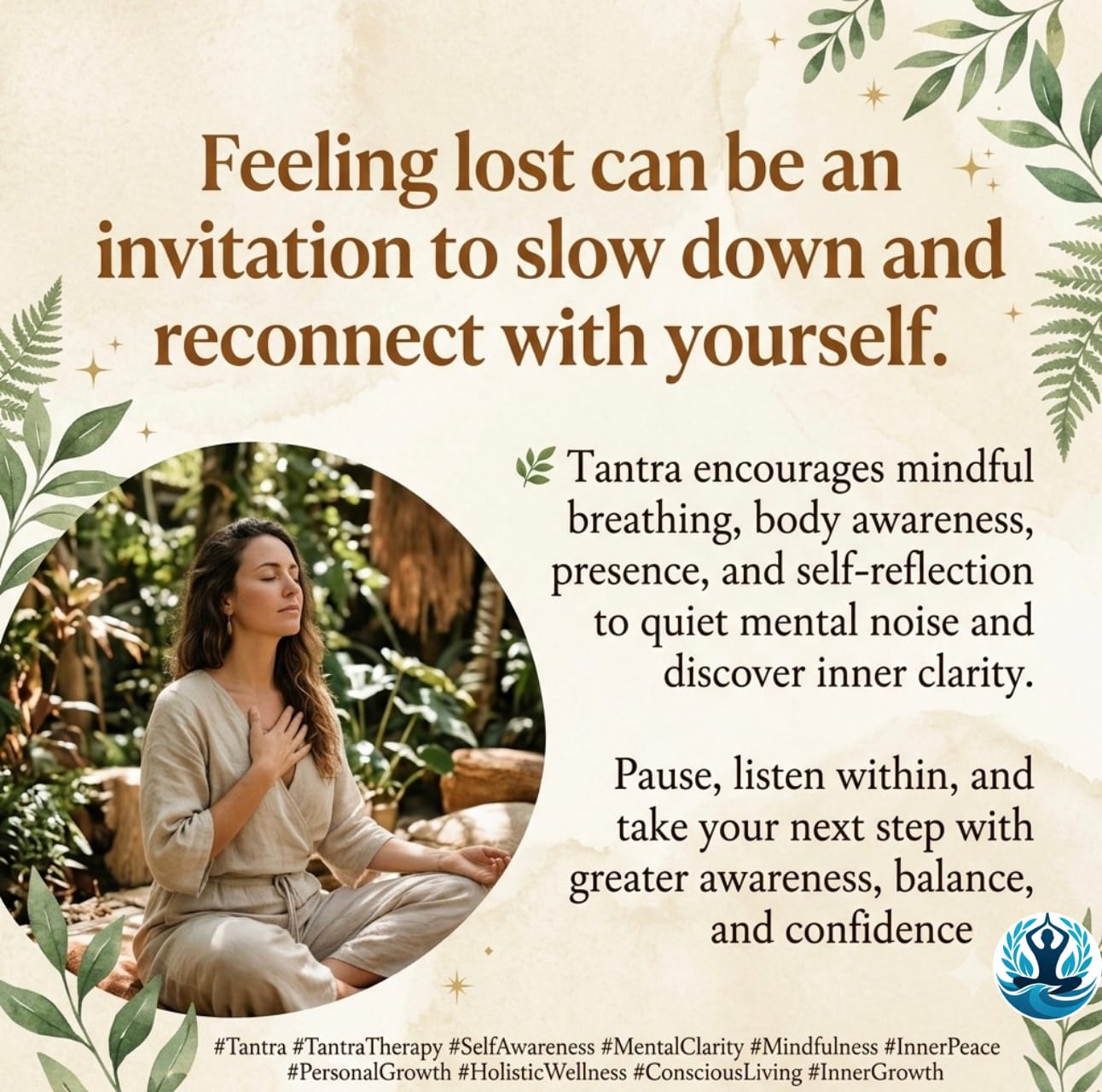
Feeling lost can be uncomfortable, but it can also become an invitation to reconnect with yourself.
Tantra for finding clarity when you feel lost is not about forcing certainty or discovering an instant solution. It is about developing awareness of your thoughts, emotions, body, breath, values, and everyday experiences.
Through conscious breathing, meditation, body awareness, mindful movement, silence, self-reflection, and present-moment awareness, you can begin creating the inner space needed to understand yourself more clearly.
You may not discover your entire path at once.
And you do not need to.
Sometimes clarity begins with a single honest moment of awareness.
A single breath.
A single question.
A single conscious choice.
When you stop demanding that life reveal the whole destination, you may become more capable of noticing the next step.
And sometimes, the next step is all the clarity you need.