

Tantra for Finding Sacredness in Ordinary Daily Experiences

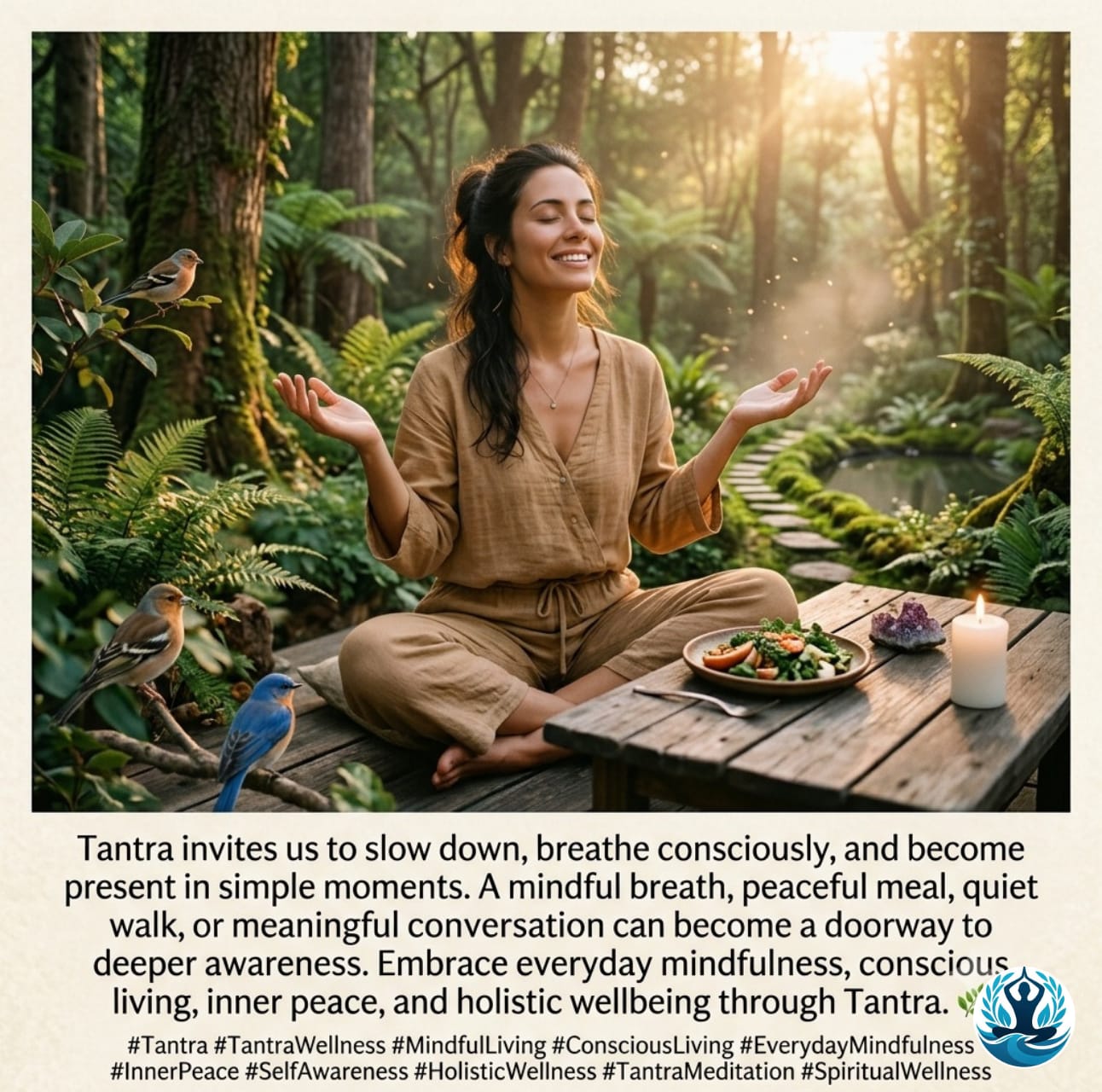
Modern life often encourages us to look beyond the present moment for something better. We may wait for a vacation to relax, a major achievement to feel successful, a special celebration to feel connected, or a dramatic life change to feel fulfilled. In the process, ordinary moments can become invisible.
A cup of tea in the morning, a quiet walk, preparing a meal, taking a shower, listening to music, sitting with a loved one, or simply breathing after a long day may seem too ordinary to deserve our attention.
Tantra offers another perspective.
At its heart, Tantra can be understood as a path of awareness that encourages us to experience life more consciously rather than separating spirituality from everyday existence. Instead of searching for meaning only in extraordinary experiences, Tantric philosophy and practices can encourage greater awareness of the body, breath, senses, emotions, relationships, and present moment.
This creates an opportunity to discover what may be called sacredness in ordinary daily experiences.
Sacredness here does not necessarily mean something religious or ceremonial. It can simply refer to approaching an experience with presence, respect, awareness, and appreciation.
When we slow down enough to actually experience the moment, everyday life can become an opportunity for mindfulness and self-awareness.
What Does It Mean to Find Sacredness in Everyday Life?
Finding sacredness in ordinary life means learning to recognize value and depth in experiences that we normally overlook.
Consider something as simple as drinking water.
You can drink water while looking at your phone, thinking about tomorrow’s responsibilities, and mentally reviewing yesterday’s problems. Or you can pause for a few seconds and notice the glass, the temperature of the water, the movement of your hand, the sensation of swallowing, and the feeling of refreshment.
The activity has not changed.
Your relationship with the activity has changed.
This shift from automatic behavior to conscious experience is an important part of mindful living.
Tantra encourages a more integrated approach to life. Rather than seeing ordinary experiences as distractions from personal growth, they can become opportunities to cultivate awareness.
A daily routine does not necessarily need to become complicated.
The invitation is simply to become more present within it.
Tantra and the Art of Presence
One of the most valuable principles associated with Tantric practice is conscious presence.
Many people spend much of their day mentally moving between the past and the future. While eating breakfast, they may be thinking about work. While working, they may be thinking about evening plans. While resting, they may worry about tomorrow.
The body remains in the present while the mind frequently travels elsewhere.
Practicing presence means gradually bringing attention back to what is happening now.
This can happen through:
- Conscious breathing
- Mindful movement
- Body awareness
- Sensory awareness
- Meditation
- Intentional pauses
- Contemplation
- Gratitude
- Conscious listening
The purpose is not to force the mind to become completely empty.
Instead, it is about noticing where attention has gone and gently returning to the current experience.
Over time, this can change how ordinary moments feel.
Why Ordinary Experiences Often Go Unnoticed
There are several reasons people overlook everyday experiences.
Habit
Repeated activities become automatic. Once the brain becomes familiar with an activity, we often stop consciously noticing it.
Distraction
Phones, notifications, social media, entertainment, and constant information can compete for attention throughout the day.
Mental Overload
When the mind is occupied with multiple responsibilities, even simple experiences can become background events.
Productivity Culture
Modern culture often emphasizes measurable achievement. Resting, observing, breathing, and simply being present may feel unproductive.
Constant Stimulation
When we become accustomed to high levels of stimulation, quiet moments may initially seem boring rather than meaningful.
Tantra offers an alternative approach: instead of constantly increasing stimulation, we can deepen our capacity to experience what is already happening.
Turning Daily Routines Into Conscious Experiences
One practical way to explore Tantra is to choose ordinary activities and practice experiencing them more fully.
1. Waking Up
Instead of immediately reaching for your phone, take a few conscious breaths.
Notice:
- Your body against the bed
- Your breathing
- The temperature of the room
- Sounds around you
- Your physical sensations
- Your emotional state
You do not need to change anything.
Simply observe.
This can create a small space between waking and entering the demands of the day.
2. Drinking Tea or Coffee
Instead of consuming your morning drink automatically, slow down.
Notice the aroma, warmth, taste, texture, and movement involved in drinking.
Take a few moments without multitasking.
A simple drink can become a practice of sensory awareness.
3. Showering
A shower can become an opportunity to reconnect with the body.
Notice the temperature of the water and the sensation on your skin.
Feel your feet against the floor.
Observe your breathing.
Rather than mentally planning your entire day, experience the activity that is actually happening.
4. Eating
Food provides one of the easiest opportunities for mindful awareness.
Before eating, pause.
Notice the appearance and aroma of the food.
Take your first few bites slowly.
Observe taste, texture, temperature, and physical sensations.
This is not about following strict eating rules. It is about replacing automatic consumption with greater awareness.
5. Walking
Walking is another simple Tantric-inspired mindfulness practice.
Instead of walking while completely absorbed in your thoughts, notice the movement of your body.
Feel your feet contacting the ground.
Notice your breathing.
Observe the environment around you.
Even a short walk can become an opportunity to return to the present.
The Role of the Senses in Tantra
The senses can become gateways to presence.
Sight, sound, smell, taste, and touch constantly provide information about the world.
Yet we often experience them while our attention is somewhere else.
Conscious sensory awareness means deliberately noticing what is already available.
For example, you might sit quietly and observe five things you can see.
Then notice several sounds.
Then become aware of physical sensations.
Then notice smells and tastes.
This does not require a special environment.
The purpose is to develop the ability to experience the present more directly.
Instead of constantly interpreting life through thought, you begin to experience it through awareness.
Sacredness Does Not Require Perfection
Finding sacredness in daily life does not mean every moment needs to feel peaceful.
Some days are stressful.
Some conversations are difficult.
Some routines feel boring.
Some emotions are uncomfortable.
A mindful approach does not require us to turn every experience into something pleasant.
Instead, it encourages us to meet experiences more consciously.
This distinction is important.
Sacredness can mean giving an experience your full attention even when that experience is imperfect.
You may notice frustration without immediately reacting.
You may notice tiredness without criticizing yourself.
You may experience uncertainty without immediately trying to eliminate it.
Awareness can exist alongside discomfort.
Tantra and Conscious Breathing
Breathing is one of the simplest ways to return attention to the present.
Unlike many external activities, the breath is always available.
Try taking a few slow, comfortable breaths and noticing:
- The movement of the abdomen
- The expansion of the chest
- The sensation of air entering and leaving
- The rhythm of breathing
- Changes in physical tension
There is no need to force the breath.
The practice is simply to observe it.
Throughout the day, brief breathing pauses can help interrupt automatic patterns and create moments of conscious presence.
Bringing Awareness Into Work
Work does not have to be separate from mindfulness.
You can bring awareness into ordinary professional activities.
Before starting a task, pause for a moment.
Clarify what you are doing.
Focus on one activity at a time when possible.
Notice your posture.
Relax unnecessary muscular tension.
Observe when your attention becomes distracted.
Take brief conscious pauses.
The goal is not necessarily to become slower.
The goal is to become more present while doing what you are already doing.
Conscious Listening
Relationships provide another powerful opportunity for practicing awareness.
Many conversations happen while people are simultaneously checking phones, preparing responses, or thinking about other responsibilities.
Conscious listening means giving another person your attention.
Notice their words.
Observe your own reactions.
Allow yourself to listen before immediately responding.
This can create a greater sense of connection and presence.
Tantra’s broader emphasis on awareness can be applied not only to meditation but also to how we relate to other people.
Finding Sacredness in Silence
Silence can feel uncomfortable in a world filled with constant stimulation.
Many people immediately reach for their phones whenever there is a quiet moment.
But silence can create an opportunity to notice what is happening internally.
Try sitting quietly for a few minutes.
There is no need to achieve anything.
Notice thoughts.
Notice sounds.
Notice your breathing.
Notice physical sensations.
Let the moment exist without constantly trying to fill it.
Over time, silence may become less something to escape and more something you can consciously experience.
Tantra and the Beauty of Simple Moments
Sometimes meaningful experiences are incredibly simple.
Sunlight entering a room.
Rain against a window.
A quiet morning.
A shared meal.
A genuine conversation.
The feeling of clean clothes after a shower.
A few minutes of rest.
The sound of birds.
The sensation of walking outdoors.
These moments do not necessarily need to become spiritual ceremonies.
They simply need our attention.
The more present we become, the more we may recognize that life contains countless experiences that are easily overlooked.
Moving Beyond the Search for Extraordinary Experiences
One common pattern in modern wellness is constantly searching for the next transformative experience.
A new retreat.
A new technique.
A new course.
A new destination.
A new productivity system.
Exploration can be valuable, but constant seeking can also make ordinary life feel insufficient.
Tantra can inspire a different question:
What happens when I experience this moment more deeply instead of immediately searching for another one?
This does not mean giving up ambition or curiosity.
It means recognizing that personal growth can also happen within ordinary life.
You do not have to wait for a dramatic event to practice awareness.
The kitchen can become a place of mindfulness.
The workplace can become a place of presence.
A walk can become meditation.
A conversation can become an opportunity for conscious connection.
Rest can become an intentional practice.
Creating a Daily Sacredness Practice
You do not need an elaborate routine.
A simple daily practice could include three moments.
Morning: Presence
Before beginning your day, take two to five minutes to notice your breath and body.
Ask yourself:
How am I experiencing this moment?
Afternoon: Pause
During the middle of your day, stop for a minute.
Take a few comfortable breaths.
Relax your shoulders.
Look around.
Return your attention to the present.
Evening: Appreciation
Before sleeping, remember three ordinary moments from the day that you genuinely noticed or appreciated.
They could be very small.
The goal is to train your attention to recognize value in everyday experience.
A Seven-Day Tantra-Inspired Awareness Practice
Day 1: Conscious Breathing
Spend five minutes observing your natural breath.
Day 2: Mindful Eating
Choose one meal and eat without unnecessary distractions.
Day 3: Sensory Awareness
Spend five minutes consciously observing your surroundings.
Day 4: Mindful Walking
Take a short walk while paying attention to your steps and breathing.
Day 5: Conscious Listening
Have one conversation where you give the other person your full attention.
Day 6: Digital Pause
Create a short period without unnecessary digital stimulation.
Day 7: Reflection
Write down several ordinary experiences that felt meaningful when you were fully present.
The practice is simple, but consistency matters more than complexity.
The Relationship Between Awareness and Gratitude
Awareness and gratitude can naturally support each other.
When we pay attention, we notice more.
When we notice more, we may recognize things we previously overlooked.
Gratitude does not require pretending that everything is perfect.
Instead, it can mean acknowledging what is meaningful or supportive within the current moment.
A conscious morning may become something to appreciate.
A supportive conversation may become something to value.
A peaceful evening may become something to notice.
This can gradually shift attention away from constantly focusing on what is missing.
Tantra for a More Meaningful Daily Life
Finding sacredness in ordinary life can influence the way we understand wellbeing.
Wellbeing does not have to exist only in special settings.
It can be cultivated through daily choices.
How we breathe.
How we eat.
How we walk.
How we listen.
How we rest.
How we respond to emotions.
How we interact with others.
How we experience our surroundings.
These seemingly small choices can become opportunities for greater self-awareness.
Tantra can therefore be explored as a way of bringing consciousness into life rather than separating personal growth from everyday living.
Common Misunderstandings
“I need to meditate for hours.”
Not necessarily.
Even short periods of intentional awareness can be meaningful.
“Every experience needs to feel spiritual.”
No.
The practice is about awareness, not forcing a particular emotional experience.
“I need special equipment.”
No special equipment is required for basic mindfulness and awareness practices.
“I have to stop thinking.”
Thinking is natural.
The goal is to notice thoughts rather than automatically becoming absorbed in every thought.
“I need a completely peaceful environment.”
Not necessarily.
Everyday environments can provide opportunities to practice presence.
How to Make the Practice Sustainable
The biggest challenge is often consistency.
Instead of creating a complicated routine, connect awareness to activities you already perform.
For example:
When I wake up → I take three conscious breaths.
When I drink water → I notice the sensation.
When I sit at my desk → I check my posture.
When I eat → I slow down for the first few bites.
When I walk → I notice my feet.
Before sleeping → I reflect on one meaningful moment.
This approach makes mindfulness easier to integrate into everyday life.
Final Thoughts
Tantra for finding sacredness in ordinary daily experiences is ultimately about changing how we relate to life.
The world does not necessarily need to become more extraordinary for us to experience greater meaning.
Sometimes, we simply need to become more present.
A breath can become a moment of awareness.
A meal can become an opportunity for appreciation.
A walk can become a meditation.
A conversation can become an experience of connection.
Silence can become a space for reflection.
Rest can become an act of conscious care.
The power of ordinary life often becomes visible when we stop rushing through it.
By bringing greater awareness to the body, breath, senses, emotions, relationships, and everyday routines, Tantra can provide a framework for exploring a more conscious way of living.
The sacred does not always have to be somewhere else.
Sometimes, it is hidden inside the moment we are already living.
Frequently Asked Questions
What does Tantra mean by finding sacredness in everyday life?
It can refer to approaching ordinary experiences with greater awareness, presence, and appreciation rather than moving through them automatically.
Can ordinary activities become Tantra practices?
Yes. Activities such as breathing, walking, eating, resting, listening, and observing can become opportunities for conscious awareness.
Does Tantra require a spiritual or religious belief?
Tantra has diverse historical and philosophical traditions. Contemporary wellness practices inspired by Tantra may emphasize awareness, embodiment, meditation, and conscious living, but specific traditions can differ considerably.
How can I start practicing Tantra in daily life?
Begin with one familiar activity. Choose something such as drinking tea, walking, or taking a shower and give it your full attention for a few minutes.
Can Tantra help with mindful living?
Tantric-inspired awareness practices can be used as a framework for exploring greater presence, body awareness, conscious breathing, and intentional living.
Conclusion
Tantra for Finding Sacredness in Ordinary Daily Experiences invites us to look at everyday life with fresh awareness. Rather than waiting for extraordinary circumstances to feel connected, we can begin by paying attention to the experiences already happening around us.
Through conscious breathing, sensory awareness, mindful movement, intentional pauses, and deeper listening, ordinary moments can become opportunities for presence and self-discovery.
The practice is not about escaping daily life. It is about experiencing daily life more consciously.