

Tantra and the Search for Meaning in an Overstimulated World


Modern life offers more information, entertainment, communication, and convenience than ever before. Yet, despite having constant access to stimulation, many people find themselves asking deeper questions: What truly matters to me? What gives my life meaning? Why do I sometimes feel disconnected even when I am constantly connected?
The modern world moves quickly. Notifications appear throughout the day, social media competes for our attention, work can follow us home, and endless streams of information can make it difficult to experience genuine stillness. We may remain busy from morning until night without creating enough space to understand what we actually need.
This is where Tantra and conscious living offer an interesting perspective.
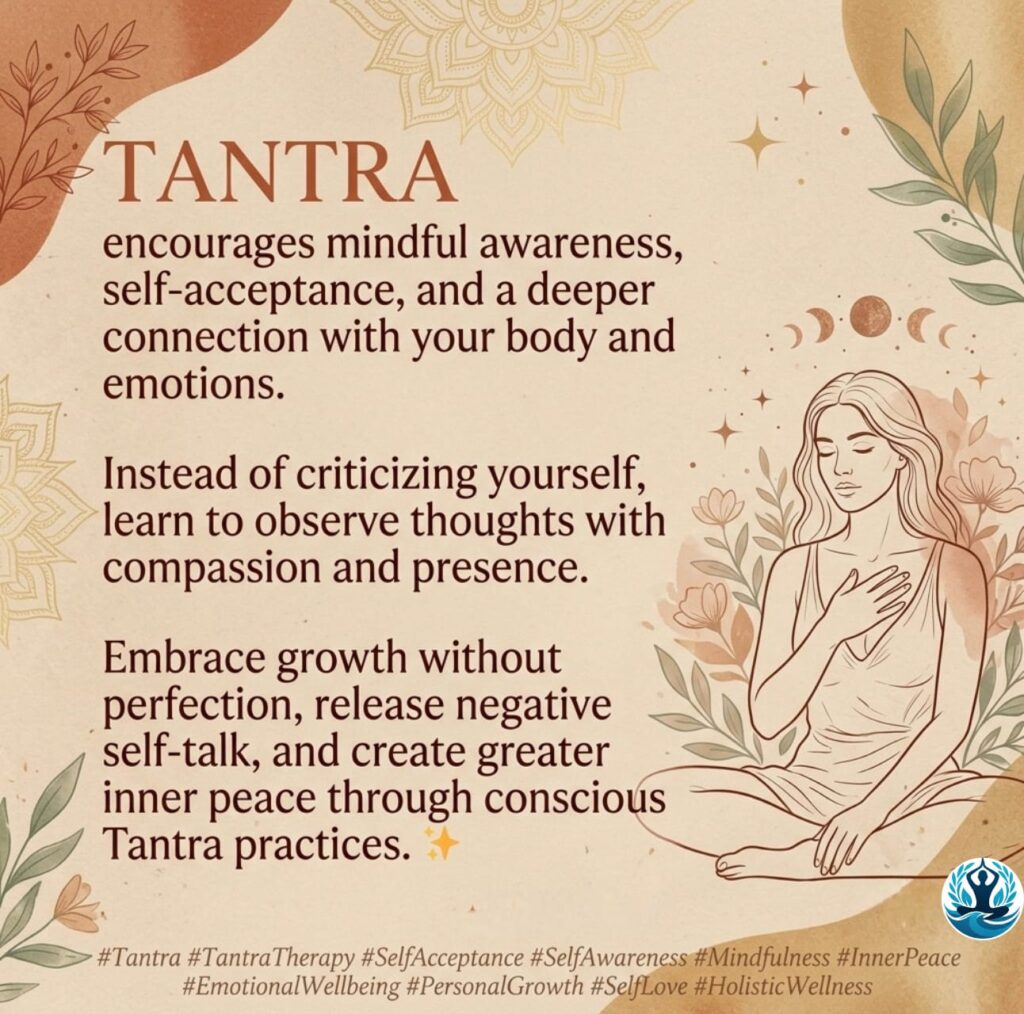
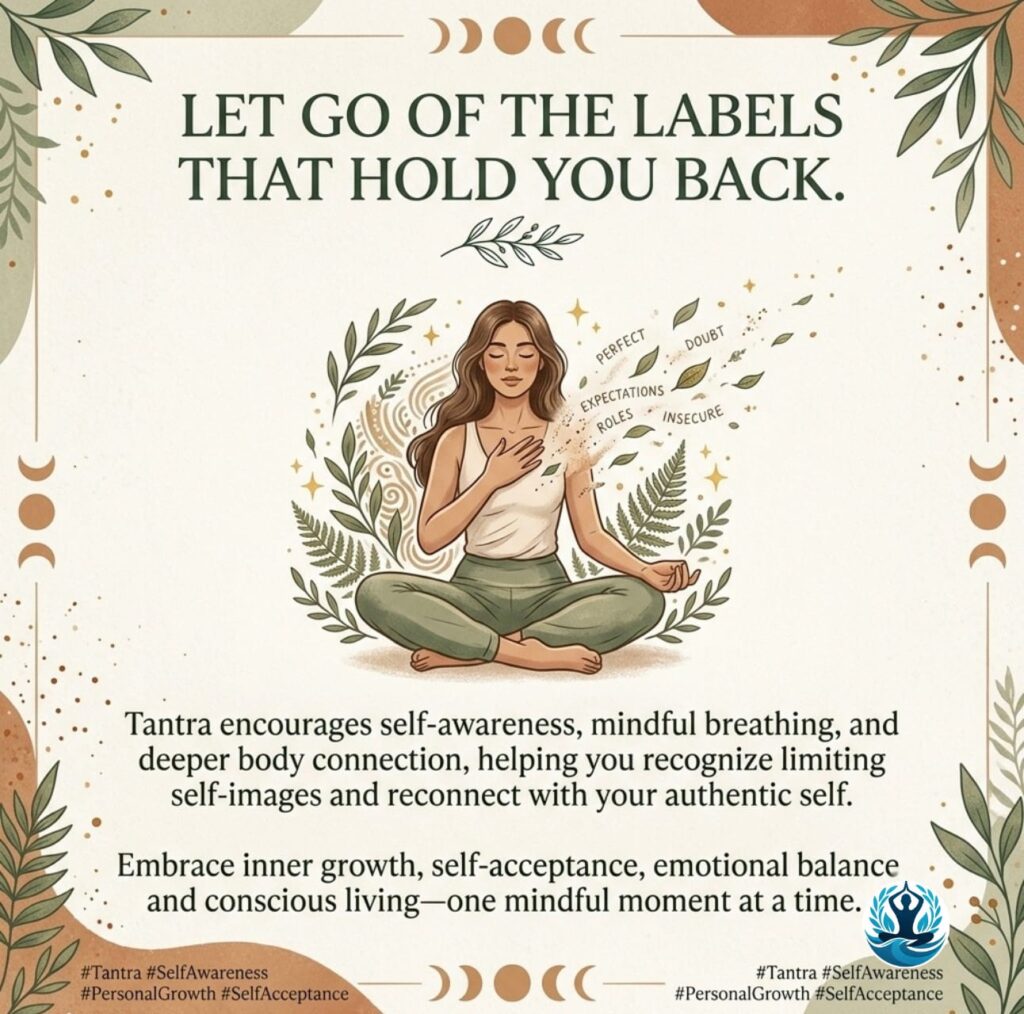
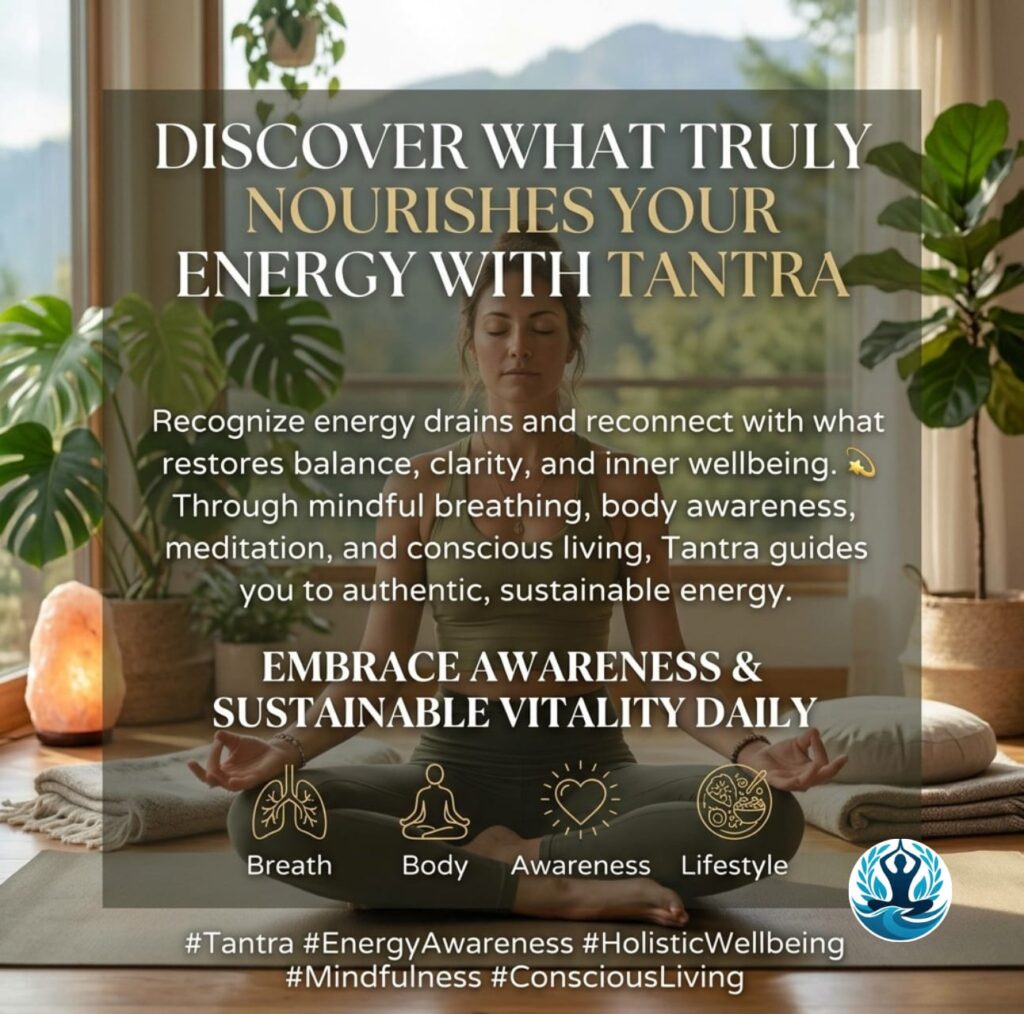
Tantra is traditionally associated with awareness, embodiment, energy, consciousness, and the recognition of life as something to be experienced rather than merely controlled. In a modern wellness context, Tantra can be approached as a practice of becoming more aware of the body, breath, emotions, thoughts, relationships, and everyday experiences.
Rather than asking us to escape modern life, a mindful approach to Tantra encourages us to become more present within it.
The search for meaning does not necessarily require dramatic life changes. Sometimes, meaning begins with noticing. It can emerge through greater awareness of ordinary experiences, deeper connection with ourselves, conscious relationships, and a willingness to question the patterns that keep us constantly distracted.
This article explores how Tantra can provide a framework for reconnecting with meaning in an overstimulated world.
What Does It Mean to Live in an Overstimulated World?
Overstimulation occurs when we are exposed to more sensory, mental, emotional, and informational input than we can comfortably process.
A typical day might involve waking up to a phone notification, checking messages, reading news, scrolling through social media, attending meetings, responding to emails, consuming entertainment, and switching between multiple tasks.
Even moments that appear to be restful can involve continuous stimulation.
A person may sit quietly but still scroll through a phone. They may watch television while checking social media. They may eat while answering messages. They may go to bed while mentally processing everything they encountered throughout the day.
The result can be a lifestyle dominated by constant input and limited reflection.
When attention is continuously directed outward, it can become difficult to recognize what is happening internally.
What do I actually feel?
What do I genuinely value?
What gives me energy?
What drains me?
What kind of life feels meaningful to me?
These questions require attention. They require pauses.
Tantra provides a perspective that places awareness at the center of experience.
Why Meaning Can Become Difficult to Recognize
Meaning is not always absent. Sometimes it is simply buried beneath noise.
When life becomes dominated by urgency, productivity, comparison, and consumption, deeper experiences may receive less attention.
People can become accustomed to asking:
- What should I achieve next?
- What should I buy?
- What should I accomplish?
- How can I become more productive?
- How do I compare with others?
- What should I do to appear successful?
These questions are not necessarily harmful. However, when they dominate life completely, they can leave little room for more personal questions.
What do I value?
What kind of person do I want to become?
What relationships matter to me?
What experiences make me feel genuinely alive?
What does a meaningful life mean to me?
Tantra encourages a movement from automatic living toward conscious experience.
Instead of simply moving from one activity to another, we begin noticing the quality of our experience.
Tantra and the Practice of Conscious Awareness
One of the most important ideas associated with Tantra is awareness.
Awareness means becoming more conscious of what is happening without immediately trying to suppress, escape, or judge it.
This can include awareness of:
- Breath
- Body sensations
- Emotions
- Thoughts
- Desires
- Reactions
- Relationships
- Environment
- Habits
- Energy levels
- Patterns of attention
In an overstimulated world, this awareness can become especially valuable.
Consider the difference between drinking a cup of tea while scrolling through your phone and drinking the same tea while noticing its aroma, warmth, taste, and your own state of mind.
The external activity is almost identical.
The quality of attention is different.
Tantra encourages this shift from simply doing to consciously experiencing.
Finding Meaning Through the Body
Modern culture often encourages people to live primarily through the mind.
We think, analyze, plan, compare, predict, and evaluate.
The body can become something we notice only when it becomes uncomfortable.
Tantric approaches place importance on embodiment—the experience of being present within the body.
Simple practices such as conscious breathing, mindful movement, stillness, and body awareness can help individuals reconnect with physical experience.
Instead of treating the body merely as a tool for productivity or appearance, we can begin experiencing it as a source of information.
For example, you might notice:
- Your shoulders becoming tense during certain conversations.
- Your breathing becoming shallow when you feel pressured.
- A sense of openness when doing something meaningful.
- Fatigue after activities that do not align with your values.
- Relaxation when spending time in environments that feel supportive.
These observations do not automatically provide perfect answers, but they can encourage deeper self-awareness.
Tantra and the Search for Authenticity
Another important part of finding meaning is understanding authenticity.
In an overstimulated culture, identity can easily become influenced by external expectations.
Social media can encourage people to compare lifestyles. Advertising can shape ideas about success. Workplace culture can influence how productivity is measured. Family and social expectations can influence personal decisions.
Over time, a person may become highly skilled at fulfilling expectations while becoming less familiar with their own inner preferences.
Tantra encourages conscious observation.
Instead of immediately asking, What should I do?, we can sometimes ask:
Why do I want this?
Is this desire genuinely mine?
Am I acting from awareness or conditioning?
Does this choice reflect my values?
What happens inside me when I imagine choosing differently?
These questions can create space between external expectations and personal awareness.
Moving Beyond Constant Consumption
Modern life provides countless ways to consume.
We consume information, entertainment, products, images, opinions, advertisements, and experiences.
Consumption itself is not necessarily negative. The issue arises when consumption becomes the primary way we relate to life.
We may constantly seek something new because stillness feels uncomfortable.
Tantra offers another possibility: experiencing rather than constantly consuming.
A walk does not have to become exercise content.
A meal does not need to become social media content.
A conversation does not need to be documented.
A quiet evening does not need to be filled with entertainment.
Sometimes meaning emerges when we allow experiences to exist without turning them into something to consume or display.
Tantra and the Five Senses
The five senses provide a powerful doorway into present-moment awareness.
Sight, sound, smell, taste, and touch are constantly giving us information, but modern distraction can cause us to overlook much of it.
A simple Tantric-inspired awareness practice might involve choosing one ordinary experience and giving it complete attention.
For example, during a meal:
Notice the colors.
Notice the aroma.
Notice the texture.
Notice the temperature.
Notice the flavors.
Notice the pace at which you eat.
Notice the sensations that arise.
This does not require changing the meal.
It changes the relationship with the experience.
When practiced regularly, sensory awareness can help ordinary moments feel richer and more connected.
Tantra and Meaningful Relationships
Meaning is also deeply connected to relationships.
In an overstimulated world, communication can become frequent without necessarily becoming deep.
People can exchange dozens of messages while rarely having meaningful conversations.
Tantra emphasizes presence and conscious connection.
Being present with another person means listening without immediately preparing a response.
It means noticing body language.
It means allowing silence.
It means recognizing emotional responses.
It means being willing to experience connection rather than treating conversation as another task.
Meaningful relationships do not necessarily require constant communication.
They often require quality of presence.
Learning to Experience Silence
Silence can initially feel uncomfortable.
When a person is accustomed to constant stimulation, quiet moments may bring previously ignored thoughts and emotions to the surface.
This is one reason people sometimes immediately reach for their phones when nothing is happening.
Tantra encourages a different relationship with silence.
Instead of treating silence as emptiness, it can become an opportunity for observation.
Sit quietly for a few minutes.
Notice the breath.
Notice sounds around you.
Notice thoughts without following every thought.
Notice sensations.
Notice the desire to become distracted.
There is no need to force the mind to become completely silent.
The practice is simply to become aware.
Over time, silence can become less threatening and more spacious.
Tantra for Breaking the Autopilot Cycle
Autopilot living happens when we repeatedly perform actions without consciously noticing them.
Wake up.
Check the phone.
Work.
Eat.
Scroll.
Watch something.
Sleep.
Repeat.
The routine itself may not be the problem.
The lack of awareness can be.
Tantra invites us to introduce small moments of conscious choice.
Before checking your phone in the morning, take three slow breaths.
Before beginning work, notice your body.
Before eating, pause for a moment.
Before responding emotionally, feel the breath.
Before sleeping, reflect on the day.
These small pauses can interrupt automatic behavior.
Meaning often becomes easier to recognize when life contains moments of conscious participation.
Tantra and the Difference Between Pleasure and Meaning
Pleasure and meaning are not identical.
Pleasure is often associated with immediate enjoyment.
Meaning can involve something deeper and longer-lasting.
A relaxing evening may provide pleasure.
Supporting someone you care about may provide meaning.
Buying something new may provide excitement.
Learning something difficult may provide meaning.
Watching entertainment may feel enjoyable.
Creating something that expresses who you are may feel meaningful.
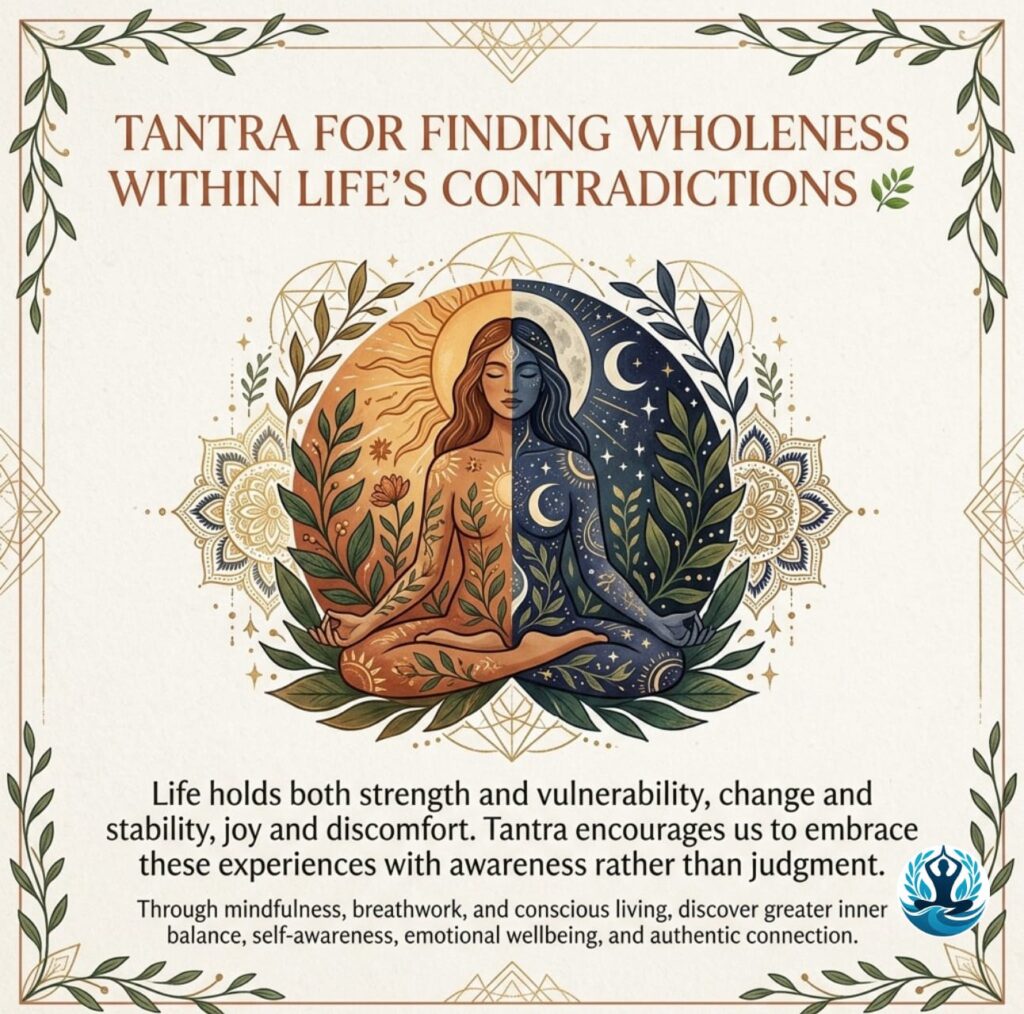
A balanced life can contain both pleasure and meaning.
Tantra does not require rejecting pleasure. Instead, conscious awareness can help us explore our relationship with pleasure.
We can ask:
Does this experience genuinely nourish me?
Am I enjoying it consciously or using it to avoid something?
What remains after the experience ends?
These questions can encourage a more intentional relationship with desire and enjoyment.
Reconnecting With Personal Values
Meaning becomes clearer when we understand our values.
Values are principles that influence how we want to live.
They might include:
- Compassion
- Creativity
- Freedom
- Connection
- Learning
- Integrity
- Simplicity
- Courage
- Service
- Curiosity
- Presence
- Growth
Tantra can support value exploration by encouraging observation of lived experience.
Instead of simply creating a list of values, notice your actual life.
What experiences feel deeply satisfying?
What situations leave you feeling disconnected?
What activities make you feel present?
What relationships feel nourishing?
What compromises repeatedly create inner conflict?
Awareness of these patterns can help reveal what matters.
Tantra and Conscious Use of Technology
Technology is now deeply integrated into everyday life.
The goal does not need to be rejecting technology.
Instead, the focus can be conscious technology use.
Before opening an app, ask:
Why am I opening this?
Is it necessary?
Am I seeking information?
Connection?
Entertainment?
Distraction?
Avoidance?
There is nothing wrong with wanting entertainment or connection.
The important distinction is whether technology is being used consciously or whether attention is being repeatedly captured without intention.
Small digital pauses can create more space for meaningful experiences.
A Simple Tantric Practice for Discovering Meaning
A simple daily practice can help cultivate awareness.
Step 1: Pause
Sit comfortably for five minutes.
Step 2: Breathe
Observe your natural breathing without forcing it.
Step 3: Feel
Notice physical sensations throughout the body.
Step 4: Observe
Notice thoughts and emotions without immediately trying to change them.
Step 5: Ask
Gently ask yourself:
What feels meaningful to me right now?
Do not force an answer.
Step 6: Listen
Allow whatever comes up to be noticed.
Step 7: Choose
Identify one small action that reflects what matters to you.
The goal is not to discover the ultimate purpose of life in five minutes.
The goal is to develop a relationship with your own awareness.
Creating Meaning Through Ordinary Experiences
Meaning does not always require extraordinary experiences.
It can exist in ordinary moments.
Cooking for someone.
Walking in nature.
Listening deeply to a friend.
Creating something.
Learning.
Helping another person.
Taking care of your body.
Watching the sunrise.
Sharing a meal.
Practicing silence.
Resting without guilt.
When attention becomes more conscious, ordinary experiences can become opportunities for connection.
Tantra encourages us to recognize that life does not have to become extraordinary before it becomes meaningful.
Sometimes, the transformation occurs in the way we experience what is already present.
Tantra and Personal Transformation
Personal transformation is often presented as becoming a completely different person.
A more sustainable approach can be learning to see yourself more clearly.
Tantra encourages awareness before transformation.
First, notice.
Then understand.
Then choose.
Then act.
This sequence can create a more conscious relationship with change.
Rather than fighting every unwanted thought or emotion, we can become curious about it.
Rather than automatically following every desire, we can observe it.
Rather than rejecting uncomfortable experiences, we can learn from them.
Awareness creates the possibility of conscious choice.
How Tantra Can Support a More Meaningful Lifestyle
A meaningful lifestyle does not have to be complicated.
You can begin by introducing small practices such as:
Practice conscious mornings
Avoid immediately filling the first moments of the day with digital stimulation.
Create moments of silence
Allow yourself a few minutes without entertainment or information.
Practice mindful movement
Pay attention to the body while walking, stretching, or performing everyday activities.
Eat with awareness
Occasionally enjoy meals without screens.
Have deeper conversations
Give people your full attention.
Spend time in nature
Observe your surroundings without constantly documenting them.
Reflect before reacting
Take a breath before responding to emotionally charged situations.
Review your day
Ask what felt meaningful, what felt draining, and what you learned.
These practices are simple, but consistency can gradually change the quality of everyday awareness.
Common Misunderstandings About Tantra
Tantra is a diverse spiritual and philosophical tradition, and modern uses of the term vary considerably. It should not be reduced to a single technique or associated exclusively with sexuality.
Different Tantric traditions have included practices involving meditation, mantra, ritual, visualization, breath, embodiment, devotion, and philosophical inquiry.
For modern wellness purposes, it is therefore useful to approach Tantra thoughtfully and avoid presenting one contemporary interpretation as representing the entire historical tradition.
The central theme relevant to this discussion is conscious engagement with experience.
Who Can Explore Tantra for Meaning and Awareness?
Tantra-inspired awareness practices may appeal to people who feel disconnected from their daily lives, constantly distracted, or uncertain about what feels meaningful.
It may be particularly relevant for people who:
- Feel overwhelmed by constant information
- Spend significant time online
- Want greater self-awareness
- Feel disconnected from their bodies
- Want to slow down without withdrawing from life
- Are exploring personal growth
- Want more intentional relationships
- Want to understand their values
- Feel caught in repetitive routines
- Want to experience everyday life more consciously
However, Tantra is not a replacement for professional medical or mental-health care when someone is dealing with significant psychological or physical difficulties.
Building a Personal Meaning Practice
Finding meaning is not necessarily a one-time discovery.
It can be an ongoing process.
Your priorities may change.
Your relationships may change.
Your interests may change.
Your understanding of yourself may change.
Therefore, a meaningful life can involve repeatedly checking in with yourself.
Ask regularly:
What matters to me now?
Where am I giving my attention?
What am I doing automatically?
What experiences make me feel connected?
What am I avoiding?
What do I want to experience more consciously?
These questions can become part of an ongoing practice of self-awareness.
Conclusion
In an overstimulated world, the search for meaning can easily become another task on an already crowded to-do list.
But meaning does not always require searching harder.
Sometimes it requires becoming still enough to notice what is already present.
Tantra offers a perspective centered on awareness, embodiment, conscious experience, and deeper connection. Through practices such as mindful breathing, sensory awareness, conscious movement, silence, reflection, and present-moment attention, people can begin developing a more intentional relationship with everyday life.
The goal is not necessarily to escape technology, productivity, responsibilities, or modern life.
It is to participate in life more consciously.
When attention becomes less scattered, ordinary experiences can become more vivid. When we become more aware of our bodies and emotions, our choices can become more intentional. When we question automatic patterns, we create room for values, relationships, curiosity, and authenticity.
Perhaps the search for meaning is not about finding one perfect answer.
Perhaps it is about learning to be present enough to recognize what matters.
And in a world filled with constant noise, that simple act of conscious presence can become a powerful beginning.