

What Tantra Really Teaches Beyond Myths


Few spiritual traditions are as widely misunderstood as Tantra. In popular culture, the word “Tantra” is often reduced to sexuality, secrecy, or indulgence. Books, workshops, and online content frequently portray Tantra as a shortcut to pleasure or mystical power, stripping it of its philosophical depth and spiritual integrity.
But Tantra, in its original and authentic form, is something far deeper, subtler, and more transformative.
Tantra is not a fringe practice, nor is it a rebellion against spirituality. It is one of the most profound spiritual sciences of awareness to emerge from ancient India. Its teachings address consciousness, energy, the body, the mind, emotions, and the nature of reality itself.
This blog explores what Tantra really teaches beyond myths, uncovering its true purpose, principles, and relevance in modern life.
The Origins of Tantra: A Brief Context
Tantra developed over thousands of years within Indian spiritual traditions, influencing Hinduism, Buddhism, Jainism, and later Tibetan practices. Tantric texts, known as Tantras and Agamas, present dialogues between consciousness (Śiva) and energy (Śakti), revealing methods for direct realization.
Unlike purely philosophical systems, Tantra emphasizes experiential wisdom—knowledge that must be lived, not just understood intellectually.
From the Vigyan Bhairav Tantra to Kularnava Tantra, these texts describe practices centered on awareness, breath, sound, visualization, movement, and silence.
Myth 1: Tantra Is Mainly About Sex
The Reality
One of the most persistent myths is that Tantra is primarily a sexual practice. While some Tantric lineages include sacred rituals involving sexuality, these represent a very small and advanced portion of Tantra, not its foundation.
At its core, Tantra teaches:
-
Awareness over indulgence
-
Sacredness over stimulation
-
Consciousness over compulsion
Sexuality in Tantra is treated as energy, not entertainment. It is approached with discipline, presence, and reverence—never as a casual or central practice.
What Tantra Really Teaches
Tantra teaches how to be fully present with any experience, including but not limited to sexuality. Breath, sound, emotions, stillness, fear, joy, pain, and silence are equally powerful gateways to awareness.
Myth 2: Tantra Encourages Excess and Indulgence
The Reality
Tantra does not promote indulgence. It promotes integration.
Unlike ascetic paths that reject the world, Tantra recognizes that suppression often leads to imbalance. However, this does not mean “do whatever you want.” Tantra emphasizes conscious engagement, not unconscious excess.
What Tantra Really Teaches
Tantra teaches:
-
Awareness before action
-
Responsibility with freedom
-
Balance between discipline and acceptance
It is not about saying yes to everything—it is about knowing when awareness is present and when it is not.
Myth 3: Tantra Rejects Discipline and Structure
The Reality
Authentic Tantra requires deep discipline, often more subtle and demanding than rigid moral codes.
Tantric discipline is not imposed from outside. It arises naturally from awareness.
What Tantra Really Teaches
-
Inner responsibility over external rules
-
Self-observation over self-control
-
Refinement of perception
True Tantric practice demands honesty, patience, and maturity.
The Core Teaching of Tantra: Awareness Is the Path
The central teaching of Tantra can be summarized simply:
Awareness itself is liberation.
Tantra does not promise salvation in the future. It invites direct recognition of consciousness here and now.
This awareness:
-
Is not effortful concentration
-
Is not withdrawal from life
-
Is not denial of experience
It is a relaxed, inclusive presence with whatever arises.
Tantra and the Body: The Sacred Instrument
Unlike traditions that view the body as an obstacle, Tantra sees the body as a temple of awareness.
What Tantra Really Teaches About the Body
-
The body stores memory and emotion
-
Sensations are gateways to presence
-
Energy moves through embodied awareness
Breath, posture, movement, and sensation are not distractions—they are tools for awakening.
This makes Tantra especially relevant in a modern world where people feel disconnected from their bodies.
Tantra and Emotions: From Suppression to Transformation
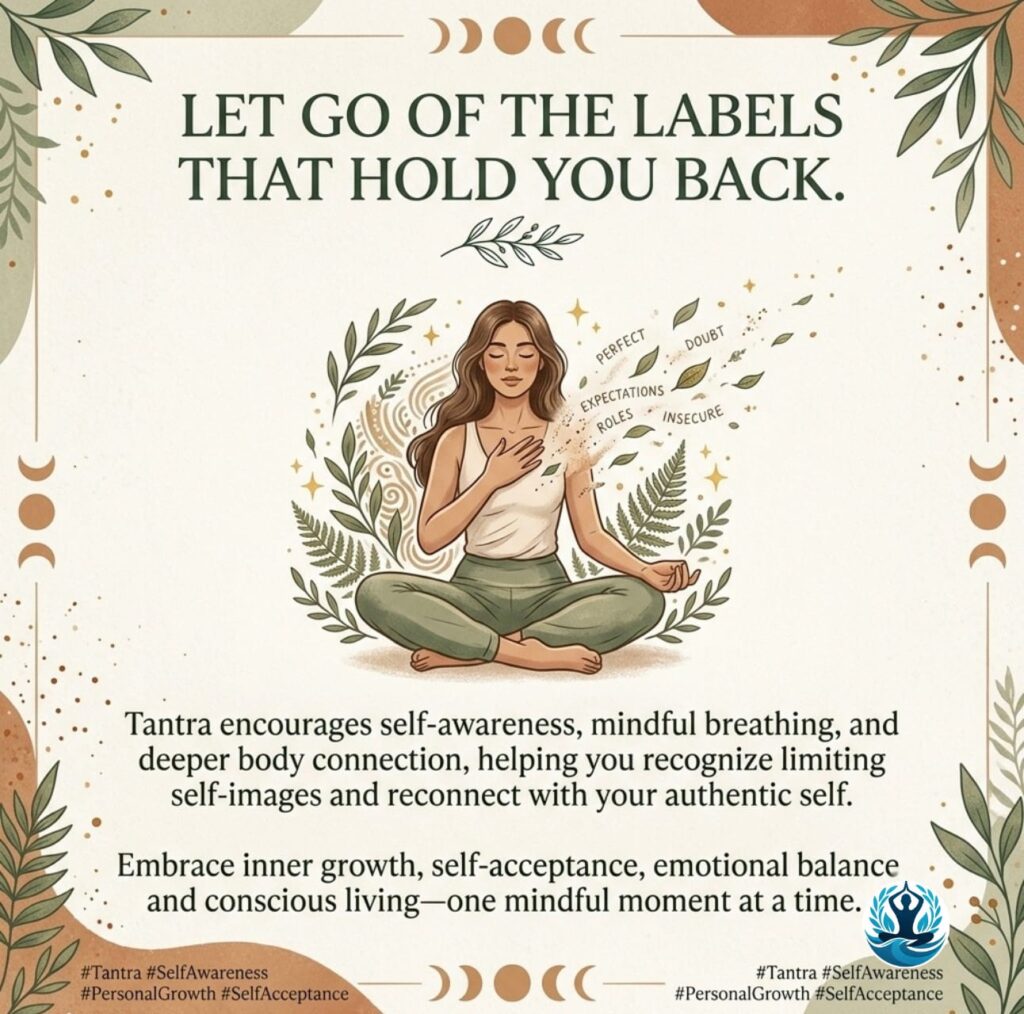
Tantra does not ask you to suppress emotions or label them as negative.
Instead, it teaches emotional alchemy.
What Tantra Really Teaches About Emotions
-
Emotions are forms of energy
-
Awareness transforms emotion naturally
-
Resistance strengthens emotional patterns
By feeling emotions fully without identification, Tantra allows them to dissolve and refine into clarity and compassion.
Tantra and the Mind: Beyond Control
Many meditation systems focus on controlling or stopping thoughts. Tantra takes a different approach.
What Tantra Really Teaches About the Mind
-
Thoughts are natural movements of consciousness
-
Freedom lies in witnessing, not suppression
-
Silence exists between thoughts
Tantric meditation often focuses on:
-
The gap between breaths
-
The pause between thoughts
-
The silence behind sound
These spaces reveal awareness effortlessly.
Tantra and Non-Duality: Nothing Is Separate
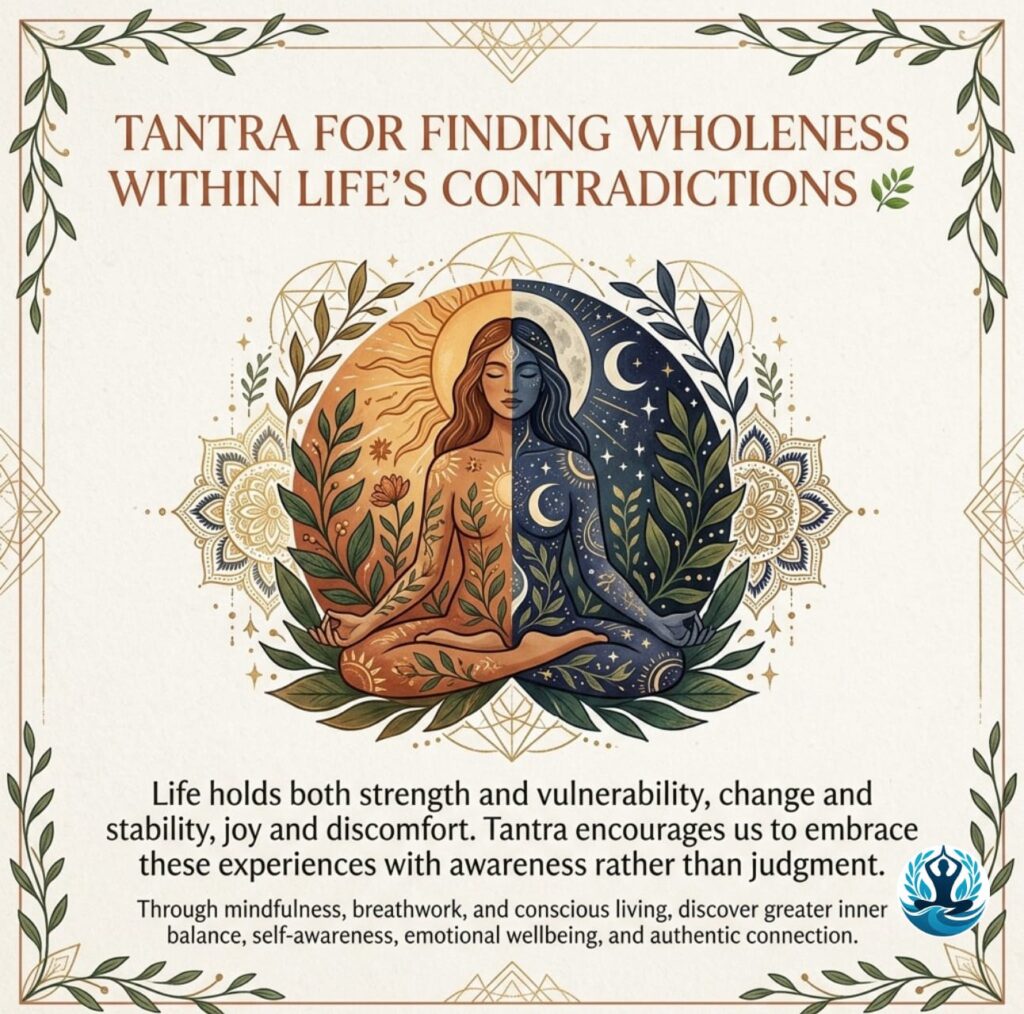
One of Tantra’s most profound teachings is non-duality.
Tantra does not divide reality into sacred and profane, spiritual and worldly, pure and impure.
What Tantra Really Teaches
-
Everything arises from the same consciousness
-
Nothing needs to be rejected
-
Awakening is recognition, not achievement
This inclusive vision allows spiritual growth without conflict.
Tantra as a Path of Integration, Not Escape
Unlike paths that encourage withdrawal from society, Tantra is designed for householders and active participants in life.
What Tantra Really Teaches About Daily Life
-
Work can be meditation
-
Relationships can be spiritual practice
-
Challenges are teachers
Tantra meets you exactly where you are.
Tantra and Ritual: Symbolism, Not Superstition
Tantric rituals are often misunderstood as superstition or magic.
In reality, Tantric rituals are symbolic technologies designed to align attention, energy, and intention.
What Tantra Really Teaches About Ritual
-
Ritual trains awareness
-
Symbols communicate with the subconscious
-
Sacred action refines perception
When misunderstood, ritual becomes empty. When understood, it becomes transformative.
Tantra in the Modern World
In today’s world of stress, burnout, and fragmentation, Tantra offers powerful insights:
-
Grounding through embodiment
-
Emotional regulation through awareness
-
Mental clarity through presence
-
Spiritual depth without withdrawal
Practices like micro meditations, breath awareness, sensory presence, and emotional witnessing are deeply Tantric, even when modernized.
Common Misuses of Tantra Today
Modern distortions of Tantra often include:
-
Overemphasis on sexuality
-
Commercialization without lineage or depth
-
Techniques without philosophical grounding
Understanding what Tantra really teaches protects seekers from confusion and exploitation.
The True Goal of Tantra
Tantra does not aim to create special experiences, powers, or identities.
Its true goal is simple and radical:
To recognize your true nature as awareness itself.
This recognition is:
-
Ordinary yet profound
-
Quiet yet transformative
-
Simple but not shallow
Conclusion: Tantra Beyond the Myths
Tantra is not about secrecy, indulgence, or rebellion.
It is about intimacy with life as it is.
Beyond myths, Tantra teaches:
-
Presence instead of escape
-
Integration instead of division
-
Awareness instead of control
In a world searching for meaning without rigidity and spirituality without denial, Tantra offers a timeless path—grounded, inclusive, and deeply human.
Tantra does not ask you to leave life behind.
It asks you to enter life fully, consciously, and awake.