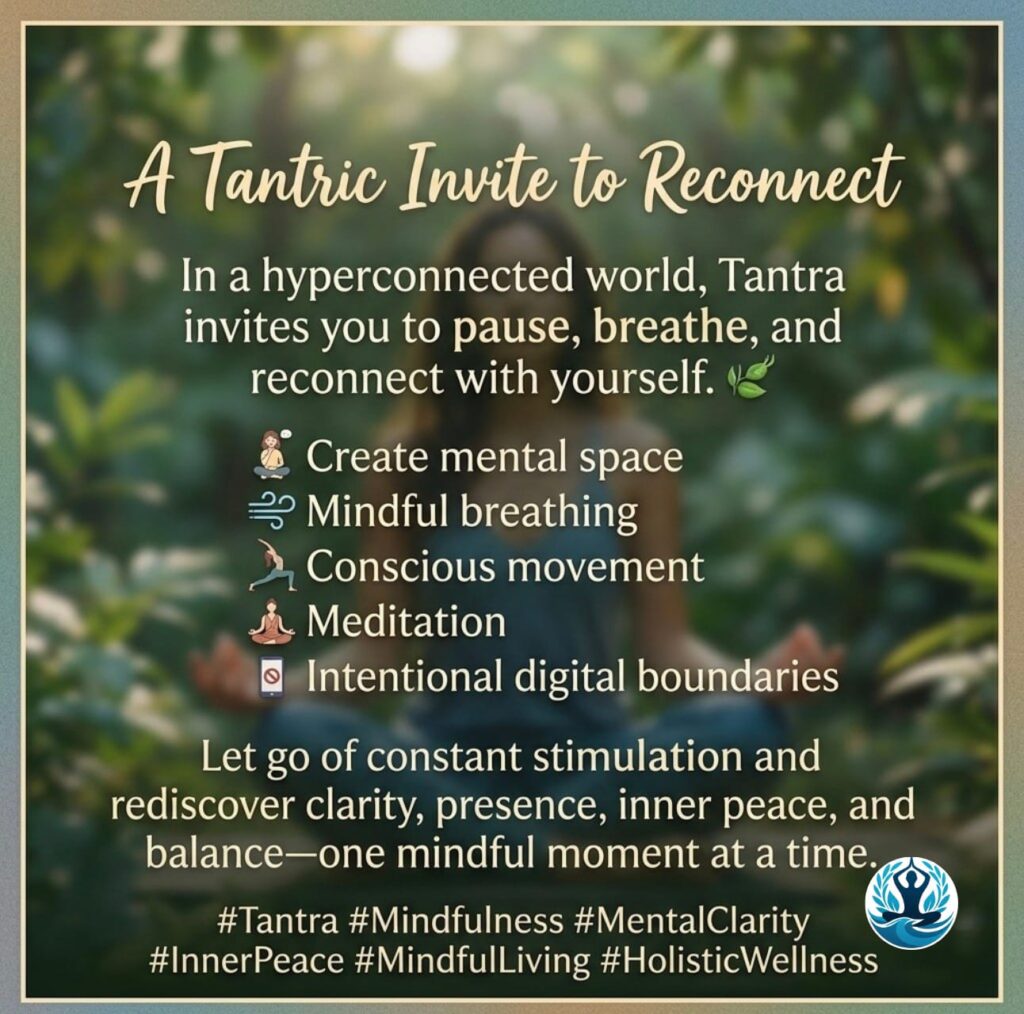


Meeting Loneliness Through Tantric Awareness


Loneliness has become one of the most common emotional experiences of our time. Despite constant connectivity through social media, messaging apps, and virtual interactions, many people report a deep sense of isolation, disconnection, and inner emptiness. Loneliness today is not merely about being alone; it is often felt even in relationships, families, workplaces, and crowded cities.
From the Tantric perspective, loneliness is not viewed as a personal failure or a psychological flaw. Nor is it something that must be immediately eliminated or covered up. Tantra approaches loneliness as a state of awareness, a signal inviting deeper presence rather than avoidance.
Meeting loneliness through Tantric awareness means learning to stay with the experience gently, consciously, and without judgment. Instead of rushing to escape loneliness through distraction, stimulation, or dependency, Tantra teaches us to meet it directly—allowing it to reveal its deeper wisdom.
This article explores how Tantra understands loneliness, why it arises, and how awareness can transform it into a doorway for inner connection and wholeness.
Understanding Loneliness Beyond the Surface
Loneliness is often misunderstood as simply the absence of companionship. However, many people feel lonely even when surrounded by others, while others feel deeply content in solitude. This suggests that loneliness is not primarily about external circumstances.
Common Roots of Loneliness
From a Tantric and psychological lens, loneliness often arises from:
-
Disconnection from one’s own body and emotions
-
Suppressed feelings and unexpressed inner truth
-
Chronic self-judgment or inner criticism
-
Early experiences of emotional neglect or lack of attunement
-
Living primarily in the mind rather than embodied awareness
Tantra recognizes loneliness as a form of separation consciousness—the sense that “I am cut off from life, from myself, from others.” This separation is not an ultimate truth but a temporary state of awareness shaped by conditioning.
Tantra’s Radical View: Loneliness Is Not the Enemy
Unlike many self-help approaches that frame loneliness as a problem to be fixed, Tantra offers a radical reframe: what we resist persists; what we meet transforms.
In Tantric philosophy, every experience—including discomfort, sadness, or loneliness—is an expression of consciousness. Nothing is excluded from the path. When loneliness arises, Tantra does not ask, “How do I get rid of this?” Instead, it asks:
-
Can you stay present with it?
-
Can you feel it directly in the body?
-
Can you allow it without collapsing or escaping?
This shift—from resistance to presence—is central to Tantric awareness.
Loneliness as a Call Back to the Self
At its core, loneliness often reflects a disconnection from one’s own inner world. We may be disconnected from our sensations, emotions, needs, or authentic expression. Tantra sees loneliness as a call back to intimacy with oneself.
Inner vs Outer Connection
Many people attempt to resolve loneliness by seeking external validation, constant relationships, or stimulation. While human connection is essential, Tantra emphasizes that outer connection cannot replace inner contact.
Without a relationship to oneself, even the most fulfilling relationships can feel empty.
Tantric awareness teaches that the first relationship is with awareness itself—with the body, breath, sensations, and the living presence within.
The Body: Where Loneliness Lives
Loneliness is not just a mental state; it is a felt experience in the body. It may appear as:
-
A tightness in the chest
-
A hollow sensation in the belly
-
A heaviness in the heart
-
A subtle numbness or dullness
Tantra works directly with these sensations rather than analyzing them away.
Tantric Practice: Feeling Without Story
A foundational Tantric approach to loneliness involves separating sensation from narrative.
Instead of repeating stories like:
-
“I am alone”
-
“Something is wrong with me”
-
“I will always feel this way”
Tantra invites you to:
-
Feel the raw sensations in the body
-
Stay curious rather than judgmental
-
Allow the sensations to move and change
This practice gradually dissolves the frozen quality of loneliness.
Awareness vs Dissociation
Many people unconsciously dissociate from loneliness through distraction—scrolling, overworking, binge-watching, or compulsive socializing. While these strategies may provide temporary relief, they often deepen inner disconnection.
Tantric awareness is different from dissociation. It is embodied, alert, and gentle.
-
Dissociation numbs
-
Awareness enlivens
When loneliness is met with awareness, it begins to soften and reveal layers beneath it—often sadness, longing, tenderness, or a need for rest.
Loneliness and the Nervous System
From a modern trauma-aware Tantric lens, loneliness is closely linked to the nervous system. Chronic loneliness often reflects a state of dysregulation, where the system oscillates between shutdown and hyper-vigilance.
Tantra and Safety
Classical Tantra emphasizes safety before expansion. When loneliness is overwhelming, the goal is not transcendence but grounding.
Simple Tantric supports include:
-
Feeling the contact of the body with the floor
-
Slowing the breath naturally
-
Orienting to sounds and sensations in the environment
-
Allowing small moments of comfort
These practices help the nervous system settle, creating a foundation for deeper awareness.
Solitude vs Loneliness: A Tantric Distinction
Tantra makes a clear distinction between loneliness and solitude.
-
Loneliness is a feeling of lack and separation
-
Solitude is a state of fullness and presence
Through Tantric awareness, loneliness can gradually transform into solitude—not by forcing positivity, but by staying present long enough for awareness to deepen.
Many Tantric sages emphasize that the capacity to be alone without loneliness is a sign of inner integration.
The Tantric Art of Being With What Is
One of Tantra’s most powerful teachings is non-avoidance. This does not mean indulging in suffering, but rather refusing to abandon oneself.
When loneliness arises, Tantric awareness says:
“Stay. Feel. Breathe. You are not wrong for feeling this.”
This compassionate presence often reveals that beneath loneliness is a longing for connection—with life itself.
Loneliness as a Gateway to Non-Dual Awareness
At a deeper level, Tantra recognizes loneliness as arising from the belief in separation between self and existence. When awareness turns back on itself, this belief begins to loosen.
Moments of stillness may arise where:
-
Loneliness dissolves into spaciousness
-
The sense of “me versus the world” softens
-
A quiet intimacy with existence is felt
These moments are not dramatic experiences but subtle shifts in perception. Tantra values these small openings as signs of integration rather than escape.
Everyday Tantric Practices for Loneliness
1. Breath-Based Presence
Sit comfortably and feel the natural movement of the breath. Do not control it. Simply notice how loneliness changes when awareness rests in breathing.
2. Hand-on-Heart Awareness
Place a hand on the chest or belly. Feel warmth and contact. This simple gesture often brings a sense of inner companionship.
3. Sensory Grounding
Engage one sense fully—sound, touch, or sight. Tantra teaches that presence in the senses anchors awareness in the here and now.
4. Compassionate Self-Inquiry
Instead of asking “What’s wrong with me?”, ask:
-
“What is being felt right now?”
-
“Can I allow this experience to be here?”
Loneliness in Relationships
Interestingly, loneliness often surfaces most strongly in relationships. Tantra does not encourage bypassing this discomfort but using it as a mirror.
Loneliness in relationship can reveal:
-
Unexpressed needs
-
Fear of vulnerability
-
Loss of self in connection
-
Old attachment patterns
Tantric awareness helps one stay present without blame—toward self or others.
From Loneliness to Inner Trust
As loneliness is met again and again with awareness, something profound begins to develop: self-trust.
You learn that:
-
You can stay with difficult feelings
-
You do not need to abandon yourself
-
Presence is always available
This trust becomes the foundation for healthier relationships, creativity, and spiritual growth.
Tantra Does Not Promise Constant Connection
It is important to clarify that Tantra does not promise that loneliness will never arise. Instead, it offers something more realistic and profound: the capacity to meet loneliness without fear.
Loneliness may still come and go, but it no longer defines you or controls your actions. It becomes another wave in the field of awareness.
Conclusion: Loneliness as a Teacher
Meeting loneliness through Tantric awareness is not a quick fix. It is a gentle, honest, and transformative process. By staying present with loneliness rather than escaping it, we rediscover our innate capacity for connection—with ourselves, with others, and with life itself.
Tantra reminds us that we are never truly separate. Even loneliness arises within awareness—and awareness is already whole.
When loneliness is met fully, it often reveals what was missing all along: our own presence.