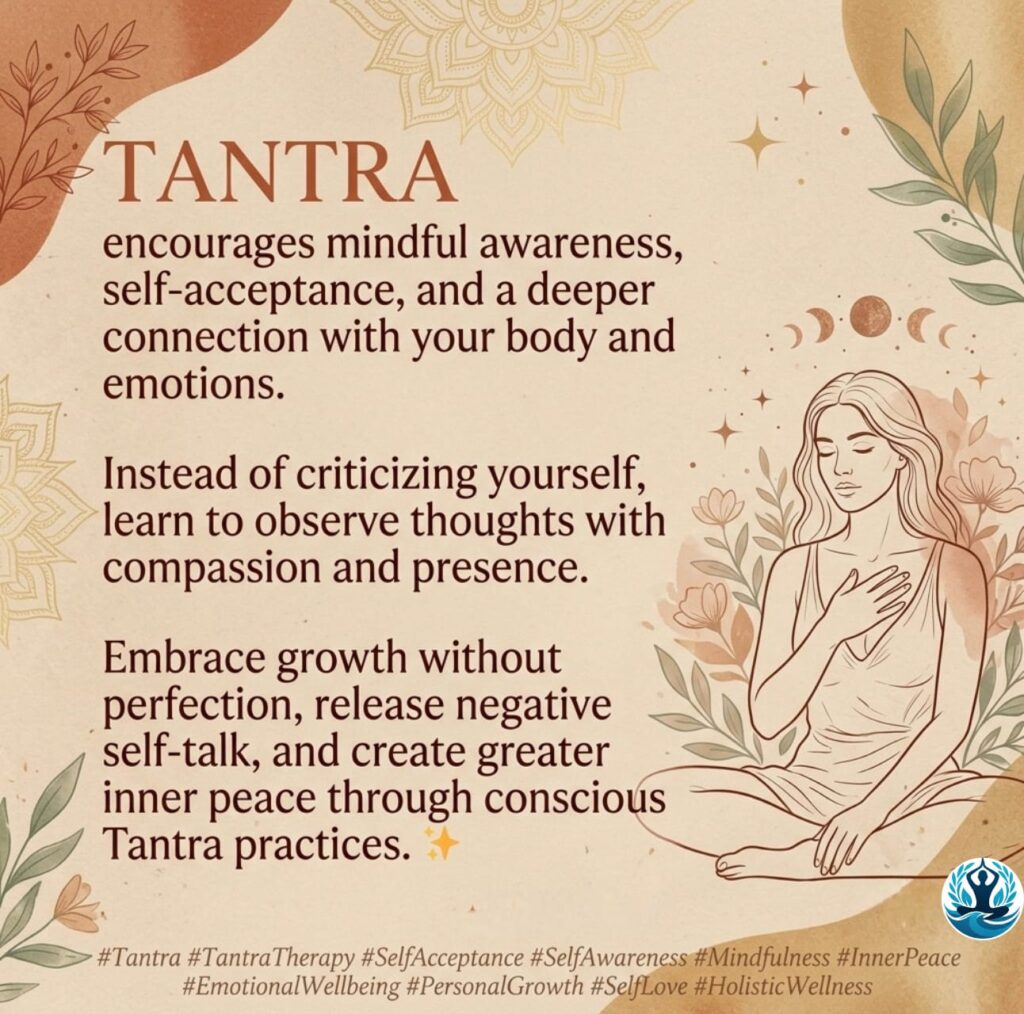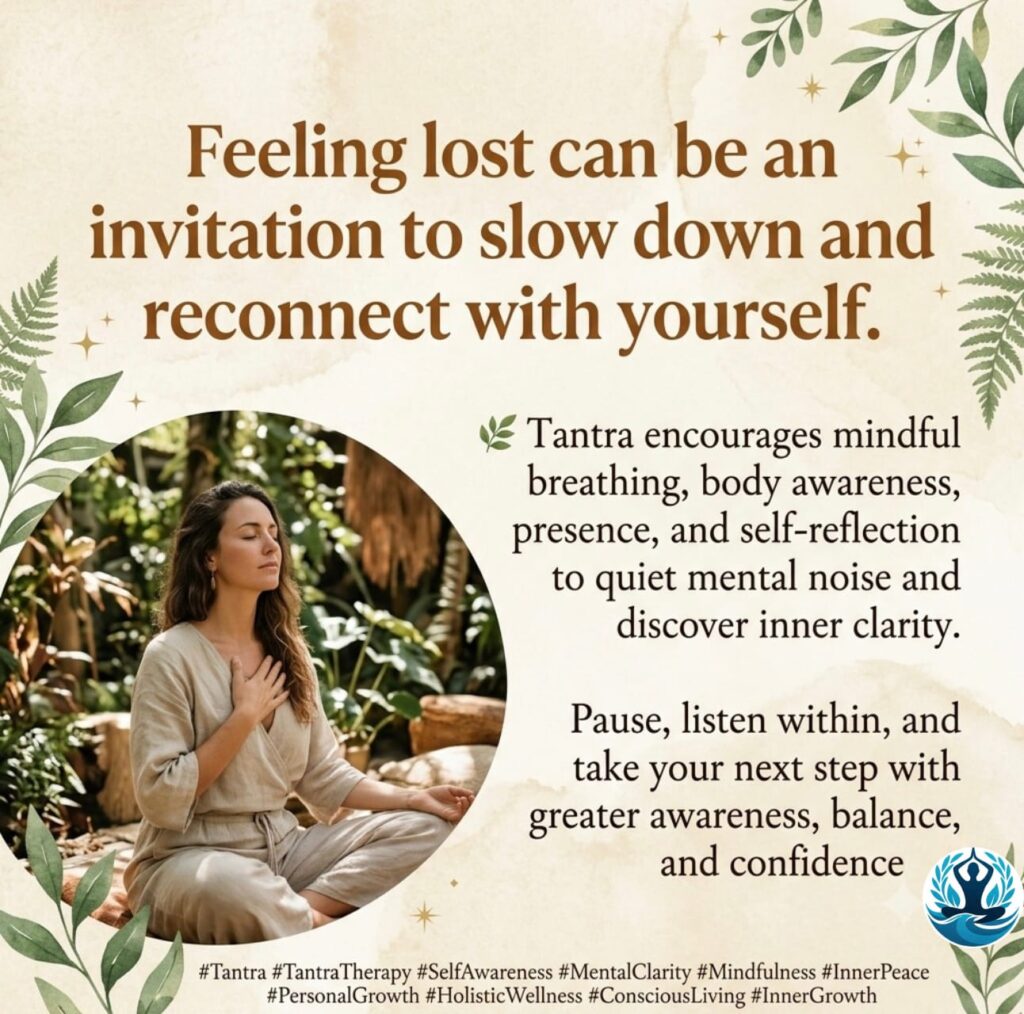


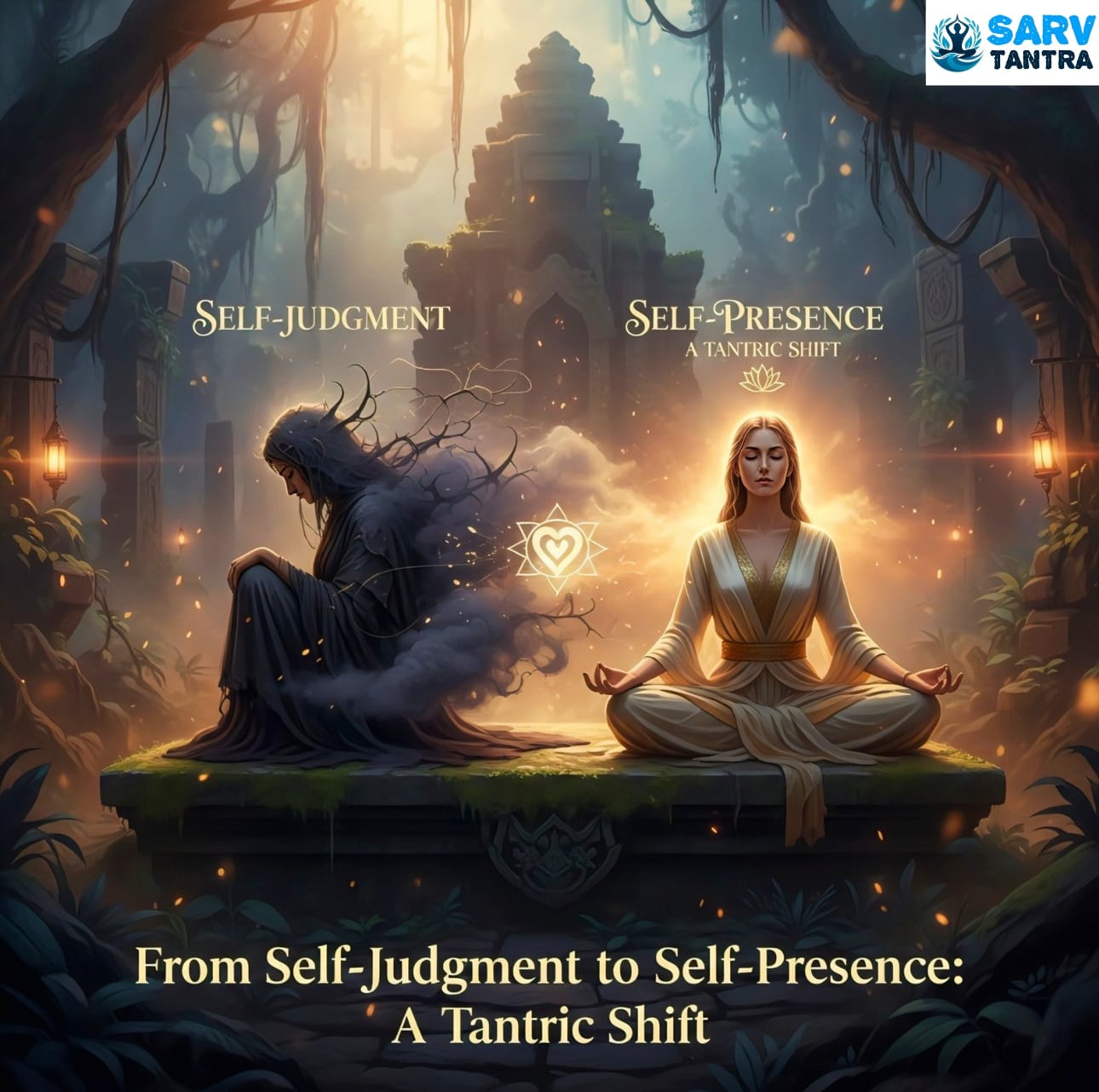
From Self-Judgment to Self-Presence: A Tantric Shift

In modern life, self-judgment has become almost automatic. From early conditioning to social comparison and internalized expectations, many people live with a constant inner critic. This voice evaluates, labels, and measures our worth based on productivity, appearance, success, or spiritual progress. Over time, self-judgment disconnects us from our natural sense of wholeness.
Tantra offers a radically different approach. Rather than fixing, improving, or transcending ourselves, Tantra invites self-presence—the capacity to be fully with what is, without rejection. This shift from self-judgment to self-presence is not merely psychological; it is somatic, energetic, and deeply transformative.
This article explores how Tantric wisdom helps dissolve self-judgment and cultivates embodied self-presence, creating lasting benefits for mental health, relationships, and daily life.
Understanding Self-Judgment
Self-judgment is the habit of evaluating our inner and outer experiences as good or bad, right or wrong, acceptable or unacceptable. While discernment has its place, chronic self-judgment becomes harmful.
Common roots of self-judgment include:
- Early conditioning and criticism
- Cultural pressure to perform and succeed
- Spiritual ideals that emphasize perfection
- Comparison amplified by digital media
Self-judgment fragments awareness. One part of us observes and condemns another part, creating internal conflict. This split drains energy and keeps the nervous system in a subtle state of tension.
Over time, self-judgment can lead to:
- Anxiety and self-doubt
- Emotional suppression
- Burnout and inner exhaustion
- Disconnection from the body
Tantra recognizes self-judgment not as a personal failure, but as a learned pattern of awareness.
What Is Self-Presence?
Self-presence is the ability to remain consciously with our sensations, emotions, thoughts, and energy without trying to change them. It is not passivity or self-indulgence; it is intimate awareness.
In Tantric philosophy, presence is healing because awareness itself is intelligent. When awareness is inclusive rather than judgmental, the body–mind naturally reorganizes.
Self-presence involves:
- Feeling without labeling
- Allowing emotions to move
- Listening to the body’s signals
- Staying with discomfort without resistance
Unlike self-judgment, self-presence unifies awareness. There is no observer versus observed—only direct experience.
The Tantric View: Nothing Is Excluded
A core Tantric principle is radical inclusion. Tantra does not divide experience into sacred and profane, spiritual and worldly, acceptable and unacceptable.
From a Tantric perspective:
- Emotions are energy, not obstacles
- Sensations are gateways to awareness
- Desire, fear, and vulnerability are teachers
Self-judgment arises when we reject parts of our experience. Tantra invites us to turn toward what we habitually avoid. In doing so, fragmented energy returns to wholeness.
This inclusive approach is especially powerful for those who feel stuck in cycles of self-criticism despite years of self-improvement work.
How Self-Judgment Lives in the Body
Tantra understands that self-judgment is not only mental—it is stored in the body. Chronic self-criticism often appears as:
- Tightness in the chest or jaw
- Shallow breathing
- Collapsed posture
- Numbness or dissociation
When we judge ourselves, the nervous system interprets it as a threat. This activates subtle fight-or-flight responses, even in moments of stillness.
Tantric practices emphasize somatic awareness—feeling the body directly—to release these patterns without analysis or force.
The Tantric Shift: From Fixing to Feeling
Many personal growth paths focus on correcting flaws. Tantra shifts the orientation from fixing to feeling.
Instead of asking:
- “What’s wrong with me?”
Tantra asks:
- “What is being felt right now?”
This question changes everything. Attention moves from evaluation to presence. Over time, the inner critic loses power because it is no longer being fed by resistance.
Presence allows emotions and sensations to complete their natural cycles, reducing the need for control.
Tantric Practices That Cultivate Self-Presence
1. Witnessed Breathing
Sit comfortably and place attention on the breath without changing it. Notice sensations without commentary. Each time judgment arises, gently return to sensation.
2. Emotional Allowing
When an emotion appears, locate it in the body. Stay with its texture, temperature, and movement rather than its story.
3. Body Scanning With Acceptance
Move awareness slowly through the body, welcoming tension rather than trying to relax it. Presence itself softens resistance.
4. Micro-Pauses in Daily Life
Pause for a few seconds during routine activities and feel your body fully. These moments retrain the nervous system toward safety and presence.
Self-Presence and Nervous System Regulation
Self-presence directly supports nervous system balance. When experiences are allowed rather than resisted, the body receives the message that it is safe.
Benefits include:
- Reduced anxiety
- Improved emotional regulation
- Greater resilience to stress
- Enhanced capacity for rest
Tantra does not aim to eliminate stress, but to increase our capacity to stay present within it.
Transforming Relationships Through Self-Presence
Self-judgment often spills into relationships as projection, defensiveness, or people-pleasing. When we are present with ourselves, we respond rather than react.
Tantric self-presence supports:
- Clearer communication
- Healthier boundaries
- Greater empathy
- Reduced emotional reactivity
As inner conflict dissolves, relationships become spaces of mutual presence rather than validation-seeking.
Spiritual Growth Without Self-Rejection
Many seekers struggle with self-judgment in spiritual practice—judging meditation quality, emotional states, or perceived progress.
Tantra reframes spirituality as integration, not transcendence. Awakening is not escaping humanity, but inhabiting it fully.
Self-presence allows spiritual growth to unfold organically, without comparison or force.
Living the Tantric Shift in Daily Life
The shift from self-judgment to self-presence is not a one-time realization; it is a lived practice.
Simple daily applications include:
- Feeling your feet while walking
- Noticing breath during conversations
- Allowing tiredness without guilt
- Listening to emotions before acting
Over time, presence becomes the default rather than the exception.
Conclusion
The journey from self-judgment to self-presence is one of the most compassionate shifts Tantra offers. Instead of striving to become someone else, Tantra invites us to arrive fully as we are.
Self-presence heals not by force, but by intimacy. As awareness becomes inclusive, the inner critic softens, the body relaxes, and life is experienced with greater depth and ease.
In this Tantric shift, wholeness is not achieved—it is remembered.