

Living Meditation: Tantra in Everyday Life

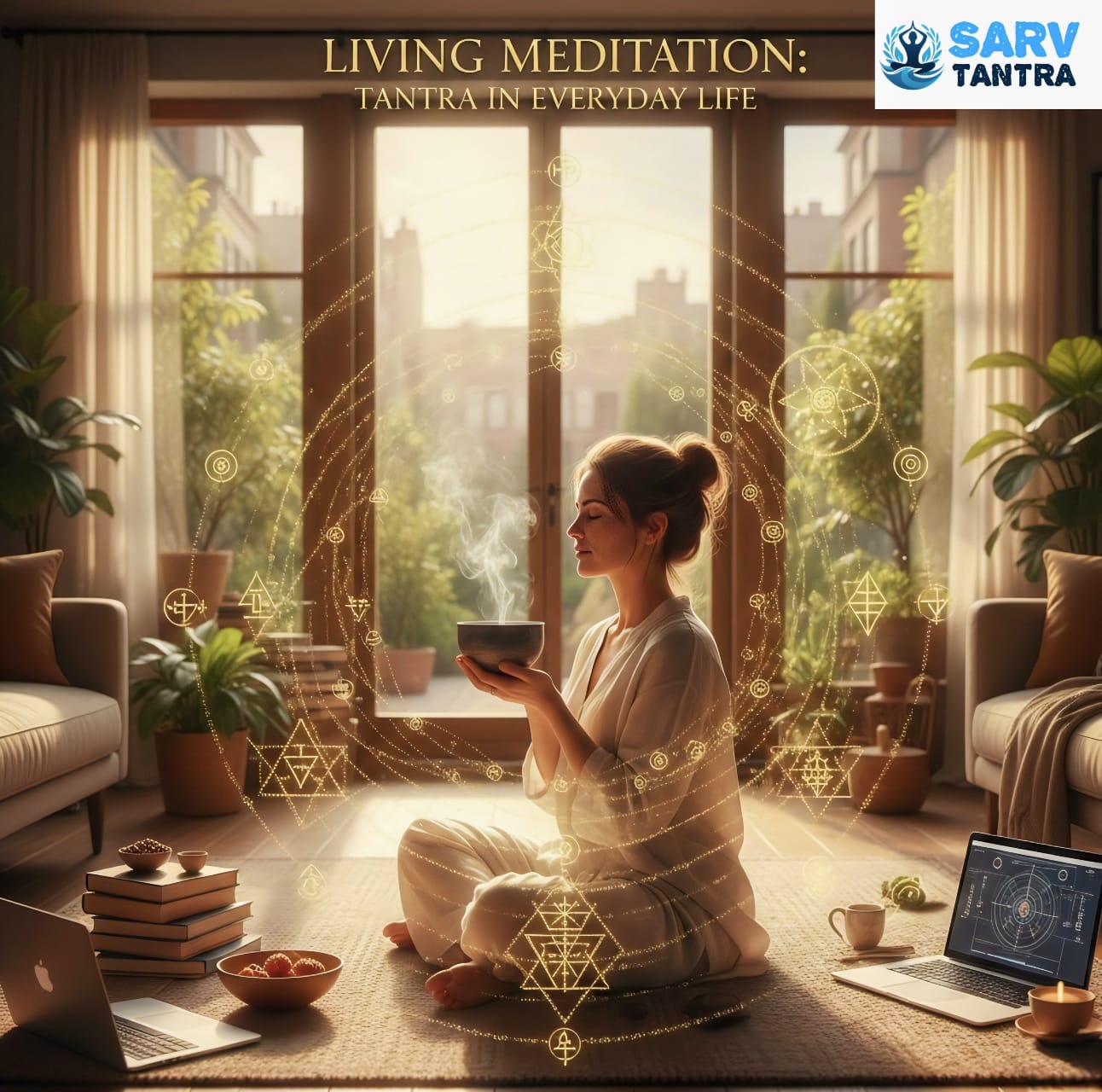
Many people associate meditation with sitting silently, eyes closed, withdrawing from the world. While seated meditation has its place, Tantra offers a far more expansive and inclusive vision—meditation as a way of living.
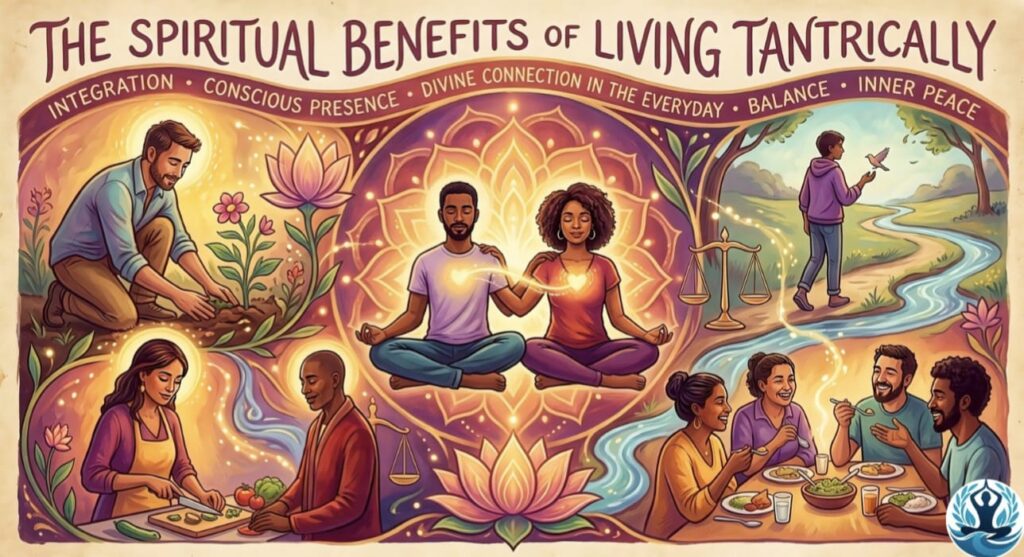
Living meditation means that awareness does not begin and end on a cushion. It permeates daily activities: walking, eating, breathing, working, speaking, touching, and resting. Life itself becomes the practice.
Tantra recognizes that existence is already sacred. Nothing needs to be excluded from spiritual life. Every sensation, emotion, and experience can become a doorway into presence.
This is why Tantra is often described as a path of embodied awakening. It does not escape the world—it embraces it fully.
Living meditation through Tantra supports deep well-being, emotional balance, energetic vitality, and spiritual growth, not as separate pursuits but as one integrated process.
This article explores what living meditation truly means, how Tantra makes it possible, and how you can begin embodying meditative awareness in everyday life.
What Is Living Meditation in Tantra?
Living meditation is continuous awareness of present-moment experience without resistance or grasping.
It is not about controlling the mind.
It is not about forcing silence.
It is not about achieving special states.
Instead, it is about intimate participation with life as it unfolds.
In Tantra:
-
Breathing is meditation
-
Feeling is meditation
-
Listening is meditation
-
Moving is meditation
-
Resting is meditation
Meditation becomes less something you do and more something you are.
This shift is profound because it dissolves the boundary between spiritual practice and ordinary life.
Why Tantra Emphasizes Meditation in Daily Life
Many spiritual paths historically developed in monastic or retreat settings. Tantra emerged within household culture, where people lived ordinary lives with families, responsibilities, work, and relationships.
Because of this, Tantra developed methods that integrate awakening into everyday existence.
Tantra understands:
If awareness only exists during formal practice, transformation remains limited.
True transformation happens when presence enters:
-
Conversations
-
Challenges
-
Emotional reactions
-
Physical sensations
-
Relationships
This integration is what makes Tantra a path of living meditation.
The Tantric View of Reality
Tantra sees reality as a dynamic expression of consciousness and energy.
Nothing is inherently profane.
Nothing is inherently separate.
Everything—pleasant or unpleasant—is an expression of the same living intelligence.
From this view:
-
Pain is not an obstacle
-
Pleasure is not a distraction
-
Neutral sensations are not insignificant
All experiences become valid objects of awareness.
This radically inclusive approach allows meditation to happen anywhere, anytime.
From Technique-Based Meditation to Awareness-Based Living
Many people begin meditation with techniques:
-
Focusing on breath
-
Repeating a mantra
-
Visualizing
These techniques can be helpful.
Tantra, however, gradually shifts emphasis from technique to pure awareness.
Instead of concentrating on a single object, you rest as the space in which all objects appear.
You notice:
-
Breath moving
-
Thoughts arising
-
Emotions shifting
-
Sensations pulsing
Nothing needs to change.
This open awareness becomes portable.
You carry it into daily life.
The Body as a Gateway to Living Meditation
The body is always present.
The body is always happening now.
This makes the body the easiest doorway into living meditation.
Tantric practice encourages you to feel:
-
Weight
-
Temperature
-
Texture
-
Pulsation
-
Movement
Rather than thinking about your body, you experience it directly.
For example:
While walking:
Feel each step.
Notice pressure, balance, and rhythm.
While sitting:
Feel contact with the chair.
Notice breath rising and falling.
While lying down:
Feel gravity holding you.
These simple acts anchor awareness in the present moment.
Over time, embodiment becomes natural.
You no longer have to “remember” to be present.
Presence becomes your default state.
Breath Awareness in Daily Activities
Breath is a bridge between conscious and unconscious processes.
Tantra does not emphasize controlling the breath.
It emphasizes feeling the breath.
Throughout the day, you can:
-
Notice inhalation entering
-
Notice exhalation leaving
-
Sense subtle pauses
You do not change the rhythm.
You simply feel.
This alone:
-
Calms the nervous system
-
Centers attention
-
Brings you back into your body
You can feel breath while:
-
Standing in line
-
Speaking
-
Driving
-
Cooking
Breath becomes a constant companion.
Sensory Awareness as Meditation
Tantra refines the senses.
Instead of living mainly in thought, you begin living through sensation.
For example:
While eating:
Notice taste, texture, temperature.
While showering:
Feel water touching skin.
While listening:
Hear sounds without labeling.
When senses open:
-
Mind activity naturally slows
-
Pleasure becomes subtle and sustainable
-
Life feels richer
Sensory awareness grounds meditation in the physical world.
This makes living meditation tangible and enjoyable.
Emotions as Objects of Meditation
Many people try to meditate away difficult emotions.
Tantra moves toward them.
When an emotion arises:
-
You feel its sensations
-
You notice its movement
-
You stay present
You do not analyze.
You do not suppress.
You do not dramatize.
You simply allow.
This transforms emotions from problems into energy currents.
As a result:
-
Emotions move through faster
-
Suppression dissolves
-
Emotional intelligence grows
Every emotional moment becomes meditation.
Thoughts as Passing Clouds
Living meditation does not require stopping thoughts.
It requires not being hypnotized by them.
You notice:
“A thought is appearing.”
Instead of:
“I am my thought.”
This subtle shift changes everything.
Thoughts continue.
But they lose authority.
You remain as the observer.
Over time:
-
Mental noise decreases
-
Clarity increases
-
Inner space expands
Thinking becomes functional rather than compulsive.
Movement as Meditation
In Tantra, movement is sacred.
Whether stretching, walking, dancing, or performing daily tasks, movement can be infused with awareness.
Key principles:
-
Move slowly sometimes
-
Feel muscles engaging
-
Sense joints opening
-
Notice balance shifting
Even simple actions like reaching for a cup become meditative.
You inhabit your movements instead of rushing through them.
This reduces accidents, tension, and fatigue.
It also creates a graceful relationship with your body.
Eating as Living Meditation
Eating is a powerful Tantric practice.
Instead of eating mechanically:
-
Look at your food
-
Smell it
-
Taste slowly
-
Chew consciously
Notice:
-
When hunger fades
-
When satisfaction arises
This builds:
-
Healthy relationship with food
-
Better digestion
-
Natural portion regulation
Eating becomes nourishing on multiple levels.
Relationships as Meditation
Relationships are often where unconscious patterns surface most clearly.
Tantra welcomes this.
In interactions, you notice:
-
Body sensations
-
Emotional reactions
-
Impulses to speak or withdraw
You stay present with these experiences.
Instead of reacting automatically, you pause.
This creates space for conscious response.
Relationships become mirrors for awareness.
They accelerate growth when approached with presence.
Listening as Meditation
Most people listen while preparing their reply.
Tantric listening means:
-
Feeling your body
-
Hearing words fully
-
Sensing tone and energy
You are present rather than strategizing.
This:
-
Deepens connection
-
Reduces misunderstanding
-
Creates intimacy
Listening becomes meditation in sound.
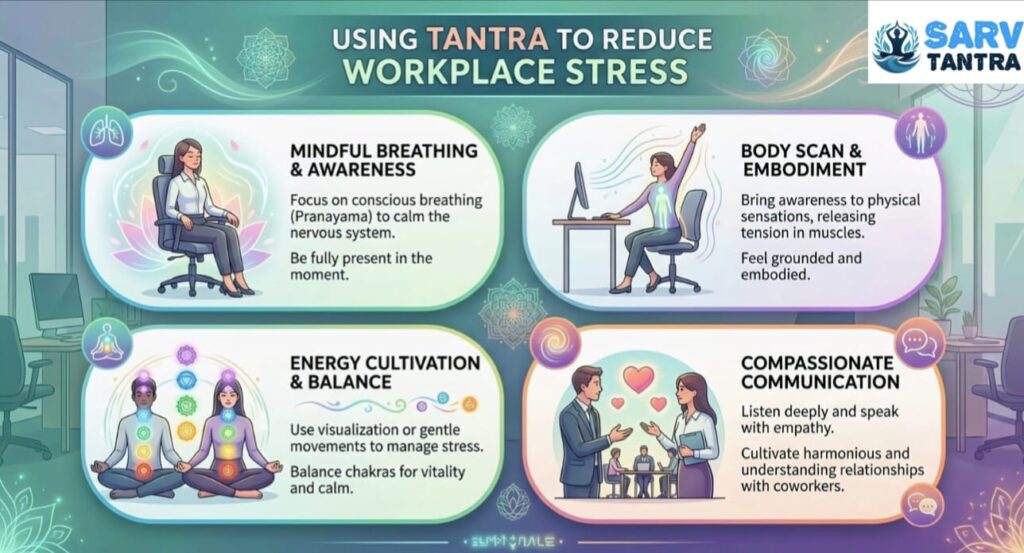
Working as Meditation
Work does not need to be separate from spiritual life.
While working:
-
Feel your hands
-
Notice posture
-
Sense breathing
You bring awareness into activity.
This:
-
Reduces burnout
-
Improves focus
-
Creates calm efficiency
Work becomes a field of practice rather than a distraction.
Rest as Meditation
Resting consciously is as important as active awareness.
When lying down:
-
Feel contact with the surface
-
Allow muscles to soften
-
Notice breath
Instead of mentally scrolling, you remain present.
Conscious rest deeply restores the nervous system.
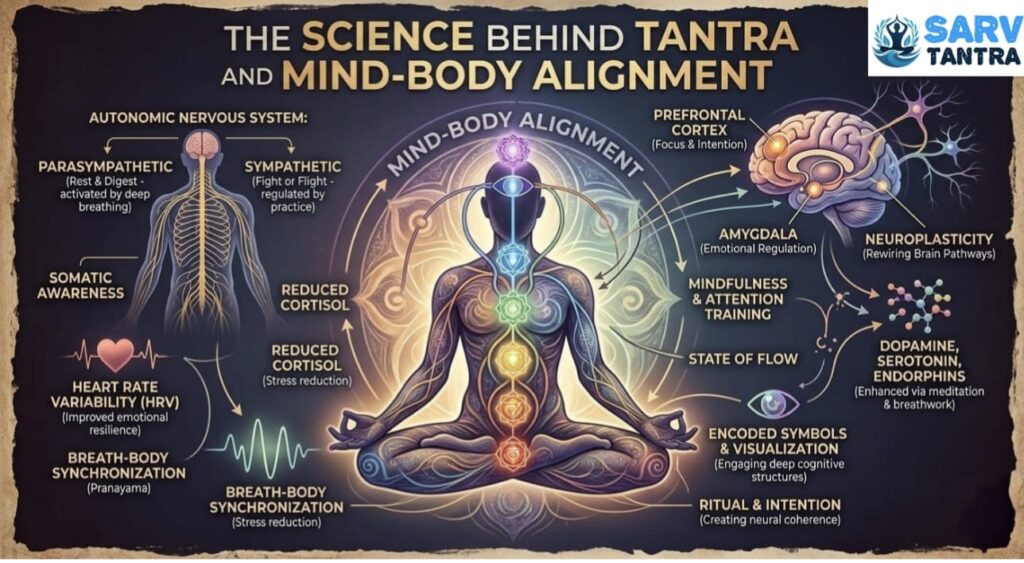
Living Meditation and the Nervous System
Living meditation gradually shifts the nervous system toward regulation.
Because you are frequently returning to sensation and breath:
-
Fight-or-flight decreases
-
Safety signals increase
-
Baseline stress lowers
This creates:
-
Better sleep
-
Improved digestion
-
Emotional stability
Long-term health depends heavily on nervous system balance.
Living meditation directly supports this.
Why Living Meditation Is Sustainable
Many people struggle with consistency in formal meditation.
Living meditation solves this problem.
Because practice is woven into daily life:
-
No special time is required
-
No special environment is required
Even short moments of awareness accumulate.
This makes transformation gentle and sustainable.
Common Challenges
1. Forgetting to Be Present
This is normal. Gently return.
2. Expecting Constant Bliss
Living meditation includes all experiences.
3. Trying Too Hard
Relaxation is key.
Small Steps Matter
You do not need perfection.
Start with:
-
Feeling one breath
-
Noticing one sensation
-
Pausing once an hour
These tiny moments compound.
Over months and years, awareness becomes continuous.
Signs Living Meditation Is Taking Root
-
You notice sensations more easily
-
You react less automatically
-
You feel more at home in your body
-
You experience quiet contentment
These are subtle but powerful indicators.
Living Meditation and Spiritual Growth
Tantra does not aim for escape from humanity.
It aims for full embodiment of consciousness.
Spiritual growth looks like:
-
Greater presence
-
Deeper compassion
-
Increased aliveness
-
Natural kindness
Not dramatic experiences.
Living meditation supports this maturation.
Living Meditation and Long-Term Well-Being
Because awareness is integrated into daily life:
-
Stress is processed as it arises
-
Emotions do not accumulate
-
Energy circulates freely
This prevents many imbalances from forming.
Well-being becomes your natural state rather than something you chase.
Conclusion: Life as the Sacred Practice
Living meditation is the heart of Tantra.
There is nowhere to go.
Nothing to become.
Only life, happening now.
By meeting each moment with open awareness, you discover that meditation is not an activity—it is your true nature.
Tantra invites you to stop dividing life into sacred and ordinary.
When everything is included, everything becomes sacred.
This is living meditation.
This is Tantra in everyday life.