

Tantra as a Bridge Between Mind and Sensation

Modern life trains us to live almost entirely in the mind. Thoughts dominate, plans accelerate, and attention stays outward—screens, schedules, responsibilities. Meanwhile, the body becomes something we use, manage, or ignore rather than something we listen to. Sensations are often dismissed unless they become intense—pain, illness, exhaustion.
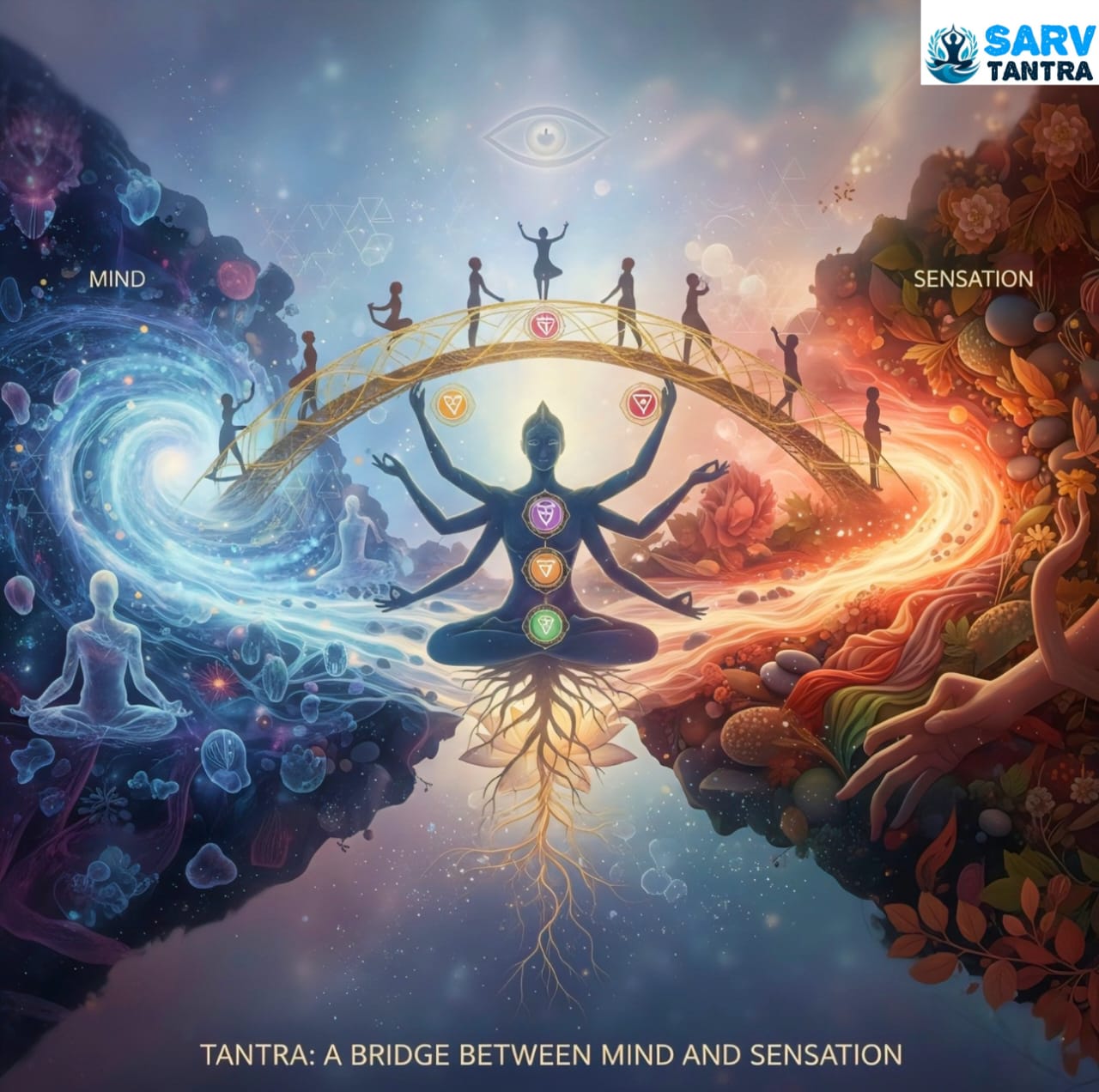
Tantra offers a radically different approach. Instead of privileging thought over sensation or spirit over body, Tantra views mind and sensation as expressions of the same living awareness. In this view, sensation is not a distraction from clarity—it is a doorway to it.
Tantra as a bridge between mind and sensation restores an ancient intelligence: the capacity to feel fully while remaining aware, present, and grounded. This reconnection has profound effects on emotional health, nervous system regulation, self-trust, and spiritual maturity.
This article explores how Tantra rebuilds this bridge, why it matters today, and how gentle Tantric awareness can transform the way we inhabit our bodies and experience life.
The Modern Split: Thinking Without Feeling
How the Mind Became Dominant
Many people today experience a subtle but persistent split:
-
The mind is active, analyzing, worrying, judging
-
The body is muted, tense, or numb
-
Sensation is either ignored or overwhelming
This split is reinforced by:
-
Productivity-driven culture
-
Constant mental stimulation
-
Suppression of emotions
-
Trauma and chronic stress
-
Spiritual teachings that devalue the body
When sensation is disconnected from awareness, two extremes arise:
-
Overthinking without embodiment
-
Raw sensation without clarity
Neither leads to wholeness.
Tantra’s Core Insight: Awareness Lives in the Body
Tantra begins with a simple but profound recognition:
Awareness is not located only in the mind.
It permeates sensation, breath, movement, and stillness.
In Tantra:
-
The body is not an obstacle to consciousness
-
Sensation is not primitive or lower
-
Feeling is not opposed to clarity
Instead, sensation is intelligence in motion.
When awareness enters sensation without control or judgment, a natural integration occurs. The mind softens. The body relaxes. Presence deepens.
What Does “Bridging Mind and Sensation” Really Mean?
Not Control, Not Indulgence—Presence
Bridging mind and sensation does not mean:
-
Forcing attention into the body
-
Intensifying sensations
-
Chasing peak experiences
-
Analyzing feelings endlessly
Tantra emphasizes gentle inclusion.
The bridge forms when:
-
The mind learns to stay with sensation without commentary
-
Sensation is allowed without resistance
-
Awareness becomes curious rather than corrective
This creates embodied presence—thinking that is grounded, and feeling that is conscious.
Sensation as a Language of Awareness
How the Body Communicates
The body constantly communicates through:
-
Subtle tension and release
-
Warmth, tingling, heaviness
-
Breath patterns
-
Postural shifts
-
Emotional textures
Most people override these signals with thought. Tantra reverses this habit by teaching listening instead of interpreting.
In Tantric awareness:
-
Sensation is felt directly, not explained
-
The mind learns to receive instead of dominate
-
Meaning emerges organically
This restores trust in the body’s wisdom.
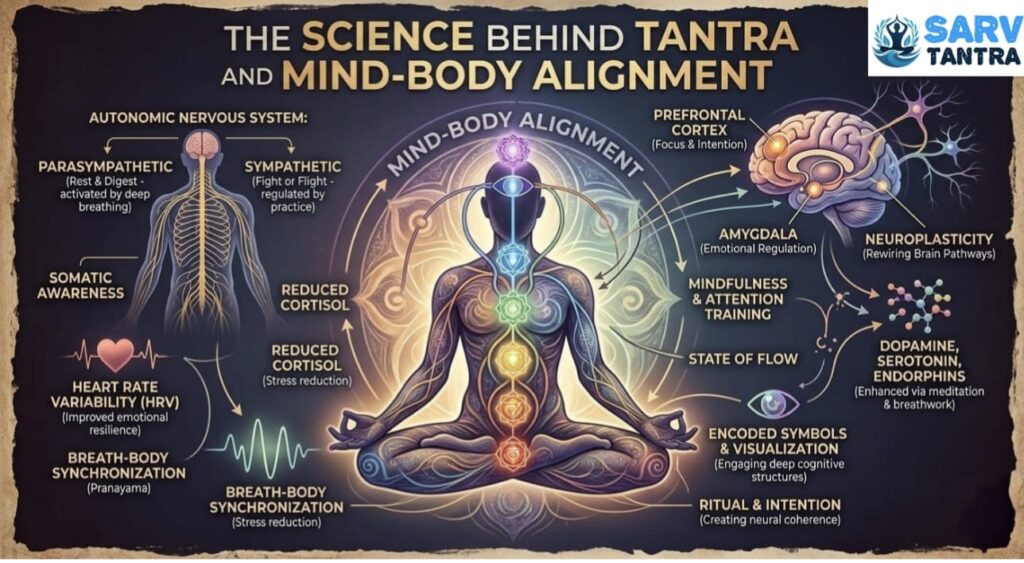
Tantra and Nervous System Regulation
One of the most powerful yet overlooked benefits of Tantric practice is its effect on the nervous system.
From Hypervigilance to Safety
When mind and sensation are disconnected:
-
The nervous system stays in fight-or-flight
-
Thoughts become repetitive
-
Emotions feel overwhelming or distant
-
The body remains tense even at rest
Tantric awareness gently reunites sensation with presence, signaling safety to the nervous system.
This leads to:
-
Slower breathing
-
Reduced mental agitation
-
Emotional regulation
-
Increased capacity to feel without overwhelm
Tantra does not “calm the mind” by suppressing thought—it grounds the mind through sensation.
Healing Dissociation Through Tantric Awareness
Re-entering the Body Gently
Many people live with mild or severe dissociation:
-
Feeling disconnected from the body
-
Numbness or emptiness
-
Difficulty sensing emotions
-
Living “in the head”
Tantra approaches this not as a problem to fix, but as a protective adaptation.
Instead of pushing awareness into sensation, Tantra invites:
-
Small moments of contact
-
Neutral sensations (breath, weight, warmth)
-
Choice and pacing
-
Compassionate presence
Over time, sensation becomes safe again. The bridge rebuilds naturally.
Tantra vs. Mindfulness: A Subtle Distinction
While mindfulness emphasizes observation, Tantra emphasizes participation.
Mindfulness often says:
“Observe the sensation.”
Tantra says:
“Enter the sensation as awareness itself.”
This subtle difference changes everything.
Tantric awareness is:
-
Less detached
-
More intimate
-
More embodied
-
Less effortful
It does not stand apart from sensation—it inhabits it.
Emotional Integration Through Sensation
Emotions are not just thoughts; they are felt experiences in the body.
Tantra helps bridge mind and sensation by:
-
Allowing emotions to be felt without narrative
-
Letting sensation move and change naturally
-
Avoiding premature interpretation
For example:
-
Anxiety becomes vibration and breath
-
Sadness becomes heaviness and softness
-
Anger becomes heat and energy
When emotions are experienced this way:
-
They complete themselves
-
They do not get stuck
-
They do not dominate the mind
This is emotional intelligence rooted in embodiment.
Tantra and the End of Self-Judgment
Self-judgment thrives in abstraction—stories about who we should be.
Sensation brings us back to what is actually happening now.
When awareness rests in sensation:
-
Judgment loses momentum
-
Comparison fades
-
Presence replaces performance
Tantra teaches that being with sensation is enough. Nothing needs to be fixed, improved, or transcended.
Everyday Tantra: Bridging Mind and Sensation in Daily Life
Tantra is not limited to formal practice. The bridge strengthens through ordinary moments.
Simple Daily Gateways
-
Feeling the feet while walking
-
Sensing breath during conversation
-
Noticing posture while working
-
Feeling temperature while bathing
-
Eating with awareness of texture and taste
These moments retrain the mind to stay connected to sensation without effort.
Spiritual Growth Without Disembodiment
Many spiritual paths emphasize transcendence—rising above the body.
Tantra emphasizes inclusion.
In Tantric understanding:
-
Awakening is not leaving the body
-
Consciousness expresses itself through form
-
Sensation is sacred, not secondary
True integration happens when:
-
Mind becomes humble
-
Body becomes trusted
-
Awareness becomes embodied
This creates spirituality that is stable, grounded, and mature.
The Intelligence of Pleasure and Discomfort
Tantra does not divide sensation into good and bad.
Both pleasure and discomfort:
-
Carry information
-
Invite awareness
-
Reveal attachment and resistance
By staying present with sensation without grasping or avoidance, the mind learns equanimity.
This balance is deeply liberating.
Why This Bridge Matters Today
In a world of acceleration, disconnection, and overwhelm, Tantra offers something essential:
-
A way to feel without drowning
-
A way to think without disembodiment
-
A way to heal without force
-
A way to be present without effort
Tantra as a bridge between mind and sensation restores wholeness—not as an idea, but as a lived experience.
Conclusion: Living as Integrated Awareness
When mind and sensation are reunited:
-
Awareness becomes embodied
-
Emotions become intelligible
-
The nervous system relaxes
-
Life feels immediate and real
Tantra reminds us that we do not need to escape the body to awaken. We only need to arrive fully within it.
The bridge is not something to build—it is something to remember.