

Tantra for Softening Inner Resistance to Change

Change is one of life’s few constants, yet most people experience it as uncomfortable, threatening, or destabilizing. Whether it is a shift in relationships, career, health, identity, or inner beliefs, change often triggers resistance before acceptance.
This resistance is rarely logical. It lives in the body, the nervous system, and emotional memory. We cling to what is familiar because it feels safe, even when it limits our growth.
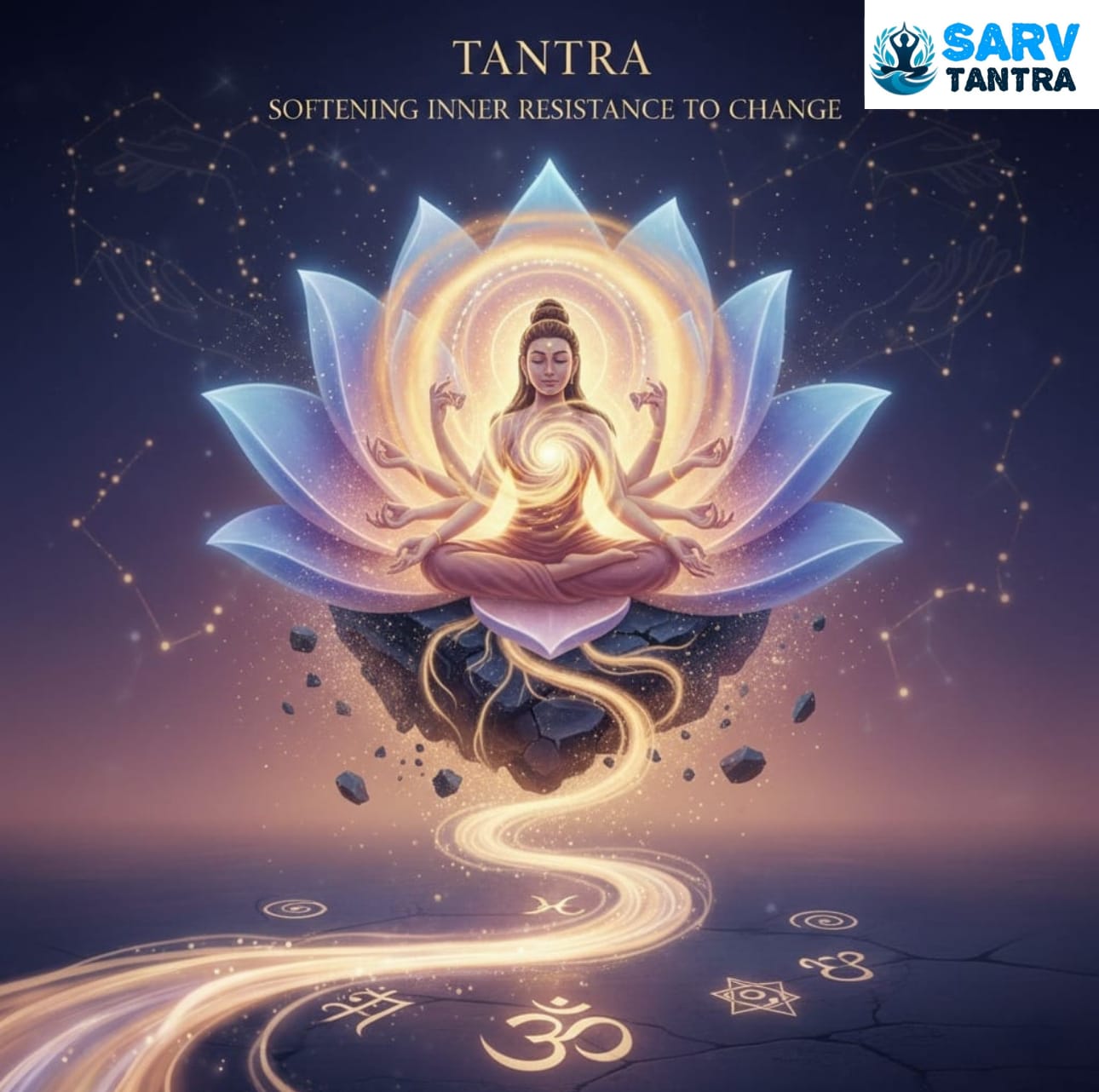
Tantra offers a radically different approach. Instead of forcing change or suppressing resistance, Tantra invites us to soften, feel, and allow transformation to unfold organically. Through awareness of breath, body, sensation, and presence, Tantra teaches us that change is not an enemy but a natural movement of life itself.
Understanding Inner Resistance
Before we explore Tantra’s role, it’s important to understand what resistance really is.
Resistance is not laziness or stubbornness. It is a protective mechanism. The mind seeks stability, while the nervous system prioritizes survival. Any unfamiliar experience may be interpreted as a threat.
Resistance can appear as:
- Overthinking or procrastination
- Emotional shutdown or avoidance
- Tightness in the chest, jaw, or stomach
- Fear of losing control
- Clinging to old identities
- Self-sabotage
At its core, resistance is the body saying: “I don’t feel safe yet.”
This is where Tantra begins.
Tantra’s Perspective on Change
Tantra views life as a dynamic flow of energy. Nothing is fixed. Everything is moving, evolving, and transforming.
From a Tantric perspective:
- Change is natural, not disruptive
- Resistance is stored energy, not failure
- Growth happens through awareness, not force
- Transformation begins in the body, not the mind
Rather than trying to eliminate resistance, Tantra encourages us to listen to it. Resistance becomes a doorway into deeper self-knowledge.
The Body as the Gateway to Transformation
Modern culture often tries to handle change intellectually. We read self-help books, make plans, and set goals. Yet transformation rarely occurs through thinking alone.
Tantra recognizes that the body holds emotional memory, fear patterns, and subconscious beliefs. When we face change, the body reacts before the mind understands why.
This is why Tantric practices emphasize:
- Breath awareness
- Sensory presence
- Movement and stillness
- Emotional witnessing
- Embodied attention
By returning to the body, we begin to loosen the grip of resistance.
Breath: The First Tantric Tool for Softening
Breath reflects our relationship with change.
When we resist, breath becomes shallow or held. When we feel safe, breath deepens naturally.
Tantra uses conscious breathing not to control experience but to create space for it. Slow, intentional breathing tells the nervous system that it is safe to relax.
A simple Tantric breath practice:
- Inhale slowly through the nose
- Feel the chest and belly expand
- Pause gently at the top
- Exhale slowly, longer than the inhale
- Notice sensations without judgment
Over time, breath becomes a bridge between fear and acceptance.
Tantra and Nervous System Regulation
Much resistance to change is rooted in the nervous system. When the body senses uncertainty, it activates survival responses:
- Fight (anger, defensiveness)
- Flight (avoidance, distraction)
- Freeze (numbness, indecision)
Tantra helps regulate these responses by encouraging mindful awareness of sensations rather than reacting automatically.
When we observe sensations with curiosity, the body gradually shifts from survival mode to presence.
This shift allows change to be experienced not as danger but as movement.
Softening Instead of Forcing
Many personal development approaches emphasize discipline, pushing, or overcoming fear. Tantra takes a different path.
In Tantra:
- Softening replaces forcing
- Allowing replaces controlling
- Awareness replaces judgment
When we soften toward resistance, we stop fighting ourselves. Energy that was trapped in tension begins to flow.
This creates a paradox: the more we allow resistance, the less power it holds.
Emotional Awareness as a Tantric Practice
Change often awakens emotions we would rather avoid:
- Grief for what is ending
- Fear of uncertainty
- Shame around identity shifts
- Anger at loss of control
Tantra teaches that emotions are not obstacles but expressions of life energy. When felt fully, they move naturally.
A Tantric approach to emotions includes:
- Feeling sensations in the body
- Naming emotions without labeling them as good or bad
- Breathing into areas of tension
- Staying present rather than escaping
Through this process, emotions become guides rather than barriers.
Tantra and the Illusion of Control
Resistance to change often comes from the belief that control equals safety.
Tantra gently dissolves this illusion. Life cannot be controlled, only experienced.
Through practices of surrender and presence, Tantra reveals that safety is not found in certainty but in awareness.
When we learn to trust our capacity to meet each moment, change loses its threatening edge.
Identity and the Fear of Becoming Someone New
Another reason we resist change is attachment to identity.
We tell ourselves stories about who we are:
- “I’m not the kind of person who…”
- “This is just how I am.”
- “I can’t change now.”
Tantra views identity as fluid rather than fixed. Instead of defending an old self, Tantra invites us to experience ourselves as living processes.
This perspective makes transformation less frightening. We are not losing ourselves—we are discovering new dimensions of ourselves.
Tantra and Trust in Life’s Intelligence
A central Tantric insight is that life has its own intelligence.
Just as the body knows how to heal a wound, the psyche knows how to evolve. When we stop interfering with constant resistance, growth happens naturally.
Trust in life’s intelligence develops through experience. Each time we move through change with awareness, we learn that we can handle uncertainty.
This builds inner confidence that no external stability can provide.
Practical Tantric Techniques for Embracing Change
1. Sensory Grounding
Focus on physical sensations:
- Feel your feet on the floor
- Notice sounds in the room
- Sense the temperature of the air
This anchors awareness in the present, where change is manageable.
2. Movement Meditation
Slow, conscious movement releases stored tension. Gentle stretching, walking meditation, or intuitive movement helps the body process change.
3. Witnessing Thoughts
Instead of believing every fearful thought, Tantra teaches observing them as passing clouds.
This reduces identification with anxiety and opens space for new possibilities.
4. Ritualizing Transitions
Tantra honors transitions through simple rituals—lighting a candle, taking a mindful breath, or pausing intentionally before a decision.
Ritual transforms change from chaos into conscious evolution.
The Role of Pleasure in Transformation
Tantra recognizes pleasure as a stabilizing force. When we allow moments of joy, beauty, and sensory richness, the nervous system relaxes.
Pleasure reminds us that life is not only uncertainty but also experience.
By cultivating pleasure in small ways—warm tea, sunlight, music, touch—we create a foundation of safety that makes change easier to navigate.
Tantra and Relational Change
Change often occurs in relationships: shifting dynamics, new boundaries, evolving needs.
Tantra encourages conscious communication, presence, and honesty. When we meet change with awareness rather than fear, relationships become spaces of growth instead of tension.
This transforms conflict into an opportunity for deeper connection.
Spiritual Growth Through Change
From a Tantric perspective, change is not just psychological—it is spiritual.
Each transition invites us to release illusion, deepen awareness, and reconnect with the flow of life.
When we stop resisting change, we discover that transformation is not something we do—it is something life does through us.
Long-Term Benefits of Softening Resistance
Practicing Tantra in the face of change leads to:
- Greater emotional flexibility
- Reduced anxiety about the future
- Increased resilience
- Stronger connection to the body
- More authentic decision-making
- Deeper trust in life
Over time, change becomes less of a disruption and more of a rhythm we learn to move with.
Conclusion: Living in Flow Instead of Fear
Resistance to change is deeply human. It arises from the desire for safety, familiarity, and control. Yet life’s nature is movement.
Tantra does not demand that we stop fearing change. Instead, it teaches us to meet fear with presence, softness, and awareness.
By returning to breath, body, and sensation, we learn that transformation does not require force. It unfolds naturally when we stop holding ourselves rigid.
When we soften our resistance, change becomes less like a storm and more like a tide—something we can feel, trust, and move with.
In this way, Tantra becomes not just a practice but a way of living: open, aware, and aligned with the ever-changing flow of life.