

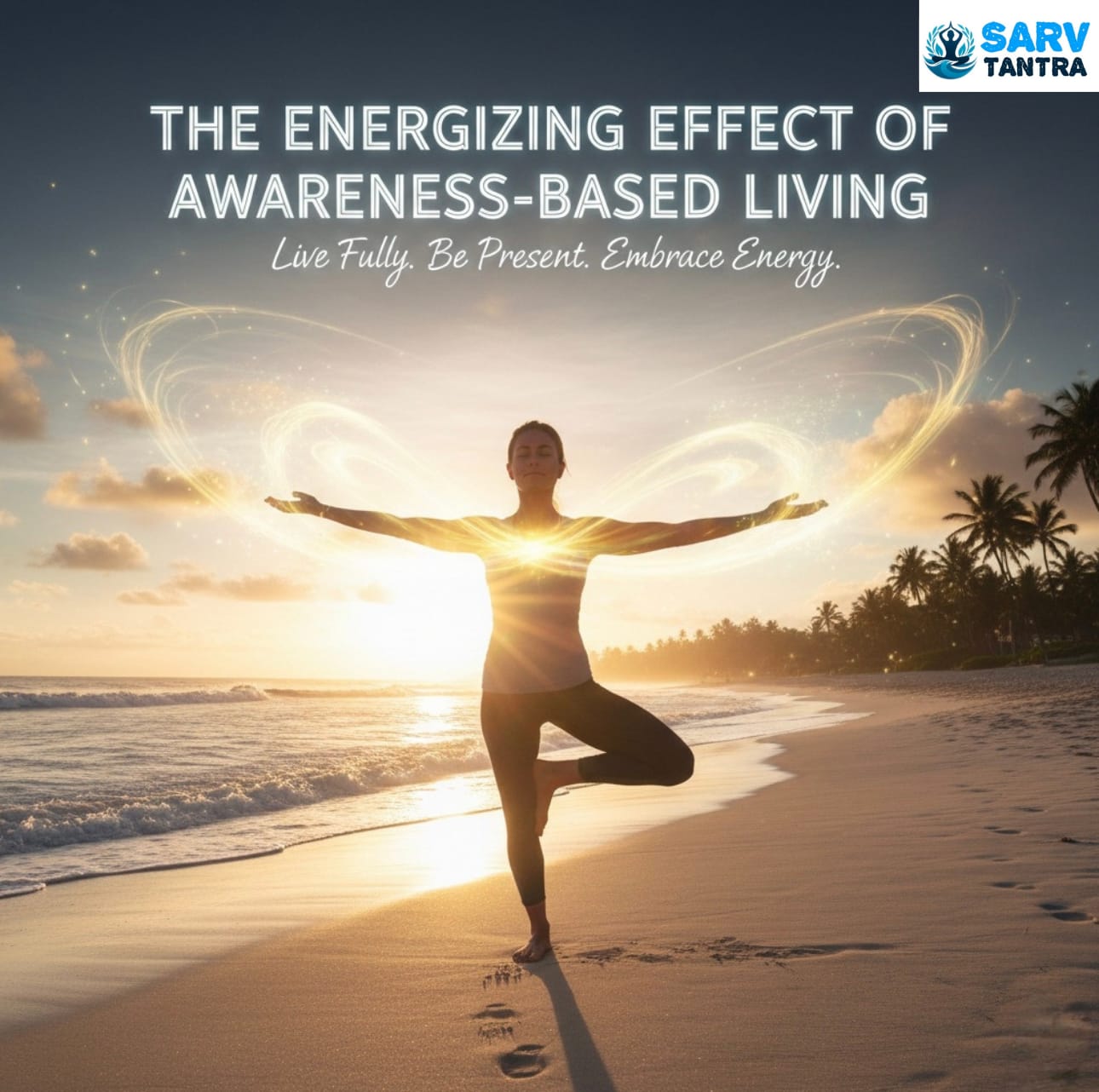
The Energizing Effect of Awareness-Based Living

In a world that constantly demands more productivity, faster responses, and endless multitasking, many people feel chronically tired — not just physically, but emotionally and mentally. Coffee, entertainment, and motivation hacks offer temporary boosts, yet the deeper exhaustion remains. What if the real source of energy is not stimulation, but awareness?
Awareness-based living is the practice of bringing conscious attention to your thoughts, body, emotions, actions, and environment. Instead of rushing through life on autopilot, you begin to experience each moment deliberately. Surprisingly, this shift does not slow life down — it energizes it.
This article explores how awareness-based living restores vitality, enhances mental clarity, strengthens emotional resilience, and reconnects you with your natural life force. More importantly, it explains why awareness is not just a spiritual concept but a practical, everyday source of sustainable energy.
What Is Awareness-Based Living?
Awareness-based living means engaging with life consciously rather than mechanically. It involves:
- Noticing your breath instead of ignoring it
- Feeling your body instead of living in your head
- Responding instead of reacting
- Observing thoughts instead of being ruled by them
- Acting intentionally rather than habitually
It is not about perfection, discipline, or constant mindfulness. Rather, it is about repeatedly returning to presence — again and again — until awareness becomes your natural way of being.
When awareness becomes your foundation, energy is no longer something you chase; it becomes something that flows through you.
Why Unawareness Drains Energy
Most exhaustion today is not caused by physical work but by unconscious living.
1. Mental Overload
When awareness is absent, the mind constantly jumps between past and future. It replays conversations, imagines problems, compares situations, and anticipates threats. This endless mental chatter consumes enormous energy.
2. Emotional Resistance
Without awareness, emotions are either suppressed or exaggerated. Both patterns drain vitality. Suppression creates inner tension, while emotional reactivity burns nervous system resources.
3. Habitual Living
Unaware habits run automatically — scrolling, worrying, rushing, overeating, procrastinating. These behaviors feel effortless, yet they silently exhaust attention and motivation.
4. Body Disconnection
When people live primarily in their thoughts, they ignore bodily signals: fatigue, tension, hunger, breath patterns. This disconnect leads to burnout because the body’s natural regulation system is bypassed.
In short, unawareness leaks energy constantly. Awareness plugs those leaks.
How Awareness Generates Energy
Awareness does not create energy artificially; it frees the energy already present.
1. Awareness Reduces Internal Conflict
Much of our tiredness comes from inner friction — wanting one thing, doing another; feeling one way, pretending another. Awareness dissolves this conflict.
When you see clearly what is happening inside you, resistance drops. Actions align with truth. This alignment saves enormous psychological energy.
2. Awareness Brings the Nervous System into Balance
When awareness deepens, breathing slows naturally. Muscles relax. Attention stabilizes. This signals safety to the nervous system, shifting it from stress mode to restoration mode.
In this state, the body begins conserving and replenishing energy instead of burning it.
3. Awareness Enhances Attention Efficiency
When you act with awareness, you focus fully on one thing at a time. This reduces cognitive switching costs and improves performance with less effort.
Paradoxically, presence allows you to accomplish more while feeling less tired.
4. Awareness Unlocks Emotional Flow
When emotions are acknowledged rather than suppressed, they move through the body quickly. This prevents emotional stagnation, which otherwise drains vitality.
Awareness allows emotions to complete their natural cycle, freeing energy instead of trapping it.
The Psychological Benefits of Awareness-Based Living
Greater Mental Clarity
Awareness acts like a filter that removes unnecessary mental noise. Decisions become easier because you see reality more directly.
Clarity saves energy that would otherwise be wasted in confusion, overthinking, and doubt.
Reduced Anxiety
Anxiety thrives on imagined futures. Awareness brings attention back to the present moment, where most threats do not actually exist.
This shift reduces chronic tension and restores emotional stamina.
Increased Self-Trust
When you live with awareness, you become familiar with your patterns, reactions, and needs. This familiarity builds self-trust.
Self-trust eliminates the exhausting habit of constantly second-guessing yourself.
The Physical Energy Benefits of Awareness
Awareness is not just mental; it deeply affects the body.
Improved Breathing
Conscious awareness naturally deepens breathing, improving oxygen flow and reducing fatigue.
Relaxed Muscles
When awareness enters the body, unnecessary tension releases. Relaxed muscles consume less energy and allow smoother movement.
Better Sleep
People who live with awareness tend to process emotions during the day rather than carry them into the night. This improves sleep quality, leading to greater daytime energy.
Emotional Energy and Awareness
Emotional energy is often overlooked, yet it shapes how alive or drained we feel.
Awareness Prevents Emotional Accumulation
Without awareness, small emotional experiences pile up throughout the day. Each unresolved feeling adds weight.
Awareness acts like a release valve, allowing emotions to move instead of accumulate.
Awareness Builds Emotional Resilience
When you observe emotions without resisting them, they lose their power to overwhelm you. This creates resilience — the ability to experience feelings without losing stability.
Resilience conserves emotional energy.
Awareness and Productivity
Contrary to popular belief, awareness does not reduce productivity. It enhances it.
Conscious Action Is Efficient Action
When awareness is present, actions are deliberate. Mistakes decrease. Rework reduces. Communication improves.
This efficiency conserves time and energy.
Awareness Reduces Decision Fatigue
Much exhaustion comes from endless small decisions. Awareness clarifies priorities, making choices simpler and quicker.
Less decision fatigue means more energy for meaningful work.
Awareness and Relationships
Relationships are one of the biggest sources of emotional energy — or depletion.
Awareness Improves Communication
When you are aware of your own emotions, you express them more clearly and calmly. This reduces conflict and misunderstanding.
Awareness Increases Empathy
Presence allows you to truly listen. When people feel heard, interactions become nourishing instead of draining.
Awareness Reduces Emotional Reactivity
Instead of reacting impulsively, awareness creates a pause. In that pause, wiser responses emerge.
This pause saves enormous emotional energy.
Awareness and Creativity
Creativity flourishes when awareness is present.
When the mind is cluttered with distractions, creativity struggles. Awareness clears space, allowing new ideas to emerge naturally.
Artists, writers, innovators, and problem-solvers often report that their most creative moments arise when they are fully present rather than mentally busy.
Presence frees imaginative energy.
Everyday Practices for Awareness-Based Living
Awareness does not require retreats or special techniques. It grows through simple daily practices.
1. Conscious Breathing Moments
Pause several times a day and notice your breath for 30 seconds. This immediately resets attention.
2. Body Check-Ins
Notice where your body holds tension. Relax those areas consciously.
3. Single-Tasking
Give full attention to one activity at a time — eating, walking, typing, listening.
4. Emotional Naming
When emotions arise, silently name them: “anger,” “fear,” “excitement.” Naming creates distance and clarity.
5. Intentional Pauses
Before responding to messages or conversations, pause briefly. This small gap brings awareness into action.
These practices gradually transform awareness from an effort into a habit.
Awareness as a Sustainable Energy Strategy
Most modern energy solutions are external:
- Caffeine
- Supplements
- Motivation techniques
- Entertainment distractions
These offer short-term stimulation but long-term depletion.
Awareness, in contrast, works from within. It removes unnecessary effort, reduces internal resistance, and restores natural vitality.
It is sustainable because it does not add stimulation; it removes friction.
The Deeper Dimension of Awareness Energy
Beyond physical, mental, and emotional benefits, awareness opens a deeper dimension of vitality — the sense of being fully alive.
When awareness deepens:
- Time feels richer
- Experiences feel more vivid
- Ordinary moments feel meaningful
- Life feels less mechanical and more alive
This sense of aliveness is not excitement or thrill; it is a steady inner brightness.
Many traditions describe this as life force, presence, or consciousness itself. Whatever the label, it is experienced as quiet, stable energy.
Challenges on the Path of Awareness
Awareness-based living sounds simple but is not always easy.
Habitual Distraction
Modern environments reward distraction. Phones, notifications, and constant stimulation pull attention outward.
Emotional Avoidance
Awareness reveals uncomfortable feelings. Many people unconsciously avoid this, preferring distraction.
Impatience
People expect instant results. Awareness, however, grows gradually.
Understanding these challenges helps maintain patience and consistency.
Integrating Awareness into Modern Life
Awareness does not require abandoning responsibilities or lifestyle.
It can be integrated into:
- Work meetings
- Commutes
- Conversations
- Exercise
- Household tasks
Every moment becomes an opportunity to return to presence.
Over time, awareness stops being something you practice and becomes how you live.
Conclusion: Awareness as the Quiet Power Source
The energizing effect of awareness-based living is profound because it works at the root of exhaustion.
Instead of forcing more effort, awareness removes unnecessary strain. Instead of stimulating the body artificially, it restores natural vitality. Instead of escaping life, it deepens participation in it.
Energy then becomes not something you chase but something you embody.
In a world that constantly demands more output, awareness offers a different path: not doing more, but being more present. From that presence, energy flows naturally.
Awareness is not just a tool for calmness; it is a foundation for aliveness.