

The Role of Tantra in Healing the Mind–Body Disconnect

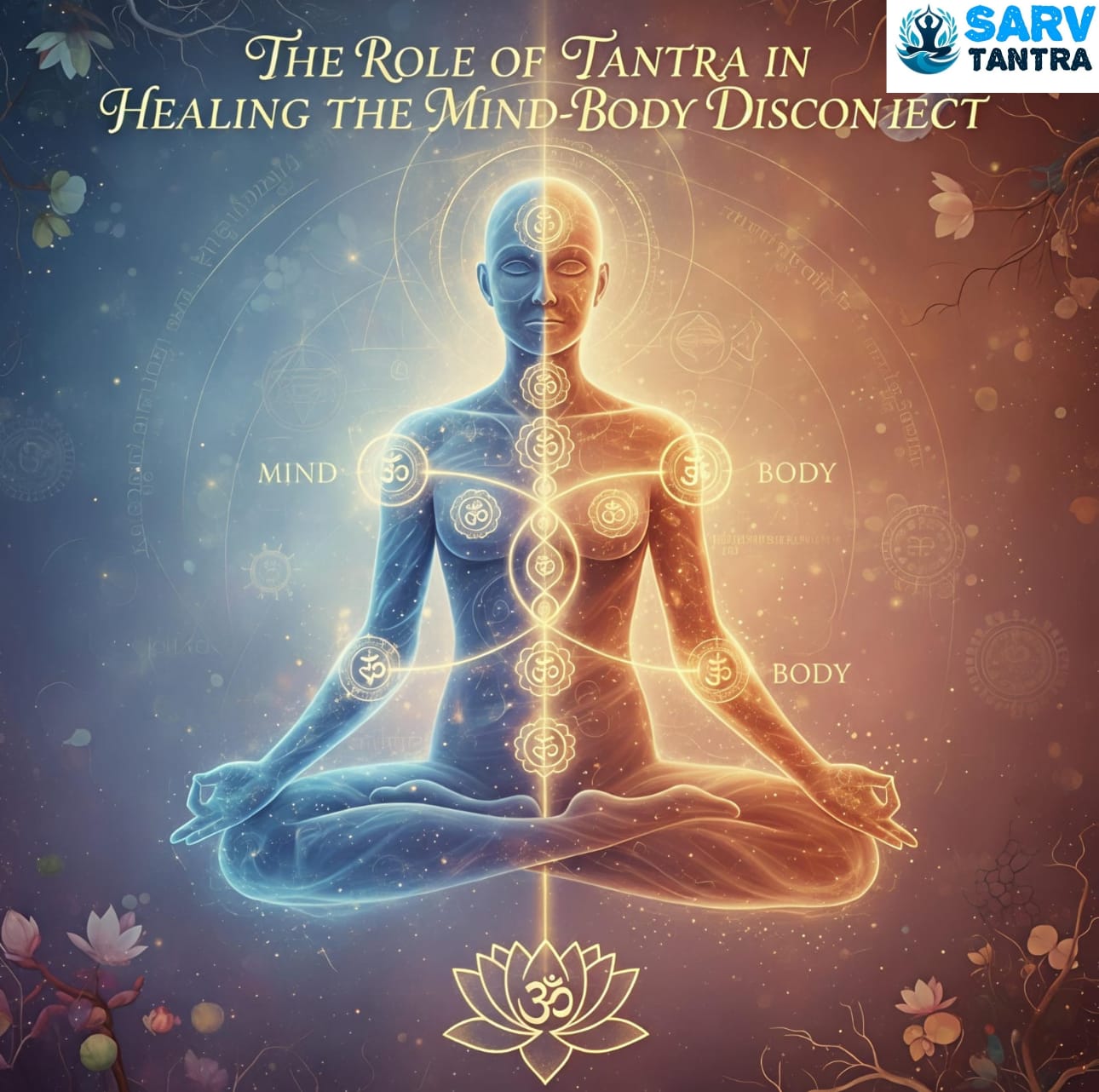
In today’s fast-paced, performance-driven world, many people live almost entirely in their heads. Thoughts dominate experience, while the body becomes something to manage, push, ignore, or fix only when it breaks down. This separation—commonly known as the mind–body disconnect—lies at the root of chronic stress, emotional imbalance, anxiety, burnout, and even physical illness.
The mind–body disconnect occurs when mental activity becomes detached from bodily sensations, emotions, and natural rhythms. We may think constantly yet feel numb, tense, fatigued, or emotionally overwhelmed. Over time, this disconnection erodes our sense of wholeness and inner stability.
Tantra offers a powerful, holistic path for healing this divide. Unlike approaches that prioritize the mind over the body—or vice versa—Tantra views consciousness and physical existence as inseparable expressions of the same life force. Through awareness, breath, sensation, and presence, Tantra gently reunites mind and body, restoring balance and vitality.
This article explores the role of Tantra in healing the mind–body disconnect, explaining its principles, practices, and long-term benefits for modern life.
What Is the Mind–Body Disconnect?
The mind–body disconnect is not a single condition but a pattern of living in which awareness is fragmented. Common signs include:
-
Chronic muscle tension or fatigue
-
Emotional numbness or emotional overwhelm
-
Anxiety, racing thoughts, or dissociation
-
Difficulty relaxing or feeling safe in the body
-
Ignoring bodily needs such as rest, hunger, or boundaries
-
Feeling “cut off” from pleasure, intuition, or creativity
This disconnect often develops due to:
-
Chronic stress and overstimulation
-
Trauma or unresolved emotional experiences
-
Cultural conditioning that values productivity over presence
-
Excessive screen time and mental multitasking
-
Spiritual or self-help approaches that bypass the body
Healing this split requires more than positive thinking or physical exercise alone—it requires integrated awareness, which is where Tantra excels.
Tantra: A Holistic Approach to Healing
Tantra is an ancient spiritual system rooted in the understanding that the body is not an obstacle to awakening, but a gateway to it. Rather than escaping the body, Tantra invites us to inhabit it fully and consciously.
Key Tantric principles relevant to mind–body healing include:
-
Embodiment: Consciousness is experienced through the body
-
Non-duality: Mind and body are not separate entities
-
Presence: Healing happens in the present moment
-
Inclusion: All sensations, emotions, and experiences are valid
-
Awareness over control: Gentle noticing rather than forcing change
Tantra does not aim to “fix” the body or silence the mind. Instead, it restores communication between them, allowing natural intelligence to reorganize itself.
How Tantra Reconnects Mind and Body
1. Restoring Sensory Awareness
One of the primary causes of mind–body disconnect is sensory dulling. Many people move through life barely noticing physical sensations unless there is pain or discomfort.
Tantric practices gently reawaken the senses by bringing awareness to:
-
Breath moving in the body
-
Subtle muscular sensations
-
Temperature, texture, and vibration
-
Emotional sensations felt physically
As sensory awareness increases, the mind naturally slows down. Thought becomes anchored in lived experience rather than abstract loops.
2. Healing Through the Breath
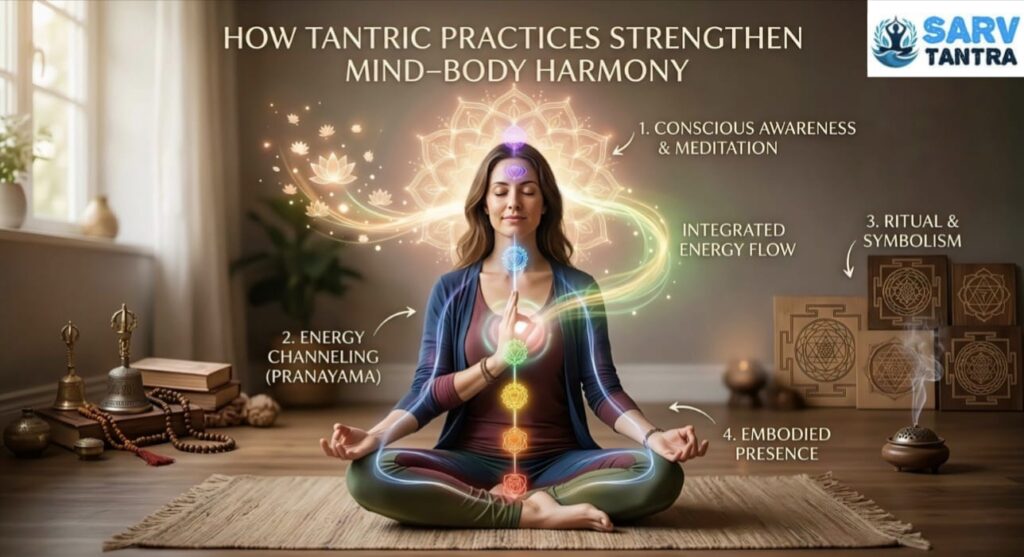
In Tantra, breath is the bridge between mind and body. Shallow, unconscious breathing reinforces tension and mental agitation, while conscious breathing restores flow.
Tantric breathing practices help to:
-
Regulate the nervous system
-
Release stored emotional tension
-
Bring awareness into the body
-
Synchronize thought and sensation
Unlike forceful breathing techniques, Tantric breathwork emphasizes softness, continuity, and listening. Over time, this retrains the body to feel safe and present.
3. Nervous System Regulation
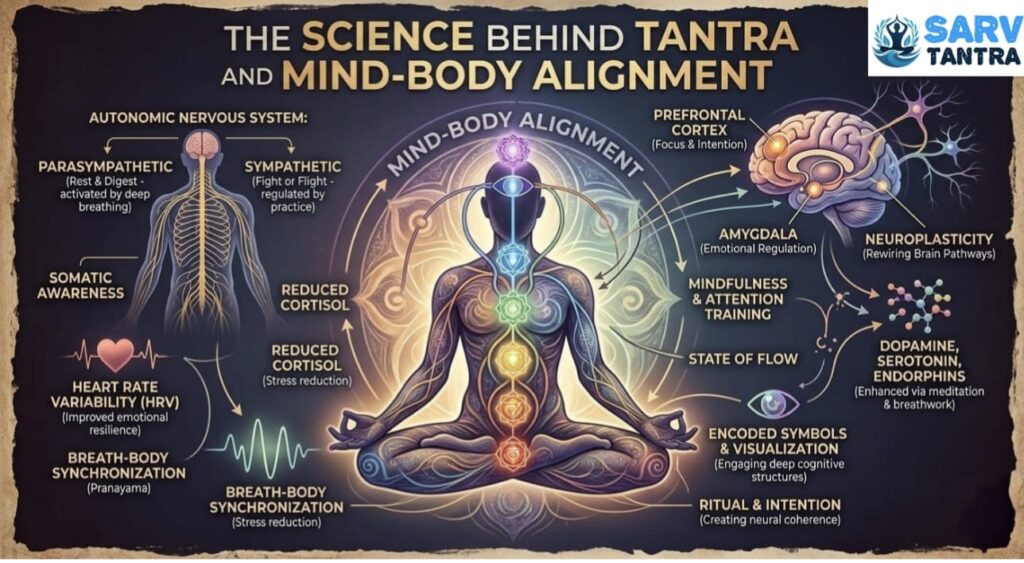
Modern neuroscience confirms what Tantra has known for centuries: healing requires a regulated nervous system.
When the nervous system is chronically activated (fight-or-flight) or collapsed (freeze), mind and body fall out of sync. Tantra works directly with this system by:
-
Encouraging slow, embodied awareness
-
Creating internal safety through presence
-
Allowing sensations without judgment
-
Supporting natural settling rather than effort
As the nervous system calms, mental clarity and bodily ease emerge together.
Tantra and Emotional Integration
Emotions Live in the Body
Emotions are not just mental events—they are physiological processes. When emotions are suppressed, avoided, or intellectualized, they remain stored in the body as tension, tightness, or numbness.
Tantra helps heal the mind–body disconnect by teaching how to:
-
Feel emotions as sensations rather than stories
-
Stay present without being overwhelmed
-
Allow emotional energy to move and resolve
-
Integrate emotional experiences into awareness
This process reduces emotional reactivity and builds resilience.
Emotional Safety and Self-Trust
Many people disconnect from their bodies because the body does not feel safe—often due to past experiences or chronic stress.
Tantric practices rebuild inner safety by:
-
Encouraging gentle self-attunement
-
Respecting personal limits and boundaries
-
Emphasizing choice and consent within oneself
-
Developing compassion toward bodily responses
As safety increases, trust between mind and body is restored.
Moving Beyond Mind-Centered Healing
Traditional self-improvement approaches often focus on changing thoughts, beliefs, or behaviors. While valuable, these methods may leave deeper bodily patterns untouched.
Tantra complements mental insight with embodied wisdom, allowing transformation to occur at multiple levels simultaneously:
-
Cognitive understanding
-
Emotional release
-
Nervous system regulation
-
Energetic flow
This integrated healing leads to changes that feel natural rather than forced.
Everyday Tantric Practices for Mind–Body Healing
1. Micro-Practices of Awareness
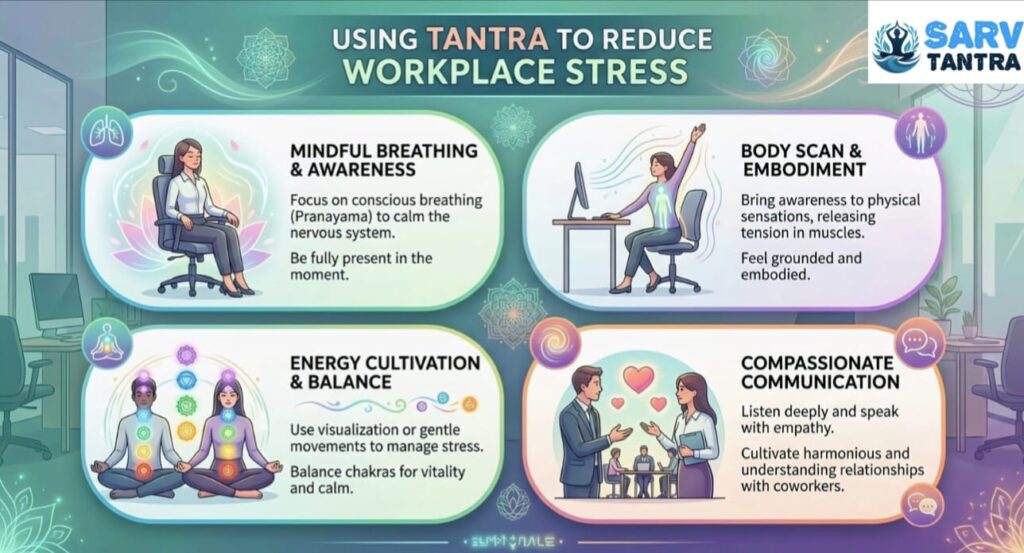
Tantra does not require long rituals. Small moments of embodied awareness throughout the day can profoundly heal the disconnect.
Examples include:
-
Pausing to feel the breath before responding
-
Noticing bodily sensations while walking or eating
-
Placing awareness in tense areas without trying to fix them
Consistency matters more than intensity.
2. Conscious Movement
Slow, mindful movement helps reestablish communication between mind and body. Unlike exercise focused on performance, Tantric movement emphasizes:
-
Fluidity over precision
-
Sensation over appearance
-
Inner experience over external form
This may include intuitive stretching, gentle yoga, or free movement with awareness.
3. Embodied Rest
True rest is not just physical inactivity—it is a state of nervous system settling.
Tantric rest practices involve:
-
Lying down with awareness in the body
-
Allowing sensations to arise and dissolve
-
Letting go of mental effort
-
Resting in presence rather than distraction
Over time, this retrains the body to recover deeply.
Tantra and Long-Term Well-Being
Healing the mind–body disconnect is not a one-time event but an ongoing relationship with oneself.
Long-term benefits of Tantric embodiment include:
-
Improved emotional regulation
-
Reduced anxiety and stress
-
Greater physical ease and vitality
-
Enhanced intuition and self-awareness
-
Deeper sense of inner wholeness
-
More authentic relationships
Rather than seeking peak experiences, Tantra supports sustainable well-being rooted in everyday life.
Common Misconceptions About Tantra and the Body
Many people associate Tantra solely with sexuality, which can obscure its profound therapeutic value.
In truth:
-
Tantra is about awareness, not indulgence
-
Sexuality is only one aspect of embodiment
-
Healing practices are gentle, respectful, and inclusive
-
Tantra works at the level of consciousness, not performance
Understanding this helps people approach Tantra as a path of healing rather than a technique.
Integrating Tantra into Modern Life
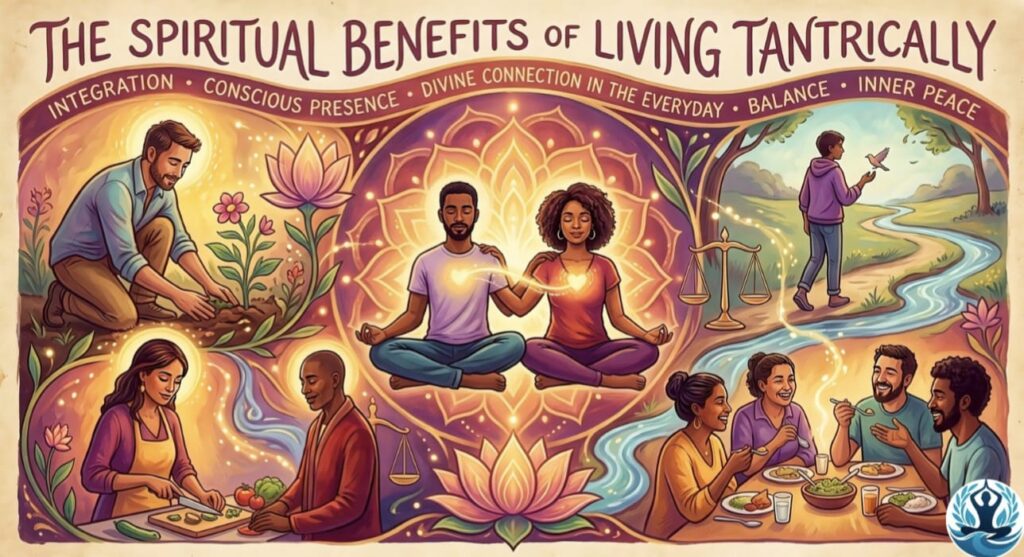
One of Tantra’s greatest strengths is its adaptability. It does not require retreating from life but encourages deeper presence within it.
Tantric awareness can be integrated into:
-
Work and decision-making
-
Relationships and communication
-
Rest and self-care
-
Creativity and expression
-
Spiritual practice
Life itself becomes the field of healing.
Conclusion: Reuniting Mind and Body Through Tantra
The mind–body disconnect is one of the defining challenges of modern life, but it is not permanent. Tantra offers a compassionate, grounded, and deeply effective path for healing this split by restoring awareness, safety, and presence.
By honoring the body as an intelligent partner in consciousness, Tantra allows the mind to relax and the body to speak. Healing unfolds not through force or control, but through listening, inclusion, and embodied awareness.
In reconnecting mind and body, Tantra does more than heal symptoms—it restores our sense of being fully alive.