

Understanding Prana Through the Tantric Lens: Awakening the Living Energy Within


In Tantra, life is not viewed as a collection of separate objects but as a continuous, intelligent flow of energy and consciousness. Everything that exists—thought, breath, emotion, sensation, movement, and stillness—arises from this living field. The Sanskrit word Prana refers to this universal life force that animates all experience. While many spiritual traditions speak about energy, Tantra offers a unique and deeply embodied understanding of Prana: not as something abstract or distant, but as something immediately knowable through direct experience.
From the Tantric lens, Prana is not merely the breath, nor is it only a subtle current moving through invisible channels. Prana is the pulsation of existence itself. It is the rhythm through which consciousness expresses as life. To understand Prana in Tantra is to begin recognizing the sacred intelligence moving through your body, shaping your emotions, fueling your thoughts, and guiding your spiritual unfolding.
Modern life often disconnects people from their natural energetic flow. Stress, overthinking, unresolved emotional patterns, and constant stimulation gradually dull sensitivity to Prana. Many people feel tired even when they rest, disconnected even when surrounded by others, and empty despite external success. Tantra sees these conditions not as personal failures, but as signs of interrupted or distorted energy flow.
This article explores Prana through the Tantric perspective—what it truly means, how it functions, how it becomes blocked, and how gentle Tantric practices help restore its natural movement. Rather than offering rigid techniques or forceful control, Tantra invites a relationship of listening, presence, and cooperation with life energy.
Understanding Prana through Tantra is not about mastering energy. It is about remembering that you are energy.
What Is Prana? A Tantric Definition
In classical Indian philosophy, Prana is often translated as “life force” or “vital energy.” While accurate, this translation barely scratches the surface. From the Tantric view, Prana is conscious energy—energy that is inherently intelligent, responsive, and creative.
Prana is not something you possess. You do not own Prana the way you own an object. You participate in Prana the way a wave participates in the ocean.
Tantra understands reality as composed of two inseparable aspects:
-
Shiva – pure consciousness, stillness, awareness
-
Shakti – dynamic energy, movement, creative force
Prana is an expression of Shakti. It is consciousness in motion.
This means that Prana is not separate from awareness. When you feel warmth in your chest, tingling in your hands, expansion in your breath, or subtle vibration in meditation, you are directly experiencing consciousness expressing as energy.
Tantra therefore treats Prana as sacred. It is not merely a tool for healing or manifestation. It is the very texture of existence.
Prana and the Body: The Body as a Field of Energy
One of Tantra’s revolutionary insights is its relationship with the body. Rather than viewing the body as an obstacle to spirituality, Tantra sees the body as the primary doorway into spiritual realization.
The physical body is the densest expression of Prana. Beneath muscles, organs, and bones lies a vibrant field of subtle energy. Every sensation is a ripple within this field.
From a Tantric perspective:
-
Sensation is Prana becoming perceptible.
-
Emotion is Prana expressing movement.
-
Thought is Prana shaping pattern.
-
Breath is Prana regulating rhythm.
When you feel alive, open, relaxed, and present, Prana is flowing harmoniously. When you feel numb, contracted, restless, or heavy, Prana is restricted or congested.
Tantra does not label these states as good or bad. Instead, they are seen as information—messages from your energetic system.
Learning to sense Prana in the body is foundational to Tantra. This sensing is not imagined. It is tangible, experiential, and trainable through gentle awareness.
The Subtle Channels: How Prana Moves
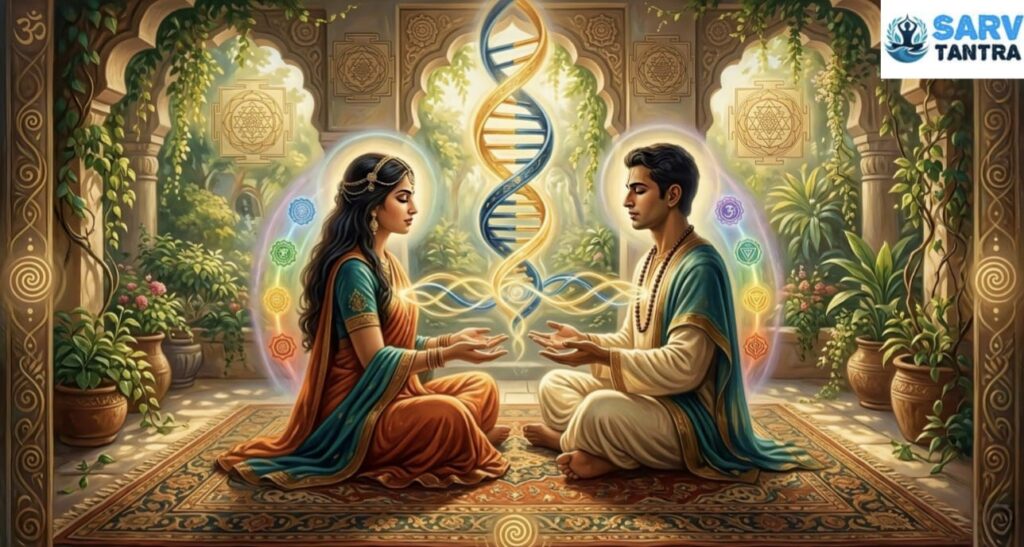
Tantric and yogic traditions describe pathways through which Prana circulates, often called nadis (energy channels). While there are said to be thousands of these channels, three are considered primary:
-
Ida – cooling, receptive, lunar energy
-
Pingala – warming, active, solar energy
-
Sushumna – central channel of balance and awakening
Rather than thinking of these as physical tubes, Tantra encourages understanding them as patterns of movement within consciousness.
When Ida and Pingala are balanced, Prana naturally enters the central channel, supporting clarity, inner stability, and expanded awareness.
However, Tantra places less emphasis on mechanically forcing energy into specific pathways. Instead, it focuses on cultivating conditions that allow Prana to reorganize itself naturally:
-
Relaxation
-
Presence
-
Emotional honesty
-
Breath awareness
-
Non-judgmental attention
When these conditions are present, Prana finds its own intelligence.
Why Prana Becomes Disturbed or Blocked
From the Tantric lens, energy blockages are not random. They are formed through lived experience.
Common sources of disturbance include:
-
Chronic stress
-
Emotional suppression
-
Trauma or shock
-
Constant mental activity
-
Lack of rest
-
Disconnection from bodily sensation
Every time an emotion arises and is not fully felt, a small contraction forms in the energetic field. Over time, repeated contractions accumulate, shaping habitual tension patterns.
For example:
-
Unexpressed sadness may create heaviness in the chest.
-
Long-term fear may create tightness in the belly.
-
Repressed anger may create rigidity in the jaw or shoulders.
Tantra does not attempt to “remove” these blockages aggressively. Instead, it recognizes them as frozen Prana—life energy that paused in order to protect you.
Healing happens not through force, but through gentle reintroduction of awareness.
Awareness as the Primary Healer
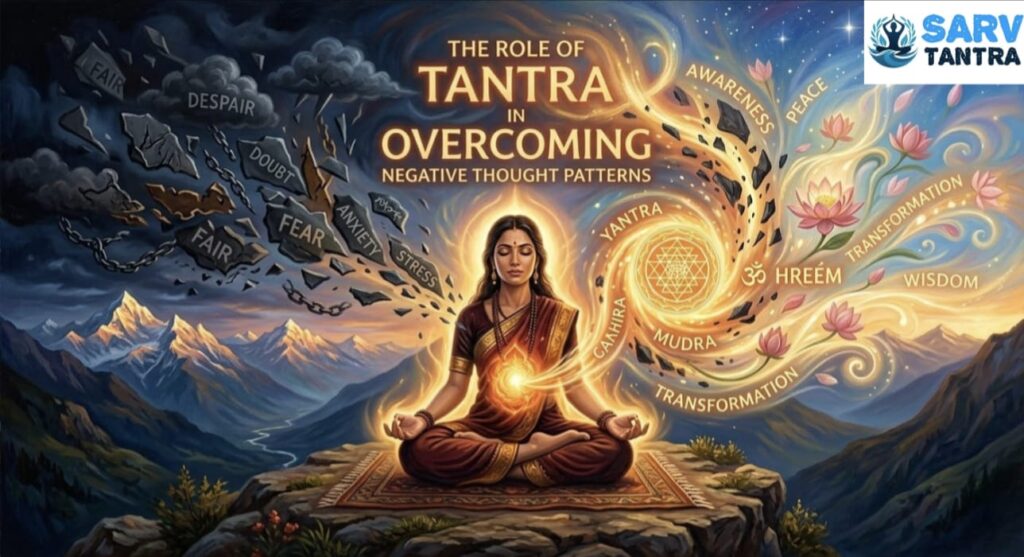
One of Tantra’s core teachings is that awareness itself is transformative.
When awareness touches a contracted area of energy without judgment, resistance begins to soften. Prana starts moving again naturally.
This is radically different from approaches that try to manipulate energy through intense techniques. Tantra trusts the innate intelligence of the body.
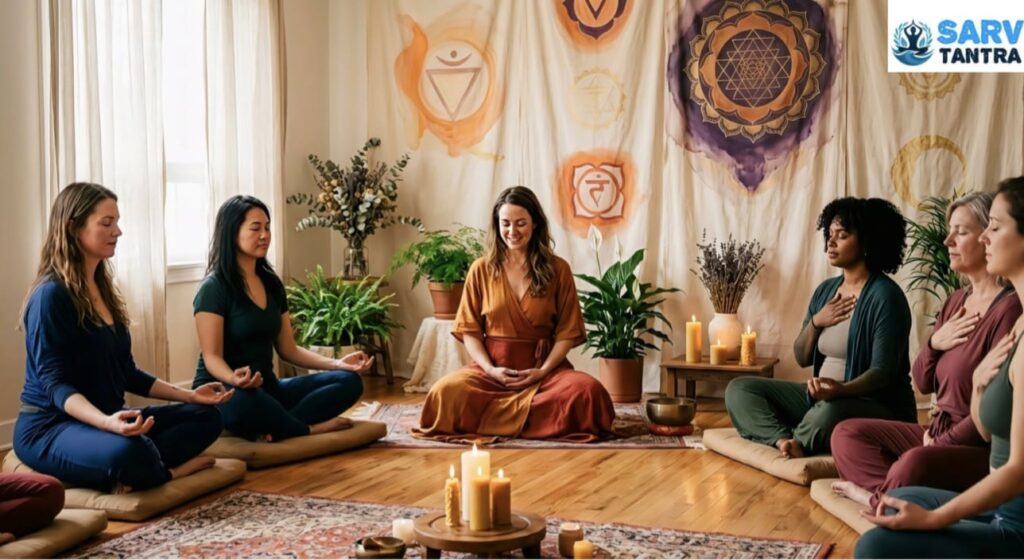
Simple awareness practice:
-
Sit or lie comfortably.
-
Bring attention to the breath.
-
Notice sensations without changing them.
-
Allow experience to be exactly as it is.
Over time, subtle sensations may emerge: warmth, pulsing, tingling, expansion, softening. These are signs of Prana reorganizing.
The role of awareness is not to control Prana, but to create a safe space for its natural movement.
Breath: The Bridge Between Consciousness and Prana
Breath occupies a unique place in Tantra because it is both voluntary and involuntary. You can control it, but it also happens on its own.
From the Tantric perspective, breath is a gross expression of Prana. Changes in breath reflect changes in energy, and changes in energy reflect changes in consciousness.
When you are anxious:
-
Breath becomes shallow and fast.
When you are calm:
-
Breath becomes slow and deep.
Tantric breathing is not about rigid patterns. It is about listening to the breath.
By gently feeling the breath throughout the body, you begin sensing Prana riding on the breath.
Over time, practitioners notice:
-
Breath becoming subtler
-
Pauses between inhalation and exhalation
-
A sense of being breathed rather than breathing
This shift signals increasing harmony between awareness and Prana.
Prana and Emotion: Energy in Motion
The word emotion can be broken into “energy in motion.” Tantra takes this literally.
Emotions are not problems. They are movements of Prana carrying information.
Anger is rising energy.
Sadness is descending energy.
Joy is expansive energy.
Fear is contracting energy.
Problems arise when emotions are resisted, suppressed, or acted out unconsciously.
Tantra’s approach:
-
Feel the emotion in the body.
-
Notice its sensations.
-
Stay present without storyline.
As attention remains with sensation, the emotional charge begins transforming into pure energy.
This is alchemy—not turning emotion into something else, but revealing its energetic essence.
Through this process, practitioners discover that beneath every emotion is a neutral, vibrant aliveness.
Prana and Sexual Energy: A Broader Understanding
Tantra is often associated with sexuality, but this is a partial and often misunderstood view.
From the Tantric lens, sexual energy is simply a powerful form of Prana. It is not separate from spiritual energy. It is life energy with a strong creative impulse.
Rather than suppressing or indulging sexual energy, Tantra invites:
-
Conscious awareness
-
Slowing down
-
Sensing the whole body
-
Allowing energy to circulate
When sexual energy is met with awareness, it naturally refines into subtler expressions: warmth, love, openness, creativity, devotion.
This understanding dissolves the false split between spirituality and embodiment.
Signs of Healthy Prana Flow
As Prana becomes more balanced, people often report:
-
Increased vitality
-
Improved sleep
-
Emotional resilience
-
Clearer thinking
-
Spontaneous joy
-
Feeling at home in the body
These changes are usually gradual and organic.
Tantra does not promise dramatic awakenings overnight. It supports steady unfolding.
Common Misconceptions About Prana
Misconception 1: More Prana Is Always Better
Excess energy without stability can create agitation. Balance matters more than intensity.
Misconception 2: Prana Must Be Controlled
Control often creates tension. Tantra emphasizes cooperation.
Misconception 3: You Need Special Powers to Feel Prana
Sensitivity develops through simple awareness. Everyone has access.
Misconception 4: Prana Is Separate from Daily Life
Every ordinary moment is an expression of Prana.
Practical Tantric Ways to Connect with Prana
1. Sensation Awareness
Spend a few minutes noticing sensations throughout the body.
2. Gentle Breath Observation
Feel the breath without altering it.
3. Slow Movement
Stretch or move slowly while sensing inner currents.
4. Sound and Vibration
Humming or toning awakens subtle energy.
5. Resting in Stillness
Allow yourself to do nothing and feel aliveness.
Consistency matters more than duration.
Prana and Spiritual Awakening
In Tantra, awakening is not escape from the body. It is full inhabitation of the body.
As Prana flows freely:
-
Awareness naturally expands
-
Identification with limited self softens
-
A sense of unity emerges
Spiritual realization is experienced as intimacy with life.
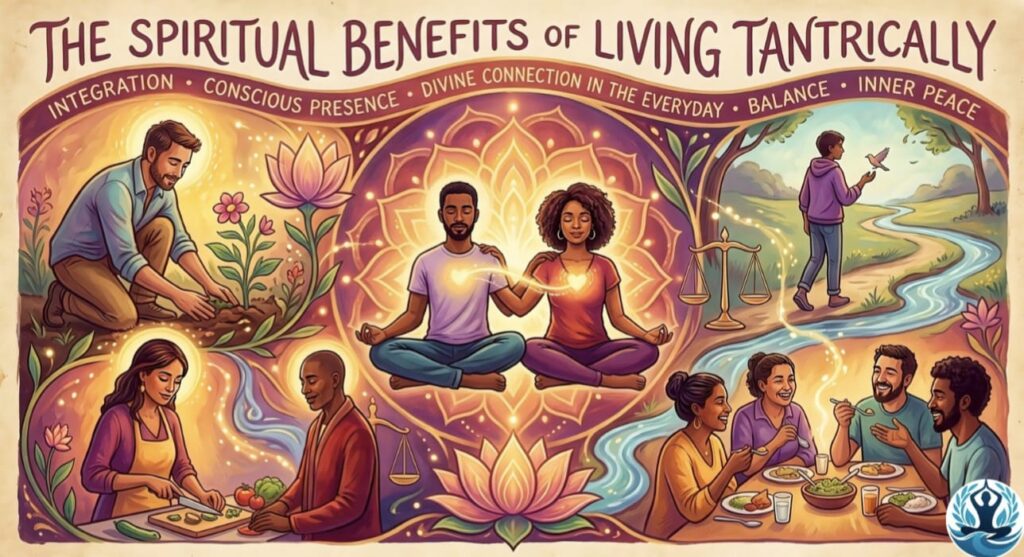
Living with Prana Awareness
Ultimately, Tantra invites a shift from using techniques to living as awareness of energy.
Washing dishes becomes sensing warmth and movement.
Walking becomes feeling rhythm and contact.
Listening becomes receiving vibration.
Life becomes meditation.
Conclusion: Prana as Your True Nature
Understanding Prana through the Tantric lens is not about acquiring knowledge. It is about remembering something deeply familiar.
You are not a solid object moving through a dead world. You are a living field of conscious energy moving within a living universe.
When you stop fighting your experience and start feeling it, Prana reveals itself.
Tantra does not add anything to you.
It gently removes what blocks you from recognizing the aliveness you already are.