

How Tantra Encourages Deep Self-Listening


In a world full of noise, distractions, and constant stimulation, many people have lost the ability to listen to themselves. We are often taught to listen to expectations, deadlines, and social pressures—but rarely to the quiet voice within. Tantra offers a profound pathway back to this inner wisdom through the practice of deep self-listening.
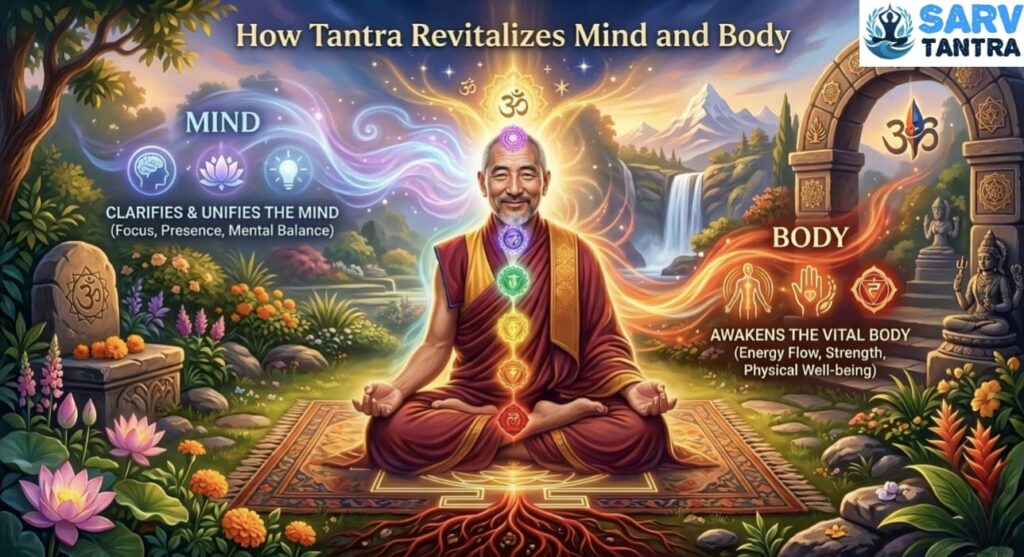
Tantra is an ancient spiritual tradition rooted in Indian philosophy that integrates body, mind, and consciousness. Rather than rejecting human experience, Tantra encourages awareness of every sensation, emotion, and thought as a gateway to deeper understanding. Ancient texts like the Vijñāna Bhairava Tantra describe numerous meditation techniques that help practitioners turn inward and recognize their true nature through awareness practices.
One of the most transformative gifts of Tantra is the ability to hear the subtle messages of the body, emotions, and intuition. Through mindful awareness and embodied practices, Tantra helps individuals reconnect with their inner guidance system.
This article explores how Tantra cultivates deep self-listening and how this practice can transform emotional health, relationships, intuition, and overall well-being.
Understanding Deep Self-Listening
Deep self-listening is the ability to observe your inner experience with openness and curiosity. It involves noticing:
-
Physical sensations in the body
-
Emotional signals and feelings
-
Thoughts and beliefs
-
Intuitive impulses and inner wisdom
Tantric philosophy teaches that the body and senses are not obstacles to spirituality but pathways toward awakening. By paying attention to sensory experiences and bodily sensations, we become more present and connected to ourselves.
This presence is the foundation of deep self-listening.
Instead of forcing answers or controlling experiences, Tantra invites us to become witnesses of our inner world.
Why Most People Struggle to Listen to Themselves
Before understanding how Tantra supports self-listening, it helps to recognize why many people lose this connection in the first place.
1. Constant Mental Noise
Modern life keeps the mind constantly busy. Notifications, information overload, and stress leave little space for inner awareness.
2. Emotional Suppression
Many people are taught to suppress emotions rather than explore them. As a result, feelings become buried instead of understood.
3. Disconnection from the Body
People often live primarily in their thoughts, ignoring physical sensations that carry important emotional signals.
Yet the body communicates continuously through sensations, tension, and intuitive responses. Learning to interpret these signals can reveal valuable insights about stress, emotional patterns, and unmet needs.
Tantra gently reverses these patterns by bringing awareness back to the body and inner experience.
The Tantric Philosophy of Inner Awareness
At its core, Tantra sees human experience as sacred.
Unlike traditions that emphasize renouncing the world, Tantra teaches that everything—including sensations, emotions, and desires—can be used as tools for self-realization.
Through awareness practices, individuals learn to observe their inner experiences without judgment. This transforms emotions into sources of insight rather than problems to avoid.
For example:
-
Anger becomes a signal of boundaries
-
Fear becomes information about safety
-
Sadness reveals unmet emotional needs
By observing emotions with awareness instead of reacting to them, Tantra transforms emotional patterns into conscious energy.
This approach naturally deepens self-listening.
How Tantra Cultivates Deep Self-Listening
1. Awareness of the Body
One of the first steps in Tantric practice is reconnecting with the body.
The body constantly communicates through sensations like:
-
Tightness
-
Warmth
-
Tingling
-
Relaxation
-
Expansion
These signals often reflect emotional states or psychological stress.
For instance:
-
Tight shoulders may indicate pressure or responsibility
-
A tense stomach might reflect anxiety
-
A relaxed chest may indicate emotional openness
Tantric practices encourage observing these sensations with curiosity rather than judgment.
When we listen to the body in this way, we reconnect with its natural intelligence.
2. Breath as a Gateway to Inner Listening
Breath awareness is central to Tantra.
Breath acts as a bridge between the body and mind. When attention rests on the breath, mental activity slows and awareness deepens.
Tantric breathing practices encourage practitioners to:
-
Observe the rhythm of breathing
-
Notice emotional shifts during breath changes
-
Feel the energy moving through the body
As attention stabilizes on the breath, subtle feelings and insights often emerge naturally.
The breath becomes a tool for listening to the deeper layers of the self.
3. Sensory Awareness
Tantra places great emphasis on the senses.
Sight, sound, smell, taste, and touch are not distractions but gateways to awareness. When practiced consciously, sensory awareness deepens presence and emotional sensitivity.
For example:
-
Listening carefully to sounds without judgment
-
Feeling the texture of an object with full attention
-
Noticing subtle sensations during movement
Conscious listening to sound, for instance, can immerse a person fully in the present moment and reveal subtle emotional shifts.
Through sensory awareness, individuals learn to experience life directly rather than through constant mental analysis.
4. Observing Emotions Without Judgment
Tantra encourages a compassionate relationship with emotions.
Instead of labeling feelings as “good” or “bad,” practitioners observe them as energy moving through consciousness.
This approach creates emotional clarity.
For example:
-
Anxiety becomes a signal asking for attention
-
Anger reveals boundaries or unmet needs
-
Joy highlights alignment with one’s authentic self
By listening to emotions instead of suppressing them, people gain deeper insight into their inner world.
5. Meditation and Inner Silence
Meditation is one of the most powerful tools for cultivating self-listening.
Tantric meditation often focuses on:
-
Breath awareness
-
Bodily sensations
-
Mantra repetition
-
Visualizations
These practices gradually quiet the mind.
As mental noise fades, subtle layers of awareness become more noticeable. In this silence, intuitive insights often arise spontaneously.
Meditation is not about forcing answers—it is about creating space where inner wisdom can speak.
6. Intuition and Inner Guidance
Deep self-listening naturally strengthens intuition.
Intuition can be described as the ability to sense truth beyond logical reasoning.
When individuals become more aware of their inner sensations, emotions, and subtle signals, they begin to trust their intuitive responses.
This guidance may appear as:
-
A feeling of expansion or contraction
-
A sudden clarity about a decision
-
A sense of calm certainty
Tantric teachings emphasize listening within for guidance as a central aspect of spiritual development.
Through continued practice, intuition becomes a reliable inner compass.
Practical Tantric Techniques for Deep Self-Listening
Body Awareness Meditation
-
Sit comfortably and close your eyes.
-
Bring attention to your breathing.
-
Slowly scan your body from head to toe.
-
Notice sensations without trying to change them.
This practice strengthens the connection between awareness and bodily intelligence.
Conscious Listening Meditation
-
Sit quietly in a peaceful space.
-
Close your eyes and listen to surrounding sounds.
-
Notice each sound without labeling it.
-
Allow sounds to come and go naturally.
This meditation trains the mind to receive experience rather than control it.
Self-Touch Awareness
Mindful touch can deepen the connection with the body.
Simple actions such as gently touching the arms or face with full awareness allow individuals to feel sensations more clearly and develop self-compassion.
This practice can reveal emotional states stored in the body.
Emotional Observation Practice
When a strong emotion arises:
-
Pause and breathe slowly.
-
Ask yourself: Where do I feel this in my body?
-
Observe the sensation without reacting immediately.
-
Let the feeling move naturally.
Over time, this practice transforms emotional reactivity into emotional awareness.
The Benefits of Deep Self-Listening Through Tantra
1. Greater Self-Awareness
Deep listening reveals unconscious patterns and beliefs.
By recognizing these patterns, individuals gain the power to change them.
2. Emotional Healing
Listening to emotions allows suppressed feelings to surface and release.
This process reduces inner conflict and promotes emotional balance.
3. Improved Decision-Making
When people listen to their inner guidance, decisions become clearer and more aligned with their authentic values.
4. Reduced Stress and Anxiety
Self-listening encourages acceptance rather than resistance.
This acceptance calms the nervous system and reduces stress.
5. Deeper Relationships
When individuals learn to listen to themselves, they also become better listeners for others.
Tantric teachings emphasize conscious communication and attentive listening as foundations for meaningful relationships.
Tantra and the Modern Need for Inner Awareness
In today’s digital world, attention is constantly pulled outward.
Social media, technology, and busy lifestyles can disconnect individuals from their inner experience.
Tantra offers a powerful antidote.
By slowing down and paying attention to breath, sensations, and emotions, people rediscover their inner world.
Even simple practices—such as mindful walking, conscious breathing, or attentive listening—can transform daily life into moments of awareness and presence.
These practices help individuals return to themselves.
Overcoming Challenges in Self-Listening
Developing deep self-listening takes patience.
Some common challenges include:
Restlessness
The mind may resist silence at first.
Emotional discomfort
Hidden feelings may arise during awareness practices.
Self-judgment
People often criticize themselves for their thoughts or emotions.
Tantra encourages approaching these challenges with curiosity and compassion.
Every sensation and emotion becomes part of the learning process.
Integrating Self-Listening into Daily Life
Deep self-listening is not limited to meditation sessions.
It can be practiced throughout the day.
Examples include:
-
Pausing to notice your breath during stressful moments
-
Feeling the sensations of walking
-
Listening fully during conversations
-
Observing emotional reactions without immediate response
These small moments gradually build a strong connection with inner awareness.
The Spiritual Dimension of Self-Listening
Beyond psychological benefits, Tantra views self-listening as a gateway to spiritual awakening.
When awareness deepens, individuals begin to recognize that their thoughts, emotions, and sensations arise within a larger field of consciousness.
This realization leads to a profound sense of unity with life.
The practitioner begins to experience:
-
Greater compassion
-
Inner peace
-
A sense of interconnectedness
Self-listening ultimately becomes a pathway to recognizing the deeper nature of consciousness itself.
Conclusion
Tantra offers a powerful path for reconnecting with the wisdom that already exists within us.
Through practices such as breath awareness, sensory attention, meditation, and emotional observation, Tantra teaches us how to listen deeply—to our bodies, emotions, and intuition.
In a noisy and fast-paced world, this ability to pause and listen inwardly becomes a profound source of clarity, healing, and transformation.
Deep self-listening allows us to move through life with greater awareness, authenticity, and compassion.
By cultivating this inner connection, Tantra reveals that the guidance we seek is not outside us—it has always been within.