

Tantra and the Journey Beyond Ego

Introduction
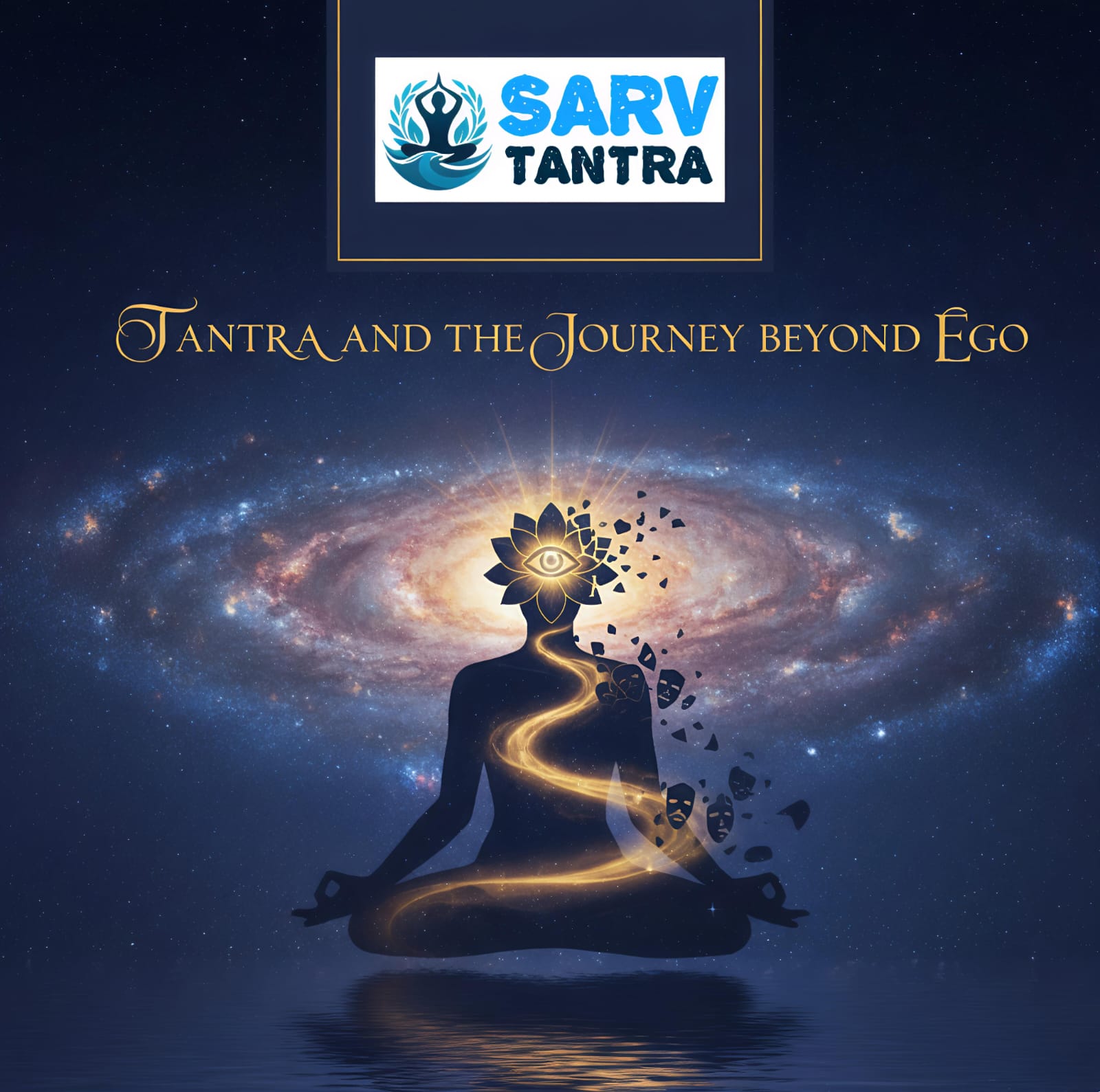
Tantra, one of the most profound spiritual sciences of ancient India, is not merely a philosophy but a direct path to self-realization. Unlike many spiritual paths that emphasize renunciation or detachment from worldly experiences, Tantra teaches transformation through awareness. It invites individuals to experience life in its fullness—pleasure, pain, relationships, and desires—while remaining conscious and unattached. One of the central aims of Tantra is to transcend the ego, the false sense of self that separates us from existence. The journey beyond ego is not about destroying individuality but about awakening to our true nature, which is infinite, pure consciousness.
Understanding the Ego in Tantric Philosophy
In Tantra, the ego is seen as a necessary but limited construct of the mind. It helps us navigate the material world, define boundaries, and establish identity. However, problems arise when the ego becomes dominant, leading to separation from the universal self. The ego constantly seeks validation, power, and control, creating inner conflict and suffering. Tantra does not advocate for suppressing or rejecting the ego but for understanding and transcending it. Through awareness, the ego loses its grip, and consciousness expands beyond the personal “I.”
The Origin and Nature of Ego
Ego arises from the mind’s tendency to identify with form—body, name, status, achievements, and possessions. It thrives on duality: me and you, good and bad, success and failure. According to Tantric philosophy, this identification begins early in life when the sense of “I” forms through conditioning and comparison. The ego is sustained by thoughts, desires, and fears. It is fragile because it depends on external validation and circumstances. Tantra sees the ego as a shadow of consciousness—real only as long as one remains unaware of the inner light. Once awareness dawns, the shadow dissolves.
Ego and the Illusion of Separation
The ego’s greatest illusion is separation. It convinces us that we are distinct from others and from the divine source. This illusion leads to competition, jealousy, and isolation. Tantra teaches that the entire universe is an interconnected web of energy. When one perceives life through the ego, everything appears fragmented. But through awareness, one begins to sense the underlying unity. The moment this oneness is experienced, the ego starts to fade. The individual self merges into the universal self, bringing profound peace and love.
Tantra’s Approach to Transcending Ego
Tantra’s path is not one of rejection but of integration. Every emotion, every experience becomes a doorway to awakening. Instead of fighting the ego, Tantra suggests witnessing it. Awareness transforms energy; what was once bondage becomes liberation. Meditation, breathwork, mantras, and rituals are tools used to expand consciousness. As awareness deepens, identification with the ego weakens naturally. The practitioner begins to act from the center of being rather than from the conditioned mind.
Meditation and Awareness Practices
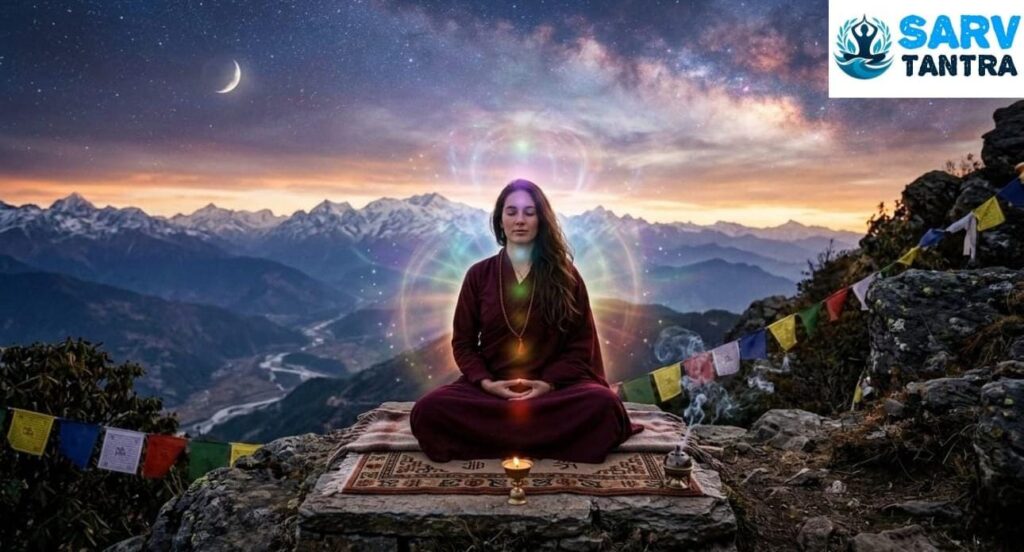
Meditation in Tantra is not about controlling the mind but about observing it. When you watch the ego in action—its fears, desires, and reactions—you start to see it as separate from your true self. One classic Tantric meditation involves witnessing thoughts as clouds passing through the sky of awareness. Another involves focusing on the space between breaths—the gap where no ego exists. In such moments, one experiences pure presence. This presence is the true self, untouched by egoic patterns.
The Role of the Body in Ego Transcendence
Unlike ascetic paths that deny the body, Tantra honors it as a sacred vessel of consciousness. The body is not an obstacle but a bridge. Through body awareness, one can go beyond the mind. Tantric practices like conscious touch, breath synchronization, and Kundalini awakening help dissolve the boundaries created by ego. When the body and mind align in awareness, a sense of unity arises. Sensations are no longer owned by the ego but are experienced as expressions of divine energy.
Relationships as Mirrors of Ego
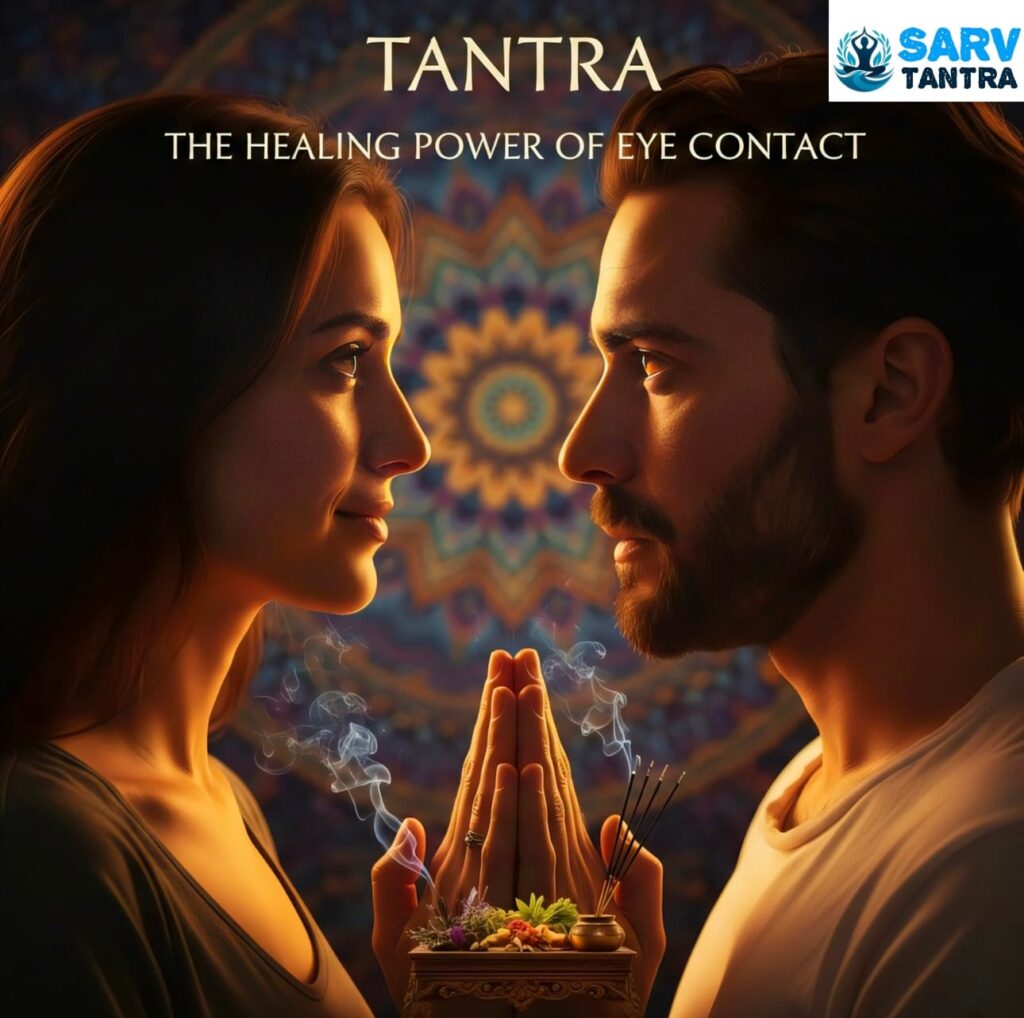
Tantra views relationships as powerful mirrors where the ego reveals itself. Every conflict, expectation, or emotional reaction is an opportunity for self-awareness. When one blames or projects onto another, it is often the ego defending its image. Tantra encourages partners to communicate consciously, to listen without judgment, and to see the divine in each other. As love deepens, the ego dissolves because it cannot survive in the presence of genuine connection. True intimacy arises not when two egos meet but when two beings share presence.
Tantric Rituals and Ego Surrender
Tantric rituals are symbolic acts designed to transcend the limited self. Through offerings, chants, and sacred gestures, the practitioner surrenders personal identity to the divine. Fire rituals, for example, represent burning away egoic attachments. Mantra chanting dissolves mental chatter, aligning the practitioner with cosmic vibration. These practices remind us that we are channels of divine energy, not separate entities. Rituals thus serve as bridges from form to formlessness.
The Ego’s Resistance and the Path of Patience
Ego does not disappear easily. As one begins the journey beyond it, resistance arises. The mind creates distractions, doubts, and fears. It clings to familiar patterns because its survival depends on them. Tantra advises patience and compassion toward oneself. The path is not linear; progress comes in waves. Each time the ego reappears, it brings a chance for deeper awareness. The key is not to fight but to observe. With time, the ego loses its power, and what remains is silence and clarity.
The Union of Shiva and Shakti Beyond Ego
At the heart of Tantra lies the sacred union of Shiva (pure consciousness) and Shakti (dynamic energy). This union symbolizes the harmony between awareness and expression, stillness and movement. The ego exists only when there is imbalance—when Shakti forgets Shiva or vice versa. Through Tantric practices, this inner marriage is restored. When Shiva and Shakti unite within, duality dissolves. The practitioner experiences blissful oneness, where no ego remains. Life becomes a dance of energy flowing effortlessly through consciousness.
The Role of Kundalini in Ego Dissolution
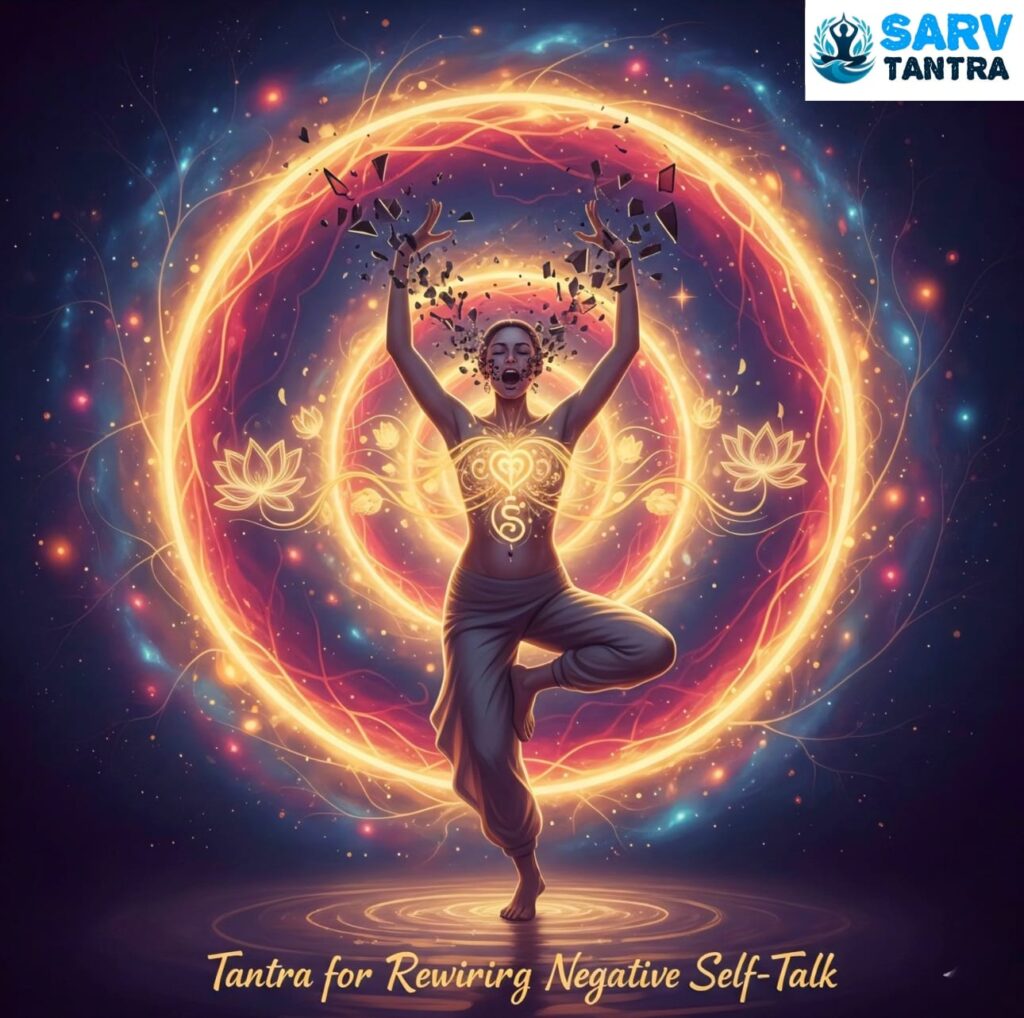
Kundalini, the dormant spiritual energy at the base of the spine, plays a vital role in Tantric awakening. When awakened through awareness and discipline, Kundalini rises through the chakras, purifying egoic patterns. Each chakra represents a level of consciousness. As energy ascends, identification shifts from the lower ego-based instincts to higher awareness. The ultimate goal is the union of Kundalini with the crown chakra, symbolizing complete liberation from the ego’s illusion.
Awareness in Daily Life
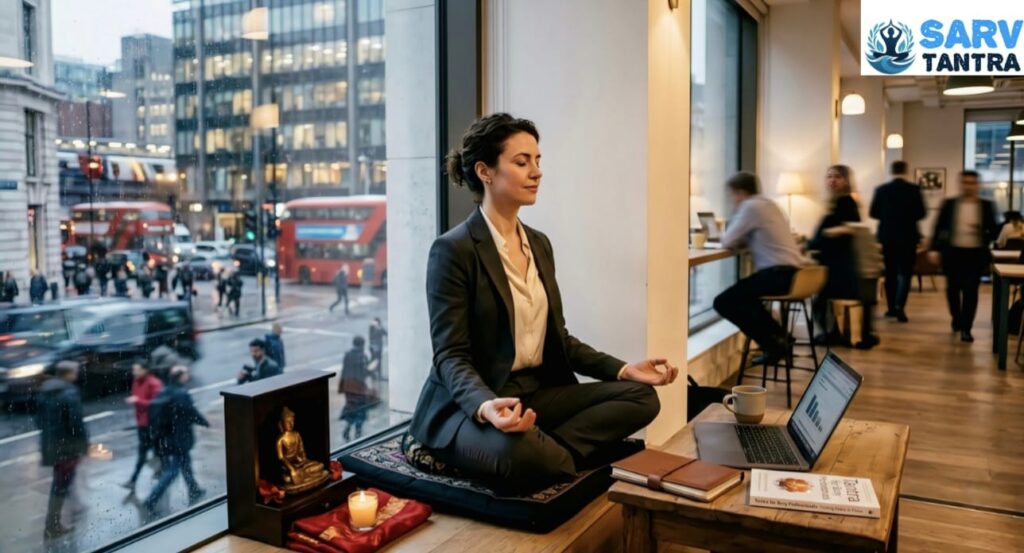
Tantra is not limited to meditation or ritual; it is a way of living. Every action, thought, and emotion can become a meditation if performed with awareness. Eating, walking, speaking—all can reveal egoic tendencies. By being fully present, one transforms mundane acts into sacred experiences. Awareness brings humility, compassion, and freedom from judgment. In daily life, when the ego tries to dominate, a simple pause to breathe and observe can restore inner balance.
Challenges on the Path
The journey beyond ego is not easy. It demands honesty, courage, and surrender. One must face hidden fears, suppressed desires, and emotional wounds. The ego will resist by creating spiritual pride or self-doubt. Tantra warns against identifying with spiritual experiences or powers, as they can become new forms of ego. True progress is marked by simplicity, openness, and inner silence. The seeker learns to trust the process, knowing that every challenge is a step toward awakening.
Freedom Beyond Ego
Freedom in Tantra is not the ability to do whatever one wants but to act without the compulsions of the ego. When the ego dissolves, actions arise spontaneously from the flow of existence. There is no doer, only doing; no thinker, only awareness. This freedom is not bound by morality or rules but guided by love and wisdom. The Tantric sage lives in the world yet remains untouched, like a lotus in the water. Such freedom brings profound joy and compassion for all beings.
The Ultimate Realization
The ultimate goal of Tantra is to realize the oneness of all existence. Beyond ego, there is no separation between the seeker and the sought. The self merges with the infinite consciousness, where time, desire, and identity disappear. This state is not something to be achieved but recognized—it has always been there, hidden behind the veil of ego. When awareness shines fully, the illusion falls away, revealing the eternal truth: you are that.
Conclusion
Tantra’s journey beyond ego is a sacred path of transformation. It does not demand rejection of life but awareness within it. By witnessing the ego, embracing the body, and cultivating presence, one gradually awakens to the infinite self. The dissolution of the ego is not a loss but a liberation—the end of separation and the beginning of unity. In this awakening, life becomes a meditation, love becomes the path, and existence itself becomes divine. The journey beyond ego is the journey home—to the boundless consciousness that is our true nature.