

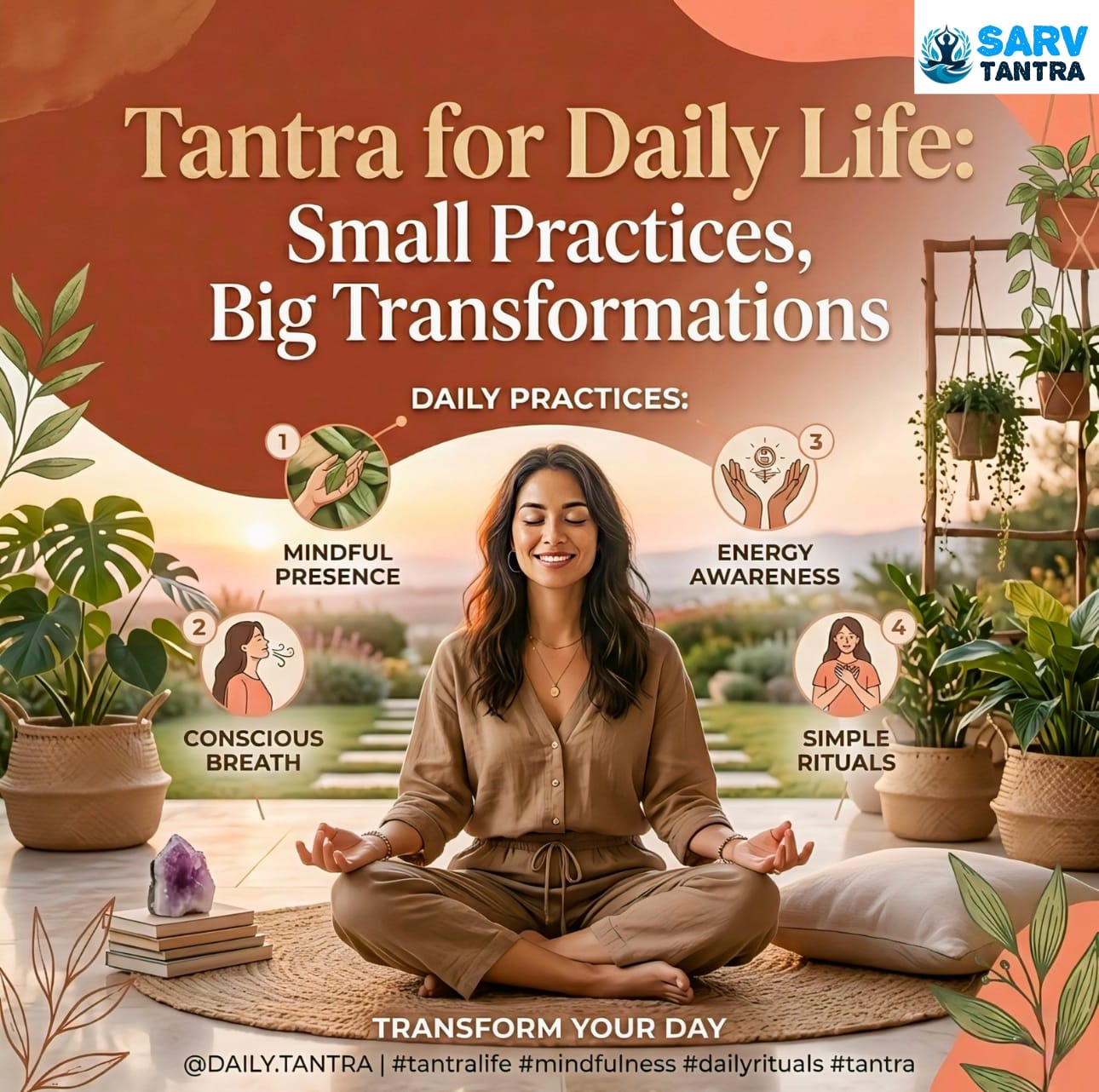
Tantra for Daily Life: Small Practices, Big Transformations

In today’s fast-paced world, people are constantly searching for ways to feel more grounded, energized, and fulfilled. While many turn to meditation, fitness routines, or productivity hacks, an ancient practice is quietly gaining recognition for its powerful impact on everyday life—Tantra.
Often misunderstood or reduced to narrow interpretations, Tantra is, in reality, a holistic system designed to help individuals live more consciously, connect deeply with themselves, and transform ordinary moments into meaningful experiences. The beauty of Tantra lies in its simplicity: you don’t need hours of practice or a retreat in the mountains. Even small, intentional practices can create profound shifts.
This blog explores how incorporating small Tantra practices into daily life can lead to big transformations—mentally, emotionally, and physically.
What Is Tantra? A Modern Perspective
Tantra is an ancient spiritual and philosophical tradition rooted in awareness, energy, and presence. Unlike approaches that separate spirituality from daily living, Tantra integrates mindfulness into everything—breathing, eating, working, and interacting with others.
At its core, Tantra teaches:
- Awareness is transformation
- The body is a gateway, not an obstacle
- Energy flows where attention goes
- Every moment holds potential for growth
Rather than escaping life, Tantra encourages you to fully engage with it.
Why Small Practices Matter
Many people assume that transformation requires drastic changes. Tantra challenges this idea. It emphasizes micro-practices—small, consistent actions that gradually reshape your mindset and nervous system.
Benefits of Small Tantra Practices:
- Easy to integrate into busy schedules
- Sustainable over long periods
- Reduce overwhelm
- Build consistency and discipline
- Create cumulative transformation
Think of it like compounding interest: small efforts, repeated daily, lead to exponential results.
The Science Behind Daily Tantra Practices
While Tantra is ancient, its principles align closely with modern science. Practices like conscious breathing, body awareness, and mindfulness influence the nervous system.
Key Scientific Benefits:
- Activates the parasympathetic nervous system (relaxation mode)
- Reduces cortisol (stress hormone)
- Improves focus and cognitive clarity
- Enhances emotional regulation
- Strengthens neural pathways related to awareness
In simple terms, Tantra helps rewire your brain for calmness, focus, and resilience.
Small Tantra Practices for Daily Life
Here are simple yet powerful Tantra techniques you can incorporate into your routine.
1. Conscious Breathing (2–5 Minutes)
Breathing is the foundation of Tantra. Most people breathe unconsciously, often shallow and fast. Tantra teaches slow, deep, intentional breathing.
How to practice:
- Sit comfortably
- Inhale deeply through the nose
- Exhale slowly through the mouth
- Focus fully on the breath
Benefits:
- Instantly calms the mind
- Reduces anxiety
- Improves oxygen flow
2. Morning Awareness Ritual
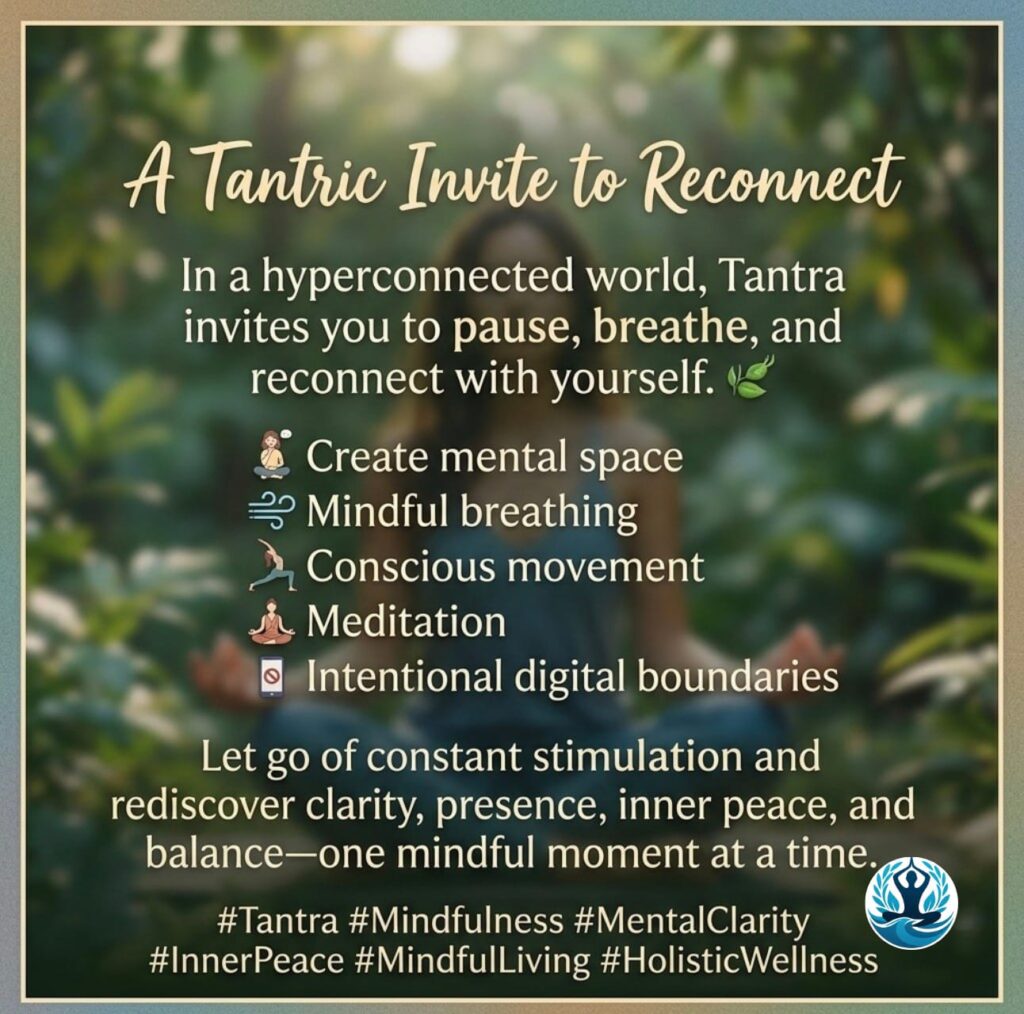
Instead of checking your phone first thing in the morning, start your day with awareness.
Practice:
- Sit quietly for 3–5 minutes
- Observe your thoughts without judgment
- Set a simple intention for the day
Transformation:
This small shift sets a calm, focused tone for the entire day.
3. Mindful Movement
Tantra sees the body as a sacred instrument. Even simple movements can become meditative.
Try this:
- Stretch slowly and consciously
- Feel each movement
- Stay present in your body
Benefits:
- Improves body awareness
- Releases tension
- Enhances flexibility and energy flow
4. Eating with Awareness
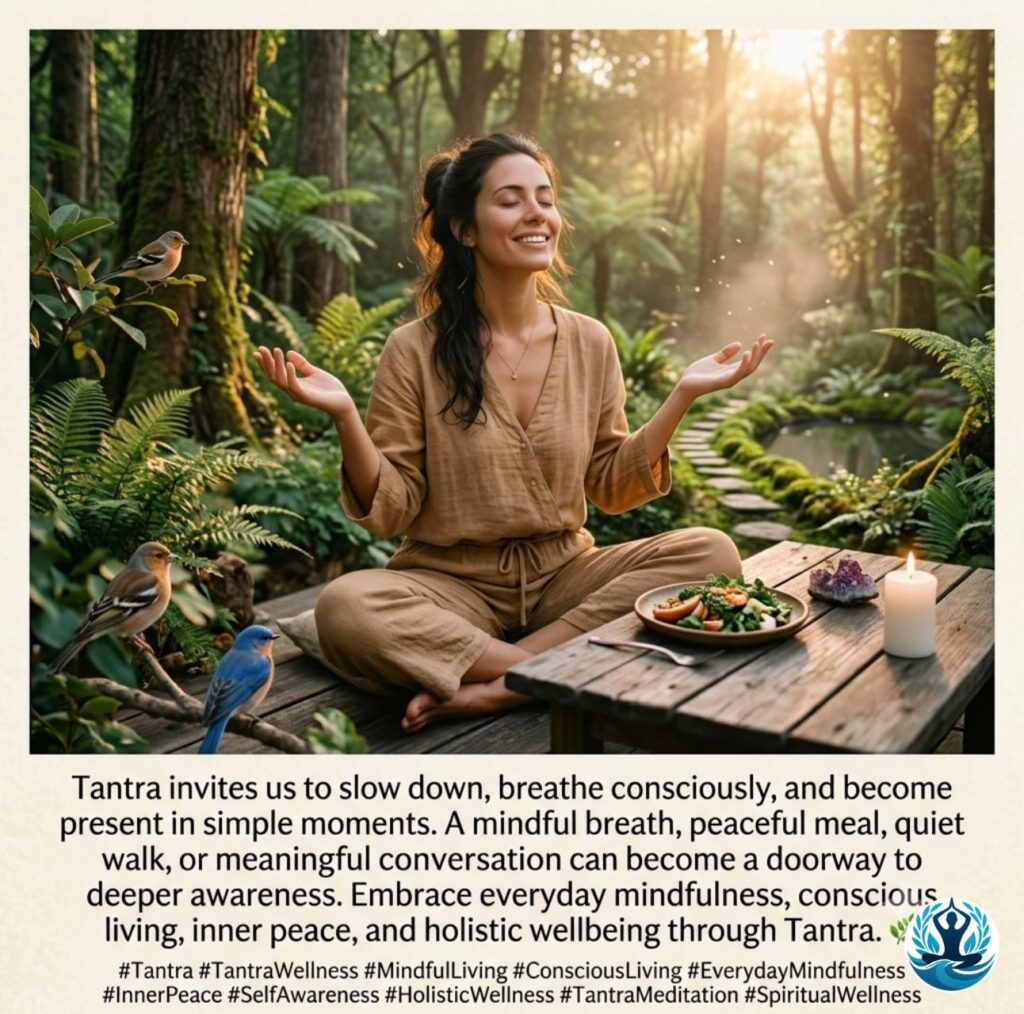
Most people eat while distracted—scrolling, watching TV, or working. Tantra turns eating into a mindful ritual.
Practice:
- Eat slowly
- Notice flavors, textures, and smells
- Avoid distractions
Impact:
- Better digestion
- Reduced overeating
- Increased satisfaction
5. The Pause Technique
Throughout the day, pause for a few seconds before switching tasks.
How:
- Take a deep breath
- Observe your current state
- Transition consciously
Why it works:
This prevents mental overload and increases clarity.
6. Emotional Awareness Practice
Tantra encourages feeling emotions fully rather than suppressing them.
Practice:
- When an emotion arises, pause
- Name it (e.g., “I feel stressed”)
- Observe without reacting
Benefits:
- Reduces emotional reactivity
- Builds emotional intelligence
- Promotes inner stability
7. Eye Contact and Presence
When talking to someone, be fully present.
Practice:
- Maintain gentle eye contact
- Listen without interrupting
- Avoid distractions
Transformation:
- Improves relationships
- Deepens connection
- Builds trust
8. Digital Detox Moments
Technology drains attention and energy. Tantra encourages conscious use of digital tools.
Simple step:
- Take 5–10 minute breaks without screens
- Just sit, breathe, or observe
Result:
- Reduced mental fatigue
- Increased focus
9. Evening Reflection
End your day with awareness instead of distraction.
Practice:
- Reflect on your day
- Notice what went well
- Observe without judgment
Benefits:
- Improves self-awareness
- Encourages growth
- Promotes better sleep
10. Gratitude Practice
Gratitude shifts your focus from lack to abundance.
How:
- Write or think of 3 things you’re grateful for
- Feel the emotion deeply
Impact:
- Boosts happiness
- Reduces stress
- Improves mental well-being
How These Small Practices Create Big Transformations
The real power of Tantra lies in consistency. When practiced daily, even for a few minutes, these techniques begin to reshape your inner world.
Over Time, You May Notice:
- Increased calmness and reduced anxiety
- Greater focus and productivity
- Improved emotional balance
- Stronger relationships
- A deeper sense of purpose
Transformation doesn’t happen overnight—but it does happen steadily.
Tantra and the Nervous System
One of the biggest benefits of Tantra is its effect on the nervous system. Many people live in a constant state of stress (fight-or-flight mode).
Tantra practices help shift the body into rest-and-digest mode, leading to:
- Lower stress levels
- Better digestion
- Improved sleep
- Enhanced immunity
This is why even small practices can feel so powerful—they directly impact your physiology.
Common Mistakes to Avoid
While Tantra is simple, beginners often make a few mistakes:
1. Trying to Do Too Much
Start small. Even 5 minutes daily is enough.
2. Expecting Instant Results
Transformation takes time. Stay consistent.
3. Overthinking the Practice
Tantra is about experience, not perfection.
4. Being Inconsistent
Daily practice matters more than intensity.
Creating Your Personal Tantra Routine
You don’t need to follow all practices. Start with 2–3 that resonate with you.
Example Routine:
- Morning: Conscious breathing (5 min)
- Afternoon: Pause technique (2–3 times)
- Evening: Reflection + gratitude (5 min)
Keep it simple and sustainable.
Tantra for Busy Lifestyles
One of Tantra’s biggest strengths is flexibility. You don’t need extra time—you integrate it into what you already do.
Examples:
- Breathe consciously while commuting
- Practice awareness while walking
- Eat mindfully during meals
Tantra fits into your life—it doesn’t disrupt it.
The Long-Term Impact of Daily Tantra Practice
With consistent practice, Tantra becomes more than a habit—it becomes a way of living.
Long-Term Benefits:
- Greater self-awareness
- Emotional resilience
- Improved mental clarity
- Enhanced physical well-being
- A deeper connection to life
You begin to experience life more fully, rather than just rushing through it.
Conclusion
Tantra is not about complexity or rituals—it’s about presence, awareness, and intention. By incorporating small practices into your daily routine, you can create powerful, lasting transformations.
The key is not to do everything at once, but to start small and stay consistent. Over time, these micro-practices reshape your mind, body, and energy, helping you live a more balanced, conscious, and fulfilling life.
In a world that constantly demands more, Tantra offers a simple yet profound reminder:
Transformation doesn’t come from doing more—it comes from being more present in what you already do.