

Tantra for Finding Calm During Life Transitions: A Holistic Approach to Inner Balance

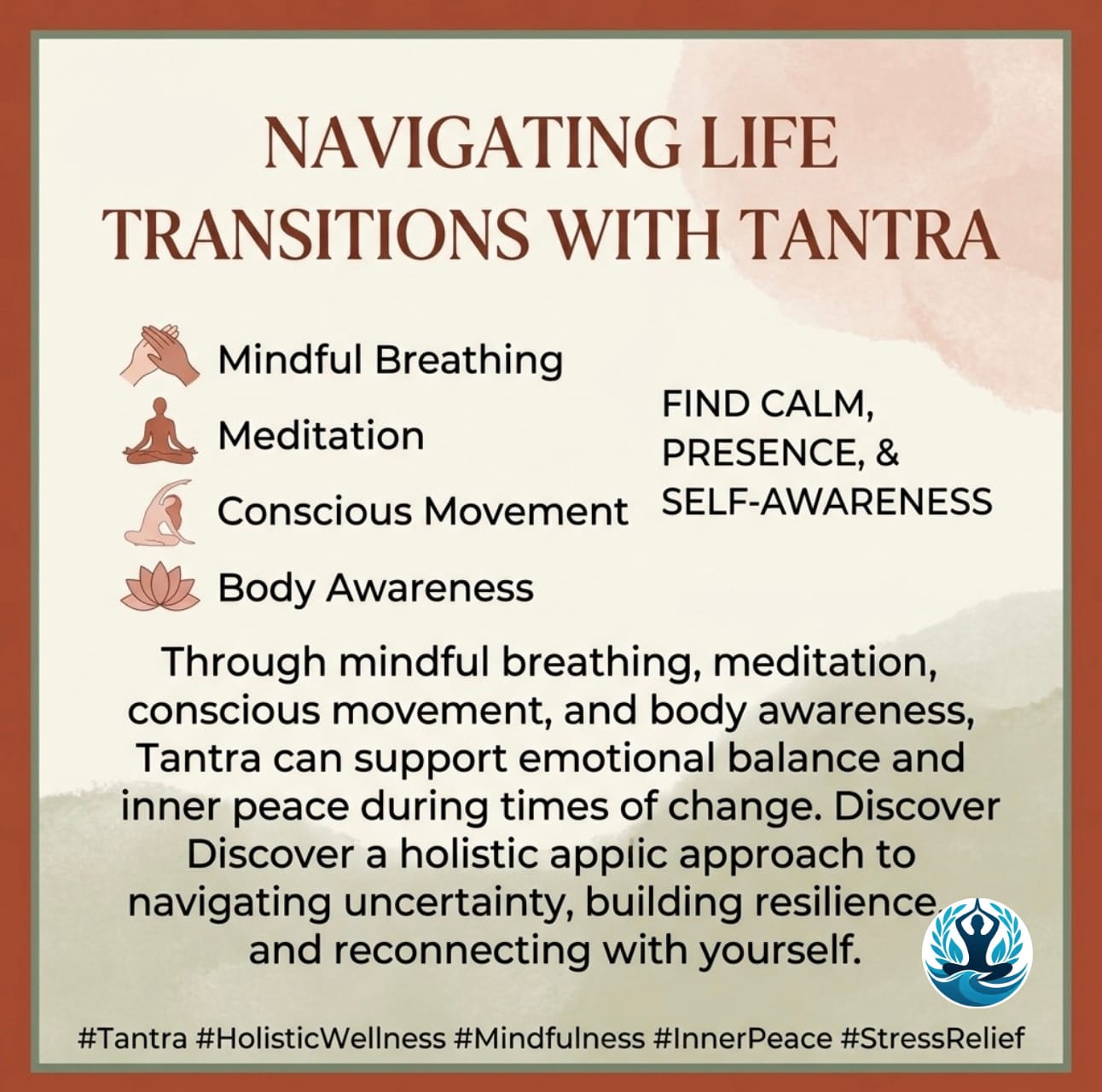
Life transitions are an unavoidable part of being human. Moving to a new city, beginning a new career, changing relationships, entering a new stage of life, experiencing personal growth, or simply facing an uncertain future can create a mixture of excitement, fear, hope, and emotional pressure. Even positive changes can feel overwhelming because they require us to leave familiar routines and adapt to something new.
During these periods, finding calm can become difficult. The mind may repeatedly ask, What will happen next? Will I make the right decision? Can I handle this change? At the same time, the body may respond to uncertainty with tension, restlessness, fatigue, or difficulty relaxing.
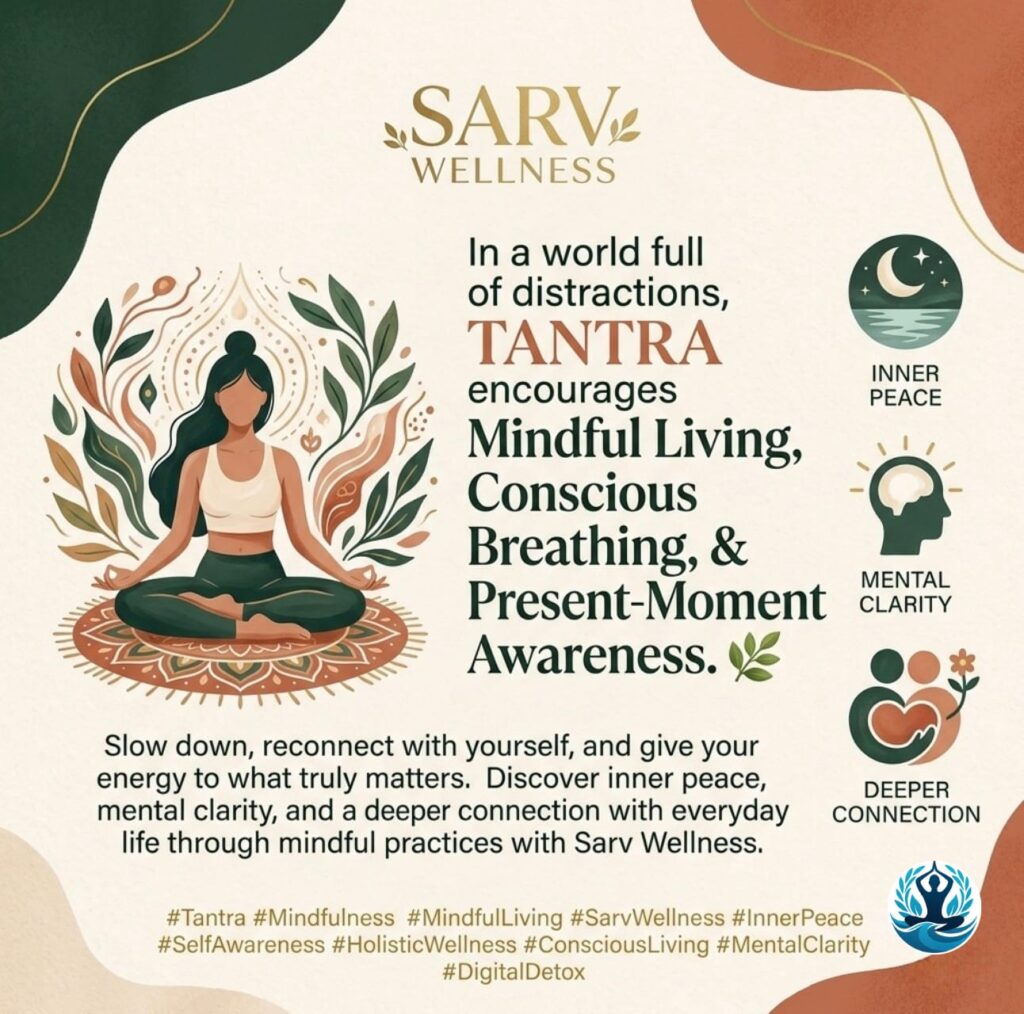
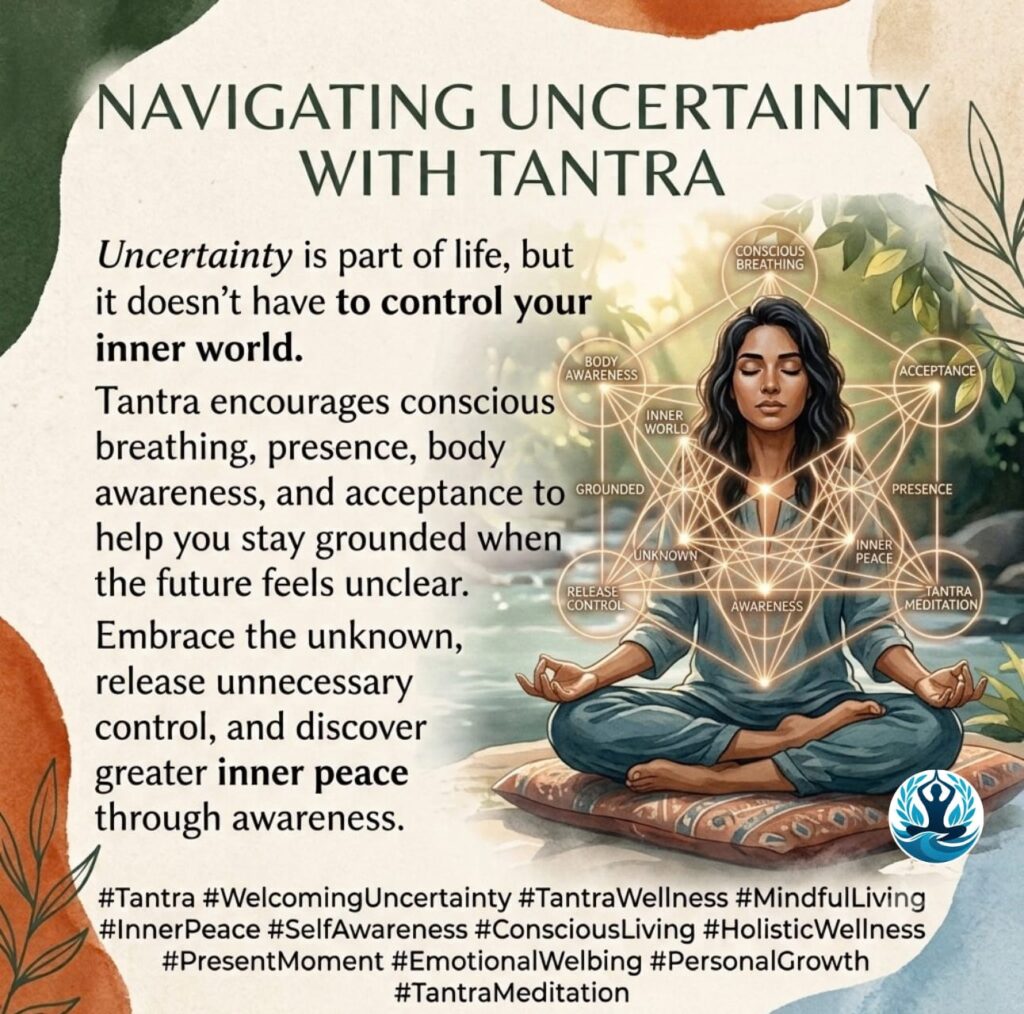
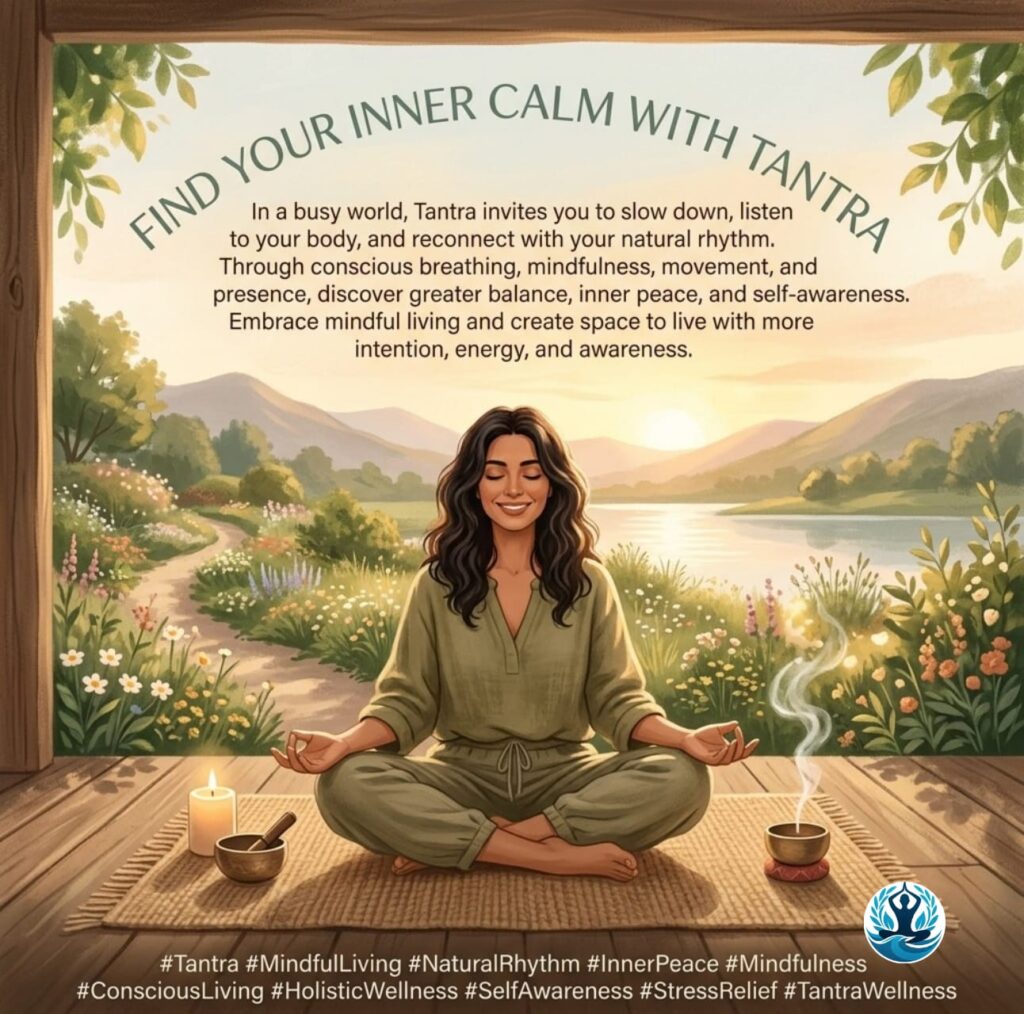
This is where Tantra for finding calm during life transitions can offer a holistic approach. Rather than treating change as something that must immediately be controlled or avoided, Tantra-inspired practices encourage greater awareness of the body, breath, emotions, thoughts, and present moment.
Tantra is a broad and diverse spiritual and philosophical tradition with many different schools and practices. In modern wellness settings, the word is sometimes used to describe mindfulness, meditation, conscious breathing, body awareness, and intentional connection. These practices can provide tools for becoming more grounded while navigating periods of uncertainty.
The goal is not to eliminate every difficult emotion. Instead, the aim is to develop a more conscious relationship with change—one that allows you to pause, observe, adapt, and move forward with greater clarity.
Understanding Life Transitions
A life transition is a period in which something significant changes in your circumstances, identity, responsibilities, relationships, or daily routine.
Some transitions are planned:
- Starting a new job
- Getting married
- Moving to another city
- Beginning a new course
- Starting a business
- Retiring
- Becoming a parent
- Beginning a new personal chapter
Others happen unexpectedly:
- Relationship changes
- Job loss
- Relocation
- Financial uncertainty
- Changes in family circumstances
- Unexpected responsibilities
- Major shifts in personal goals
Even when a transition is positive, the nervous system may need time to adapt to the new circumstances. Familiar routines provide predictability. When those routines change, people can experience uncertainty and emotional discomfort.
This is why the ability to remain present can be especially valuable during transitional periods.
How Tantra Can Support Calm During Change
Tantra-inspired wellness practices emphasize conscious awareness rather than automatically reacting to every thought or emotion.
When applied responsibly, these practices can help create moments of stillness during a busy or uncertain period.
1. Tantra Encourages Present-Moment Awareness
One of the biggest challenges during a transition is spending too much time mentally living in the future.
You may constantly imagine possible outcomes:
What if things go wrong?
What if I regret this decision?
What will my life look like six months from now?
Planning can be useful, but excessive future-focused thinking can increase mental tension.
Mindfulness practices associated with contemporary Tantra-inspired wellness encourage you to return attention to the present.
You can notice:
- Your breathing
- Your posture
- Physical sensations
- Sounds around you
- Your current emotions
- Your immediate environment
This does not mean ignoring the future. It means recognizing that the present moment is the place where you can actually make decisions and take action.
2. Conscious Breathing Can Create a Pause
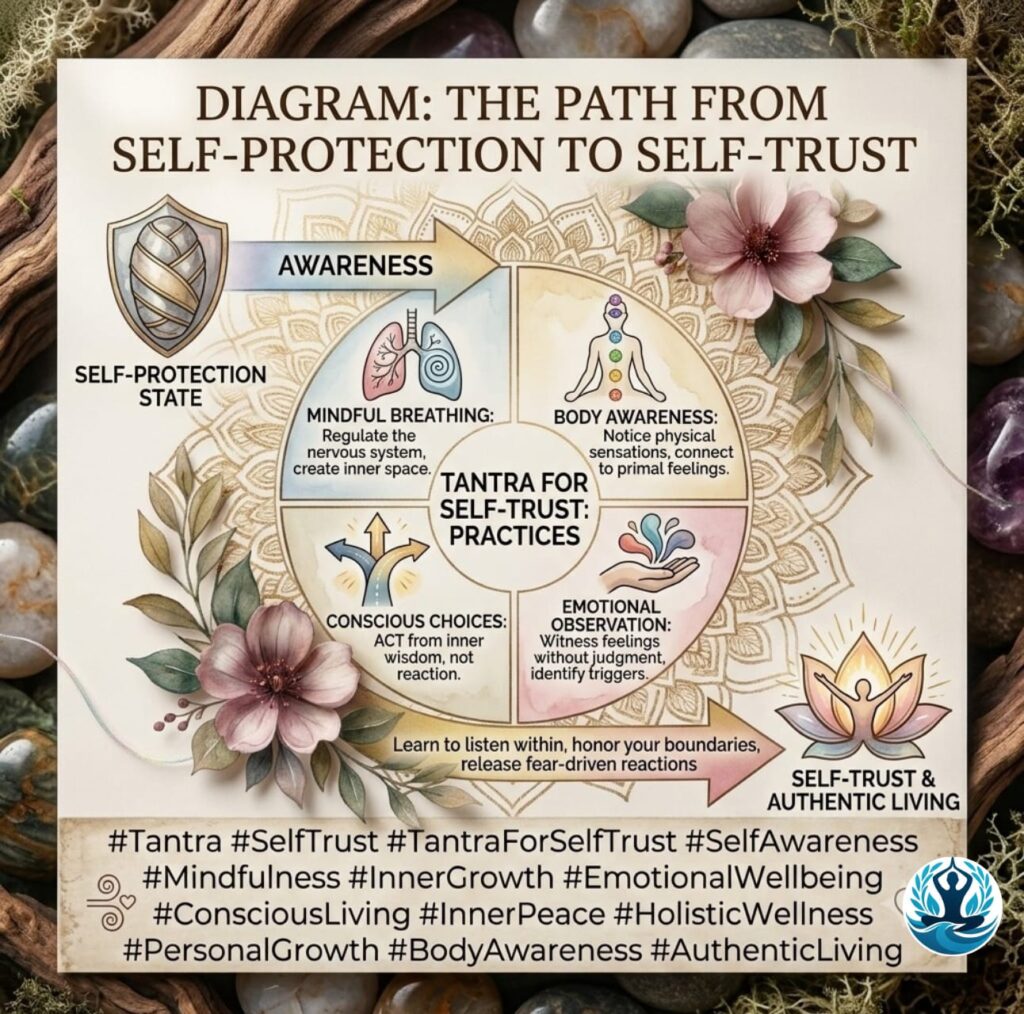
Breathing is one of the simplest ways to develop greater awareness.
During stressful moments, people may unconsciously change their breathing patterns. Bringing gentle attention to the breath can create a pause between an emotional trigger and an automatic reaction.
A simple practice is to sit comfortably and observe your natural breathing for several minutes.
You do not need to force your breath.
Instead:
- Sit comfortably.
- Relax your shoulders.
- Notice the natural rhythm of your breathing.
- Feel the movement of the abdomen or chest.
- When your mind wanders, gently return attention to the breath.
- Continue for five to ten minutes.
The purpose is not to achieve a particular state. It is simply to develop awareness.
For people navigating major changes, this small pause can become a valuable daily ritual.
3. Tantra Can Encourage Greater Body Awareness
Transitions often create mental stress, but emotional experiences can also be felt physically.
You may notice:
- Tight shoulders
- A tense jaw
- Restlessness
- A heavy feeling in the chest
- Changes in appetite
- Difficulty settling down
- General physical fatigue
Instead of immediately judging these sensations, conscious body awareness encourages you to notice them.
A simple body-awareness exercise involves slowly moving your attention through different parts of the body.
Notice your:
- Feet
- Legs
- Hips
- Abdomen
- Chest
- Shoulders
- Neck
- Face
Ask yourself:
“What am I noticing right now?”
There is no need to label the sensation as good or bad.
This practice can help you become more aware of how your body responds to emotional experiences.
4. Tantra Can Help You Develop Emotional Awareness
One common response to uncomfortable emotions is avoidance.
During a transition, you may try to stay constantly busy so you do not have to think about uncertainty, sadness, fear, or disappointment.
However, emotions often become easier to understand when we give ourselves space to acknowledge them.
Tantra-inspired mindfulness practices can encourage observation rather than immediate suppression.
You might say:
“I am noticing uncertainty.”
Instead of:
“Everything is going wrong.”
This small shift changes the relationship you have with the emotion.
You are observing an experience rather than defining yourself by it.
5. Creating Space Between Thoughts and Reactions
Transitions can produce repetitive thoughts.
For example:
“I don’t know what I’m doing.”
“Everything has changed.”
“I should already have the answer.”
Mindfulness does not require you to eliminate these thoughts.
Instead, you can observe them.
Imagine thoughts as clouds moving through the sky. You notice them without having to follow every one.
This can help create psychological space.
That space can make it easier to ask:
Is this thought useful?
Is there something I can actually do about this?
What is within my control today?
These questions can bring attention away from endless speculation and toward practical action.
6. Tantra and the Practice of Acceptance
Acceptance does not mean liking everything that happens.
It means acknowledging reality as it is before deciding how to respond.
During a transition, resistance may sound like:
“This shouldn’t be happening.”
“I don’t want things to change.”
“Everything needs to go back to normal.”
Acceptance allows another perspective:
“This is where I am right now. What can I learn from this moment, and what can I do next?”
This approach can create a more grounded relationship with uncertainty.
Instead of spending all your energy fighting the existence of change, you can begin directing energy toward adaptation.
7. Conscious Movement for Grounding
The body can become an important anchor during periods of change.
Gentle movement, stretching, walking, yoga-inspired practices, or mindful movement can help shift attention away from constant mental activity.
The key is awareness rather than performance.
During a slow movement practice, notice:
- How your feet contact the ground
- How your muscles move
- How your breathing changes
- Where you feel tension
- How your body responds to different movements
Even a ten-minute mindful walk can become a grounding practice.
Instead of walking while scrolling through your phone or thinking about the future, experience the movement itself.
8. Tantra Can Encourage Self-Connection
Life transitions sometimes cause people to lose connection with themselves.
New responsibilities can make you focus entirely on work, family, relationships, or external expectations.
Over time, you may stop asking:
“What do I actually need?”
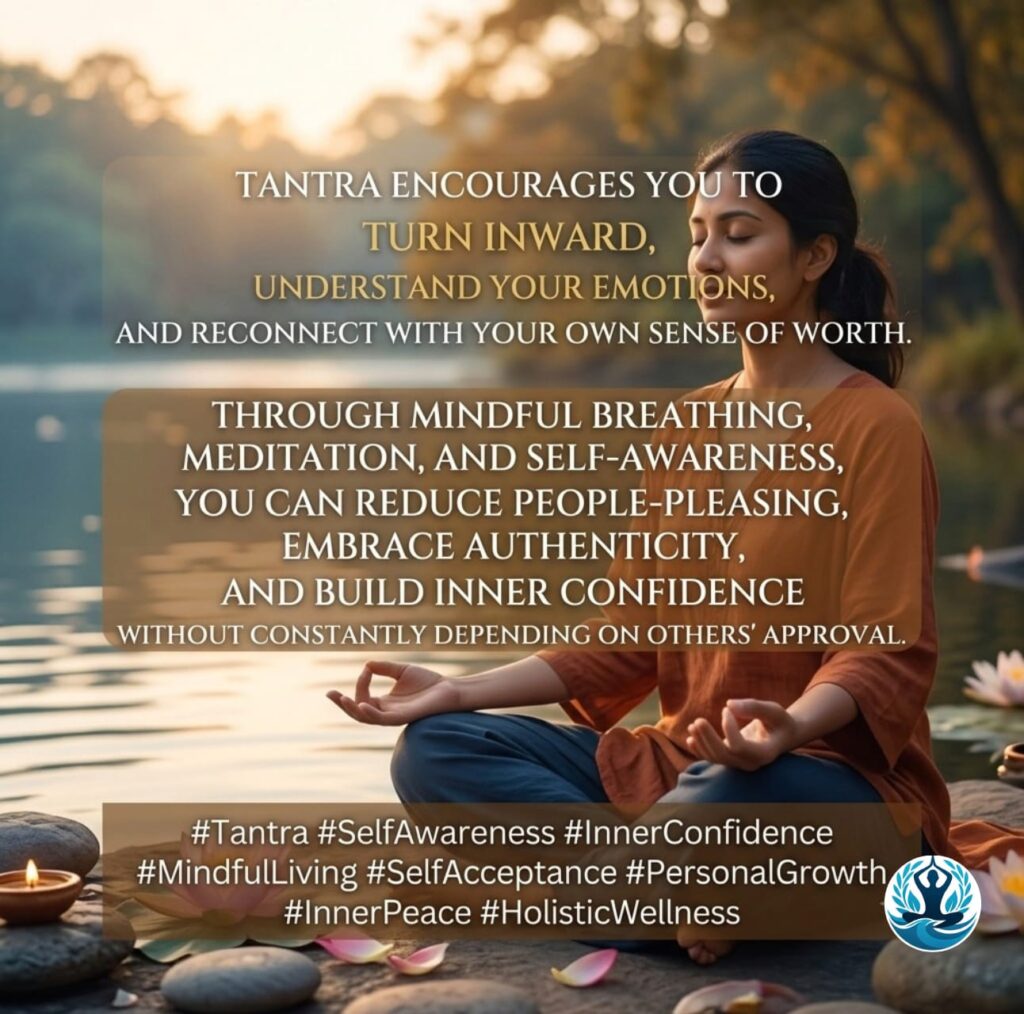
Self-awareness is an important part of conscious living.
A simple reflective practice can involve asking yourself:
- What am I feeling today?
- What is creating the most pressure?
- What gives me energy?
- What drains my energy?
- What do I value?
- What kind of life am I trying to create?
These questions can help you reconnect with your internal priorities.
9. Finding Calm Without Rushing the Process
Modern culture often encourages immediate solutions.
When something feels uncomfortable, we may search for a quick answer.
But transitions are processes.
You may need time to:
- Adjust
- Reflect
- Learn
- Make mistakes
- Rebuild routines
- Understand your emotions
- Discover new priorities
Tantra-inspired mindfulness encourages patience with the process.
Instead of demanding immediate certainty, you can practice becoming comfortable with gradual understanding.
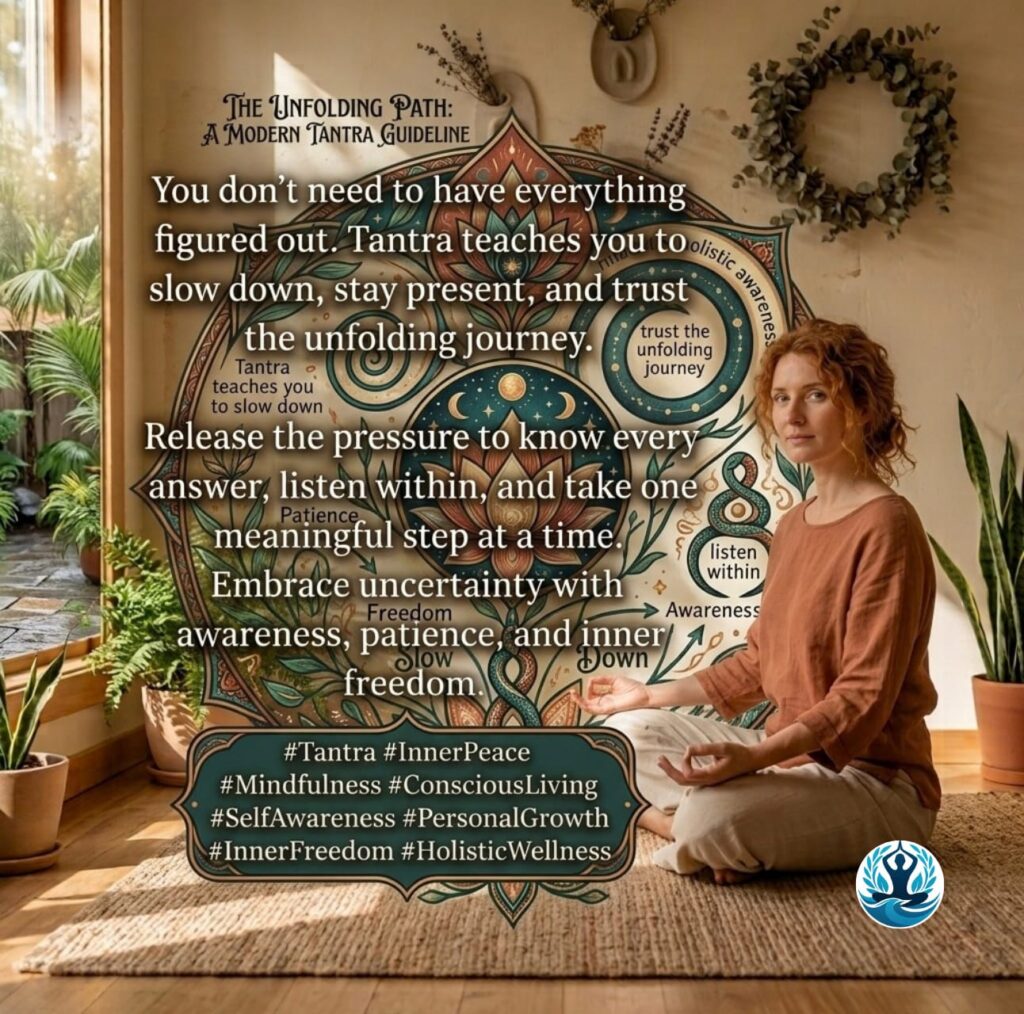
Sometimes calm comes not from knowing exactly what happens next, but from trusting yourself to respond as life unfolds.
10. Building a Conscious Daily Routine
During major changes, routines can provide stability.
A simple daily Tantra-inspired routine might include:
Morning
Begin the day with five minutes of quiet breathing.
Before checking your phone, notice your body and ask:
“How do I want to approach today?”
Afternoon
Take a short mindful pause.
Step away from work, breathe slowly, and notice your surroundings.
Evening
Spend ten minutes reflecting on the day.
Consider:
- What went well?
- What felt difficult?
- What did I learn?
- What can I release before sleeping?
The routine does not have to be complicated.
Consistency is often more valuable than complexity.
Tantra for Different Types of Life Transitions
Career Transitions
Changing careers can create excitement and uncertainty.
You may worry about financial security, professional identity, or whether you made the correct decision.
Mindful breathing, reflection, and grounding practices can help you remain connected to the present rather than constantly imagining every possible outcome.
Use the transition as an opportunity to explore:
- Your values
- Your strengths
- Your goals
- Your relationship with work
- Your definition of success
Relationship Transitions
Relationships can change in many ways.
Beginning a relationship, getting married, experiencing separation, or developing new relationship dynamics can bring intense emotions.
Conscious practices can encourage you to slow down before reacting.
Ask:
“What am I feeling?”
“What do I need?”
“Am I listening consciously?”
“Am I responding or simply reacting?”
These questions can encourage more thoughtful communication.
Moving to a New Place
Relocation can be both exciting and stressful.
A new environment means new routines, unfamiliar surroundings, and sometimes a temporary loss of community.
Grounding practices can help you establish a sense of familiarity.
Create small rituals:
- Morning breathing
- Mindful walks
- Evening reflection
- Regular meals
- Quiet meditation
- Time away from screens
Small repeated actions can help create stability while your external environment changes.
Personal Growth and Identity Changes
Not every transition is visible to others.
Sometimes you simply realize that the person you used to be is changing.
Your values may evolve.
Your priorities may shift.
Your understanding of yourself may deepen.
This can feel confusing because personal growth sometimes requires letting go of old identities.
Tantra can be viewed as an invitation to become more conscious of this process.
Rather than asking:
“Who am I supposed to be?”
you can explore:
“Who am I becoming?”
The Role of Meditation in Finding Calm
Meditation is one of the most accessible mindfulness practices.
A simple meditation practice can involve sitting quietly and observing your breath.
When thoughts arise, notice them without judgment.
Then return attention to the breath.
At first, the mind may wander constantly. That is normal.
Meditation is not about having an empty mind.
It is about practicing awareness.
Over time, this can help you become more familiar with your thoughts and reactions.
For someone experiencing a life transition, this familiarity can be valuable because uncertainty may otherwise feel overwhelming.
Tantra and Letting Go of Excessive Control
One of the hardest parts of transition is accepting that you cannot control everything.
You can control your actions.
You can influence your habits.
You can make decisions.
But you cannot control every outcome.
Trying to control everything can create exhaustion.
A conscious approach asks:
What is within my control?
- My response
- My habits
- My communication
- My preparation
- My boundaries
- My daily choices
What is outside my control?
- Other people’s decisions
- Unexpected events
- Every future outcome
- The passage of time
Recognizing this distinction can help conserve mental energy.
Creating a Personal Calm Ritual
A personal ritual does not need to be elaborate.
Try creating a 15-minute daily practice.
Step 1: Sit quietly for two minutes
Allow your body to settle.
Step 2: Practice conscious breathing for five minutes
Observe your natural breath.
Step 3: Practice body awareness for three minutes
Notice areas of tension or relaxation.
Step 4: Reflect for three minutes
Ask:
“What do I need today?”
Step 5: End with one intention
Choose a simple intention such as:
“Today, I will respond rather than react.”
The purpose is to create a consistent moment of connection with yourself.
Benefits of Tantra for Life Transitions
A consistent mindfulness-oriented practice may support several aspects of wellbeing.
Greater Emotional Awareness
You may become more capable of recognizing emotions before they influence your behavior.
Improved Presence
You can practice focusing on what is happening now instead of becoming consumed by future possibilities.
Better Self-Understanding
Reflection can help you identify values, needs, and priorities.
Greater Relaxation
Breathing, meditation, and gentle movement can become part of a calming routine.
Improved Adaptability
Mindfulness can encourage a less reactive relationship with uncertainty.
Stronger Mind-Body Connection
Body awareness helps you recognize physical responses to emotional experiences.
More Conscious Decision-Making
Creating a pause before reacting can give you more space to consider your choices.
How to Incorporate Tantra Into Modern Life
You do not need to completely change your lifestyle to explore Tantra-inspired wellness practices.
Start small.
Practice 5 Minutes of Conscious Breathing
Use the first few minutes of your morning to connect with your breath.
Take Mindful Breaks
Instead of immediately reaching for your phone, spend a few moments noticing your surroundings.
Practice Conscious Movement
Stretch, walk, or move slowly while paying attention to bodily sensations.
Reduce Unnecessary Stimulation
Create periods during the day without constant notifications, social media, or multitasking.
Keep a Reflection Journal
Write down thoughts, emotions, concerns, and intentions.
Create an Evening Wind-Down
Allow your mind and body to transition from activity toward rest.
Common Misunderstandings About Tantra
Tantra is often misunderstood because the term has been used in many different contexts.
Traditional Tantra encompasses diverse philosophical and spiritual traditions, and practices differ significantly between schools and lineages.
Modern wellness programs may use the word Tantra to describe mindfulness, meditation, conscious movement, breath awareness, embodiment, or relationship practices.
Therefore, it is important to understand what a particular practitioner or wellness center means by “Tantra.”
It should also not be presented as a guaranteed treatment or cure for anxiety, depression, trauma, or other medical conditions.
If emotional distress becomes severe or persistent, professional mental-health support can be appropriate alongside personal wellness practices.
Tips for Practicing Tantra During Major Changes
Keep your practice realistic.
Start Small
Five minutes of mindfulness is better than creating an unrealistic one-hour routine that you quickly abandon.
Stay Consistent
Regular practice can be more useful than occasional intense sessions.
Avoid Judging Yourself
Some days will feel peaceful. Other days may feel restless.
Both experiences are normal.
Focus on Awareness
You do not need to force yourself to feel positive.
Simply notice what is happening.
Respect Your Boundaries
Personal practices should feel safe and appropriate for your circumstances.
Seek Qualified Guidance
If you choose to work with a Tantra practitioner, look for someone who clearly explains their training, approach, boundaries, and scope of practice.
A Simple 7-Day Tantra-Inspired Calm Practice
Day 1: Breath Awareness
Spend five minutes observing your breathing.
Day 2: Body Awareness
Slowly notice sensations throughout your body.
Day 3: Mindful Walking
Take a ten-minute walk without using your phone.
Day 4: Emotional Reflection
Write down three emotions you experienced during the day.
Day 5: Digital Pause
Take 20–30 minutes away from screens and notifications.
Day 6: Gratitude and Reflection
Write down three things you appreciate about your current life.
Day 7: Personal Intention
Reflect on what you want to carry forward into your next chapter.
The goal is not perfection. The goal is developing a more conscious relationship with yourself.
Conclusion
Life transitions can challenge our sense of stability, but they can also create opportunities for growth, self-discovery, and transformation.
Tantra for finding calm during life transitions offers a holistic perspective centered on awareness, presence, breath, body connection, reflection, and conscious living. Instead of demanding that uncertainty disappear, these practices encourage you to become more grounded while moving through it.
When life changes, you may not always know what comes next. You may not be able to control every outcome. But you can create moments of stillness, listen to your body, acknowledge your emotions, and choose how you respond.
A few minutes of conscious breathing, mindful movement, meditation, or quiet reflection can become an anchor during an uncertain chapter.
Ultimately, finding calm during life transitions is not about avoiding change. It is about learning to meet change with greater awareness.
When you slow down enough to listen to yourself, uncertainty can become less overwhelming and more informative. You may begin to discover what matters most, what you are ready to release, and what you want to carry into the next chapter of your life.
Tantra can therefore be explored not as a quick solution to life’s challenges, but as a pathway toward greater presence, self-awareness, and holistic wellbeing—one conscious moment at a time.