

How Conscious Movement, Breathwork, and Mindfulness Improve Body Awareness and Emotional Wellbeing

Modern life often encourages people to live primarily in their minds. Busy schedules, digital distractions, work pressure, social responsibilities, and constant stimulation can make it easy to overlook what is happening inside the body. We may notice stress only when the shoulders become tense, sleep becomes difficult, breathing becomes shallow, or emotions begin to feel overwhelming.
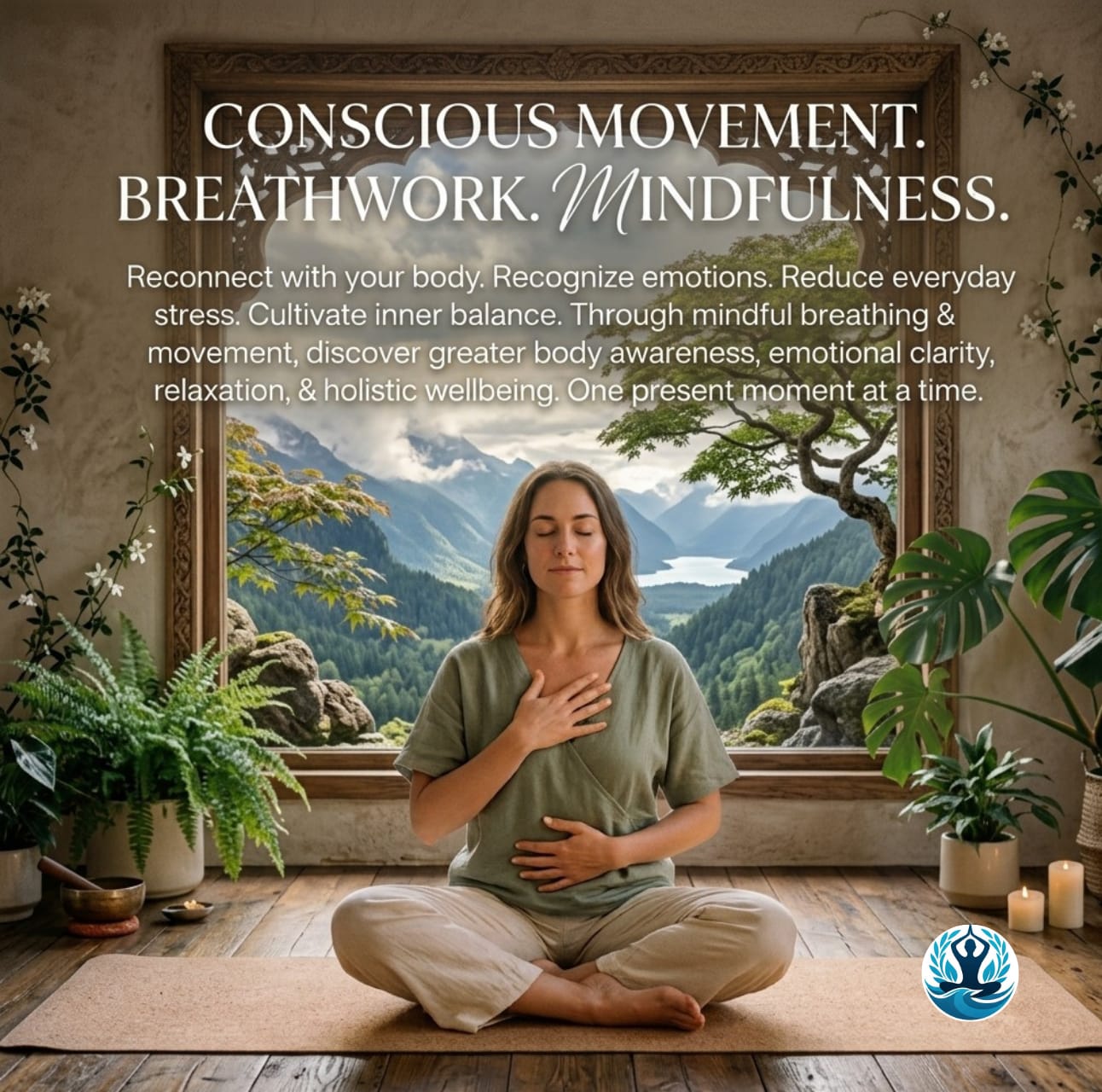
This is where conscious movement, breathwork, and mindfulness can become valuable practices for developing greater body and emotional awareness.
These approaches encourage a person to slow down and pay attention to physical sensations, breathing patterns, thoughts, emotions, and habitual reactions. Instead of automatically moving through daily experiences, individuals learn to observe what is happening within them.
Body awareness does not mean constantly analyzing every physical sensation. Rather, it involves developing a more balanced relationship with the body. You learn to notice tension, comfort, fatigue, relaxation, energy, breathing changes, and emotional responses with greater clarity.
Similarly, emotional awareness involves recognizing feelings as they arise without immediately suppressing, judging, or reacting to them.
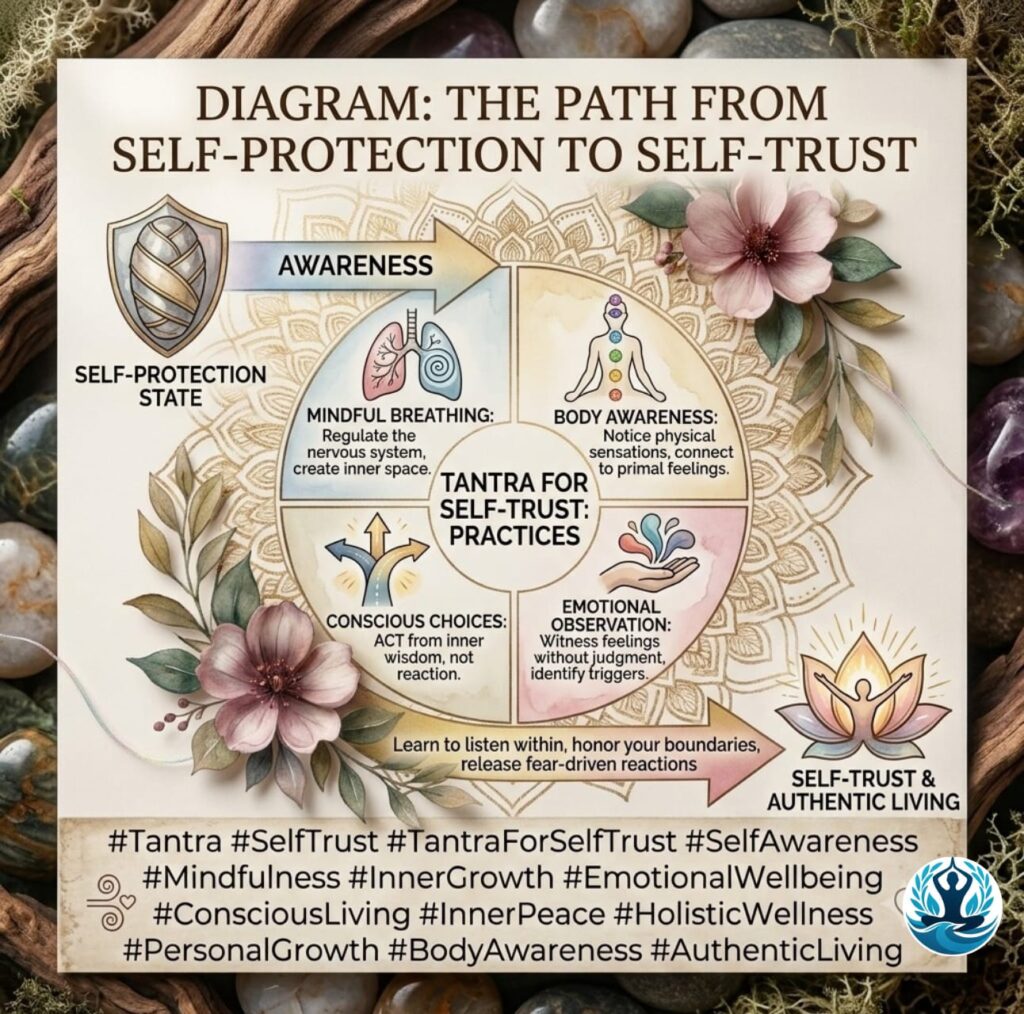
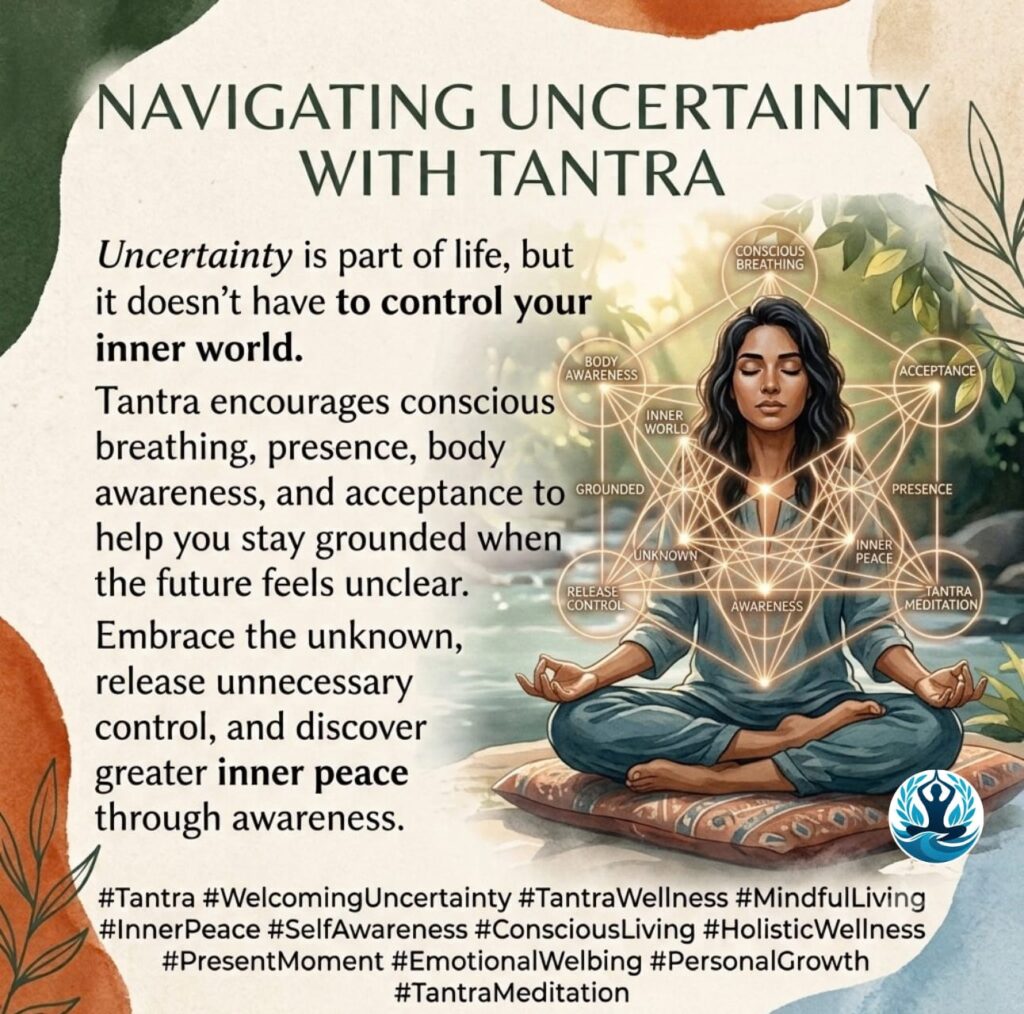
In holistic wellness and Tantra-inspired practices, the connection between body, breath, awareness, and emotions is often considered important. Conscious practices can encourage people to become more present and responsive to their internal experiences.
This article explores how conscious movement, breathwork, and mindfulness can support body awareness and emotional awareness, how these practices work together, and how they can be incorporated into everyday life.
What Is Body Awareness?
Body awareness is the ability to recognize and understand physical sensations occurring within the body.
These sensations can include:
- Muscle tension
- Relaxation
- Warmth or coolness
- Heartbeat
- Breathing patterns
- Physical fatigue
- Restlessness
- Heaviness or lightness
- Changes in posture
- Feelings of comfort or discomfort
Many people move through their day without consciously noticing these signals. For example, someone may spend hours working at a desk before realizing that their neck and shoulders are tense.
Developing body awareness means becoming more attentive to these signals before they become overwhelming.
This awareness can also help create a stronger connection between physical sensations and emotional experiences. For example, nervousness may be accompanied by a faster heartbeat, tightness in the stomach, or shallow breathing. Relaxation may be experienced as softer muscles, slower breathing, and a greater sense of ease.
Learning to notice these patterns can encourage more conscious responses.
What Is Emotional Awareness?
Emotional awareness means recognizing and identifying emotions as they arise.
Instead of simply thinking, “I feel bad,” a person may gradually learn to distinguish between frustration, sadness, anxiety, anger, disappointment, excitement, or emotional exhaustion.
This distinction can be useful because emotions often influence the body.
Stress may produce muscle tension. Anxiety may change breathing. Anger may create heat or physical activation. Sadness may be accompanied by heaviness or low energy.
The relationship also works in the other direction. Physical discomfort, lack of rest, or prolonged tension can influence mood and emotional resilience.
Mindfulness-based practices encourage individuals to observe these experiences without immediately judging them.
The Connection Between the Body, Breath, and Emotions
The body and mind constantly influence one another.
When a person experiences stress, the body can respond through changes in breathing, muscle tension, heart rate, posture, attention, and energy levels. Emotional experiences can therefore have noticeable physical expressions.
For example, during a stressful situation, someone may unconsciously:
- Hold their breath
- Tighten their jaw
- Raise their shoulders
- Clench their hands
- Tighten their abdomen
- Move more quickly
- Become restless
If these reactions are not noticed, they may become habitual.
Conscious movement, breathwork, and mindfulness provide opportunities to interrupt automatic patterns by bringing attention back to the present experience.
The goal is not to eliminate every uncomfortable sensation or emotion. Instead, the goal is to notice experiences earlier and respond to them with greater awareness.
How Conscious Movement Improves Body Awareness
Conscious movement means moving the body with deliberate attention rather than performing movements automatically.
It can include gentle stretching, yoga-inspired movement, walking meditation, mindful mobility exercises, somatic practices, or slow movements used in certain Tantra and wellness traditions.
The important element is not necessarily the specific movement. It is the quality of attention brought to the movement.
1. It Helps You Notice Muscle Tension
Slow, attentive movement can make it easier to notice areas of unnecessary tension.
For example, while stretching the shoulders, you may recognize that one side feels tighter than the other. During a slow walk, you may notice tension in the hips or legs.
This awareness can encourage you to adjust your posture, movement, or activity level.
2. It Improves Awareness of Posture
Posture can change according to mood, stress, fatigue, and environment.
A person under pressure may sit with raised shoulders or a forward head position. Someone who feels relaxed may naturally move more slowly and comfortably.
Conscious movement encourages observation of these patterns.
Rather than judging posture as “good” or “bad,” the practice focuses on noticing how different positions feel.
3. It Encourages Slower Movement
Many people move quickly because they are constantly trying to complete tasks.
Slowing down can reveal sensations that might otherwise be overlooked.
You may notice:
- How your feet contact the ground
- How your spine moves
- How your shoulders respond
- How your breath changes
- Which movements feel comfortable
- Where resistance or tension appears
This can strengthen the connection between attention and physical experience.
4. It Creates Opportunities for Self-Observation
Conscious movement can become a form of self-inquiry.
Instead of asking only, “How far can I stretch?” you might ask:
“What am I experiencing right now?”
That shift changes the purpose of movement from performance to awareness.
How Breathwork Supports Body Awareness
Breathwork refers broadly to intentional breathing practices. Different traditions use different breathing techniques, and some practices can be quite intense.
For general wellness, gentle and comfortable breathing practices are usually the easiest place to begin.
Breathing is particularly useful for body awareness because it is both automatic and voluntarily controllable.
You breathe throughout the day without consciously directing every breath, yet you can also intentionally change the rhythm and depth of your breathing.
1. Breathing Brings Attention Into the Present
When attention becomes caught in thoughts about the past or future, focusing on the breath provides a simple present-moment anchor.
You can notice:
- The movement of the abdomen
- Expansion of the ribs
- Air moving through the nose
- The length of the inhale
- The length of the exhale
- Pauses between breaths
This creates a direct connection with physical experience.
2. Breath Can Reveal Emotional Changes
Breathing patterns often change with emotional states.
When people feel stressed or excited, their breathing may become faster or more noticeable. When they are relaxed, breathing may naturally become slower and quieter.
Observing these changes can help individuals recognize emotional activation earlier.
For example:
“My breathing has become shallow, and my shoulders are tense. Perhaps I am feeling stressed.”
That observation creates a moment between sensation and reaction.
3. Conscious Breathing Can Encourage Relaxation
Slow, comfortable breathing may support a calmer state for some people. Pairing breathing with mindfulness can make relaxation more intentional.
However, breathwork should not be treated as a guaranteed treatment for anxiety, trauma, or medical conditions. Individual responses vary, and people with certain health conditions should seek appropriate professional guidance before practicing intensive breathing techniques.
How Mindfulness Improves Awareness of Emotions
Mindfulness involves intentionally paying attention to present-moment experience with an attitude of openness and reduced judgment.
Mindfulness can be practiced while sitting, walking, moving, breathing, eating, or performing everyday activities.
One of its important benefits is that it creates space between an experience and an automatic reaction.
For example, imagine receiving criticism at work.
An automatic response might be:
“They don’t respect me.”
A mindful response may begin with noticing:
“I feel heat in my face. My chest feels tight. I notice anger arising. I want to respond immediately.”
The emotion has not necessarily disappeared. Instead, awareness has increased.
That awareness may create an opportunity to choose a more thoughtful response.
Mindfulness and the Practice of Naming Emotions
One useful mindfulness technique is simply identifying what you are feeling.
Instead of becoming completely absorbed in an emotion, you can acknowledge:
- “I notice frustration.”
- “I notice sadness.”
- “I notice tension.”
- “I notice fear.”
- “I notice excitement.”
- “I notice mental restlessness.”
This does not mean labeling yourself according to the emotion.
There is an important difference between:
“I am an anxious person.”
and:
“I notice anxiety arising right now.”
The second statement creates some psychological distance between the individual and the temporary emotional experience.
The Role of Interoception in Body Awareness
A useful concept connected with body awareness is interoception.
Interoception refers to the perception of signals from within the body, such as heartbeat, breathing, hunger, fullness, temperature, and other internal sensations.
Mindfulness and conscious movement can encourage people to pay closer attention to these internal signals.
For example, before eating, someone might notice whether they are physically hungry or simply eating because of boredom.
Before continuing a demanding activity, they might notice fatigue.
During a stressful conversation, they might recognize a tightening sensation in the stomach.
This kind of awareness can support more intentional decision-making.
Conscious Movement, Breathwork, and Mindfulness Work Together
Although these practices can be used separately, combining them can create a more complete mind-body awareness routine.
Consider a simple sequence:
Step 1: Pause
Stop what you are doing for a moment.
Step 2: Notice the Body
Observe your posture, muscle tension, physical comfort, and general sensations.
Step 3: Observe the Breath
Notice whether your breathing feels slow, fast, deep, shallow, relaxed, or tense without forcing it to change.
Step 4: Notice Emotions
Ask yourself:
“What emotion is present right now?”
Step 5: Move Consciously
Make a few slow, comfortable movements while maintaining awareness of the body.
Step 6: Return to the Breath
Use natural breathing as an anchor for attention.
Step 7: Respond Intentionally
Instead of immediately returning to an automatic habit, consider what your body and mind may need next.
This sequence can take only a few minutes.
How These Practices May Help With Stress Awareness
Stress is often noticed only after it becomes intense.
Conscious practices can encourage earlier recognition.
For example, you may begin to identify your personal stress signals:
- Tight shoulders
- Jaw clenching
- Rapid breathing
- Restlessness
- Difficulty concentrating
- Stomach discomfort
- Racing thoughts
- Irritability
- Feeling emotionally overwhelmed
Recognizing these signs does not automatically remove stress. However, it can make it easier to pause and choose supportive strategies such as taking a break, slowing down, stretching, breathing comfortably, or seeking appropriate support.
The Relationship Between Movement and Emotional Release
People sometimes describe emotional experiences as being “held” in the body.
This language can be useful as a metaphor for the way emotions and stress can influence physical patterns, such as muscle tension, posture, breathing, and movement.
Gentle conscious movement can help individuals notice these patterns.
For example, someone might realize that they habitually tense their shoulders whenever they feel pressured.
Once the pattern becomes visible, they can begin experimenting with relaxation, posture changes, breathing, and healthier responses.
It is important, however, not to assume that every physical sensation represents a hidden emotional problem. Physical symptoms can have many causes and may require medical attention when persistent, severe, or concerning.
Tantra and Conscious Body Awareness
In some Tantra-inspired wellness settings, the body is approached as an important part of conscious experience rather than something separate from mental and emotional life.
Practices may emphasize:
- Presence
- Breath awareness
- Meditation
- Slow movement
- Sensory awareness
- Self-observation
- Relaxation
- Conscious connection
The emphasis is generally on experiencing the present moment more fully.
When used in a responsible wellness context, Tantra-inspired practices can be presented as tools for self-awareness rather than promises of guaranteed medical or psychological outcomes.
Tantra should also not be confused with a single standardized therapy. Different teachers, traditions, and wellness providers may use the word “Tantra” in very different ways.
How Mindfulness Can Change the Way We Respond to Emotions
One of the most important aspects of mindfulness is that it encourages observation before reaction.
Imagine feeling angry during an argument.
Without awareness, the sequence may be:
Trigger → Emotion → Immediate Reaction
With greater awareness, the sequence may become:
Trigger → Physical Sensation → Emotional Awareness → Pause → Choice → Response
That small pause can be meaningful.
It does not mean suppressing anger. Instead, it provides an opportunity to understand the emotion and decide how to express it constructively.
Conscious Movement for Everyday Life
Conscious movement does not have to mean attending a formal class.
You can practice it during ordinary activities.
Mindful Walking
While walking, notice your feet touching the ground, the rhythm of your steps, your posture, and your breathing.
Gentle Stretching
Move slowly and observe sensations rather than trying to force flexibility.
Mindful Sitting
Notice how your body feels while sitting at your desk. Relax unnecessary tension when possible.
Conscious Transitions
Before moving from one activity to another, take a moment to notice your body and breathing.
These small practices can gradually make body awareness part of everyday life.
A Simple Daily Breathwork Practice
For a gentle approach, sit comfortably and allow your breathing to remain natural.
Observe the breath for several minutes.
Notice:
- Where you feel the breath.
- Whether the breath feels comfortable.
- Whether your breathing changes with thoughts.
- Whether your shoulders remain relaxed.
- How your body feels before and after the practice.
There is no need to force deep breathing.
The purpose is observation rather than performance.
If you become dizzy, uncomfortable, anxious, or physically unwell, stop the exercise and return to normal breathing.
A Five-Minute Mindfulness Practice
A simple five-minute routine can help beginners develop awareness.
Minute 1: Body
Notice your posture and physical sensations.
Minute 2: Breath
Observe the natural rhythm of breathing.
Minute 3: Emotions
Ask what emotional state is present without judging it.
Minute 4: Thoughts
Notice thoughts as mental events rather than instructions that must immediately be followed.
Minute 5: Whole-Body Awareness
Bring attention to the entire body and notice how you feel in the present moment.
Consistency is often more useful than making the practice complicated.
Benefits of Developing Body and Emotional Awareness
Regular mindfulness-based practices may support several areas of wellbeing.
Greater Self-Awareness
You may become more familiar with your physical and emotional patterns.
Better Stress Recognition
You may recognize signs of stress earlier.
Improved Relaxation Skills
You may become more comfortable using breathing, movement, and pauses to support relaxation.
Greater Emotional Clarity
You may find it easier to distinguish between different emotions.
Stronger Mind-Body Connection
You may become more aware of how thoughts, emotions, breathing, and physical sensations interact.
More Intentional Responses
Greater awareness can create opportunities to respond rather than automatically react.
Common Mistakes to Avoid
Although these practices are generally approachable, beginners can sometimes make them unnecessarily difficult.
Trying to Empty the Mind
Mindfulness is not about having no thoughts.
Thoughts naturally arise. The practice is to notice them and gently return attention to the present.
Forcing the Breath
Breathwork should not become a competition.
Aggressive or prolonged breathing exercises are not appropriate for everyone.
Judging Physical Sensations
Not every sensation needs to be classified as positive or negative.
Simply notice it.
Expecting Immediate Transformation
Some people notice relaxation quickly, while others require consistent practice before recognizing changes.
Ignoring Medical Symptoms
Mindfulness should not be used to dismiss persistent pain, breathing difficulties, unusual physical symptoms, or significant emotional distress.
Appropriate healthcare should be sought when needed.
How to Build a Sustainable Mind-Body Practice
The best practice is one you can maintain.
Start with five to ten minutes rather than creating an elaborate routine that becomes difficult to follow.
A simple weekly structure could include:
Morning: Two minutes of conscious breathing.
During the day: One mindful body check-in.
Evening: Five minutes of gentle movement and mindfulness.
Before sleep: Observe the breath and release unnecessary physical tension.
The goal is not perfection. The goal is developing a habit of returning to awareness.
Conscious Awareness in Everyday Situations
The real value of these practices is not limited to formal meditation sessions.
You can practice awareness while:
- Drinking tea
- Taking a shower
- Walking
- Eating
- Working
- Exercising
- Talking to someone
- Resting
- Preparing for sleep
For example, while drinking tea, instead of scrolling through your phone, notice the temperature of the cup, aroma, taste, breathing, posture, and thoughts.
This simple experience becomes an opportunity for present-moment awareness.
When Professional Guidance May Be Helpful
Mindfulness, conscious movement, and gentle breath awareness can be useful wellness practices, but they are not substitutes for professional medical or mental-health care.
If someone experiences persistent physical pain, severe anxiety, trauma-related symptoms, depression, breathing problems, dizziness, or other significant concerns, professional guidance is appropriate.
People with specific medical conditions should also consult a qualified healthcare professional before beginning intensive breathwork or physically demanding movement practices.
A responsible Tantra or wellness practitioner should respect personal boundaries, consent, physical limitations, and individual comfort.
Frequently Asked Questions
What is conscious movement?
Conscious movement involves moving the body while intentionally paying attention to physical sensations, breathing, posture, and movement quality.
How does breathwork improve body awareness?
Breathing provides a direct way to focus attention on internal physical sensations. Observing breathing patterns can also help individuals notice changes associated with stress and emotional states.
Can mindfulness improve emotional awareness?
Mindfulness may help people notice emotions as they arise without immediately reacting to them. This can create greater clarity around emotional experiences.
Can these practices reduce stress?
Relaxation-oriented mindfulness, breathing, and movement practices may support stress management and relaxation. Individual responses vary.
Is Tantra the same as mindfulness?
No. Tantra refers to diverse traditions and practices, while mindfulness is a broader practice of present-moment awareness. Some modern Tantra-inspired wellness approaches incorporate mindfulness, meditation, breath awareness, or conscious movement.
How long should I practice?
Beginners can start with a few minutes per day and gradually increase according to comfort. Consistency is generally more practical than forcing long sessions.
Conclusion
Conscious movement, breathwork, and mindfulness can create a stronger connection between physical sensations and emotional experiences. By slowing down and paying attention, individuals may become more aware of muscle tension, breathing patterns, posture, energy levels, thoughts, and emotions.
The central principle is simple: notice before reacting.
Conscious movement teaches us to listen to the body while moving. Breath awareness provides a direct anchor to the present moment. Mindfulness helps us observe thoughts and emotions with greater openness.
Together, these practices can become valuable tools for self-awareness, relaxation, stress management, and holistic wellbeing.
For people exploring Tantra and other mind-body wellness approaches, this awareness can be particularly meaningful. Rather than treating the body as separate from emotional and mental experiences, conscious practices encourage a more integrated perspective.
The goal is not to control every sensation or eliminate every difficult emotion. It is to become more present with what is happening, recognize personal patterns, and respond with greater awareness.
With regular, gentle practice, even a few mindful minutes each day can become an opportunity to reconnect with the body, understand emotional signals, and cultivate a calmer and more conscious relationship with everyday life.