

How Tantra Teaches Radical Presence in a Distracted World

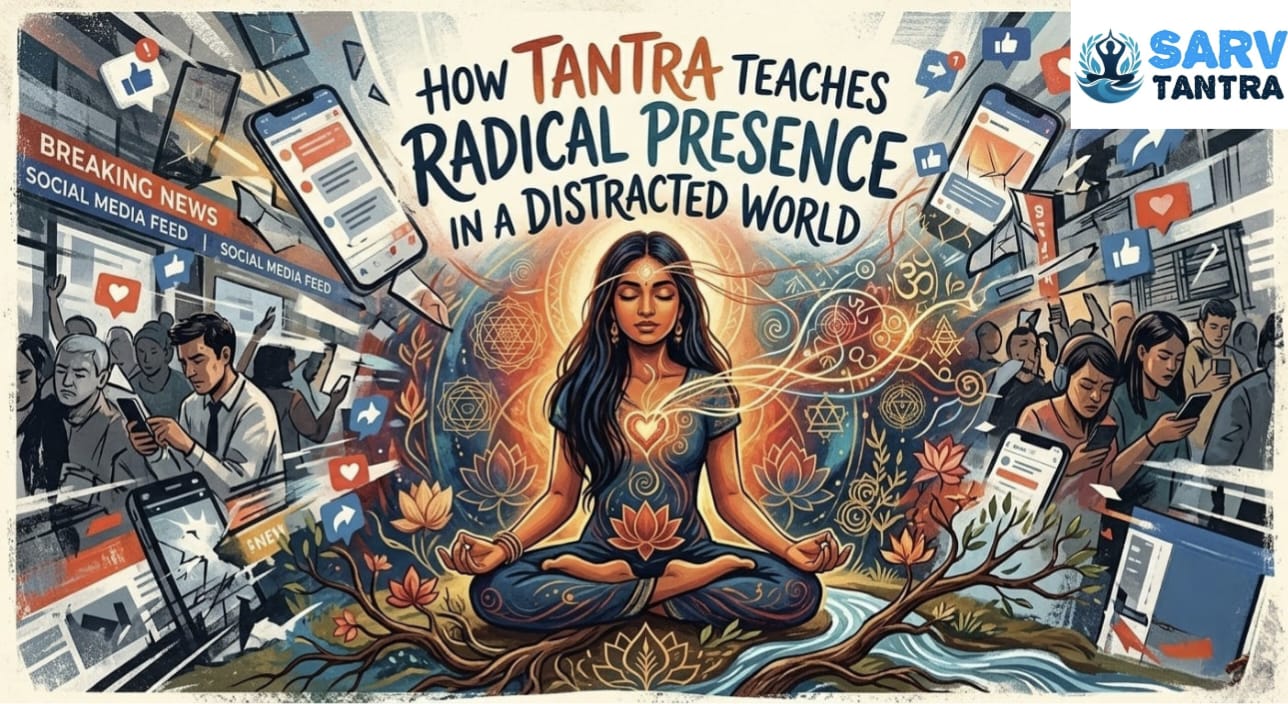
Modern life moves at an extraordinary speed. Notifications constantly interrupt our attention, social media fragments our focus, and the pressure to multitask keeps the mind busy almost every moment of the day. In this environment, many people feel mentally exhausted, emotionally disconnected, and spiritually ungrounded.
The ability to simply be present—to fully experience the moment without distraction—has become increasingly rare. Yet presence is the foundation of clarity, peace, and meaningful living.
This is where Tantra offers profound wisdom.
Tantra, an ancient spiritual tradition, teaches that life becomes vibrant and meaningful when we cultivate deep awareness of the present moment. Instead of escaping the world or suppressing our experiences, Tantra invites us to meet life directly with full attention.
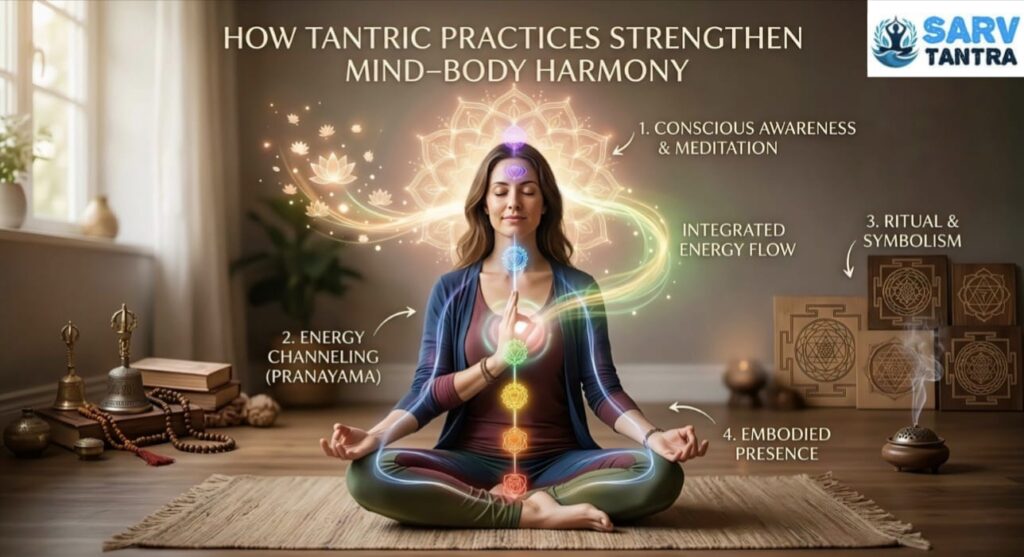
Through mindful breathing, conscious awareness of the body, and deep emotional presence, Tantra helps us reclaim our attention from the constant noise of modern life.
In a world full of distractions, Tantra teaches something revolutionary: radical presence.
Understanding Radical Presence
Radical presence means experiencing the current moment with total awareness. It is a state in which your mind is not lost in past regrets or future worries but fully connected with what is happening right now.
Most people live in a constant mental loop:
- Thinking about the past
- Planning the future
- Reacting to digital stimuli
- Multitasking continuously
As a result, they rarely experience life directly.
Tantra teaches that true vitality emerges when awareness returns to the present moment.
Radical presence involves:
- Awareness of breath
- Sensitivity to bodily sensations
- Emotional openness
- Attentive listening
- Conscious engagement with life
When presence deepens, everyday experiences become richer and more meaningful.
Even simple moments—like walking, breathing, or drinking tea—become profound experiences of connection.
Why Modern Life Creates Constant Distraction
Before exploring Tantra’s teachings, it is important to understand why modern society makes presence so difficult.
1. Digital Overstimulation
Smartphones, emails, and social media continuously compete for attention. Each notification pulls the mind away from the present moment.
This constant stimulation trains the brain to seek novelty rather than depth.
2. Multitasking Culture
Modern productivity culture encourages people to do many things at once. While multitasking seems efficient, it fragments attention and reduces mental clarity.
Tantra teaches the opposite approach—full attention to one experience at a time.
3. Mental Overactivity
Many people live almost entirely in their thoughts. They analyze, worry, and plan constantly.
While thinking is useful, excessive mental activity prevents direct experience of life.
Tantra encourages us to balance thinking with embodied awareness.
4. Emotional Disconnection
When people are overwhelmed by stimulation, they often disconnect from their emotions.
Tantric awareness helps people reconnect with their emotional experience in a conscious and compassionate way.
The Tantric Approach to Presence
Tantra offers a radically different approach to life compared to the modern mindset.
Rather than rushing through experiences, Tantra invites us to slow down and deepen awareness.
The Tantric path emphasizes:
- Conscious breathing
- Sensory awareness
- Emotional presence
- Connection with the body
- Deep attention to everyday activities
Through these practices, awareness gradually becomes stable and expansive.
Instead of constantly seeking new stimulation, the mind begins to appreciate the richness of the present moment.
The Role of the Body in Tantric Presence
One of the most important teachings of Tantra is that the body is a gateway to presence.
Many people live primarily in their thoughts and ignore the wisdom of the body. However, the body always exists in the present moment.
By bringing awareness to bodily sensations, we naturally return to the now.
Tantric practices often involve:
- Observing the breath
- Feeling the heartbeat
- Noticing subtle sensations
- Relaxing muscular tension
- Moving with awareness
As awareness deepens in the body, the mind becomes calmer and more focused.
This shift from mental activity to embodied awareness creates a powerful sense of grounding.
Conscious Breathing: A Key to Radical Presence
Breath awareness is one of the simplest yet most powerful Tantric practices.
Breathing happens continuously, but most people rarely notice it.
When attention gently returns to the breath, the mind begins to settle.
Tantric breathing practices help:
- Calm mental activity
- Increase focus
- Release stress
- deepen awareness
A simple practice involves taking a few minutes to observe the natural rhythm of breathing.
Instead of controlling the breath, simply notice the sensations of inhalation and exhalation.
This small shift in awareness can bring the mind back into the present moment almost instantly.
Awakening Sensory Awareness
Another essential element of Tantric presence is awakening the senses.
In a distracted world, many people move through life without fully experiencing it.
Tantra invites us to rediscover the richness of sensory perception.
This includes:
- Feeling the warmth of sunlight
- Listening deeply to sounds
- Noticing textures and colors
- Savoring the taste of food
- Experiencing the rhythm of movement
When sensory awareness expands, everyday life becomes vibrant and alive.
Even ordinary moments become opportunities for presence.
Tantra and Emotional Presence
True presence also involves emotional awareness.
Many people try to suppress uncomfortable emotions such as sadness, anger, or fear. However, suppressed emotions often create internal tension.
Tantra teaches that emotions are forms of energy that can be observed and experienced consciously.
Instead of resisting emotions, we can meet them with awareness.
This approach allows emotions to move naturally without overwhelming the mind.
Over time, emotional awareness leads to:
- greater inner stability
- increased self-understanding
- deeper compassion
- emotional freedom
Presence becomes more complete when we allow ourselves to feel fully.
Radical Presence in Relationships
One of the most powerful applications of Tantric presence is in relationships.
Modern communication often happens through quick messages, distracted conversations, and divided attention.
Tantric awareness encourages deep listening and authentic connection.
When people are truly present with each other:
- conversations become more meaningful
- empathy increases
- misunderstandings decrease
- emotional intimacy deepens
Simple practices like maintaining eye contact, listening without interrupting, and feeling the emotional tone of the conversation can transform relationships.
Presence is one of the greatest gifts we can offer another human being.
Tantra as a Practice of Slowing Down
In many ways, Tantra is an art of slowing down.
This does not mean becoming passive or unproductive. Instead, it means engaging with life more consciously.
Slowing down allows us to:
- notice subtle details
- respond thoughtfully instead of reacting
- experience emotions more clearly
- make wiser decisions
When awareness slows down the pace of the mind, life becomes less chaotic and more harmonious.
Overcoming the Habit of Distraction
Developing radical presence requires patience and consistent practice.
The mind has been conditioned for years to seek stimulation and distraction.
Tantra encourages gentle awareness rather than forceful control.
When distractions arise:
- notice them
- acknowledge them
- gently return attention to the present moment
Over time, awareness becomes stronger and distractions lose their power.
This process gradually transforms the quality of consciousness.
Everyday Practices for Tantric Presence
Radical presence can be cultivated through simple daily practices.
1. Mindful Breathing
Spend a few minutes each day observing your breath.
2. Conscious Walking
Walk slowly and notice the movement of your body and the sensation of your feet touching the ground.
3. Digital Awareness
Take regular breaks from screens to reconnect with your surroundings.
4. Sensory Observation
Pause during the day to notice sounds, textures, and sensations.
5. Deep Listening
Give full attention when someone is speaking.
These small practices gradually transform awareness.
The Benefits of Radical Presence
As Tantric presence develops, many positive changes naturally occur.
Mental Clarity
A present mind is less cluttered by unnecessary thoughts.
Emotional Balance
Awareness allows emotions to flow naturally without overwhelming the mind.
Reduced Stress
Presence brings the nervous system into a calmer state.
Deeper Relationships
Authentic attention strengthens emotional bonds.
Greater Appreciation of Life
Even simple moments feel meaningful when experienced fully.
Presence transforms ordinary life into a rich and fulfilling experience.
Tantra and the Spiritual Dimension of Presence
Beyond psychological benefits, Tantra also points to a deeper spiritual dimension.
When awareness becomes fully present, the sense of separation between self and life begins to soften.
Many Tantric teachings describe this experience as a state of unity or wholeness.
In this state:
- awareness feels expansive
- life is experienced directly
- inner peace naturally arises
Presence becomes not just a practice but a way of being.
Living Tantra in a Distracted World
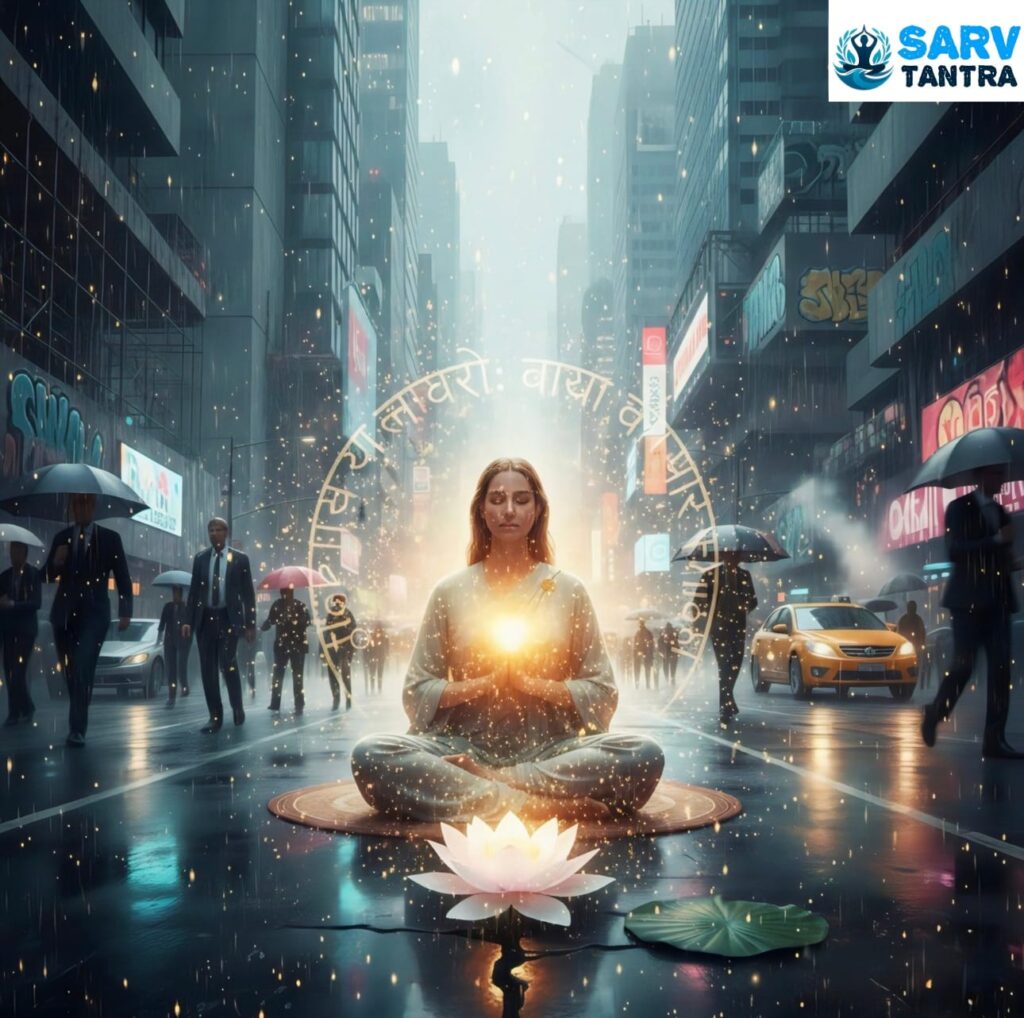
Modern life may seem incompatible with presence, but Tantra shows that awareness can be practiced anywhere.
You do not need to retreat to a monastery or abandon modern life.
Presence can be cultivated:
- while working
- during conversations
- while walking
- during meals
- even while using technology
The key is remembering to return to awareness again and again.
Each moment offers a new opportunity to reconnect with the present.
Conclusion
In a world dominated by constant distraction, the ability to be fully present has become a rare and valuable skill.
Tantra teaches that radical presence is not something we must force or achieve. It is a natural state that emerges when we gently return our awareness to the body, breath, senses, and emotions.
Through conscious breathing, sensory awareness, emotional openness, and mindful attention to everyday life, Tantra helps us reclaim our focus and reconnect with the richness of the present moment.
As presence deepens, life becomes less fragmented and more meaningful.
The ordinary becomes extraordinary.
In the midst of a distracted world, Tantra reminds us that the most profound experience is always available right now—the simple, powerful experience of being fully alive in the present moment.