

Tantra for Finding Yourself Beneath Social Expectations: A Journey to Authentic Living

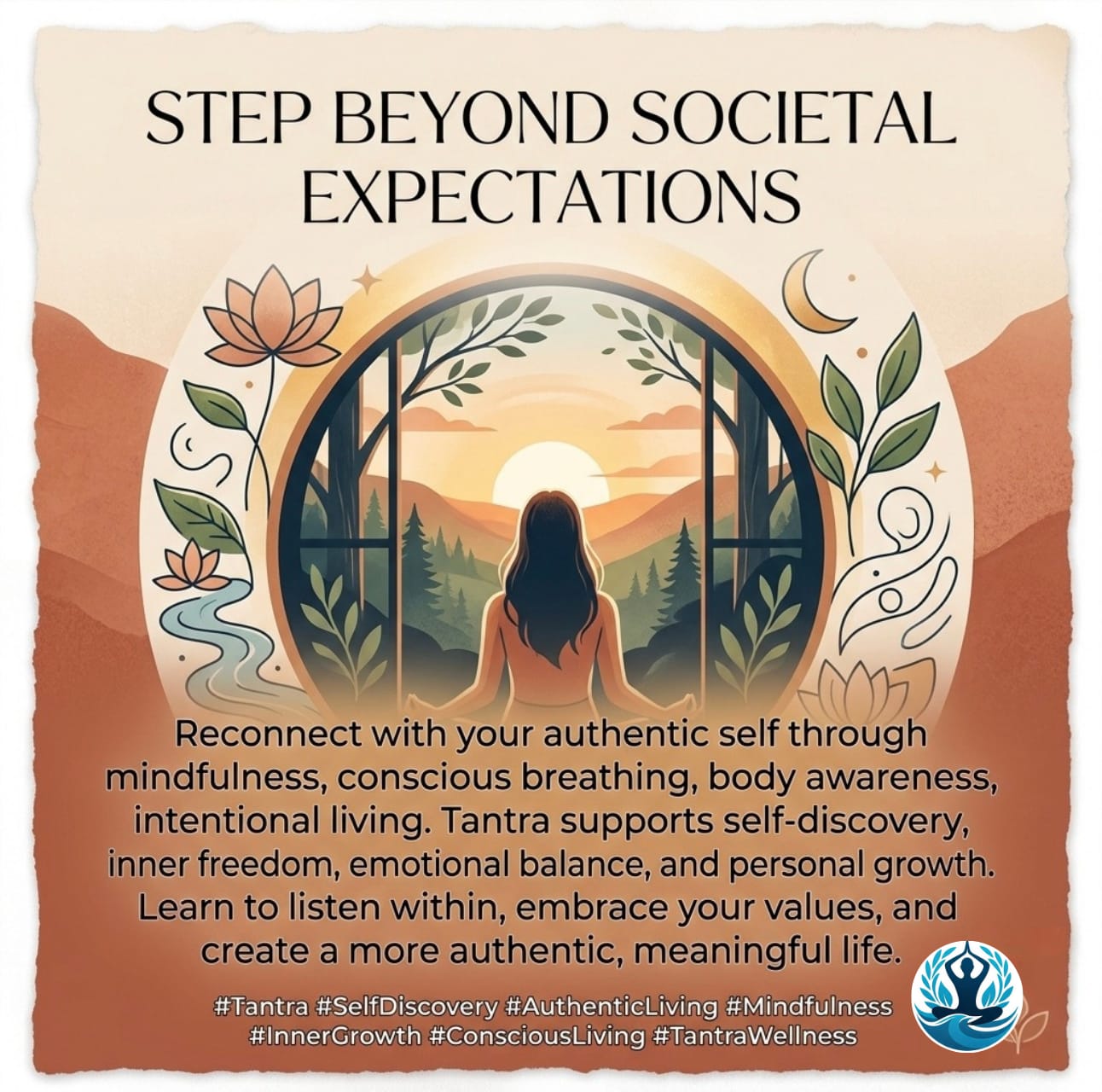
Modern life often comes with an invisible list of expectations. We are encouraged to behave a certain way, choose particular careers, maintain specific lifestyles, achieve success, and present ourselves in ways that society considers acceptable. Over time, these expectations can become so familiar that we may stop questioning them.
A person can spend years trying to become who they believe they should be rather than discovering who they genuinely are.
This is where Tantra for finding yourself can offer a meaningful perspective. Rather than focusing only on external achievement, Tantra traditionally emphasizes awareness, presence, conscious experience, and the integration of different aspects of life. In a modern wellness context, these principles can encourage people to slow down, observe themselves honestly, reconnect with their bodies, and recognize their own values.
Finding yourself does not necessarily mean abandoning your responsibilities or rejecting society. It means developing enough self-awareness to distinguish between what genuinely comes from within you and what you have learned to expect from yourself because of external pressure.
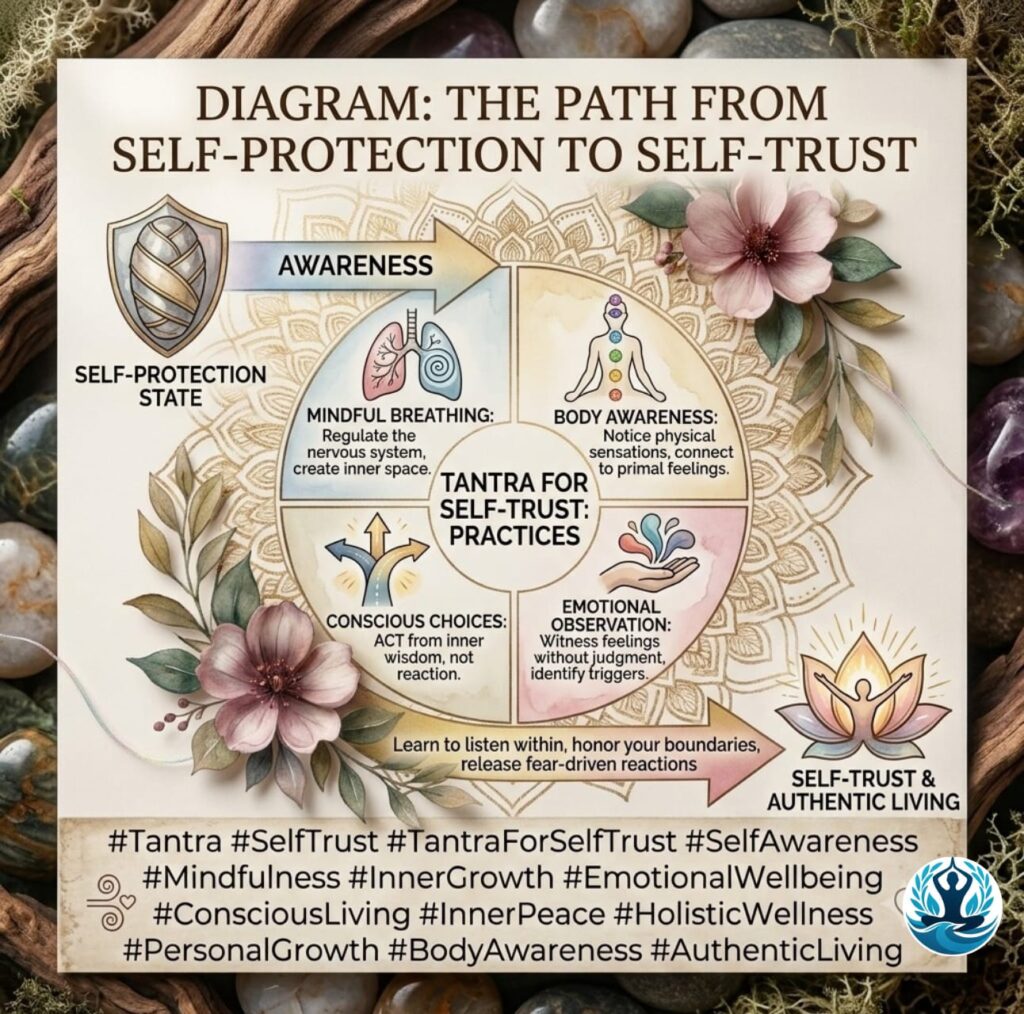
Tantra can provide practices involving mindful breathing, meditation, conscious movement, sensory awareness, and reflection that may help create this inner space.
The journey is not about becoming someone new. It is about becoming more aware of the person who is already there.
What Does It Mean to Find Yourself?
Finding yourself is often misunderstood as discovering one permanent identity or finding a single life purpose.
In reality, self-discovery can be an ongoing process.
It involves asking questions such as:
- What do I genuinely value?
- What makes me feel alive and present?
- Which decisions reflect my own desires?
- Which choices are influenced by fear or social approval?
- What emotions do I tend to suppress?
- What does my body communicate when I am uncomfortable?
- What kind of life feels meaningful to me?
- Am I living according to my values or someone else’s definition of success?
These questions can reveal the difference between authentic living and socially conditioned living.
Many people unconsciously adapt themselves to their environment. They may learn that being successful means earning more money, that being happy means appearing positive, or that being accepted means behaving according to expectations.
There is nothing inherently wrong with many social values. The problem arises when external expectations completely replace personal awareness.
Tantra encourages a return to observation.
Instead of immediately judging your thoughts, emotions, desires, or reactions, you learn to notice them.
That simple act of noticing can become the beginning of self-discovery.
Understanding Social Expectations
Social expectations are the spoken and unspoken rules that influence how people believe they should behave.
They can come from:
- Family
- Friends
- Culture
- Education
- Workplace environments
- Social media
- Relationships
- Community
- Traditional ideas of success
- Advertising and popular culture
For example, someone may feel pressured to pursue a particular career because their family considers it prestigious.
Another person may believe they must constantly be productive because modern culture associates busyness with success.
Someone else may hide their emotions because they were taught that vulnerability is weakness.
These expectations can become internalized.
Eventually, you may not hear anyone telling you what to do. Instead, the voice of expectation comes from inside.
You might think:
“I should be further ahead.”
“I should have achieved more by now.”
“I should look a certain way.”
“I should always be confident.”
“I should make everyone happy.”
“I should never disappoint anyone.”
When these thoughts become habitual, it can be difficult to identify your authentic preferences.
Tantric self-awareness offers an opportunity to pause before automatically accepting these assumptions.
How Tantra Can Support Self-Discovery
Tantra is a broad and diverse set of traditions, and its historical forms are much more complex than the simplified wellness versions often presented today.
In a contemporary wellness context, some Tantric-inspired practices emphasize presence, awareness, embodiment, breath, meditation, and conscious experience.
These practices can support self-discovery by shifting attention from external judgment toward direct experience.
Instead of asking:
“What will people think of me?”
you can begin asking:
“What am I experiencing right now?”
Instead of:
“What should I feel?”
you can ask:
“What am I actually feeling?”
Instead of:
“Who am I supposed to become?”
you can explore:
“What matters to me?”
This shift from automatic reaction to conscious observation is one of the most valuable aspects of a self-awareness practice.
1. Tantra Encourages You to Slow Down
One of the biggest obstacles to self-discovery is constant activity.
When life becomes filled with work, notifications, responsibilities, entertainment, and social interaction, there may be very little opportunity to hear your own thoughts.
Slowing down creates space.
A few minutes of conscious breathing can interrupt the constant momentum of daily life.
You may sit quietly, breathe naturally, and simply notice what is happening inside.
At first, this may feel uncomfortable.
You may discover that your mind is busy.
You may notice emotions you have been avoiding.
You may realize how often you seek distraction.
This is not failure.
It is awareness.
Self-discovery begins when you become willing to observe yourself without immediately escaping into another activity.
2. Tantra Brings Attention Back to the Body
Social conditioning often happens at the mental level.
We develop ideas about who we should be, what we should achieve, and how we should behave.
But the body can provide another source of information.
Conscious body awareness encourages you to notice sensations such as:
- Tension
- Relaxation
- Heaviness
- Lightness
- Warmth
- Restlessness
- Ease
- Discomfort
For example, imagine agreeing to something because you are afraid of disappointing someone.
Your mind may say:
“It is fine. I should do this.”
But when you become quiet, you might notice tension in your shoulders or a feeling of uneasiness.
That sensation does not automatically mean the decision is wrong. However, it can invite you to investigate your experience more carefully.
Tantra and body awareness can therefore complement emotional reflection by helping you become more attentive to your lived experience.
3. Tantra Can Help You Question the “Shoulds”
One of the most powerful exercises in self-discovery is noticing how frequently you use the word should.
Try completing these sentences:
- I should be…
- I should have…
- I should want…
- I should look…
- I should earn…
- I should behave…
- I should feel…
Now ask:
“Whose expectation is this?”
Sometimes the answer will be your own value.
Sometimes it may belong to your family.
Sometimes it may come from your culture.
Sometimes it may come from social media.
Sometimes you may not even know where it came from.
This does not mean every expectation must be rejected.
Instead, Tantra-inspired mindfulness can help you examine these beliefs consciously.
You can decide which values genuinely belong to you.
That distinction is an important part of authentic living.
4. Tantra and the Practice of Non-Judgmental Awareness
Self-discovery can become difficult when every observation turns into criticism.
You notice anxiety and immediately think:
“Why am I like this?”
You notice insecurity and think:
“I should be stronger.”
You discover jealousy and think:
“I am a bad person.”
Judgment can shut down curiosity.
A more mindful approach is:
“I notice that I am feeling jealous. What is this emotion trying to show me?”
This does not mean accepting every thought or acting on every emotion.
It simply means creating enough psychological space to understand yourself.
Non-judgmental awareness can turn self-examination from criticism into curiosity.
5. Tantra Helps You Reconnect With Your Personal Values
Finding yourself beneath social expectations requires knowing what actually matters to you.
Values are deeper than goals.
A goal might be:
“I want a high-paying job.”
The underlying value could be:
- Security
- Freedom
- Recognition
- Creativity
- Contribution
- Independence
Understanding the deeper value can help you determine whether your goal genuinely reflects who you are.
A person may discover that they do not actually want status. They may want freedom.
Another person may discover that they do not need constant achievement. They value connection.
Another may realize that creativity matters more than external recognition.
Tantra-inspired reflection can encourage this deeper exploration.
6. Conscious Breathing Creates a Moment of Inner Space
Breath is central to many contemplative traditions.
In a simple modern mindfulness practice, you can sit comfortably and observe your natural breathing.
There is no need to force the breath.
Simply notice:
Inhale.
Exhale.
Notice the movement of the body.
Notice thoughts appearing.
Notice emotions.
Return attention to breathing.
Even a short practice can create a pause between external stimulation and internal reaction.
That pause can become valuable when social pressure feels overwhelming.
Before immediately saying yes, reacting to criticism, comparing yourself with others, or making an important decision, you can pause and breathe.
That moment gives you an opportunity to respond consciously rather than automatically.
7. Tantra and Authentic Self-Expression
Authenticity does not mean saying everything you think or doing whatever you want.
Instead, authentic self-expression means allowing your communication and actions to reflect your genuine values while remaining respectful of others.
This may involve:
- Saying no when necessary
- Expressing your preferences
- Communicating your boundaries
- Admitting when you do not know something
- Allowing yourself to change
- Sharing emotions appropriately
- Choosing activities that genuinely interest you
When people spend years trying to satisfy everyone, they can lose touch with their own preferences.
Self-awareness helps rebuild that connection.
8. Tantra for Letting Go of Constant Comparison
Social comparison can make self-discovery extremely difficult.
You see someone else’s career and question your own.
You see another person’s relationship and question yours.
You see someone’s appearance, lifestyle, home, travel, or achievements and suddenly feel behind.
Comparison encourages you to measure your life using someone else’s scale.
Mindfulness brings attention back to your own experience.
Instead of asking:
“Am I doing better than them?”
you can ask:
“Am I living according to what matters to me?”
That is a much more useful question.
9. Tantra and the Courage to Change
Finding yourself may reveal that certain parts of your life no longer fit.
Perhaps an old goal is no longer meaningful.
Perhaps a relationship dynamic needs to change.
Perhaps you have been pursuing approval rather than fulfillment.
Perhaps your definition of success has evolved.
Self-awareness does not always produce comfortable answers.
Sometimes it creates difficult clarity.
But clarity can be valuable.
Tantra’s emphasis on awareness can encourage you to observe change rather than immediately resisting it.
You do not have to make dramatic decisions simply because you discover something new about yourself.
Instead, you can listen, reflect, and make thoughtful choices.
10. Tantra for Developing Inner Freedom
Inner freedom does not mean having complete control over circumstances.
Life will always include responsibilities, limitations, uncertainty, and other people’s opinions.
Inner freedom means becoming less controlled by unconscious reactions.
For example:
Someone criticizes you.
Your automatic reaction may be anger.
With greater awareness, you notice the anger before responding.
You breathe.
You observe.
You choose your response.
That space between stimulus and reaction can become a form of freedom.
Similarly, when someone expects something from you, you can listen without automatically abandoning your own needs.
This is one of the deeper possibilities of self-awareness.
A Simple Tantra-Inspired Self-Discovery Practice
You do not need an elaborate routine to begin exploring these ideas.
Try this simple practice.
Step 1: Create Quiet
Sit somewhere comfortable for five to ten minutes.
Put your phone away.
Allow yourself to be undisturbed.
Step 2: Observe Your Breath
Notice your natural breathing.
Do not force it.
Simply observe.
Step 3: Scan Your Body
Notice areas of tension or ease.
Ask:
“What am I experiencing physically right now?”
Step 4: Observe Your Thoughts
Allow thoughts to come and go.
Do not try to eliminate them.
Notice recurring themes.
Step 5: Identify One Expectation
Ask yourself:
“What expectation am I currently carrying?”
Perhaps it concerns work, relationships, appearance, money, family, or success.
Step 6: Question Its Origin
Ask:
“Is this genuinely my value, or have I absorbed it from somewhere else?”
Step 7: Return to Yourself
Ask:
“If I were not worried about other people’s opinions, what would I honestly value here?”
Do not force an answer.
Give yourself time.
Signs You May Be Living Too Much According to External Expectations
Self-reflection may reveal certain patterns.
You might notice:
Constant Need for Approval
You find it difficult to make decisions without knowing whether others will approve.
Difficulty Saying No
You regularly agree to things even when you do not genuinely want to participate.
Fear of Disappointing Others
Someone else’s disappointment feels unbearable.
Persistent Comparison
You constantly measure your life against other people’s achievements.
Loss of Personal Interests
You struggle to remember what you enjoy when nobody else is watching.
Perfectionism
You believe you must perform perfectly to feel worthy.
Emotional Suppression
You regularly hide emotions because they do not fit the image you want to present.
Feeling Disconnected
Life looks successful externally but feels disconnected internally.
These patterns do not mean something is wrong with you.
They can simply become invitations to explore yourself more deeply.
Tantra, Self-Acceptance, and Personal Growth
Finding yourself does not mean creating a perfect version of yourself.
It means developing a more honest relationship with yourself.
You have strengths.
You have limitations.
You have preferences.
You have fears.
You have changing desires.
You have contradictions.
You have experiences that shaped you.
Self-acceptance means making room for this complexity.
A mindful Tantric approach can encourage you to observe yourself as a whole person rather than dividing yourself into acceptable and unacceptable parts.
This can create a healthier foundation for personal growth.
Growth becomes less about:
“I must become someone worthy.”
And more about:
“I want to understand myself and live more consciously.”
How Tantra Can Influence Everyday Life
Self-awareness becomes meaningful when it moves beyond meditation.
You can practice conscious awareness while:
- Eating
- Walking
- Working
- Exercising
- Communicating
- Resting
- Spending time alone
- Making decisions
- Listening to others
For example, during a meal, instead of scrolling through your phone, notice the food, sensations, taste, and pace of eating.
During a conversation, listen instead of preparing your response.
During a stressful moment, notice your breathing before reacting.
Before accepting a commitment, pause and ask whether it genuinely fits your priorities.
These small moments can gradually transform ordinary life into opportunities for awareness.
Tantra and the Difference Between Identity and Authenticity
One important insight is that identity can change.
You may once have considered yourself extremely ambitious and later prioritize balance.
You may once have been highly social and later enjoy more solitude.
You may change careers.
Your interests may evolve.
Your relationships may change.
Your understanding of yourself may deepen.
Authenticity does not require maintaining exactly the same identity forever.
Instead, it involves remaining honest about your present experience while allowing yourself to grow.
Tantra-inspired awareness can support this flexibility.
Common Misunderstandings About Tantra and Self-Discovery
Tantra Is Only About Sexuality
This is one of the most common modern misconceptions.
Tantra encompasses diverse traditions, practices, philosophies, rituals, meditation methods, and spiritual approaches. Some modern wellness interpretations emphasize sexuality, but Tantra cannot accurately be reduced to that alone.
Tantra Means Rejecting Society
Self-discovery does not require rejecting family, culture, relationships, or responsibilities.
The goal is greater awareness of your relationship with these influences.
Tantra Promises Instant Transformation
Meaningful self-awareness generally develops through consistent practice and reflection.
Tantra Means Ignoring Difficult Emotions
Awareness does not mean avoiding difficult emotions.
It means learning to notice them and respond to them more consciously.
Creating a Personal Tantra-Inspired Routine
Consistency matters more than complexity.
A simple routine might look like this:
Morning – 5 Minutes
Sit quietly and observe your breathing.
Ask:
“How do I want to experience today?”
During the Day – Mindful Pause
Before important decisions, take three conscious breaths.
Ask:
“Am I responding from awareness or pressure?”
Evening – Reflection
Write down:
- One moment when you felt authentic
- One moment when you sought approval
- One emotion you noticed
- One thing you genuinely appreciated
Over time, these observations can reveal patterns.
Patterns create awareness.
Awareness creates choice.
Choice creates the possibility of change.
The Role of Boundaries in Authentic Living
Finding yourself also involves understanding your limits.
Healthy boundaries communicate what you can and cannot comfortably accept.
For example:
“I cannot take on another responsibility right now.”
“I need some time before making this decision.”
“I understand your opinion, but I need to make this choice for myself.”
Boundaries do not have to be aggressive.
They can be calm and respectful.
Mindfulness can help you notice when you are agreeing out of genuine willingness and when you are agreeing because of fear, guilt, or pressure.
Tantra for Finding Yourself in the Digital Age
Social media has created unprecedented opportunities for connection, but it can also intensify comparison and external validation.
People constantly encounter carefully curated versions of other people’s lives.
This can create unrealistic expectations about:
- Beauty
- Wealth
- Relationships
- Productivity
- Travel
- Success
- Lifestyle
A conscious approach to technology can become part of self-discovery.
Try taking regular periods away from social media.
Notice what happens.
Do you feel calmer?
More creative?
More present?
More connected to your own interests?
The goal is not necessarily to eliminate technology.
It is to ensure that external voices do not completely dominate your internal one.
When Professional Support May Be Helpful
Self-reflection and mindfulness practices can be valuable wellness tools, but they are not substitutes for professional mental-health care when someone is experiencing significant psychological distress.
If self-exploration brings up overwhelming emotions, persistent distress, trauma-related experiences, or major difficulties functioning in everyday life, working with a qualified mental-health professional can provide appropriate support.
A responsible approach to Tantra should prioritize personal safety, consent, healthy boundaries, and qualified guidance.
Conclusion: Returning to the Person Within
Finding yourself beneath social expectations is not about becoming selfish, rebellious, or disconnected from the world.
It is about becoming conscious.
It is about noticing the difference between your authentic values and the expectations you have unconsciously inherited.
Tantra for finding yourself offers a perspective centered on awareness, presence, embodiment, breath, and conscious experience. Through practices such as mindful breathing, meditation, body awareness, reflection, and intentional living, you can create moments in which external noise becomes quieter and your own experience becomes easier to hear.
You may discover that some expectations genuinely align with your values.
Others may no longer fit.
The important thing is that the choice becomes conscious.
Your life does not have to be defined entirely by what others expect from you.
You can pause.
You can listen.
You can question.
You can feel.
You can choose.
And through that process, self-discovery becomes less about searching for a completely different person and more about reconnecting with the person who has been within you all along.