

Tantra for Overthinking: Calming Mental and Physical Tension

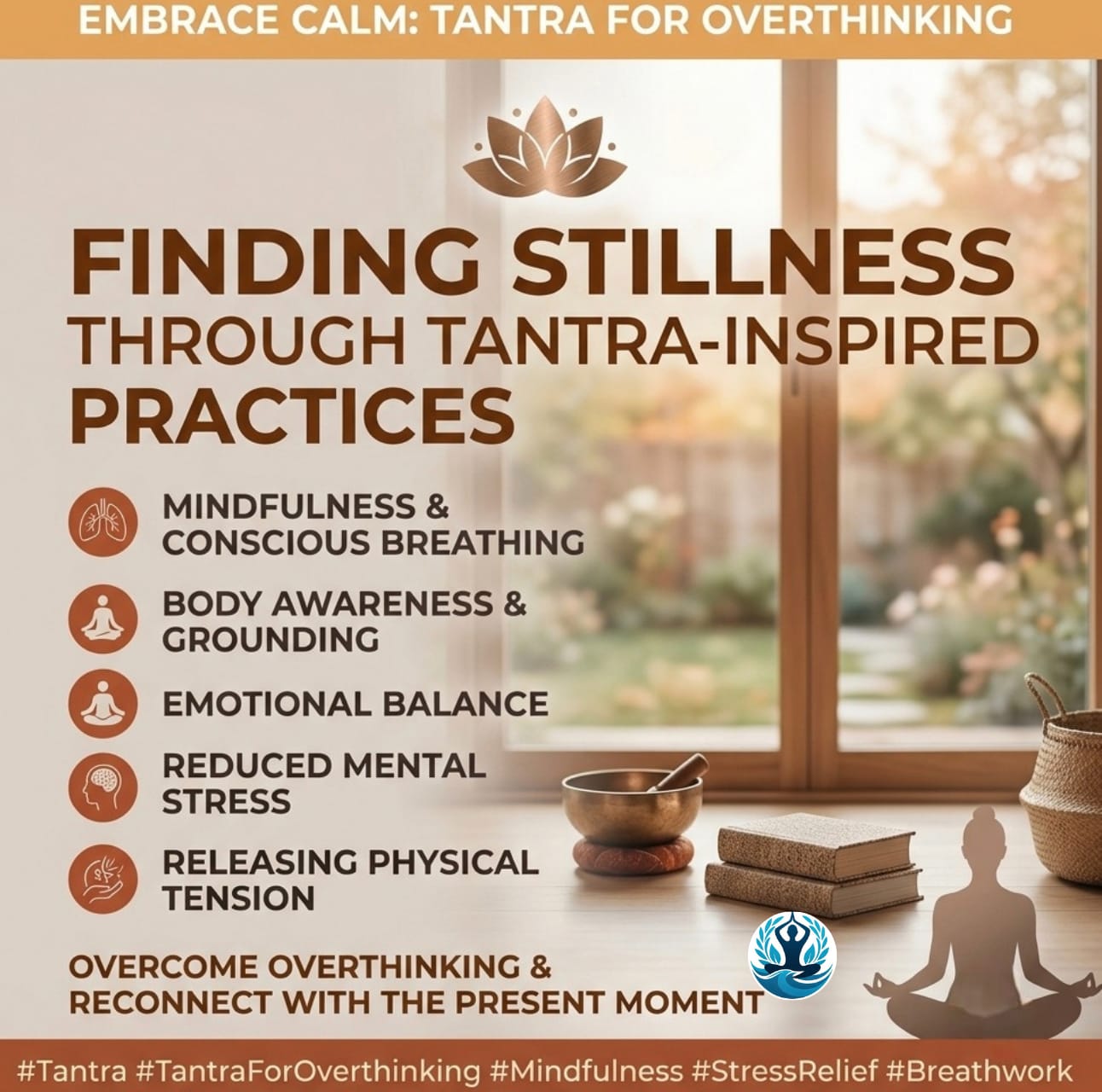
Overthinking has become a common experience in modern life. Constant responsibilities, digital distractions, work pressure, relationship concerns, uncertainty, and the habit of mentally replaying situations can make it difficult to slow down. Even when the body is physically resting, the mind may continue analyzing, planning, worrying, or imagining different outcomes.
Tantra for overthinking offers a holistic approach that focuses on awareness rather than fighting thoughts. Through practices involving conscious breathing, meditation, mindful movement, body awareness, and presence, Tantra can encourage a person to notice mental activity without becoming completely absorbed in it.
The goal is not necessarily to stop thinking. Thinking is a natural function of the mind. Instead, Tantra-inspired practices can help create a healthier relationship with thoughts by bringing attention back to the body, breath, sensations, and present moment.
When mental tension decreases, physical tension may also become easier to recognize and release. This mind-body connection is an important part of holistic wellness.
What Is Overthinking?
Overthinking generally refers to excessive or repetitive mental activity. A person may repeatedly analyze past conversations, worry about future situations, question decisions, or imagine negative possibilities.
Some common examples include:
- Replaying a conversation again and again
- Constantly worrying about the future
- Difficulty making simple decisions
- Thinking about “what if” scenarios
- Criticizing yourself for past choices
- Mentally planning every possible outcome
- Difficulty switching off before sleep
- Feeling mentally tired despite physical rest
Occasional reflection can be useful. It allows people to learn from experiences and make thoughtful decisions. However, repetitive thinking that creates distress or interferes with daily life can become exhausting.
Overthinking is not simply a mental experience. It can also influence the body. A person may notice tight shoulders, jaw tension, shallow breathing, restlessness, headaches, fatigue, or difficulty relaxing.
This is why approaches that include both mental awareness and body awareness can be valuable.
Understanding Tantra in a Modern Wellness Context
Tantra is a broad and diverse spiritual tradition with roots in South Asian religious and philosophical traditions. Modern wellness programs sometimes use the word “Tantra” to describe practices involving mindfulness, meditation, breath awareness, conscious movement, embodiment, and deeper self-awareness.
It is important not to reduce the entire Tantric tradition to modern wellness techniques. Traditional Tantra encompasses sophisticated philosophical, ritual, meditative, and spiritual systems.
In a contemporary wellness context, selected practices inspired by Tantric traditions may be used to cultivate:
- Present-moment awareness
- Mind-body connection
- Conscious breathing
- Meditation
- Self-observation
- Embodied awareness
- Emotional awareness
- Relaxation
- Personal growth
For someone experiencing overthinking, these practices can shift attention from constant mental analysis toward direct experience.
How Tantra May Help With Overthinking
One of the central ideas behind using Tantra for overthinking is awareness without immediate reaction.
When a thought appears, people often automatically follow it. One thought leads to another, creating a long chain of mental activity.
For example:
“Did I make the right decision?”
may become:
“What if I made a mistake?”
which can become:
“What will happen if things go wrong?”
and eventually:
“How will I deal with everything?”
The mind moves further away from the present moment.
Tantric-inspired mindfulness practices can encourage a different response:
Notice → Breathe → Feel → Observe → Return to the present.
Rather than trying to force thoughts away, the practitioner learns to recognize them and gently redirect attention.
This can create psychological space between the person and the thought.
1. Conscious Breathing Can Interrupt Mental Overactivity
Breathing is one of the simplest ways to bring attention into the present moment.
When people become stressed or mentally overwhelmed, they may become less aware of their breathing. Their breathing can feel shallow, irregular, or tense.
Conscious breathing encourages attention toward the natural rhythm of inhalation and exhalation.
A simple practice can involve:
- Sit comfortably.
- Relax the shoulders.
- Notice your natural breathing.
- Feel the movement of the abdomen or chest.
- Avoid forcing the breath.
- Observe each inhalation and exhalation.
- When thoughts arise, acknowledge them.
- Gently return attention to breathing.
The purpose is not to achieve a perfect breathing pattern. The practice is about developing awareness.
Regular mindful breathing may help create a pause between stressful thoughts and automatic reactions.
2. Tantra Encourages Present-Moment Awareness
Overthinking often involves living psychologically in the past or future.
The mind may repeatedly revisit something that has already happened or predict something that has not happened yet.
Mindfulness encourages attention to what is happening right now.
Tantric meditation practices can use sensory awareness to support this process.
For example, notice:
- The sensation of your feet touching the floor
- The movement of your breath
- The temperature of the room
- Sounds around you
- The position of your body
- Areas of tension
- The movement of your abdomen while breathing
These observations may seem simple, but they can help shift attention away from repetitive mental narratives.
3. Body Awareness Can Reduce Mental Absorption
Overthinking can make people live primarily in their heads.
They may become so focused on thoughts that they lose awareness of physical sensations.
Tantra emphasizes embodiment—the experience of being present in the body.
A simple body-awareness exercise involves slowly moving attention from the head toward the feet.
Ask:
What am I feeling right now?
You might notice:
- Tightness in the forehead
- Tension around the eyes
- A clenched jaw
- Tight shoulders
- Pressure in the chest
- Abdominal tension
- Restlessness in the legs
The goal is not to judge these sensations.
Simply noticing them can help you recognize how mental stress manifests physically.
4. Conscious Movement Can Help Release Physical Tension
Mental tension frequently accompanies physical tension.
After several hours of work or worrying, you may notice that your shoulders are raised, your jaw is tight, or your posture has become rigid.
Conscious movement can bring awareness to these patterns.
Tantra-inspired movement may involve slow stretching, gentle yoga-based movements, mindful walking, or deliberate body movements coordinated with breathing.
The emphasis is on awareness rather than performance.
Instead of asking:
“How far can I stretch?”
you might ask:
“What am I experiencing as I move?”
This change in attention can make movement more mindful and less competitive.
5. Tantra Can Encourage a Different Relationship With Thoughts
One of the biggest challenges of overthinking is believing every thought deserves immediate attention.
But thoughts are mental events. They are not automatically facts.
A mindfulness-based Tantric approach can encourage observation.
Instead of saying:
“Something is going to go wrong.”
you might recognize:
“I am noticing a thought that something may go wrong.”
That small change creates distance.
The thought remains, but your relationship with it changes.
This approach may be particularly helpful for people who become caught in repetitive mental stories.
6. Tantra and Emotional Awareness
Overthinking can sometimes be connected with emotions that have not been fully recognized.
For example, repeated worrying may be associated with:
- Fear
- Uncertainty
- Frustration
- Sadness
- Anger
- Shame
- Pressure
- A need for control
Rather than immediately analyzing the emotion, mindful awareness encourages you to notice it.
Ask:
Where do I feel this emotion in my body?
Perhaps anxiety feels like tightness in the chest. Frustration may feel like tension in the shoulders. Sadness may feel heavy or dull.
The purpose is not to force emotions away. It is to develop greater awareness of them.
7. Tantra May Support Stress Management
Modern lifestyles can keep the mind continuously occupied.
Emails, notifications, deadlines, social media, financial concerns, family responsibilities, and work demands can create an environment where relaxation becomes difficult.
Tantra-inspired practices can introduce moments of intentional slowing down.
Even a few minutes of conscious breathing or mindful movement can become an opportunity to pause.
A regular practice may help create a healthier rhythm between:
Activity and rest
Thinking and feeling
Doing and being
External attention and inner awareness
This balance is an important part of sustainable wellbeing.
8. Tantra for Overthinking Before Sleep
Nighttime is often when overthinking becomes particularly noticeable.
During the day, activities and responsibilities provide distractions. When the environment becomes quiet, thoughts may become more noticeable.
People may replay conversations, worry about tomorrow, or create mental to-do lists.
A calming evening mindfulness practice may help create a transition between daytime activity and nighttime rest.
Try:
- Reducing stimulating screen use before bed
- Sitting quietly for five minutes
- Practicing gentle breathing
- Relaxing the jaw and shoulders
- Noticing physical sensations
- Writing down tomorrow’s important tasks
- Returning attention to the breath
The intention is to create a sense of completion rather than continuing mental problem-solving in bed.
If persistent sleep problems continue, professional medical guidance may be appropriate.
9. Tantra Can Promote Self-Awareness
Overthinking often involves being disconnected from what you actually need.
You may spend hours analyzing what other people think while ignoring your own emotions, boundaries, or physical needs.
Self-awareness changes the focus.
Questions such as these can be useful:
- What am I feeling?
- What do I need right now?
- Am I physically tired?
- Am I holding unnecessary tension?
- Is this thought useful?
- Can I take one small action instead of solving everything mentally?
- What is within my control today?
These questions encourage practical awareness instead of endless analysis.
10. Tantra and Nervous System Awareness
The nervous system plays an important role in how humans respond to stress and relaxation.
A person experiencing ongoing stress may notice increased alertness, restlessness, muscle tension, or difficulty settling down.
Practices involving slow breathing, meditation, mindful movement, and body awareness may support relaxation and greater awareness of stress responses.
However, it is important to avoid exaggerated claims that Tantra can “reset,” “heal,” or “cure” the nervous system.
Tantra should be viewed as a complementary wellness practice rather than a replacement for appropriate medical or psychological care.
A Simple Tantra-Inspired Practice for Overthinking
Here is a gentle five-minute practice.
Step 1: Sit comfortably
Choose a quiet place and allow your body to settle.
Step 2: Notice your posture
Relax your shoulders and unclench your jaw.
Step 3: Observe your breath
Notice the natural movement of your breathing without forcing it.
Step 4: Observe your thoughts
When thoughts appear, simply recognize them.
You can mentally say:
“Thinking.”
Then return attention to your breath.
Step 5: Feel your body
Notice your feet, hands, shoulders, chest, and abdomen.
Step 6: Slow down
Take a few comfortable breaths and notice the sensations of being present.
Step 7: Return to your surroundings
Open your eyes and gradually return to your normal activity.
Practicing this consistently may be more useful than expecting dramatic results from a single session.
Benefits of Tantra for Overthinking
A consistent mindfulness-based practice may support several areas of wellbeing.
Potential benefits include:
Reduced mental clutter
Regular attention training may make it easier to recognize repetitive thought patterns.
Greater relaxation
Conscious breathing and mindful movement can create opportunities to relax physically.
Improved body awareness
You may become more aware of how emotions and stress appear in your body.
Better emotional awareness
Instead of immediately reacting, you may learn to notice emotions more clearly.
Greater present-moment awareness
Mindfulness can help redirect attention from repetitive thoughts toward current experience.
Improved self-understanding
Regular self-observation may reveal recurring habits, triggers, and emotional patterns.
Better stress management
Short periods of intentional awareness can become part of a broader stress-management routine.
Greater sense of inner balance
Combining breath, movement, meditation, and awareness can encourage a more integrated approach to wellbeing.
Tantra vs. Trying to Stop Thinking
A common misunderstanding is that meditation requires an empty mind.
That expectation can actually create more frustration.
The mind naturally produces thoughts.
The objective is not necessarily:
“I must stop thinking.”
A healthier intention may be:
“I can notice my thoughts without becoming completely absorbed in them.”
This distinction is particularly important when working with overthinking.
Trying to force thoughts away can become another mental struggle.
Awareness is different.
You notice the thought, acknowledge it, and gently return to your chosen point of attention.
Building a Daily Tantra Practice for Mental Calm
Consistency is more important than complexity.
A simple daily routine could include:
Morning:
Five minutes of conscious breathing.
During the day:
One-minute pauses to notice your body and posture.
Evening:
Five to ten minutes of mindful movement or meditation.
Before sleep:
Slow breathing and body awareness.
You can gradually increase the duration as the practice becomes comfortable.
The aim is to integrate awareness into everyday life rather than treating mindfulness as something that only happens during meditation.
Common Mistakes to Avoid
Trying to force the mind to become completely silent
Thoughts are natural. Focus on observing rather than controlling every thought.
Practicing only when overwhelmed
Regular practice can help develop familiarity with awareness before stress becomes intense.
Ignoring the body
Overthinking is not only a mental experience. Notice posture, breathing, muscle tension, and physical sensations.
Expecting instant transformation
Wellness practices generally work best as part of consistent habits.
Making exaggerated health claims
Tantra should not be presented as a guaranteed cure for anxiety, depression, trauma, insomnia, or other health conditions.
People experiencing persistent or severe symptoms should seek appropriate professional support.
Who Can Benefit From Tantra for Overthinking?
Tantra-inspired mindfulness practices may appeal to people who:
- Frequently experience mental clutter
- Want to develop greater mindfulness
- Feel disconnected from their bodies
- Experience everyday stress
- Want to explore conscious breathing
- Are interested in holistic wellness
- Want to develop healthier self-awareness
- Find it difficult to slow down after busy days
The practices can be adapted according to individual comfort and experience.
Tantra for Overthinking and Modern Lifestyle
Modern life rewards constant activity.
We are encouraged to multitask, respond quickly, stay connected, consume information, and remain productive.
But the human body and mind also need periods of rest and recovery.
Tantra offers a philosophy and collection of practices that can encourage slowing down and becoming more aware of direct experience.
Instead of constantly asking:
“What should I do next?”
you can occasionally ask:
“What am I experiencing right now?”
That shift can be powerful.
It moves attention from constant mental planning toward awareness of the present.
How to Make Tantra a Sustainable Wellness Habit
Start small.
You do not need an hour-long meditation session every day.
Begin with five minutes.
Choose one practice that feels comfortable and repeat it consistently.
You might practice conscious breathing while sitting in the morning, mindful walking during a break, or body awareness before bedtime.
Over time, these small moments of awareness can become part of your lifestyle.
The most valuable part is not the complexity of the technique but the quality of attention you bring to it.
Frequently Asked Questions
Can Tantra help with overthinking?
Tantra-inspired practices involving mindfulness, conscious breathing, meditation, and body awareness may help people develop a different relationship with repetitive thoughts. They should be viewed as complementary wellness practices, not guaranteed treatments for clinical conditions.
Is Tantra only about sexuality?
No. Tantra is a broad spiritual and philosophical tradition with many practices involving meditation, ritual, consciousness, breath, embodiment, and spiritual development. Modern wellness interpretations often focus on mindfulness and mind-body awareness.
Can Tantra help reduce stress?
Mindfulness, conscious breathing, meditation, and gentle movement may support relaxation and stress management. Individual experiences vary.
Can I practice Tantra at home?
Many simple mindfulness and breath-awareness practices can be practiced at home. Beginners should choose gentle practices and learn more advanced techniques from appropriately trained teachers.
How long should I practice?
Beginners can start with five to ten minutes daily. Consistency is often more practical than attempting long sessions occasionally.
Can Tantra cure anxiety or mental health conditions?
Tantra should not be presented as a cure for anxiety, depression, trauma, or other mental health conditions. If symptoms are persistent, severe, or interfering with daily life, consult a qualified healthcare or mental-health professional.
Conclusion
Tantra for overthinking can be understood as an invitation to move from constant mental analysis toward greater awareness of the present moment.
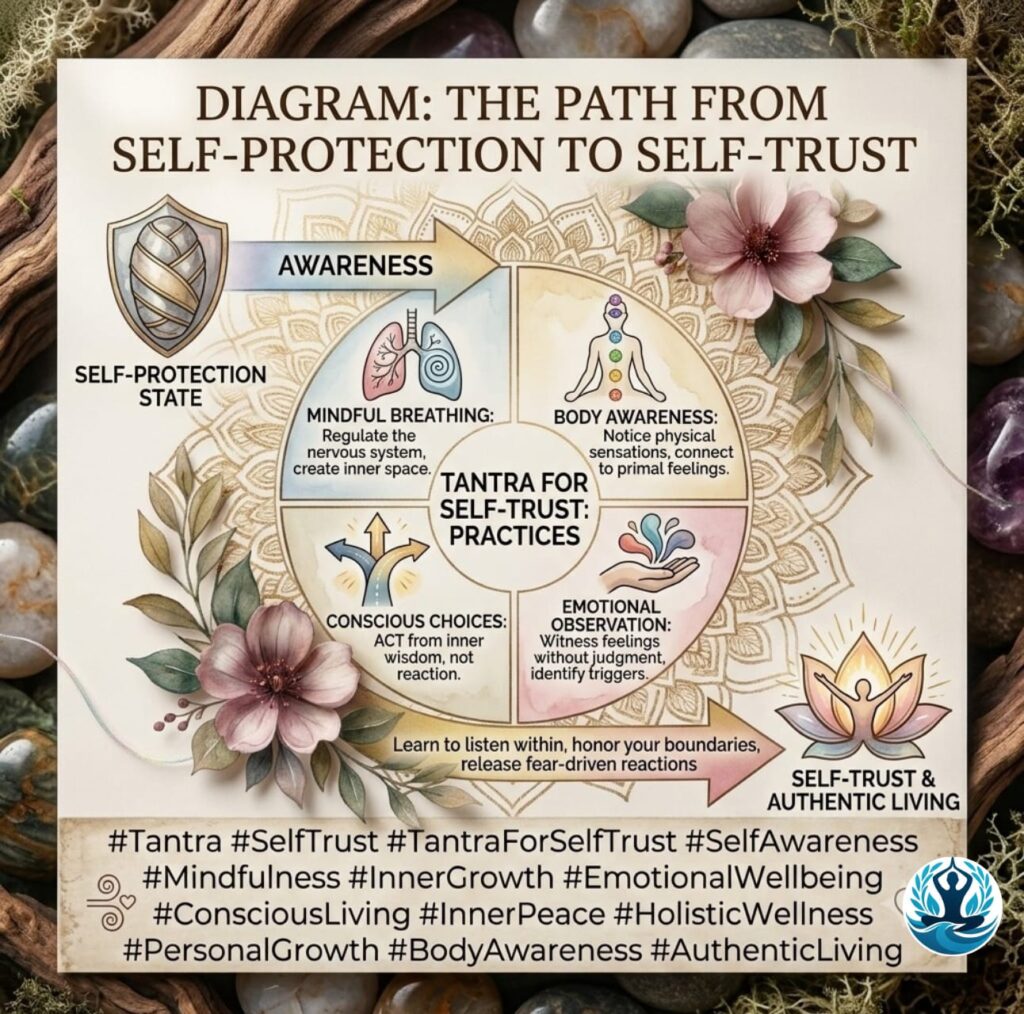
Through conscious breathing, meditation, mindful movement, body awareness, and emotional observation, Tantra-inspired practices may help people recognize repetitive thought patterns and physical tension without automatically reacting to them.
The goal is not to eliminate every thought. Instead, it is to cultivate the ability to notice thoughts, feel the body, breathe consciously, and return to the present.
In a world filled with constant stimulation and demands, this ability to slow down can become an important part of holistic wellbeing.
When practiced consistently and responsibly, Tantra can complement a healthy lifestyle by encouraging greater self-awareness, relaxation, emotional balance, and connection between the mind and body.