

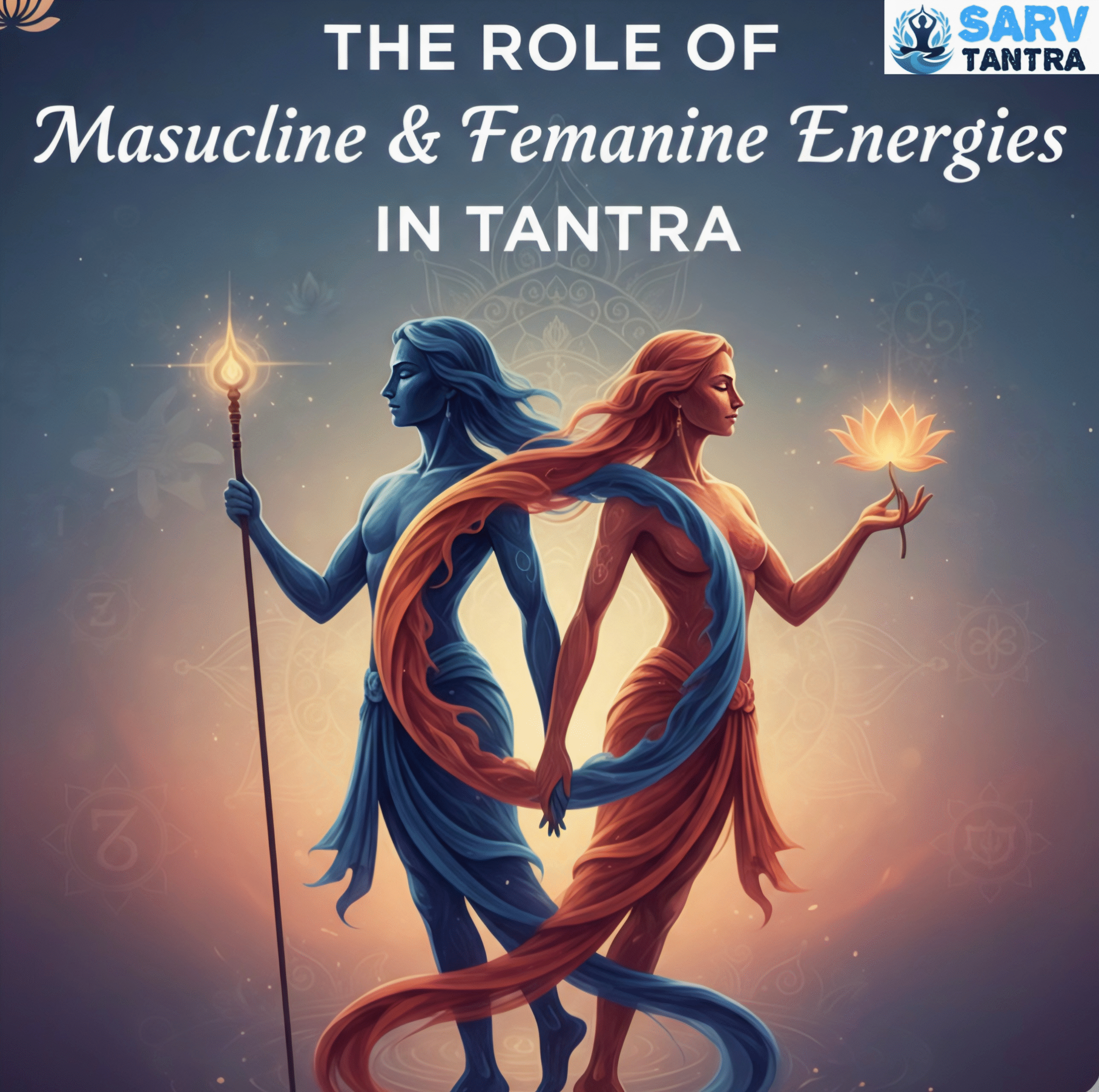
The Role of Masculine and Feminine Energies in Tantra

Tantra is one of the most profound spiritual systems to emerge from the Indian subcontinent. It is not merely a set of rituals or secret sexual practices as it is often misunderstood in the modern world, but a vast and intricate philosophy that aims to reveal the unity of existence through the integration of opposites. At its core, Tantra recognizes the dual forces that pervade all of creation — the masculine and feminine energies. These two currents, known as Shiva and Shakti, form the foundation of Tantric cosmology, psychology, and practice. They are not viewed as male and female in a biological sense, but as archetypal principles representing consciousness and energy, stillness and movement, transcendence and immanence. Understanding the interplay between these two aspects is key to understanding the essence of Tantra itself.
In the Tantric worldview, existence arises from the dynamic union of Shiva and Shakti. Shiva represents pure consciousness — the unchanging, formless, and silent witness beyond creation. He is the void, the infinite sky of awareness that holds everything but is not affected by anything. Shakti, on the other hand, is the creative power of that consciousness, the pulsating energy that brings the universe into being. Without Shakti, Shiva remains a passive potential; without Shiva, Shakti becomes a chaotic force without direction. Their interaction is the dance of life itself, the eternal rhythm that manifests as all forms, thoughts, emotions, and experiences. Tantra teaches that every being, object, and phenomenon is a reflection of this divine polarity, and that spiritual realization arises when one becomes conscious of this sacred play within oneself.
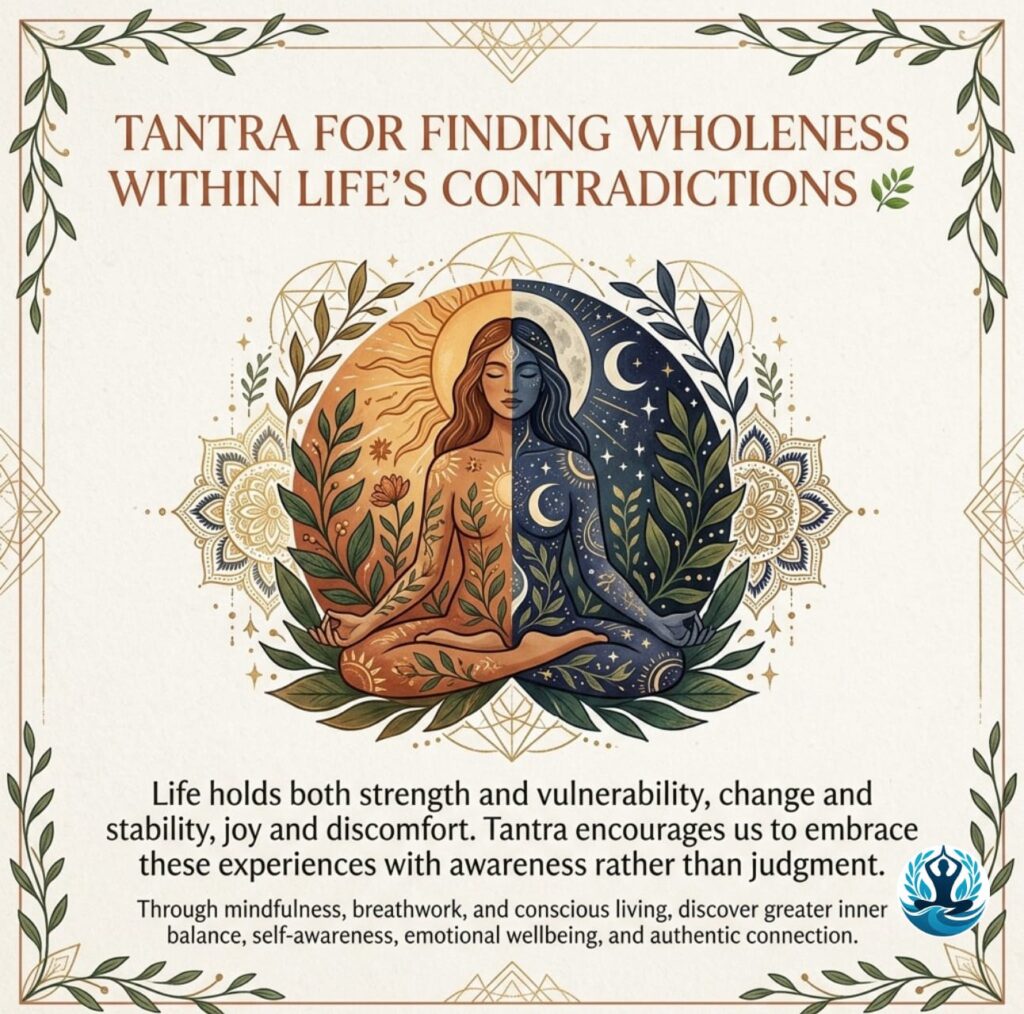
The masculine and feminine energies are present in every individual regardless of gender. A man carries within him a feminine dimension, just as a woman embodies a masculine principle. These are not fixed categories but fluid aspects of human consciousness that interact in countless ways. The masculine principle is associated with awareness, clarity, direction, and detachment. It is the still point that witnesses experience without becoming entangled in it. The feminine principle, by contrast, is associated with energy, emotion, creativity, and connection. It is the movement of life that expresses and celebrates existence. When these two aspects are balanced and harmonized within a person, there arises a state of inner completeness and wholeness. Tantra sees spiritual growth not as a renunciation of either polarity, but as a process of integrating and uniting them in conscious harmony.
In Tantric symbolism, this union is often represented through sacred imagery such as the Ardhanarishvara — the androgynous form of Shiva and Parvati fused into one body, half male and half female. This image captures the essence of Tantric wisdom: that the ultimate truth transcends duality while containing it. Similarly, the Sri Yantra, one of the most revered symbols in Tantra, is composed of interlocking upward and downward triangles representing masculine and feminine forces merging into a point of perfect balance, the bindu. The entire cosmos, according to Tantra, is an expression of this sacred geometry of polarity and unity.
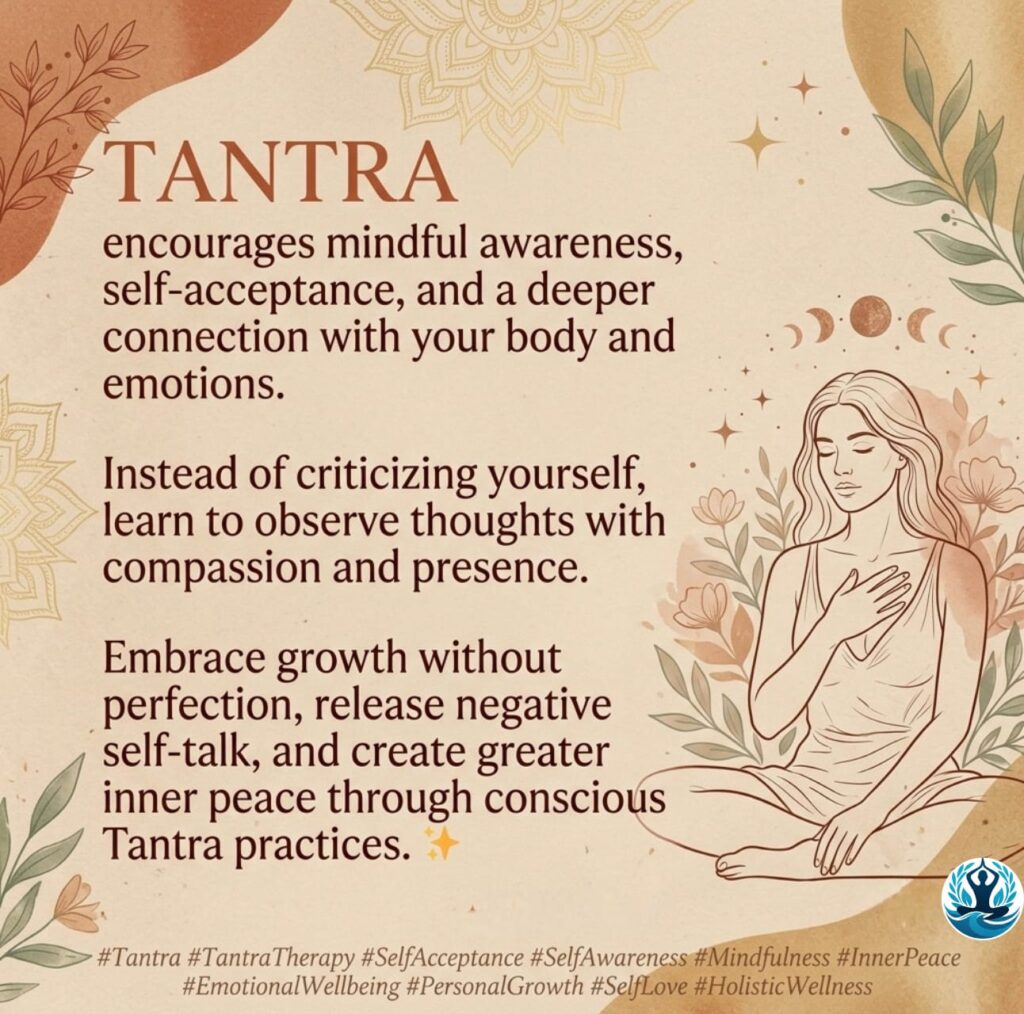
On the psychological level, the masculine and feminine energies correspond to two fundamental modes of being. The masculine consciousness is directed outward, analytical, and goal-oriented; it seeks to understand, define, and achieve. The feminine consciousness is inward, intuitive, and receptive; it seeks to experience, nurture, and flow. Both are necessary for a fulfilled life. An excess of masculine energy can lead to rigidity, aggression, and detachment from feeling, while an excess of feminine energy can result in passivity, emotional instability, or lack of direction. Tantra teaches that the path to liberation lies in awakening both these forces and bringing them into equilibrium. When awareness (Shiva) and energy (Shakti) unite within, the individual transcends inner division and experiences the ecstatic state known as samarasya — the harmony of opposites.
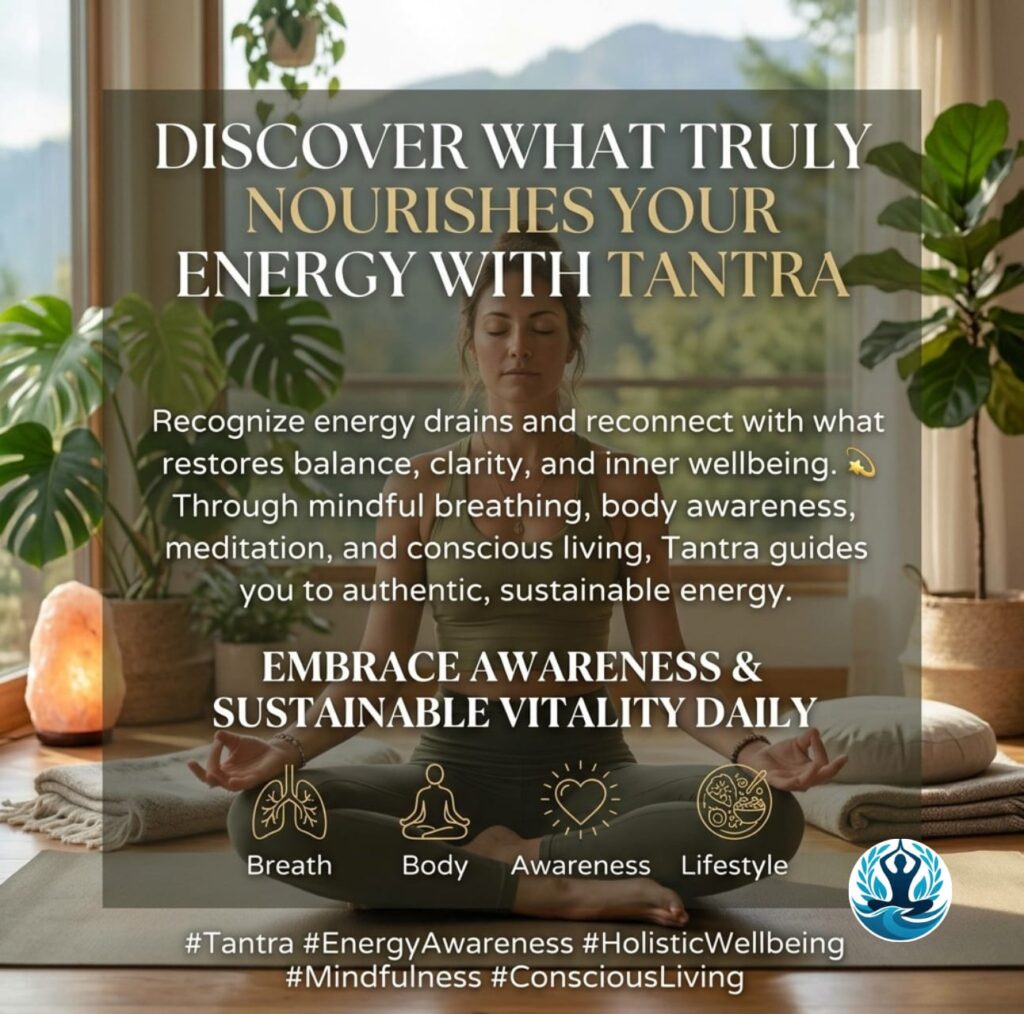
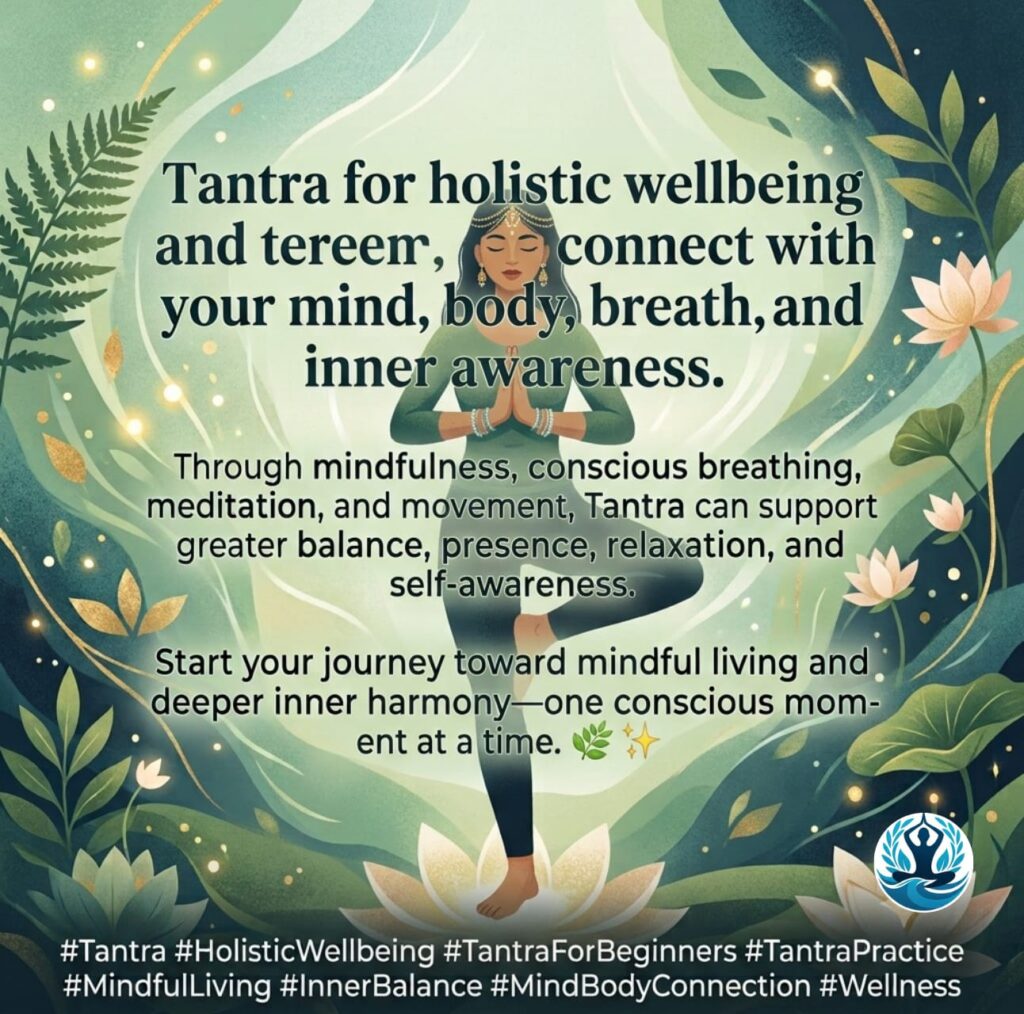
In Tantric practice, this union is not an abstract concept but a lived experience cultivated through meditation, breathwork, mantra, visualization, and ritual. One of the central practices involves awakening the Kundalini — the dormant spiritual energy coiled at the base of the spine. Kundalini is regarded as the manifestation of Shakti within the human body. Through disciplined practice, this energy is awakened and guided upward through the chakras, the subtle energy centers that correspond to different aspects of consciousness. As Kundalini rises, she unites with Shiva at the crown of the head, symbolizing the merging of the individual with the absolute. This inner alchemy is the essence of Tantra — the realization that the dual forces of existence are not separate but two faces of one reality.
Tantra also emphasizes the sacredness of the body as a vehicle of spiritual awakening. Unlike ascetic traditions that view the body as an obstacle, Tantra sees it as the temple of the divine where the dance of Shiva and Shakti takes place. Every sensation, emotion, and thought is an expression of this dance. By bringing awareness to the body and honoring its energies, one can experience the divine in the most ordinary aspects of life. The body becomes a bridge between the physical and the spiritual, between the masculine stillness and the feminine movement. This holistic view affirms life in all its forms and celebrates the unity of spirit and matter.
In the context of relationships, Tantra offers a profound understanding of love and intimacy as a means of spiritual growth. The meeting of masculine and feminine energies between two individuals is seen as a mirror of the cosmic union of Shiva and Shakti. Through conscious partnership, lovers can awaken each other to the deeper dimensions of being. The key lies in presence — the masculine quality of awareness — and surrender — the feminine quality of openness. When a man embodies deep presence, he becomes the stable consciousness that allows his partner’s energy to flow freely. When a woman embodies full surrender, she becomes the radiant energy that awakens deeper presence in her partner. Their connection becomes a sacred exchange that transcends the personal and touches the divine.
However, Tantra does not confine these roles to gender. A woman can embody the masculine quality of presence, and a man can express the feminine quality of surrender. The ultimate goal is not to conform to gender expectations but to awaken the full spectrum of human potential. Each person is encouraged to explore and integrate both dimensions within themselves. This inner marriage, sometimes called the “mystical union,” leads to a state of self-realization where the dualities of masculine and feminine dissolve into pure awareness. In this state, one no longer identifies as male or female but as the totality of being.
Historically, the Tantric tradition arose as a response to the one-sided spiritual approaches that emphasized transcendence and renunciation. Tantra sought to reclaim the power of the feminine principle, which had often been suppressed or undervalued in patriarchal systems. By honoring Shakti as the dynamic force of creation, Tantra restored balance to the spiritual landscape. It recognized that enlightenment is not achieved by escaping the world but by embracing it fully, with awareness. The feminine energy represents the immanent aspect of the divine — the presence of the sacred in the material world. Without acknowledging Shakti, spiritual practice becomes incomplete, detached from life and emotion. Tantra insists that liberation must include both the ascent into pure consciousness and the descent into embodied existence.
The mythology of Tantra vividly portrays this relationship through stories of Shiva and Shakti. In one such tale, Shiva sits in deep meditation, absorbed in transcendence, while Shakti dances around him, creating the worlds. Her movement draws him into creation, and his stillness gives her dance purpose and balance. Their union gives rise to the cosmos, symbolizing the interdependence of consciousness and energy. In another story, Shakti leaves Shiva when he becomes too absorbed in detachment, reminding him that pure awareness without energy is lifeless. These myths convey timeless truths about human life: consciousness must be balanced with energy, and the masculine must honor the feminine to remain whole.
In modern times, the imbalance between masculine and feminine energies can be observed on a global scale. Societies that overemphasize logic, control, and competition reflect a dominance of the masculine principle, leading to environmental destruction, emotional alienation, and spiritual emptiness. Tantra offers a remedy by inviting a return to the wisdom of the feminine — the principles of intuition, compassion, receptivity, and connection with nature. This is not about rejecting the masculine but about restoring equilibrium. The world needs both the clarity of Shiva and the creativity of Shakti, both the discipline of structure and the spontaneity of flow. True harmony arises only when these polarities work together in conscious partnership.
On the individual level, cultivating this balance involves becoming aware of one’s energetic patterns. A person who lives predominantly in their masculine may feel driven, goal-oriented, and mentally active but may struggle with emotional expression or intimacy. Such a person can benefit from practices that awaken the feminine energy — activities that involve creativity, movement, touch, and surrender to the flow of life. Conversely, someone who is more rooted in the feminine may be nurturing and intuitive but may lack focus or boundaries. For them, cultivating the masculine qualities of clarity, discipline, and detachment brings balance. Tantra provides techniques for harmonizing these energies through breathwork, meditation on the chakras, mantra recitation, and the use of mudras and yantras to align the subtle body.
One of the most important teachings in Tantra is that the masculine and feminine are not in conflict but in eternal play. Their apparent opposition is an illusion born of limited perception. In truth, they are two aspects of the same reality — consciousness expressing itself as polarity for the joy of creation. When this understanding deepens, life itself becomes a Tantric ritual, a dance of Shiva and Shakti. Every moment, every emotion, every interaction becomes an opportunity to witness the divine interplay of stillness and movement. Spiritual practice then ceases to be a separate activity and becomes the art of living with awareness.
The ultimate realization in Tantra is that beyond the dance of duality lies the non-dual essence — the state where Shiva and Shakti merge into pure consciousness-bliss, or sat-chit-ananda. This is the supreme state of realization where there is no separation between the observer and the observed, no distinction between masculine and feminine. The practitioner who attains this state sees the world as a divine play of energy, free from attachment and aversion. They live in harmony with all aspects of existence, embracing both light and shadow, pleasure and pain, activity and stillness. This is the true liberation that Tantra points to — not escape from the world, but awakening to its sacred unity.
In contemporary spiritual circles, there is a growing interest in the Tantric understanding of masculine and feminine energies, particularly as a means of healing personal and collective imbalance. Many people today are rediscovering Tantra as a path that integrates sexuality, spirituality, and psychology. When approached with sincerity and awareness, these teachings can lead to profound transformation. The conscious recognition of one’s inner masculine and feminine fosters self-acceptance, emotional healing, and deeper relationships. It allows individuals to embody authenticity, creativity, and purpose while remaining grounded in inner peace.
The role of masculine and feminine energies in Tantra also extends to how we engage with the world. In work, creativity, and social life, we can apply these principles to bring balance and harmony. The masculine energy helps us set goals, create structure, and maintain discipline, while the feminine energy allows us to adapt, empathize, and respond to life’s flow. When both are honored, our actions become both effective and compassionate. This integration can also inform leadership, education, and social change, encouraging a culture that values both reason and intuition, strength and sensitivity, achievement and nurturing.
Furthermore, Tantra invites us to view the Earth itself as the body of the Divine Feminine — Shakti — and to recognize our responsibility to honor and protect her. Ecological consciousness arises naturally from this awareness, as we see that harming nature is equivalent to desecrating the sacred. The restoration of balance between masculine and feminine energies thus has not only personal but planetary implications. By awakening Shakti and grounding her within the presence of Shiva, humanity can rediscover its harmonious relationship with the cosmos.
Tantra’s message is timeless and universal. It speaks to the deepest human longing for wholeness, connection, and meaning. The masculine and feminine are not merely metaphysical principles but living realities within each of us, guiding our growth and evolution. To walk the Tantric path is to honor both, to celebrate their dance without clinging to either pole. When we learn to embody the stillness of Shiva and the radiance of Shakti simultaneously, we awaken to our true nature — the boundless consciousness that embraces all opposites in perfect unity.
In conclusion, the role of masculine and feminine energies in Tantra is central to its philosophy and practice. They represent the fundamental forces of existence, the dual aspects through which the universe manifests and through whose union liberation is attained. Tantra teaches that the path to wholeness lies not in choosing one over the other, but in realizing their inseparability. By awakening, balancing, and uniting these energies within ourselves, we come to experience the sacredness of life in every moment. The dance of Shiva and Shakti continues eternally within and around us, inviting us to participate consciously in the divine play. To live Tantrically is to recognize that every breath, every sensation, and every relationship is a manifestation of that eternal union — the timeless embrace of consciousness and energy, masculine and feminine, stillness and movement, forever one.