

Veda Therapy for Burnout Recovery and Restoring Vitality

Burnout has become increasingly common in today’s fast-paced world. Constant work pressure, emotional demands, lack of rest, digital overload, and an always-on lifestyle can gradually leave the body and mind feeling exhausted. While occasional tiredness is normal, prolonged stress can affect motivation, emotional balance, concentration, sleep, and overall quality of life.
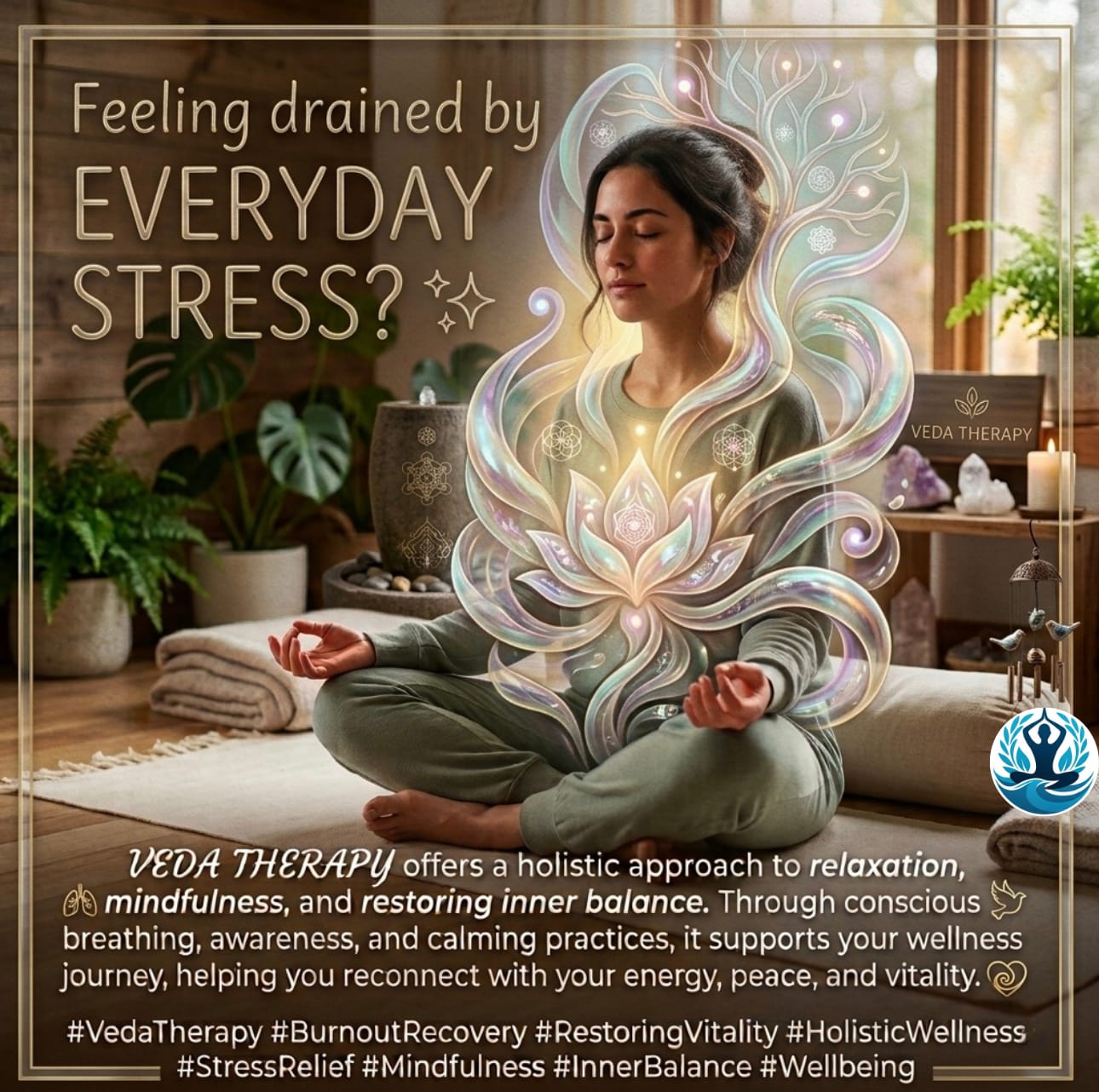
Veda Therapy for burnout recovery offers a holistic wellness approach focused on relaxation, self-awareness, mindful practices, and restoring a sense of balance. Rather than simply focusing on temporary relaxation, a holistic approach encourages individuals to slow down, reconnect with themselves, and develop healthier patterns of rest and self-care.
At Sarv Wellness, approaches inspired by traditional wellness philosophies can be integrated into personalized experiences designed to support relaxation, vitality, and holistic wellbeing.
Important: Veda Therapy should be considered a complementary wellness approach, not a replacement for medical or mental-health treatment. Persistent exhaustion, depression, anxiety, sleep problems, or inability to function should be discussed with a qualified healthcare professional.
What Is Burnout?
Burnout is a state of prolonged physical and emotional exhaustion that can develop when ongoing demands consistently exceed a person’s ability to recover. It is often associated with work-related stress, but similar patterns can occur because of caregiving responsibilities, personal pressures, academic demands, relationship challenges, or other long-term stressors.
Burnout may involve:
- Persistent tiredness
- Reduced motivation
- Difficulty concentrating
- Emotional irritability
- Feeling overwhelmed
- Reduced enjoyment of everyday activities
- Sleep difficulties
- Feeling disconnected from yourself
- Reduced productivity
- A sense that ordinary responsibilities have become difficult
Recognizing these signs early can encourage healthier approaches to rest and recovery.
Understanding Veda Therapy
The term Veda is associated with ancient Indian knowledge traditions. In modern holistic wellness settings, Veda-inspired approaches may draw from principles involving awareness, balance, breath, meditation, mindful living, and connection between body and mind.
Veda Therapy can therefore be understood as a holistic wellness practice intended to encourage relaxation and greater awareness of one’s physical and emotional state.
The exact techniques used can vary depending on the practitioner or wellness center. Sessions may incorporate elements such as:
- Mindful breathing
- Meditation
- Relaxation practices
- Gentle movement
- Body awareness
- Guided visualization
- Sensory relaxation
- Reflective practices
- Personalized wellness routines
The goal is not to force the body to perform more, but to create opportunities for slowing down and recovering.
How Veda Therapy May Support Burnout Recovery
1. Encourages Deep Relaxation
One of the most important aspects of burnout recovery is learning to create space for genuine rest.
When people experience prolonged stress, they may continue thinking about responsibilities even when they are physically resting. This can make it difficult to feel refreshed.
Veda Therapy can incorporate calming practices that encourage individuals to pause, focus on their breathing, become aware of physical sensations, and temporarily step away from external demands.
Regular relaxation practices may help create a healthier transition between periods of activity and rest.
2. Helps Develop Greater Self-Awareness
Burnout can make it easy to ignore personal needs.
People may continue working despite exhaustion, skip meals, reduce sleep, avoid relaxation, or overlook emotional signals because responsibilities seem more important.
Mindful Veda Therapy practices can encourage greater awareness of:
- Energy levels
- Breathing patterns
- Muscle tension
- Emotional states
- Mental fatigue
- Personal boundaries
- Need for rest
This awareness can help individuals recognize stress earlier rather than waiting until exhaustion becomes overwhelming.
3. Supports Mind-Body Connection
Burnout is not only a mental experience. Prolonged stress can also be reflected in the body.
People may notice muscle tension, headaches, digestive discomfort, sleep disruption, restlessness, or general fatigue.
A mind-body approach encourages individuals to pay attention to how thoughts and emotions relate to physical sensations.
Practices involving breathing, meditation, gentle movement, and body awareness can provide a structured opportunity to reconnect with the body.
4. Promotes Mindful Breathing
Breathing is an important component of many traditional Indian wellness practices.
During stressful periods, people may breathe quickly or shallowly without realizing it. Bringing conscious attention to breathing can provide an immediate opportunity to pause.
A simple mindful breathing practice can involve sitting comfortably, relaxing the shoulders, noticing the natural breath, and gradually allowing the breathing pattern to become slower and more comfortable without forcing it.
The purpose is not to achieve a particular breathing performance. Instead, it is about developing awareness and creating a moment of calm.
5. Creates Space Away From Constant Stimulation
Modern lifestyles often involve continuous notifications, emails, social media, meetings, and multitasking.
Even during breaks, people may continue consuming information through their phones.
A Veda Therapy session can provide dedicated time away from these distractions. Creating regular periods of reduced stimulation may help people reconnect with their immediate experience.
Sometimes recovery begins with something simple: stopping.
Veda Therapy and Restoring Vitality
Burnout recovery is not only about reducing exhaustion. It is also about gradually rebuilding energy and engagement with life.
Veda Therapy for restoring vitality can encourage individuals to reconsider how they use their physical, mental, and emotional energy.
Rest Before Rebuilding
When someone feels depleted, immediately trying to become more productive may increase pressure.
A healthier approach can begin with recovery.
Rest allows individuals to create a foundation from which they can gradually rebuild routines, movement, creativity, social connection, and meaningful activities.
Reconnecting With Enjoyment
Burnout can make previously enjoyable activities feel like obligations.
Mindfulness encourages people to notice small positive experiences without demanding immediate transformation.
This might include:
- Enjoying a quiet morning
- Taking a mindful walk
- Listening to calming music
- Spending time in nature
- Practicing gentle movement
- Preparing a nourishing meal
- Connecting with supportive people
- Taking a technology-free break
Small experiences can become meaningful parts of a broader recovery routine.
Veda Therapy for Emotional Balance
Emotional exhaustion is often one of the most challenging aspects of burnout.
A person may feel frustrated, disconnected, impatient, overwhelmed, or emotionally numb.
Holistic practices can create opportunities to observe emotions without immediately reacting to them.
Meditation and mindful awareness can encourage a simple shift:
“I am experiencing this emotion” rather than “I am this emotion.”
This distinction can create psychological space and encourage more conscious responses.
However, intense or persistent emotional symptoms should not be managed solely through wellness practices. Professional mental-health support can be important when symptoms are severe or persistent.
Veda Therapy for Mental Fatigue
Mental fatigue can make simple decisions feel difficult.
After prolonged periods of multitasking and information overload, the mind may need periods of reduced cognitive demand.
Veda-inspired relaxation practices may encourage:
- Single-tasking
- Mindful attention
- Quiet periods
- Breathing awareness
- Meditation
- Reduced digital stimulation
- Intentional rest
Instead of constantly switching between tasks, individuals can learn to give their attention to one experience at a time.
This principle of focused awareness can also become useful outside therapy.
The Role of Meditation in Burnout Recovery
Meditation is frequently associated with holistic approaches to wellbeing because it provides structured time for observing thoughts, sensations, and emotions.
For someone experiencing burnout, meditation does not necessarily mean eliminating thoughts.
Instead, it can involve noticing thoughts without continuously following them.
For example:
- Sit comfortably.
- Close the eyes if comfortable.
- Notice the natural breathing rhythm.
- Observe physical sensations.
- When thoughts arise, acknowledge them.
- Gently return attention to the breath.
- Continue for a few minutes.
Beginners may start with short sessions rather than expecting themselves to meditate for long periods.
Consistency can be more useful than intensity.
Veda Therapy and Better Rest
Rest is a fundamental component of recovery from exhaustion.
However, physical rest and mental rest are not always the same.
Someone may spend eight hours in bed while still feeling mentally overwhelmed.
A holistic wellness routine can combine:
- Consistent sleep schedules
- Evening relaxation
- Reduced screen exposure before bed
- Mindful breathing
- Gentle stretching
- Quiet time
- Comfortable sleep surroundings
Veda Therapy may complement these habits by creating opportunities for relaxation and body awareness.
It is important to remember that persistent insomnia or significant sleep disturbance deserves professional evaluation.
Creating a Veda-Inspired Daily Wellness Routine
The benefits of a therapy session can become more meaningful when supported by healthy everyday habits.
A simple routine might include:
Morning
Begin the day without immediately checking messages.
Spend a few minutes noticing your breathing, stretching gently, or sitting quietly.
During Work
Take short breaks.
Instead of moving directly from one task to another, pause for a few breaths and relax your shoulders.
Afternoon
Notice energy levels.
If fatigue is increasing, consider whether you need hydration, food, movement, fresh air, or a short mental break.
Evening
Create a transition between work and personal time.
Reduce unnecessary stimulation and choose a calming activity.
Before Bed
Practice a few minutes of slow, comfortable breathing or mindfulness.
The objective is not perfection. It is consistency.
Veda Therapy and Healthy Boundaries
Burnout recovery also requires examining the habits that contributed to exhaustion.
If someone repeatedly says yes to every request, works beyond reasonable limits, or feels guilty about taking breaks, relaxation alone may not be enough.
Healthy boundaries can include:
- Setting realistic working hours
- Taking regular breaks
- Learning to say no
- Protecting personal time
- Limiting unnecessary notifications
- Communicating workload concerns
- Creating technology-free periods
Veda-inspired self-awareness can encourage people to notice when their lifestyle is consistently exceeding their capacity.
The Importance of Energy Conservation
Vitality does not necessarily mean doing more.
Sometimes restoring vitality means learning where energy is being unnecessarily consumed.
Consider asking:
What activities restore my energy?
What activities consistently drain my energy?
Where am I saying yes when I need to say no?
Do I allow myself enough recovery time?
These questions can reveal patterns that contribute to exhaustion.
Energy conservation can therefore become an important part of holistic wellbeing.
Veda Therapy and Personal Growth
Burnout recovery can become an opportunity to reconsider priorities.
Instead of simply returning to the same routine that caused exhaustion, individuals may begin exploring:
- What matters most to me?
- What kind of lifestyle feels sustainable?
- How do I want to spend my time?
- What relationships support my wellbeing?
- What does success mean to me?
- What boundaries do I need?
- What activities make me feel alive?
This reflective process can transform recovery from simply “getting back to normal” into creating a healthier version of normal.
Who May Consider Veda Therapy?
Veda Therapy may appeal to people interested in holistic wellness, mindfulness, relaxation, and self-awareness.
It may be particularly relevant for individuals who:
- Feel chronically stressed
- Want to create more relaxation in daily life
- Experience everyday mental fatigue
- Want to develop mindful habits
- Feel disconnected from their bodies
- Want to improve their self-care routine
- Are interested in traditional Indian wellness concepts
However, it should be viewed as complementary wellness support rather than a treatment for medical or psychiatric conditions.
How to Make Veda Therapy More Effective
The experience of holistic therapy can be supported by a broader lifestyle approach.
Choose Consistency Over Intensity
One occasional wellness session may feel relaxing, but long-term wellbeing generally requires consistent habits.
Short daily practices can be easier to maintain than demanding routines.
Listen to Your Body
Recovery should not become another performance goal.
Pay attention to fatigue and adjust activities accordingly.
Combine Different Wellness Practices
Breathing, meditation, movement, adequate sleep, healthy nutrition, meaningful relationships, and appropriate professional support can work together as part of a balanced lifestyle.
Reduce Unnecessary Pressure
Healing does not need to happen immediately.
Allow yourself time to recover gradually.
What to Expect From a Veda Therapy Session
A session can vary depending on the practitioner and the specific approach used.
Generally, a wellness session may begin with a conversation about current stress, lifestyle patterns, and personal goals.
The practitioner may then introduce suitable relaxation or awareness practices.
These could include breathing exercises, meditation, gentle movement, guided relaxation, or other holistic techniques.
After the session, individuals may be encouraged to continue simple practices at home.
A personalized approach is often preferable because everyone’s experience of stress and exhaustion is different.
Veda Therapy at Sarv Wellness
At Sarv Wellness, holistic wellness can be approached through practices designed to encourage relaxation, awareness, balance, and a deeper connection with oneself.
For individuals exploring Veda Therapy for burnout recovery, the focus can be placed on creating a supportive environment where slowing down becomes part of the wellness journey.
Rather than treating relaxation as a luxury, a holistic approach recognizes rest and self-awareness as important components of sustainable wellbeing.
The broader goal is to help individuals develop healthier relationships with their energy, attention, body, and daily routines.
Building Long-Term Vitality
Restoring vitality is not a one-day process.
It often develops through repeated choices that support recovery.
These may include:
- Sleeping consistently
- Moving the body regularly
- Eating nourishing foods
- Practicing mindful breathing
- Taking meaningful breaks
- Spending time outdoors
- Maintaining supportive relationships
- Creating healthy boundaries
- Reducing unnecessary stimulation
- Practicing meditation
- Seeking professional help when necessary
Veda Therapy can complement these habits by providing a dedicated space for relaxation and reflection.
Final Thoughts
Veda Therapy for burnout recovery and restoring vitality represents a holistic approach to slowing down, increasing self-awareness, and creating space for relaxation.
Burnout often develops when demands remain high while recovery remains low. Addressing this imbalance requires more than simply taking a single day off. Sustainable recovery can involve better rest, mindful awareness, healthy boundaries, emotional support, and lifestyle changes.
Veda-inspired practices such as meditation, conscious breathing, relaxation, and body awareness can become valuable parts of a broader wellness routine.
The ultimate goal is not simply to become productive again. It is to create a lifestyle in which energy, rest, awareness, and wellbeing can coexist.
By learning to listen to the body, quiet unnecessary mental stimulation, and make intentional choices, individuals can gradually create a stronger foundation for everyday vitality and holistic wellbeing