

Ancient Tantra, Modern Wellness: Why This Practice Still Matters Today

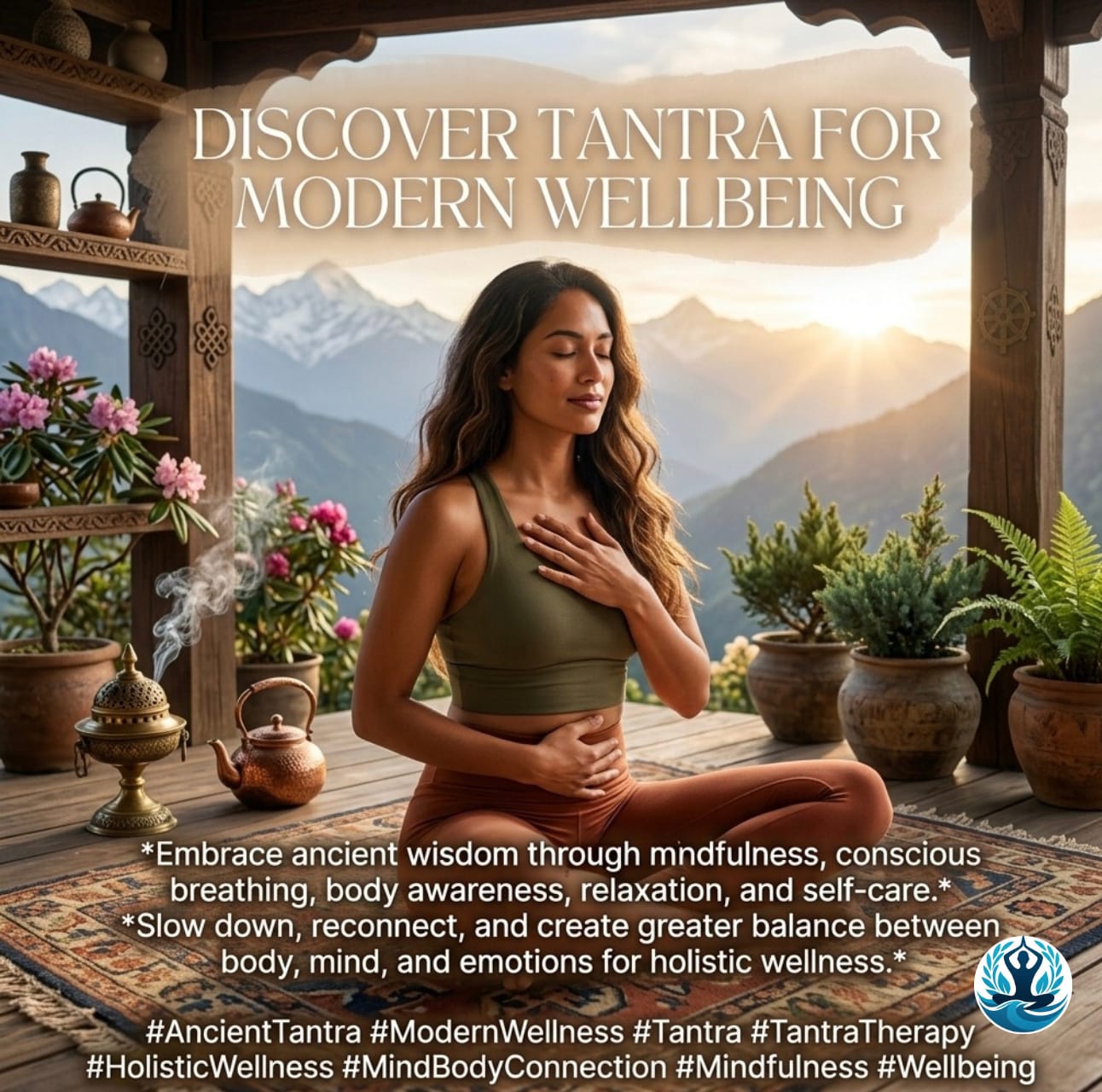
Modern life moves quickly. Work responsibilities, digital distractions, social pressure, busy schedules, and constant information can make it difficult to slow down and reconnect with ourselves. As people search for healthier ways to manage stress and improve overall wellbeing, many are becoming interested in traditional practices that emphasize awareness, balance, and the connection between body and mind.
Ancient Tantra and modern wellness can be viewed together through this lens.
Tantra is a broad and diverse spiritual and philosophical tradition that developed in South Asia over many centuries. Although the word is often associated with sexuality in popular culture, traditional Tantra encompasses much more. Different Tantric traditions include meditation, breath awareness, visualization, mantra, ritual, concentration, subtle-body practices, and methods for cultivating awareness.
In a modern wellness context, selected Tantric-inspired practices may be used to encourage mindfulness, relaxation, self-awareness, conscious breathing, and a deeper connection with the body.
The continuing interest in Tantra does not necessarily mean that ancient practices should simply be copied into modern life. Instead, it invites us to explore which principles remain meaningful today and how they can be approached responsibly.
What Is Tantra?
Tantra is not a single technique or one standardized therapy. It refers to a range of traditions and teachings with different histories, practices, and philosophical perspectives.
Many Tantric approaches place importance on awareness, transformation, embodiment, and conscious experience. Rather than treating everyday life as something that must always be rejected or escaped, some Tantric traditions explore ways of becoming more conscious within experience.
Practices associated with different Tantric traditions can include:
- Meditation
- Mantra
- Breath awareness
- Visualization
- Concentration
- Ritual practices
- Contemplation
- Conscious movement
- Body awareness
- Spiritual study
Because Tantra is so diverse, it is important to avoid presenting one modern wellness practice as representing all traditional Tantra.
Why Is Ancient Tantra Relevant to Modern Wellness?
Modern wellness increasingly focuses on the relationship between mental, physical, emotional, and behavioral wellbeing. This makes certain principles associated with Tantra particularly interesting for contemporary audiences.
People often want more than temporary relaxation. They want to understand their patterns, become more aware of their bodies, manage everyday stress, and develop sustainable self-care habits.
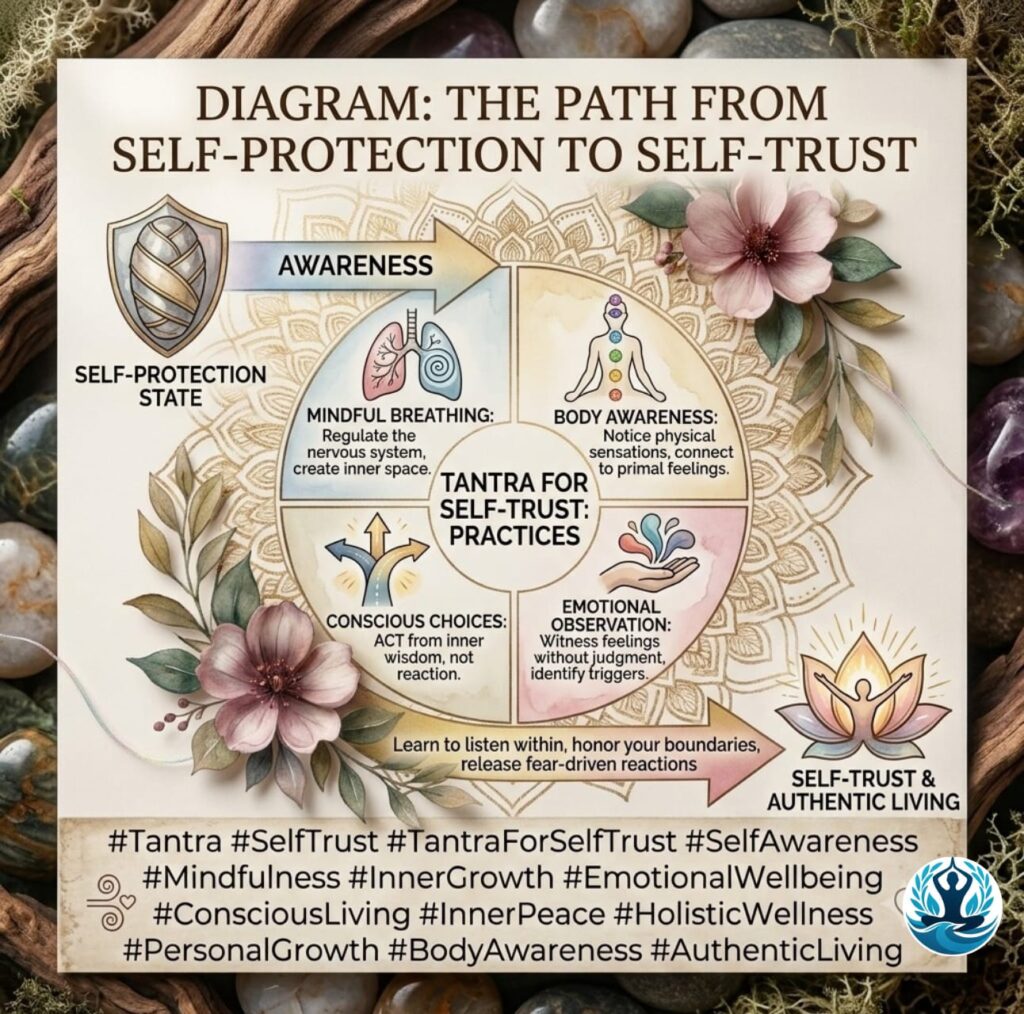
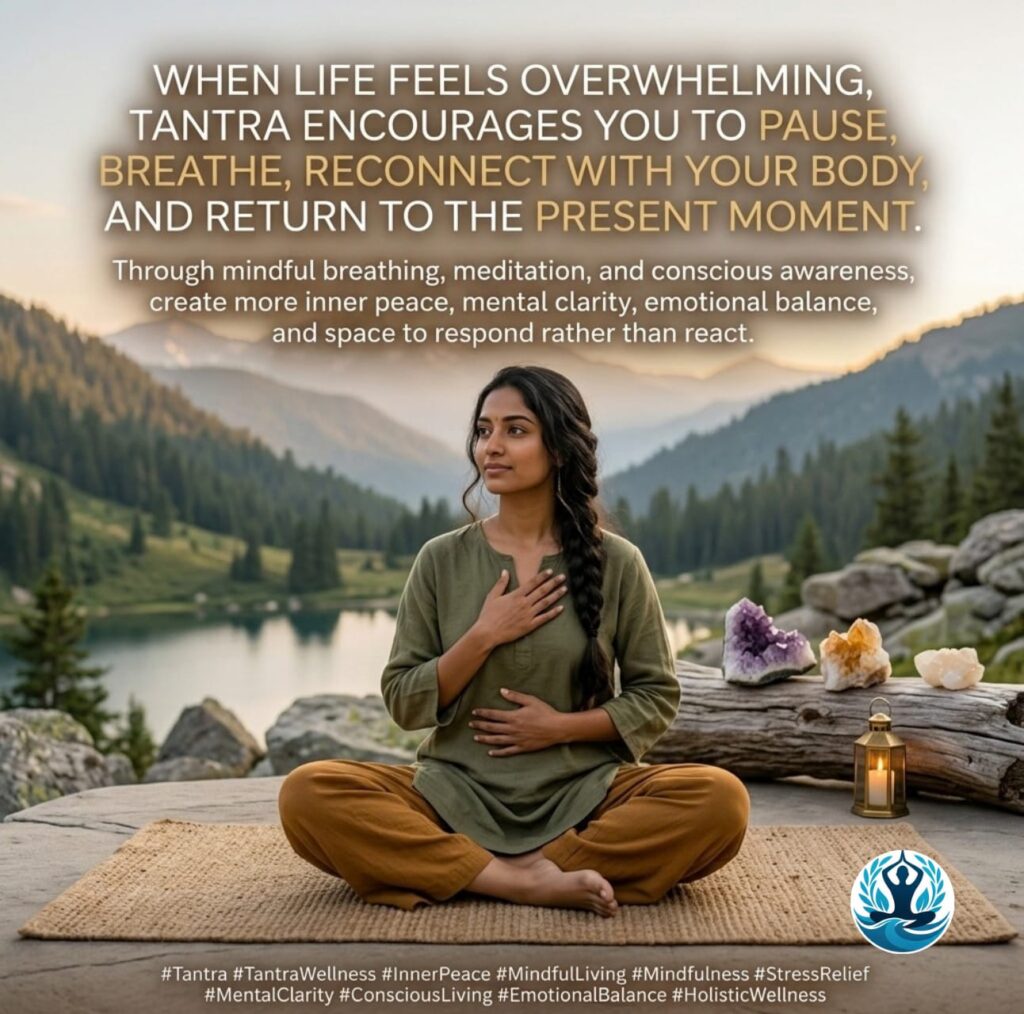
Tantric-inspired mindfulness practices can encourage people to pause and observe their experience rather than automatically reacting to everything around them.
For example, instead of immediately responding to stress with distraction, a person may take a few conscious breaths, notice physical tension, observe their thoughts, and reconnect with the present moment.
This simple shift from automatic reaction to conscious awareness can become an important part of a modern wellness routine.
1. Tantra Encourages Mind-Body Awareness
One of the most interesting aspects of Tantra is its emphasis on awareness.
Many people spend much of their day thinking, planning, working, communicating, and consuming information. As a result, they may pay little attention to what is happening in their bodies.
A mindful practice can encourage you to notice:
- Muscle tension
- Breathing patterns
- Posture
- Physical fatigue
- Restlessness
- Emotional reactions
- Feelings of relaxation
- Changes in energy and attention
This greater awareness can help people identify when they need rest, movement, nourishment, or a break from stimulation.
In modern wellness, body awareness is valuable because it encourages people to become active participants in their own wellbeing.
2. Tantra and Stress Management
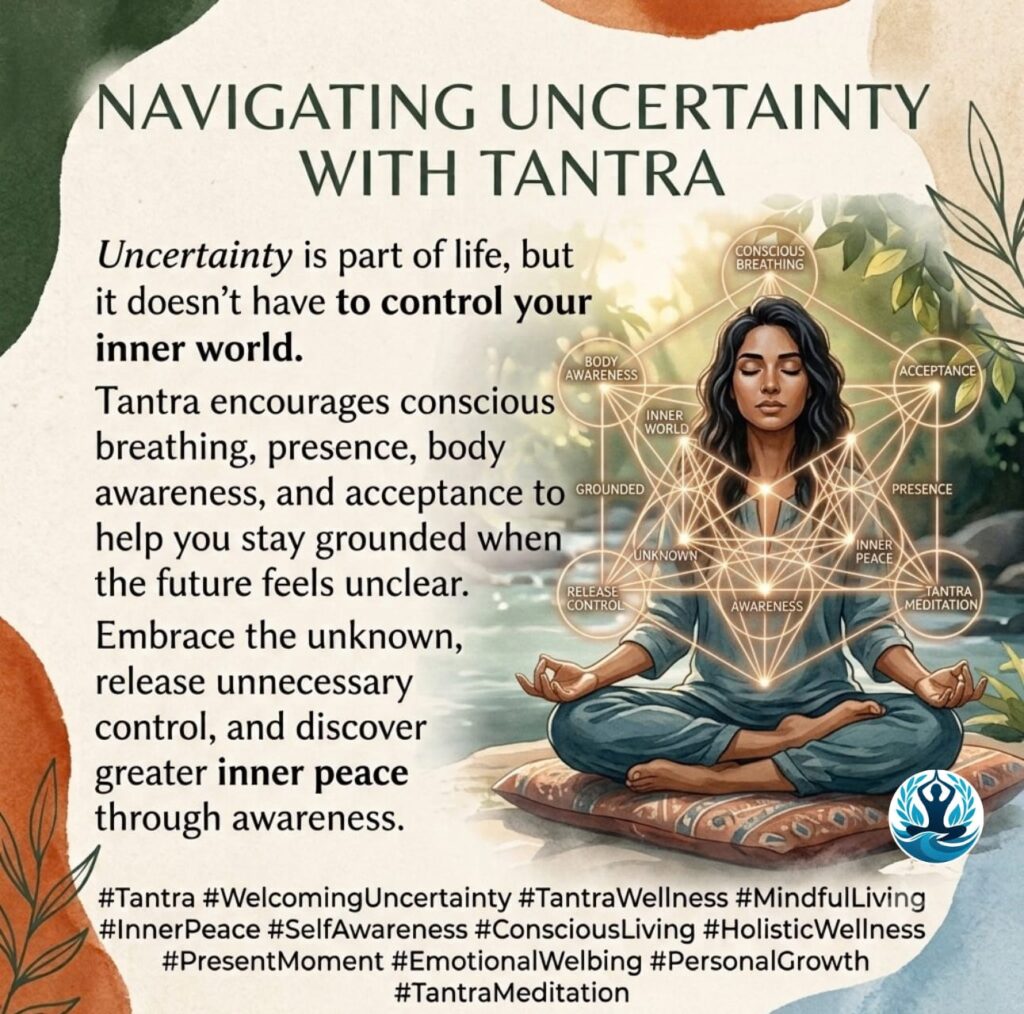
Stress has become a major part of contemporary life. Deadlines, financial concerns, work pressure, relationships, social media, and constant notifications can keep the mind in a state of continuous stimulation.
Tantric-inspired practices involving slow breathing, meditation, and mindful attention may provide opportunities to pause.
A simple practice might involve sitting quietly, observing the breath, relaxing unnecessary muscular tension, and bringing attention back whenever the mind wanders.
The goal is not necessarily to eliminate every stressful thought. Instead, the practice can encourage a different relationship with stress.
You learn to notice:
“I am experiencing stress”
rather than becoming completely identified with:
“I am my stress.”
This distinction can support greater self-awareness.
3. Conscious Breathing in Tantra
Breathing is one of the simplest ways to bring attention into the present moment.
Breath-focused practices appear across many contemplative traditions, including different Tantric lineages. Modern wellness programs also frequently incorporate conscious breathing because it is accessible and requires little equipment.
Paying attention to breathing can help you notice whether you are breathing quickly, holding your breath, or carrying unnecessary tension.
A simple wellness practice could involve sitting comfortably and observing the natural breath for several minutes without trying to force it.
The practice is less about achieving a perfect breathing pattern and more about developing awareness.
4. Tantra Supports Presence
Many modern problems are connected to being mentally somewhere other than where we physically are.
During work, we may think about tomorrow. During conversations, we may check our phones. While eating, we may watch videos. Before sleeping, we may replay the past.
Tantra’s emphasis on conscious experience offers an alternative: become more present with what is happening now.
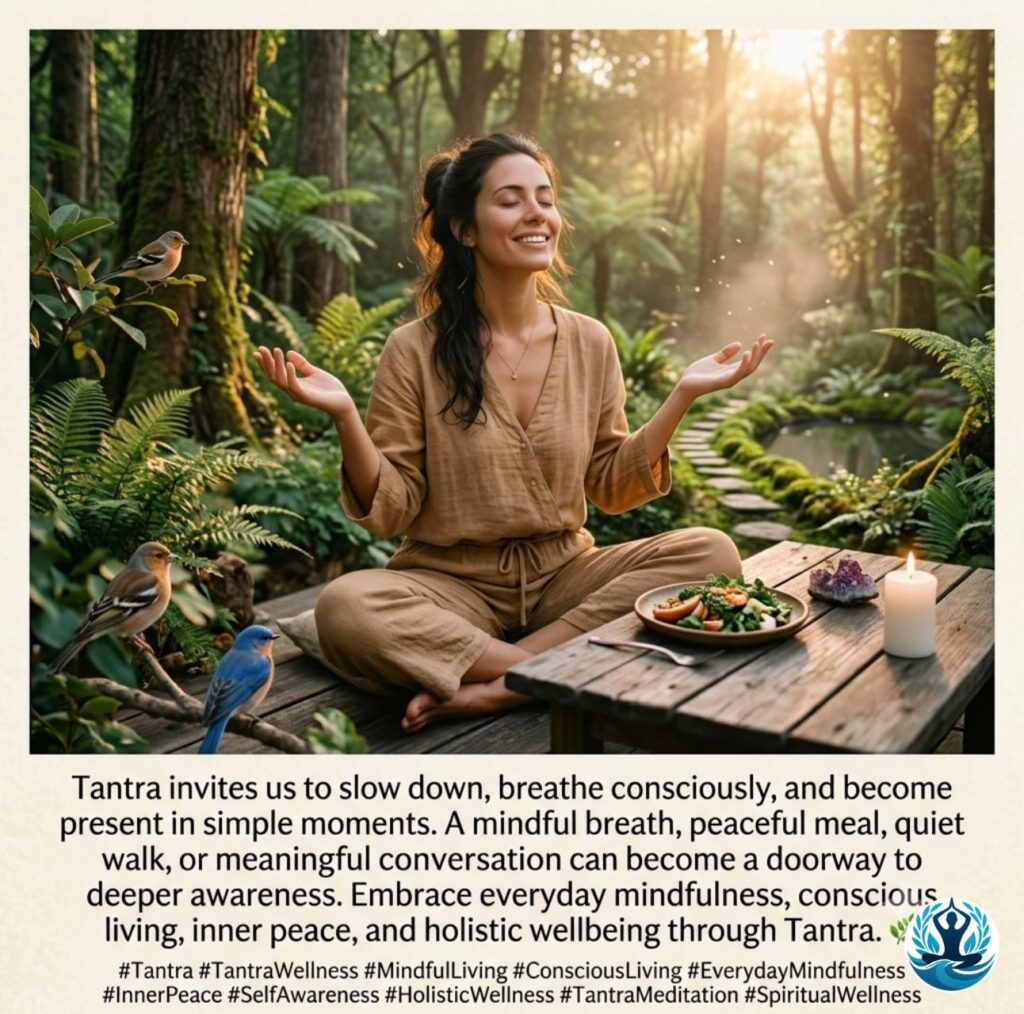
Presence can be practiced during ordinary activities.
You might notice:
- The sensation of walking
- The taste of food
- The movement of your breath
- The feeling of sunlight
- Your posture while sitting
- Your emotional response during a conversation
These small moments can transform ordinary activities into opportunities for awareness.
5. Tantra and Emotional Awareness
Emotions are part of human experience, but many people learn to suppress, avoid, or immediately react to difficult feelings.
A mindful approach encourages observation.
Instead of immediately judging an emotion as good or bad, you can ask:
What am I feeling?
Where do I notice it in my body?
What thoughts accompany this feeling?
What do I need right now?
This does not mean that every emotion should be acted upon. It means creating enough awareness to respond thoughtfully.
In this way, Tantra-inspired mindfulness can complement modern approaches to emotional wellbeing.
6. Tantra and Relaxation
Another reason people are interested in Tantra today is the desire for deeper relaxation.
Modern relaxation is often associated with entertainment: watching television, scrolling through social media, shopping, or listening to music.
These activities can be enjoyable, but they are not always the same as intentional rest.
A conscious relaxation practice involves deliberately creating space to slow down.
This may include:
- Comfortable breathing
- Meditation
- Gentle movement
- Quiet reflection
- Body scanning
- Reduced stimulation
Over time, these practices can become part of a broader self-care routine.
7. Tantra and the Nervous System
The nervous system plays an important role in how we respond to our environment. Stress, stimulation, sleep, physical activity, emotions, and perceived safety can all influence how we feel.
Modern wellness practices increasingly emphasize nervous-system awareness.
Tantric-inspired practices such as meditation and conscious breathing may encourage a slower, more attentive state. However, it is important not to make exaggerated medical claims. Tantra should not be presented as a cure for nervous-system disorders or a substitute for professional healthcare.
Instead, it can be approached as a complementary practice that encourages relaxation and self-awareness.
8. Tantra Encourages Conscious Movement
Movement does not always have to be intense to be meaningful.
Conscious movement means paying attention while moving rather than treating movement as something that must simply be completed.
A person may notice:
- How the feet connect with the ground
- How the spine moves
- Where tension is present
- How breathing changes
- How comfortable or uncomfortable a movement feels
This can create a stronger relationship between movement and awareness.
For modern lifestyles dominated by sitting and screens, consciously reconnecting with physical movement can be valuable.
9. Tantra and Self-Care
Self-care is often marketed as expensive products, vacations, spa treatments, or elaborate routines.
But meaningful self-care can also be simple.
Tantra encourages a deeper question:
How consciously am I experiencing my life?
A modern Tantric-inspired self-care routine might include ten minutes of quiet meditation, conscious breathing, gentle movement, journaling, or simply spending time without digital distractions.
The purpose is not to create another task to complete. It is to develop a healthier relationship with yourself.
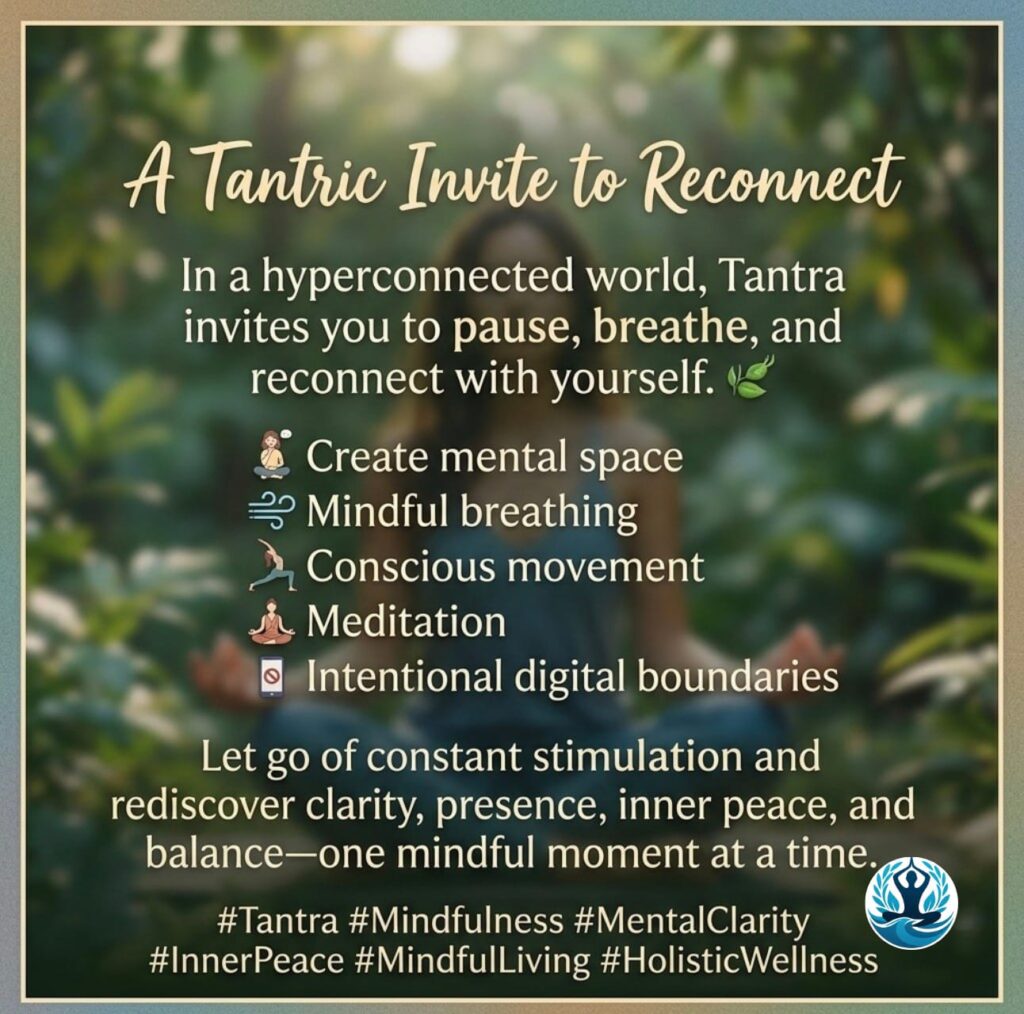
10. Tantra and Digital Overload
Technology has transformed modern life, but constant connectivity can make it difficult to experience silence.
Notifications, emails, social media, short videos, and online conversations continually compete for attention.
Tantra’s emphasis on concentration and awareness can be especially relevant in this environment.
A simple practice is to create technology-free periods during the day.
For example:
Morning: Avoid checking the phone immediately after waking.
During meals: Eat without scrolling.
Evening: Create a quiet period before sleep.
These habits are not exclusively Tantric, but they reflect the broader principle of becoming more intentional with attention.
11. Tantra for Overthinking
Overthinking can create a cycle in which the same questions, fears, or imagined scenarios repeatedly occupy the mind.
Meditative awareness does not necessarily stop thoughts from appearing. Instead, it teaches you to notice thoughts without automatically following every thought.
For example, when a worry appears, you might recognize:
“This is a thought about the future.”
Then gently return attention to breathing or physical sensations.
With regular practice, this can encourage a more observational relationship with mental activity.
12. Tantra and Better Sleep Habits
Sleep is essential for overall wellbeing, yet modern lifestyles can make restful sleep difficult.
Work stress, screen exposure, irregular schedules, and mental stimulation can interfere with a peaceful bedtime routine.
A calming evening practice inspired by mindfulness and Tantra might include:
- Reduce screen use before bed.
- Sit quietly for several minutes.
- Observe your breathing.
- Relax your shoulders and jaw.
- Notice physical sensations.
- Allow thoughts to come and go without chasing them.
- Transition into sleep without unnecessary stimulation.
These practices are supportive wellness habits, not guaranteed treatments for sleep disorders.
13. Tantra and Personal Growth
Wellness is not only about feeling relaxed.
It can also involve becoming more aware of habits, reactions, relationships, values, and personal choices.
Tantric traditions have historically included practices intended for transformation and spiritual development. In a modern setting, this can inspire people to ask deeper questions:
- What patterns keep repeating in my life?
- How do I respond to difficult situations?
- What makes me feel genuinely connected?
- Where do I need greater awareness?
- Am I living according to my values?
Such reflection can turn wellness into a journey of personal development.
14. Tantra and the Mindful Relationship With the Body
Many people experience complicated relationships with their bodies.
Social media can encourage comparison, unrealistic expectations, and self-criticism.
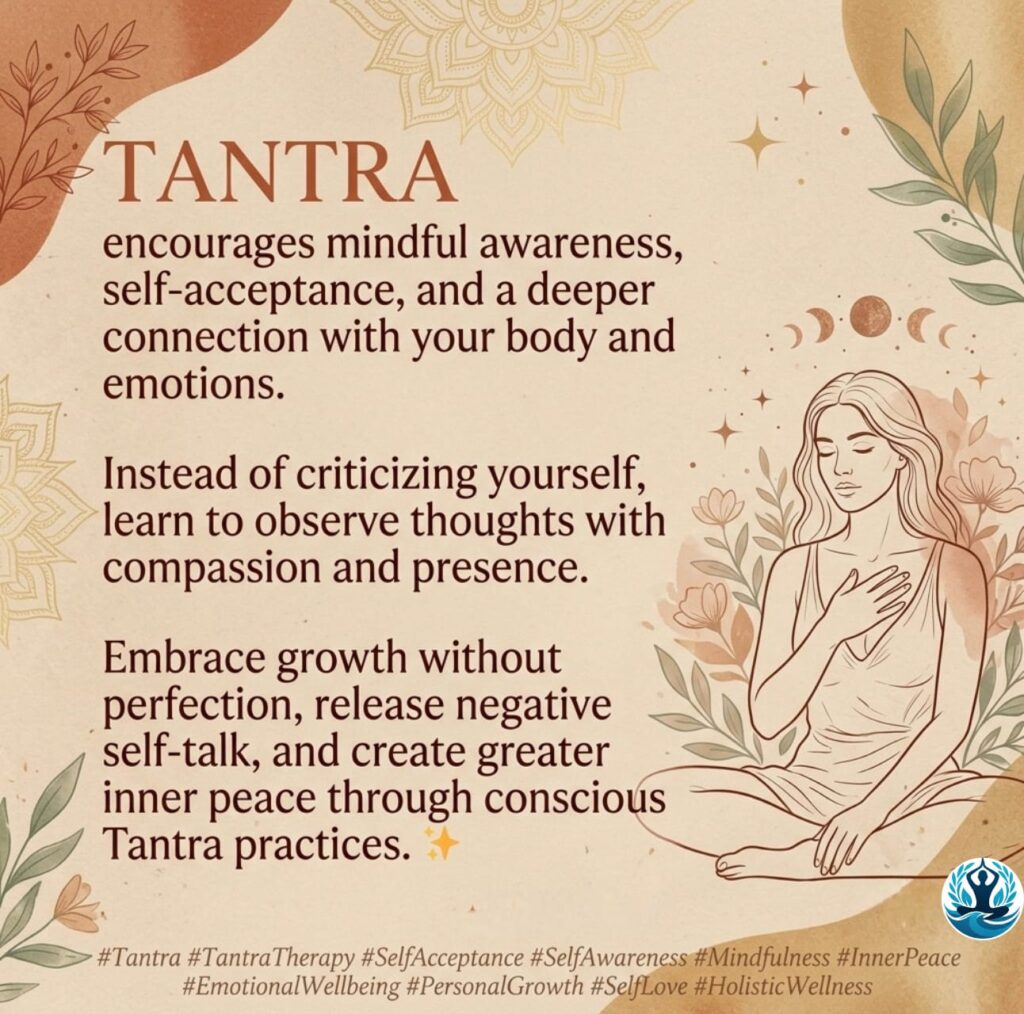
A mindful Tantric approach can shift attention from judging the body toward experiencing the body.
Instead of asking only:
“How does my body look?”
you can also ask:
“How does my body feel?”
This can encourage greater appreciation for the body’s sensations, movement, strength, rest, and needs.
15. Tantra and Holistic Wellness
Holistic wellness considers different dimensions of life rather than focusing on one area alone.
These may include:
- Physical wellbeing
- Emotional wellbeing
- Mental wellbeing
- Social connection
- Lifestyle habits
- Purpose and meaning
- Self-awareness
Tantra can contribute to this broader perspective by emphasizing conscious experience and the relationship between different aspects of life.
However, holistic wellness should not mean rejecting evidence-based healthcare. A balanced approach combines healthy lifestyle practices with appropriate medical and psychological support when needed.
16. Ancient Wisdom Meets Modern Science
One reason ancient practices attract modern attention is that some of their techniques overlap with contemporary research areas such as mindfulness, meditation, stress management, breathing practices, and behavioral wellbeing.
However, it is important to distinguish between traditional philosophy and scientific evidence.
Not every traditional claim about energy, consciousness, or healing has been scientifically established.
A responsible modern approach therefore asks:
Which practices are useful, safe, and appropriate, and what evidence supports them?
This allows people to appreciate traditional wisdom without making unsupported health promises.
17. Tantra Is More Than Sexuality
One of the biggest misunderstandings surrounding Tantra is that it is primarily or exclusively about sexuality.
In reality, Tantra encompasses diverse traditions, and sexuality is only one aspect associated with some modern interpretations.
Reducing Tantra entirely to sexual practices overlooks its broader themes of meditation, ritual, consciousness, embodiment, mantra, visualization, and transformation.
For modern wellness, understanding this broader context is important.
18. How to Bring Tantric Principles Into Everyday Life
You do not necessarily need an elaborate routine to begin exploring mindfulness-based principles inspired by Tantra.
Try a simple daily practice:
Morning Awareness
Spend five minutes sitting quietly. Notice your breathing and bodily sensations before beginning your day.
Conscious Movement
Take a slow walk while paying attention to each step and your surroundings.
Mindful Meals
Eat one meal without your phone or television. Notice the smell, texture, taste, and pace of eating.
Evening Reflection
Before bed, spend a few minutes reflecting on your emotional state and what you learned during the day.
Digital Pause
Create short periods during the day without notifications or social media.
These practices can gradually encourage greater presence.
19. Why Tantra Matters in Today’s World
Perhaps the greatest relevance of Tantra today is not that it offers a magical solution to modern problems.
Its value can be found in the reminder to slow down, pay attention, and experience life consciously.
Modern culture often rewards speed.
Tantric-inspired awareness invites depth.
Modern life encourages constant stimulation.
Meditative practices invite stillness.
Modern technology constantly pulls attention outward.
Conscious awareness brings attention inward.
This contrast helps explain why ancient contemplative traditions continue to attract modern interest.
20. Building a Sustainable Tantra Wellness Practice
Consistency is generally more useful than intensity.
Instead of attempting an hour-long practice once a month, consider starting with five to fifteen minutes regularly.
A simple weekly structure could include:
Monday: Breath awareness
Tuesday: Gentle conscious movement
Wednesday: Meditation
Thursday: Body awareness
Friday: Quiet reflection
Saturday: Longer mindfulness practice
Sunday: Rest and self-reflection
The purpose is not perfection. It is developing a sustainable relationship with awareness.
Who Can Explore Tantra-Inspired Wellness?
Many adults interested in mindfulness, meditation, relaxation, personal growth, and holistic wellbeing may find certain practices meaningful.
However, practices should be adapted to individual needs and comfort levels.
Anyone with significant physical or psychological concerns should consult an appropriately qualified healthcare professional before using wellness practices as part of their care.
Common Myths About Tantra
Myth 1: Tantra Is Only About Sexuality
Reality: Tantra encompasses diverse spiritual and contemplative traditions. Sexuality is not the entire tradition.
Myth 2: Tantra Is a Quick Fix
Reality: Meaningful change generally requires patience, consistency, self-awareness, and realistic expectations.
Myth 3: Tantra Replaces Healthcare
Reality: Wellness practices can complement healthy living but should not replace appropriate medical or mental healthcare.
Myth 4: Everyone Practices Tantra in the Same Way
Reality: Tantra includes many traditions, techniques, philosophies, and interpretations.
Myth 5: More Intense Practice Means Better Results
Reality: A gentle and consistent approach may be more sustainable than pushing beyond your comfort level.
Benefits of Bringing Tantra Into a Modern Wellness Routine
When approached responsibly, Tantra-inspired practices may help support:
- Greater body awareness
- Mindfulness
- Relaxation
- Stress management
- Emotional awareness
- Conscious breathing
- Present-moment attention
- Self-reflection
- Mind-body connection
- Personal growth
- More intentional self-care
- A greater sense of balance
Individual experiences vary, and these practices should be viewed as supportive wellness tools rather than guaranteed medical treatments.
Frequently Asked Questions
Is Tantra suitable for modern lifestyles?
Yes, selected practices such as meditation, conscious breathing, mindful movement, and self-reflection can be incorporated into busy lifestyles.
Can Tantra help with stress?
Tantric-inspired mindfulness and relaxation practices may support stress management by encouraging awareness, slower breathing, and intentional relaxation.
Is Tantra only a spiritual practice?
Tantra has strong spiritual and philosophical dimensions, but modern interpretations may also focus on mindfulness, embodiment, and wellbeing. It is important to understand the historical context of specific practices.
How long should I practice Tantra?
There is no universal duration. Beginners can start with five to ten minutes and gradually develop a consistent practice.
Can Tantra improve body awareness?
Practices involving mindful movement, breathing, meditation, and attention to physical sensations can encourage greater body awareness.
Is Tantra the same as yoga?
No. Tantra and yoga overlap historically and philosophically in some traditions, but they are not identical. Both encompass diverse schools and practices.
Conclusion
Ancient Tantra, modern wellness, and mindful living can come together in meaningful ways when approached with respect, context, and realistic expectations.
Tantra offers a broad collection of traditions that explore awareness, consciousness, embodiment, meditation, breath, ritual, and transformation. In today’s fast-paced world, these themes can provide useful inspiration for people seeking greater presence and balance.
The modern relevance of Tantra does not depend on presenting it as a miracle cure. Instead, its value can be explored through practical principles: slow down, become aware of the body, observe the mind, breathe consciously, develop presence, and create space for meaningful self-reflection.
In a world filled with constant noise and stimulation, the ability to pause and experience the present moment can itself be powerful.
Ultimately, Tantra and modern wellness meet at the idea of conscious living—developing a deeper awareness of how we experience our bodies, emotions, thoughts, relationships, and everyday lives.
When practiced safely and responsibly, Tantra-inspired mindfulness can become one part of a broader wellness routine focused on balance, self-awareness, relaxation, and personal growth.
Ancient wisdom may come from another era, but the human desire for peace, awareness, connection, and meaningful living remains timeless.