

Tantra for Overcoming the Feeling of Being Energetically Drained

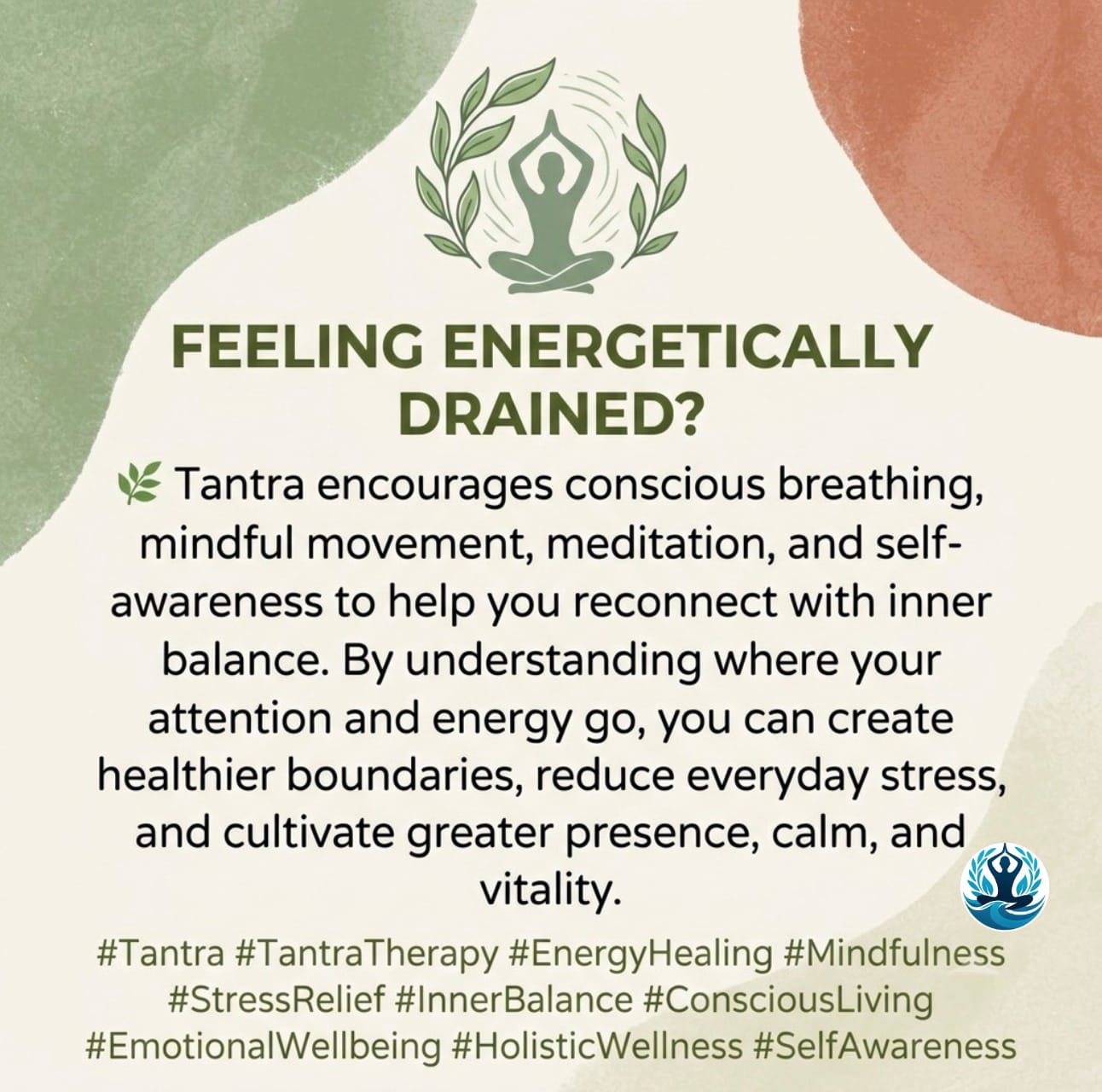
Modern life can leave us feeling exhausted in ways that go beyond physical tiredness. A demanding schedule, constant digital stimulation, emotional responsibilities, relationship pressures, work stress, and a lack of meaningful rest can gradually create a feeling of being energetically drained.
You may sleep but still feel tired. You may have time to relax but find it difficult to switch off. You may spend time with people and afterward feel emotionally depleted. Sometimes, the feeling is difficult to explain because there is no single obvious cause.
This is where Tantra can offer a different perspective.
Tantra is traditionally associated with cultivating awareness, presence, consciousness, and a deeper relationship with the body and mind. Rather than treating energy as something that must simply be increased, many Tantric approaches emphasize becoming aware of how attention, emotions, habits, relationships, and daily choices influence our experience of vitality.
Tantra for overcoming the feeling of being energetically drained is therefore less about forcing yourself to become more energetic and more about learning where your energy is going.
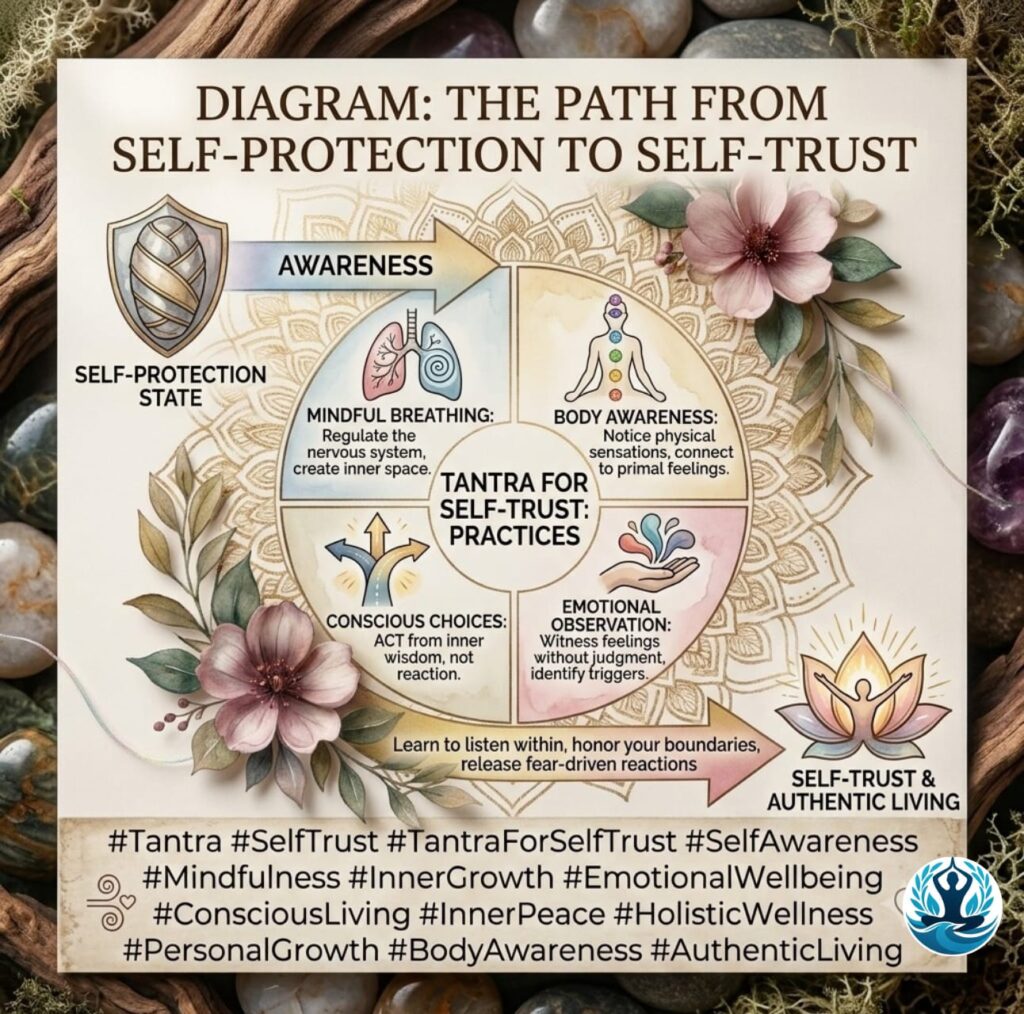
Through conscious breathing, meditation, mindful movement, body awareness, relaxation, and intentional living, Tantra-inspired practices can encourage you to slow down and reconnect with yourself.
The goal is not constant productivity.
The goal is balanced energy, greater awareness, and a more conscious relationship with life.
What Does It Mean to Feel Energetically Drained?
Feeling energetically drained can mean different things to different people.
For one person, it may feel like mental exhaustion. For another, it may appear as emotional heaviness, lack of motivation, irritability, restlessness, or difficulty concentrating.
Some common experiences include:
- Feeling tired even after resting
- Difficulty concentrating
- Emotional irritability
- Feeling overwhelmed by simple responsibilities
- Lack of enthusiasm
- Constant mental activity
- Feeling disconnected from yourself
- Needing frequent stimulation
- Difficulty relaxing
- Feeling emotionally exhausted after certain interactions
- Spending excessive time worrying
- Feeling like your attention is constantly being pulled in different directions
These experiences can have many possible causes, including insufficient sleep, stress, lifestyle factors, emotional difficulties, or underlying health conditions.
Tantra does not replace professional medical or psychological care. Instead, Tantra-inspired practices can be viewed as complementary tools for cultivating awareness and supporting healthier daily habits.
How Tantra Understands Energy
One of the most interesting aspects of Tantra is its emphasis on awareness.
In everyday life, energy can be understood practically through attention, effort, emotions, physical activity, rest, and engagement with our surroundings.
Tantric traditions may use more subtle concepts of energy, including prana, but interpretations vary considerably across different Tantric traditions.
For modern wellness purposes, the concept can be approached as an invitation to notice:
Where is my attention going?
What activities leave me feeling refreshed?
What repeatedly leaves me exhausted?
Where am I giving more than I can comfortably sustain?
When do I feel most present and alive?
These questions can change the way we understand exhaustion.
Instead of automatically assuming that we need to work harder, consume more stimulation, or push ourselves to become productive again, we can pause and investigate what is happening internally.
1. Tantra Encourages Conscious Awareness
One reason Tantra can be valuable for feelings of energetic depletion is its emphasis on conscious awareness.
Many people move through their day automatically.
They wake up, check their phone, begin working, answer messages, manage responsibilities, consume information, interact with others, and continue until the day ends.
There may be very little opportunity to ask:
How am I actually feeling?
Without awareness, we may continue habits that repeatedly exhaust us.
Mindfulness-based Tantric practices encourage observation without immediate judgment.
You might notice:
- Your breathing becoming shallow during stress
- Tension in your shoulders
- Tightness in your jaw
- Restlessness in your body
- Racing thoughts
- Emotional resistance
- Difficulty staying present
Simply noticing these experiences can create a pause between what you experience and how you respond.
That pause can become an important part of energy management.
2. Conscious Breathing and Inner Balance
Breathing is one of the simplest ways to reconnect with the present moment.
When people are stressed or overwhelmed, their breathing may become faster, shallower, or irregular.
Conscious breathing practices invite attention back to the breath.
A simple practice can involve sitting comfortably, relaxing the shoulders, and observing the natural rhythm of breathing.
Rather than trying to force a particular experience, simply notice:
- The inhalation
- The exhalation
- The movement of the abdomen
- Sensations around the chest
- The rhythm of the breath
- Moments of natural pause
You can practice for a few minutes at a time.
The purpose is not to create a dramatic energetic experience.
It is to develop awareness and presence.
If any breathing exercise causes dizziness, discomfort, anxiety, or other concerning symptoms, stop and return to normal breathing.
3. Tantra and Mindful Movement
Physical inactivity can sometimes contribute to feelings of sluggishness, while excessive activity can contribute to exhaustion.
Tantra-inspired mindful movement offers a middle path.
Instead of exercising purely to achieve a physical goal, movement can become an opportunity to experience the body.
Slow stretching, gentle yoga-inspired movements, walking meditation, or conscious mobility exercises can encourage you to notice:
- Muscle tension
- Posture
- Balance
- Breathing
- Physical comfort
- Movement quality
- Areas of fatigue
The emphasis is on listening rather than forcing.
A few minutes of intentional movement can become a transition between work and rest.
For example, after several hours at a desk, you might stand up, move slowly, take several comfortable breaths, and notice how your body feels.
This simple ritual can help interrupt automatic patterns.
4. Understanding Energy Leaks
The concept of an “energy leak” can be useful as a metaphor for identifying habits that repeatedly consume attention or emotional resources.
Common examples may include:
Constant digital stimulation
Checking messages, notifications, social media, and news repeatedly can fragment attention.
Overthinking
Replaying conversations and imagining future problems can consume significant mental attention.
People-pleasing
Constantly trying to meet everyone’s expectations can make it difficult to recognize your own needs.
Unclear boundaries
Saying yes when you want to say no can gradually create emotional exhaustion.
Multitasking
Constantly switching between tasks can make it harder to remain focused.
Emotional suppression
Ignoring difficult feelings does not necessarily make them disappear.
Lack of meaningful rest
Watching content for hours may not provide the same experience as genuinely restorative rest.
Tantra encourages awareness of these patterns rather than automatically judging them.
The question becomes:
What is repeatedly consuming my attention without giving me meaningful nourishment in return?
5. Tantra for Emotional Energy
Emotional experiences can influence how energized or depleted we feel.
Anger, fear, sadness, frustration, guilt, and unresolved conflict can occupy a significant amount of attention.
Tantra-inspired awareness encourages people to acknowledge emotions rather than immediately suppressing or escaping them.
This does not mean acting on every emotion.
Instead, it means learning to observe emotions with greater consciousness.
For example, when frustration appears, you might pause and notice:
Where do I feel this emotion in my body?
Perhaps there is tightness in the chest.
Maybe the jaw becomes tense.
Maybe the stomach contracts.
Maybe the shoulders rise.
This body-based awareness can create a greater sense of connection between emotional and physical experience.
Over time, conscious observation may help you recognize emotional patterns earlier.
6. Learning to Stop Fighting Yourself
Another source of exhaustion can be the constant internal struggle between what we feel and what we believe we should feel.
You may tell yourself:
“I should be more productive.”
“I shouldn’t be tired.”
“I should be happier.”
“I should have everything figured out.”
This internal pressure can become exhausting.
Tantric philosophy, in its diverse forms, often emphasizes acceptance of experience as a starting point for awareness.
Acceptance does not mean giving up.
It means acknowledging reality before deciding how to respond.
Instead of:
“I shouldn’t feel exhausted.”
Try:
“I notice that I feel exhausted. What might my body and mind be asking for?”
That small change can transform self-criticism into curiosity.
7. Tantra and the Practice of Presence
One of the most valuable ways to conserve attention is learning to be present.
When you eat, eat.
When you walk, walk.
When you talk to someone, listen.
When you rest, allow yourself to rest.
This sounds simple, but modern life often encourages continuous mental multitasking.
You may be eating while scrolling through your phone.
You may be talking to someone while thinking about work.
You may be working while checking messages.
You may be resting while worrying about tomorrow.
Presence brings attention back to what is actually happening.
This can make ordinary experiences feel more grounded and intentional.
8. Creating Conscious Boundaries
Relationships can be deeply nourishing, but certain interactions may also leave us emotionally exhausted.
Tantra-inspired self-awareness can encourage you to notice your relational patterns.
Ask yourself:
- Do I feel comfortable expressing my needs?
- Do I frequently agree to things I don’t want?
- Do I feel responsible for everyone’s emotions?
- Do I have enough personal space?
- Which relationships leave me feeling supported?
- Which interactions repeatedly create stress?
Healthy boundaries are not about rejecting people.
They are about understanding where your responsibilities end and another person’s responsibilities begin.
Learning to say no respectfully can sometimes be an important form of energy conservation.
9. Reconnecting With the Body
Many people spend much of their day living primarily through their thoughts.
They plan, analyze, calculate, worry, communicate, and make decisions.
The body can become something they notice only when it hurts or becomes exhausted.
Tantra brings attention back to bodily experience.
A simple body-awareness practice can involve sitting quietly for five minutes and observing sensations from head to toe.
Notice:
- Temperature
- Pressure
- Tension
- Relaxation
- Movement
- Breathing
- Heaviness
- Lightness
There is no need to change anything.
You are simply learning to listen.
This can help develop greater awareness of physical signals and daily needs.
10. Tantra and Rest Without Guilt
Some people find it difficult to rest because they associate rest with laziness.
They may believe that every moment should be productive.
But constant activity can make it difficult to recover attention and emotional resources.
Conscious rest is different from simply collapsing at the end of an exhausting day.
Conscious rest means intentionally creating moments where you are not required to perform.
You might:
- Sit quietly
- Practice meditation
- Take a slow walk
- Spend time in nature
- Stretch gently
- Practice conscious breathing
- Listen to calming music
- Disconnect from unnecessary notifications
Rest becomes part of your routine rather than something you earn only after completing everything.
11. Tantra for Reducing Mental Overload
Mental overload can make even simple tasks feel difficult.
One way to approach this is to reduce unnecessary inputs.
Try creating periods of single-tasking.
For example:
For 20 minutes, focus only on one task.
Put your phone away.
Close unnecessary browser tabs.
Take a few comfortable breaths.
Complete the task without repeatedly switching your attention.
Then take a short break.
This practice can transform productivity from constant stimulation into focused awareness.
12. A Simple Daily Tantra-Inspired Energy Practice
You do not need hours of meditation to begin.
A simple routine might take 10–15 minutes.
Step 1: Arrive
Sit comfortably and allow yourself to become still.
Step 2: Observe the breath
Notice several natural breaths without forcing them.
Step 3: Scan the body
Notice areas of tension and relaxation.
Step 4: Observe your emotional state
Ask:
What am I feeling right now?
You do not need to change it.
Step 5: Observe your attention
Ask:
What has been occupying most of my mental energy today?
Step 6: Choose consciously
Ask:
What is one thing I can reduce, release, postpone, or simplify today?
Step 7: Close with gratitude
Identify one simple thing you appreciate.
This practice can become a daily check-in.
13. Tantra and Conscious Energy Management
Overcoming energetic depletion is not necessarily about increasing energy all the time.
Sometimes it is about stopping unnecessary expenditure.
Imagine having a limited amount of attention each day.
If you spend much of it worrying about things outside your control, comparing yourself with others, responding to every notification, or trying to satisfy everyone, there may be less attention available for meaningful activities.
Conscious energy management asks:
Is this worth my attention?
This question can be surprisingly powerful.
Before entering an argument, checking social media, accepting another commitment, or continuing an exhausting conversation, pause.
Ask whether the activity aligns with your priorities.
14. The Role of Silence
Silence can provide an important contrast to the constant stimulation of modern life.
Even a few minutes of intentional quiet can create space for observation.
You might sit without your phone.
Close your eyes.
Listen to environmental sounds.
Observe your breathing.
Notice your thoughts.
At first, silence may feel uncomfortable.
That discomfort itself can become something to observe.
Rather than immediately escaping it, you can become curious about what arises when external stimulation decreases.
15. Tantra and Digital Detox
Digital technology is not inherently harmful, but continuous digital engagement can make it difficult to disconnect.
A Tantra-inspired approach to technology is not necessarily about rejecting technology.
It is about using it consciously.
Consider creating small technology-free periods:
- During meals
- Shortly after waking
- Before sleeping
- During meditation
- During meaningful conversations
- During personal reflection
You can also turn off unnecessary notifications.
The objective is to regain control over attention.
16. Transforming Exhaustion Into Self-Awareness
Feeling energetically drained can become an opportunity to learn more about yourself.
Instead of asking only:
“How can I get more energy?”
Ask:
“What is my exhaustion trying to tell me?”
Perhaps you need more rest.
Perhaps you have taken on too many responsibilities.
Perhaps you are spending too much time online.
Perhaps a relationship needs a healthier boundary.
Perhaps you have ignored your body’s signals.
Perhaps your schedule has no space for meaningful recovery.
Self-awareness can help you investigate these patterns.
17. Tantra and the Importance of Consistency
One meditation session is unlikely to transform your entire experience of energy.
The deeper value comes from consistency.
Five minutes of conscious breathing every day may be more sustainable than an occasional hour-long practice.
A practical routine might include:
Morning:
Three to five minutes of conscious breathing.
Afternoon:
One mindful pause between tasks.
Evening:
Five minutes of body awareness.
Before sleep:
A short reflection on what supported or drained your energy during the day.
Small practices can gradually become habits.
18. Common Mistakes to Avoid
When exploring Tantra for energy and wellbeing, several misconceptions are worth avoiding.
Mistake 1: Expecting instant transformation
Inner practices generally require patience.
Mistake 2: Forcing experiences
You do not need to create unusual sensations or dramatic experiences.
Mistake 3: Ignoring physical health
Persistent fatigue should not automatically be interpreted as an “energy imbalance.” Sleep, nutrition, stress, medications, and medical conditions can all influence fatigue.
Mistake 4: Treating Tantra as a replacement for professional care
Tantra-inspired practices may complement wellbeing, but they should not replace appropriate medical or mental-health care.
Mistake 5: Turning spirituality into another performance
If your wellness routine becomes another source of pressure, it defeats the purpose.
The practice should encourage awareness rather than perfectionism.
19. When to Seek Professional Help
Occasional tiredness is common.
However, persistent or severe fatigue deserves attention.
If you experience unexplained fatigue that continues despite adequate rest, or if it interferes significantly with daily life, consider speaking with a qualified healthcare professional.
Similarly, if emotional exhaustion is accompanied by persistent anxiety, depression, hopelessness, or significant changes in daily functioning, professional support may be appropriate.
Tantra can be one part of a broader wellbeing approach, but it should not be used to explain away symptoms that require proper assessment.
20. Building a More Sustainable Relationship With Energy
The ultimate goal is not to become energetic every minute.
Human beings naturally experience fluctuations.
Some days are active.
Some days are slower.
Some periods require greater effort.
Others require recovery.
A sustainable approach to wellbeing allows these natural changes.
Tantra encourages us to become more conscious of these rhythms.
Instead of constantly fighting tiredness, we can learn to listen.
Instead of automatically reacting to stress, we can pause.
Instead of giving attention to everything, we can become selective.
Instead of pushing ourselves endlessly, we can recognize the value of rest.
This creates a more balanced relationship with personal energy.
Conclusion: Tantra as a Path Toward Conscious Energy
Feeling energetically drained can be frustrating, especially when modern life constantly encourages us to do more, achieve more, respond faster, and remain productive.
Tantra offers another perspective.
Rather than asking only how to increase energy, it encourages us to become aware of how we experience and direct our attention.
Through conscious breathing, mindful movement, meditation, body awareness, emotional observation, intentional rest, healthy boundaries, and present-moment awareness, Tantra-inspired practices can become valuable tools for developing a more conscious relationship with everyday wellbeing.
The journey begins with a simple question:
Where is my energy going?
From there, you can begin noticing what restores you, what exhausts you, what deserves your attention, and what you may be ready to release.
You do not need to change your entire life overnight.
Start with one conscious breath.
One quiet moment.
One healthy boundary.
One mindful pause.
One decision to rest without guilt.
Over time, these small moments of awareness can help create a lifestyle that feels less reactive and more intentional.
Tantra for overcoming the feeling of being energetically drained is ultimately about reconnecting with yourself—your body, your attention, your emotions, and your capacity to live with greater awareness.
When energy is approached consciously, wellbeing becomes less about constantly pushing forward and more about learning when to act, when to pause, when to receive, and when to restore.