

Tantra for Recharging Mind, Body, and Spirit Naturally

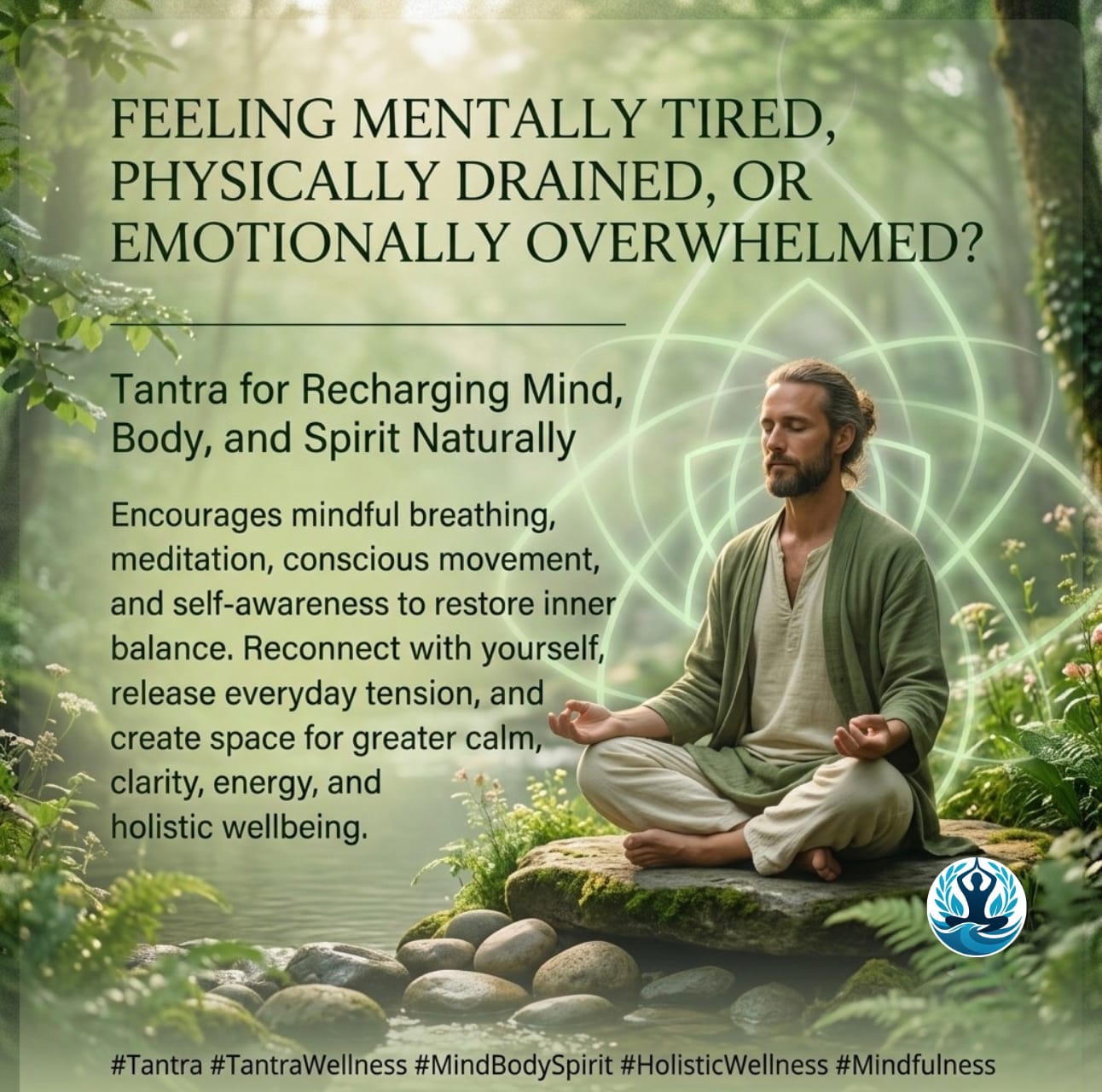
Modern life can leave people feeling mentally exhausted, physically tense, and emotionally disconnected. Long working hours, constant digital stimulation, social pressure, irregular routines, and insufficient rest can gradually reduce our sense of energy and inner balance. While many people search for quick ways to feel refreshed, genuine rejuvenation often requires something deeper: reconnecting with the body, calming the mind, and creating space for inner awareness.
Tantra for recharging mind, body, and spirit naturally offers a holistic approach to wellbeing that focuses on awareness, conscious breathing, meditation, movement, presence, and a deeper relationship with one’s inner experience.
Tantra is often misunderstood as being exclusively associated with sexuality. In reality, traditional tantric traditions encompass a broad range of contemplative and spiritual practices. Depending on the tradition, these may include meditation, breath awareness, visualization, mantra, ritual, concentration, subtle-energy practices, and mindful engagement with everyday life.
In a modern wellness context, selected tantric-inspired practices can be used as tools for relaxation, self-awareness, emotional balance, and personal growth. They encourage people to slow down and experience themselves more consciously rather than constantly operating on autopilot.
This guide explores how Tantra may support natural renewal of the mind, body, and spirit, practical practices for incorporating tantric principles into daily life, potential benefits, and important considerations for beginners.
What Does Recharging Mind, Body, and Spirit Mean?
Recharging is more than simply taking a break from work.
The mind may need relief from excessive thinking. The body may need relaxation and conscious movement. Emotional wellbeing may benefit from greater self-awareness and healthy expression. The spiritual dimension of life may need meaning, connection, stillness, or a stronger sense of purpose.
A holistic approach recognizes that these dimensions are interconnected.
For example, mental stress can contribute to muscle tension. Physical tension can make it harder to relax mentally. Emotional overwhelm may affect sleep and concentration. When people become disconnected from their bodies, they may also find it harder to recognize what they genuinely need.
Tantra approaches this interconnectedness through awareness.
Instead of asking only, “How can I become more productive?” tantric practice encourages questions such as:
- What am I experiencing right now?
- How does my body feel?
- What emotions are present?
- Is my breathing relaxed or strained?
- What happens when I stop rushing?
- What do I actually need at this moment?
- Can I experience this moment without constantly trying to change it?
These questions can transform ordinary moments into opportunities for conscious living.
Understanding Tantra as a Holistic Practice
The word Tantra has roots in ancient Indian traditions and has been interpreted in different ways across various philosophical and spiritual schools.
There is no single practice that represents all forms of Tantra. Traditions differ considerably in their beliefs, methods, goals, and practices.
One broad theme found in many tantric approaches is the idea that awareness can be cultivated through direct experience. Rather than rejecting ordinary life, certain tantric traditions emphasize transforming one’s relationship with experience through consciousness.
This can involve:
- Meditation
- Breath awareness
- Mantra
- Visualization
- Mindful movement
- Concentration
- Ritual
- Contemplation
- Awareness of bodily sensations
- Cultivating presence
For modern wellness purposes, it is important not to present Tantra as a guaranteed medical treatment or as a replacement for professional healthcare. Instead, tantric-inspired practices can complement healthy lifestyle habits and support relaxation, self-awareness, and personal development.
How Tantra Can Help Recharge the Mind
The modern mind is rarely quiet.
Notifications, responsibilities, deadlines, social media, financial concerns, relationships, and endless information can create a continuous stream of mental stimulation.
Over time, people may become accustomed to thinking constantly.
Tantric meditation and awareness practices can encourage a different relationship with thoughts.
Rather than fighting every thought, practitioners can learn to notice thoughts without immediately reacting to them.
1. Creating Mental Space
One of the simplest ways to recharge the mind is to create moments without constant stimulation.
A few minutes of quiet sitting can become an opportunity to observe:
- Thoughts
- Breathing
- Physical sensations
- Emotions
- Sounds
- Internal reactions
The goal is not necessarily to eliminate thoughts.
Instead, the practice is about developing awareness of thoughts without automatically becoming absorbed in them.
This can create a sense of psychological space.
2. Practicing Present-Moment Awareness
Much mental exhaustion comes from constantly moving between the past and future.
People may replay conversations, worry about upcoming events, or imagine possible problems.
Tantra emphasizes the value of being fully present.
A simple practice is to pause several times during the day and notice:
Breathing → Body → Environment → Thoughts → Emotions
Spend a few moments observing each without judgment.
This can interrupt habitual mental rushing and bring attention back to the current moment.
3. Using Breath as an Anchor
Breathing is continuously available as an object of awareness.
A simple tantric-inspired breathing practice can involve sitting comfortably and observing the natural breath.
Notice:
- The movement of the abdomen
- The expansion of the chest
- The temperature of the breath
- The rhythm of inhalation and exhalation
- The small pause between breaths
There is no need to force the breath.
Simply observing it can encourage a slower and more conscious experience.
For people with certain medical or psychological conditions, intensive breath-retention or advanced breathing techniques may not be appropriate without qualified guidance.
Tantra for Recharging the Body
The body often communicates before the conscious mind recognizes that something is wrong.
Shoulders may become tense. The jaw may tighten. Breathing may become shallow. The body may feel restless or heavy.
Tantric-inspired body awareness encourages people to notice these signals instead of ignoring them.
1. Conscious Body Scanning
A simple body scan can be practiced while sitting or lying comfortably.
Move your attention gradually through:
- Feet
- Legs
- Hips
- Abdomen
- Chest
- Shoulders
- Arms
- Neck
- Face
- Head
At each area, notice sensations without judging them.
You may notice warmth, pressure, tightness, movement, tingling, heaviness, or relaxation.
The objective is awareness rather than forcing the body to feel a particular way.
2. Conscious Movement
Movement can become a form of meditation when performed with attention.
Instead of exercising only to achieve an external result, slow movement can help you become aware of:
- Posture
- Balance
- Muscle tension
- Breathing
- Coordination
- Physical comfort
Gentle stretching, mindful walking, yoga-inspired movement, or slow mobility exercises can complement a broader wellness routine.
The important principle is conscious participation.
3. Releasing Unnecessary Tension
Many people unconsciously hold tension throughout the day.
A short relaxation practice can involve deliberately noticing areas of tension and allowing them to soften where comfortable.
For example:
Relax the jaw.
Drop the shoulders.
Soften the hands.
Relax the abdomen.
Allow the breath to move naturally.
Release unnecessary muscular effort.
This simple practice can help create a feeling of physical ease.
Tantra and the Power of Conscious Breathing
Breath is central to many contemplative traditions.
From a modern wellness perspective, breathing practices can encourage people to pay attention to their physiological state and become more aware of tension and relaxation.
A simple practice is slow, comfortable breathing without force.
Sit comfortably.
Close your eyes if that feels safe.
Notice your natural breath.
Gradually allow the exhalation to become soft and unhurried.
Continue for several minutes.
Do not strain or hold the breath unnecessarily.
The goal is not to achieve an unusual breathing state. The goal is to cultivate awareness and ease.
Advanced pranayama or breath-retention practices should be learned from appropriately qualified teachers, especially for anyone with relevant medical concerns.
Tantra for Emotional Recharging
Emotional exhaustion can be just as draining as physical tiredness.
When emotions are ignored, suppressed, or constantly resisted, people may feel disconnected from themselves.
Tantric approaches can encourage greater awareness of emotions.
Instead of immediately labeling an emotion as good or bad, try observing it.
Ask:
What am I feeling?
Where do I experience it in my body?
What happens when I breathe with awareness?
What does this emotion seem to need?
This approach does not mean acting on every emotion.
Awareness creates space between experiencing an emotion and reacting automatically.
Responding Instead of Reacting
One valuable aspect of conscious living is learning to create a pause.
For example:
Someone says something upsetting.
The immediate reaction might be anger.
Instead of responding instantly, pause.
Take one breath.
Notice the body.
Notice the emotion.
Then choose how to respond.
This small pause can become a powerful form of emotional self-regulation.
Tantra and Spiritual Rejuvenation
The word “spirit” can mean different things to different people.
For some, spirituality involves religious faith. For others, it may mean connection, purpose, inner stillness, self-discovery, or a deeper relationship with life.
Tantra can offer practices that encourage contemplation and connection with experience.
Spiritual recharging may involve:
- Meditation
- Gratitude
- Mantra
- Silence
- Nature connection
- Contemplation
- Self-inquiry
- Ritual
- Mindful living
The emphasis is on developing a more conscious relationship with life rather than escaping everyday experience.
Mantra and Mental Renewal
Mantra practices involve the repetition of sacred sounds, words, or phrases.
In traditional settings, mantras may have specific spiritual meanings and are often learned within a particular lineage.
For a general mindfulness practice, repeating a meaningful phrase can also serve as a concentration anchor.
The repetitive nature of the practice can encourage attention and create a rhythm that supports meditation.
If using traditional Sanskrit mantras, learning their pronunciation, meaning, and context from a knowledgeable teacher can deepen understanding.
Tantra for Restoring Energy Naturally
Many people think of energy only in terms of physical strength.
However, energy can also refer to attention, emotional capacity, motivation, and mental clarity.
A person may be physically rested but mentally overwhelmed.
Another person may have plenty of motivation but feel physically depleted.
Tantra encourages a more integrated perspective.
Natural energy renewal can involve:
- Adequate sleep
- Balanced nutrition
- Physical movement
- Conscious breathing
- Rest
- Meditation
- Emotional awareness
- Healthy boundaries
- Time in nature
- Meaningful relationships
- Reduced overstimulation
Tantric practices can complement these lifestyle foundations rather than replacing them.
The Importance of Slowing Down
One of the most valuable lessons of conscious practice is that constant activity is not the same as meaningful living.
Modern culture often rewards speed.
Faster work.
More tasks.
More messages.
More productivity.
More consumption.
But the body and mind also need periods of slowing down.
A few minutes of intentional stillness can provide an opportunity to notice what is happening internally.
Slowing down does not mean becoming inactive.
It means becoming more present.
A Simple Daily Tantra-Inspired Recharging Routine
You do not need hours of practice to begin.
A simple daily routine could look like this.
Morning: 5–10 Minutes
Begin the day without immediately checking your phone.
Sit comfortably.
Take several natural breaths.
Notice your body.
Set an intention for the day.
For example:
“Today I will move through my day with awareness.”
Midday: 3–5 Minutes
Pause during the day.
Relax your shoulders.
Unclench your jaw.
Take a few comfortable breaths.
Notice your emotional state.
Ask:
“What do I need right now?”
Perhaps you need movement.
Perhaps you need water.
Perhaps you need rest.
Perhaps you simply need a moment without stimulation.
Evening: 10–15 Minutes
Create a quiet transition between daytime activity and sleep.
Sit or lie comfortably.
Practice a gentle body scan.
Notice areas of tension.
Allow the breath to become natural and relaxed.
Reflect on the day without harsh judgment.
Ask:
- What did I experience today?
- What did I learn?
- Where was I present?
- Where did I react automatically?
- What can I release before sleep?
This can become a calming personal ritual.
Tantra and Mindful Self-Care
Self-care is sometimes presented as purchasing products or taking occasional breaks.
A deeper form of self-care begins with awareness.
Instead of asking only:
“What should I do for myself?”
Ask:
“What is my body, mind, and emotional life communicating?”
This shift can make self-care more responsive.
If you are exhausted, perhaps you need rest rather than another productivity technique.
If you feel disconnected, perhaps you need meaningful human connection.
If your body feels stiff, perhaps gentle movement is appropriate.
If your mind feels overloaded, perhaps silence is needed.
Awareness helps you identify the difference.
Tantra for Breaking the Cycle of Overstimulation
Digital technology can be useful, but constant stimulation can make stillness uncomfortable.
A simple practice is to create small technology-free periods.
For example:
- No phone during the first 15 minutes after waking.
- One technology-free meal.
- A short evening meditation without notifications.
- A quiet walk without headphones.
- Several minutes of silence before sleep.
These practices can create opportunities for the nervous system and attention to shift away from continuous stimulation.
Tantra and Connection With Nature
Nature can provide a simple environment for presence.
A mindful walk can become a contemplative practice.
Instead of rushing through the walk, notice:
- The sensation of your feet touching the ground
- The movement of your body
- The air against your skin
- Sounds around you
- Light and shadows
- Trees, plants, and surroundings
The practice does not require complicated techniques.
It requires attention.
Tantra and Self-Awareness
Perhaps the greatest long-term benefit of tantric-inspired practice is developing a clearer relationship with yourself.
Self-awareness means noticing patterns.
You may discover:
“I become tense when I rush.”
“I stop breathing deeply when I feel pressured.”
“I use my phone when I feel uncomfortable.”
“I ignore tiredness until I become exhausted.”
“I react quickly when I feel criticized.”
These observations are valuable because awareness creates the possibility of change.
You cannot consciously change a pattern that you never notice.
Tantra for Creating Healthy Boundaries
Recharging also requires protecting your energy.
Healthy boundaries can include:
- Saying no when necessary
- Limiting unnecessary commitments
- Creating quiet time
- Reducing excessive digital stimulation
- Protecting sleep
- Taking regular breaks
- Spending time with supportive people
Tantra-inspired awareness can help you recognize when you are repeatedly giving energy without adequate recovery.
Common Misconceptions About Tantra
Myth 1: Tantra Is Only About Sexuality
This is one of the most common misconceptions.
Although some tantric traditions contain sexual or erotic practices, Tantra as a broader historical category encompasses meditation, ritual, mantra, visualization, philosophy, deity practices, subtle-body concepts, and other spiritual disciplines.
Modern wellness discussions should avoid reducing the entire tradition to sexuality.
Myth 2: Tantra Is a Quick Fix
Tantra is not a magic solution for every problem.
Developing greater awareness generally requires consistent practice.
The benefits of meditation, conscious movement, and mindful breathing may become more noticeable with regularity rather than occasional practice.
Myth 3: More Intense Practice Is Always Better
Not necessarily.
Beginners sometimes believe that advanced techniques will produce faster results.
A gentle, sustainable routine is often a better starting point.
Awareness should not become another source of pressure.
How to Start Tantra Practice Safely
Beginners can start with simple practices.
Step 1: Create a Quiet Space
Choose a comfortable place where you are unlikely to be interrupted.
Step 2: Begin With Natural Breathing
Do not force the breath.
Simply observe it.
Step 3: Add Body Awareness
Notice physical sensations.
Step 4: Practice Stillness
Sit quietly for a few minutes.
Step 5: Observe Thoughts
Allow thoughts to arise without automatically following them.
Step 6: End With Reflection
Ask what you noticed.
Consistency matters more than complexity.
Choosing a Qualified Tantra Teacher
If you decide to explore formal Tantra, choosing an appropriate teacher is important.
Look for someone who:
- Clearly explains their lineage or training
- Respects personal boundaries
- Avoids coercion
- Does not promise miraculous cures
- Explains practices transparently
- Encourages informed consent
- Respects cultural and spiritual context
- Does not pressure students into sexual activities
- Understands appropriate professional boundaries
A trustworthy teacher should make you feel informed, respected, and free to say no.
Tantra and Modern Wellness
Tantra can be viewed as a complementary wellness philosophy when practices are adapted thoughtfully.
Modern life often separates mental health, physical health, emotional wellbeing, and spirituality into different categories.
Tantric perspectives can encourage a more integrated view.
The body is not separate from the mind.
Breathing is connected with emotional experience.
Attention influences how we experience daily life.
Rest affects our capacity to respond.
Self-awareness influences our choices.
This integrated perspective makes tantric-inspired mindfulness relevant to contemporary wellness conversations.
Long-Term Benefits of a Consistent Practice
A consistent practice may support:
Greater Self-Awareness
You may become more familiar with your thoughts, emotions, physical sensations, and behavioral patterns.
Improved Mindfulness
You may become better at noticing what is happening in the present moment.
Better Relaxation
Gentle breathing and meditation can become part of a relaxation routine.
Emotional Awareness
You may become more capable of recognizing emotions before reacting automatically.
Greater Body Awareness
You may notice tension, fatigue, comfort, and physical needs more clearly.
A Stronger Sense of Connection
Mindful living can encourage deeper connection with yourself, others, nature, and your values.
These outcomes vary between individuals and should not be understood as guaranteed medical effects.
Tantra for a More Balanced Lifestyle
The ultimate purpose of recharging is not simply to feel energetic for a few hours.
It is to create a sustainable relationship with activity and rest.
A balanced lifestyle includes both:
Doing and being.
Movement and stillness.
Expression and silence.
Effort and recovery.
Connection and solitude.
Tantric-inspired awareness can help people recognize when they have moved too far toward one extreme.
Frequently Asked Questions About Tantra for Recharging Mind, Body, and Spirit
1. What is Tantra for recharging mind, body, and spirit?
It refers to using selected tantric-inspired practices such as meditation, conscious breathing, mindful movement, body awareness, mantra, and self-reflection to support holistic wellbeing and a greater sense of inner balance.
2. Can Tantra help reduce stress?
Mindfulness, meditation, relaxation, and conscious breathing may support stress management. Tantra should be viewed as a complementary wellness practice rather than a substitute for professional treatment.
3. Can beginners practice Tantra?
Yes. Beginners can start with simple practices such as breath awareness, meditation, body scanning, and mindful movement.
4. How long should I practice Tantra each day?
There is no universal requirement. Even 5–10 minutes of consistent practice can provide an opportunity to develop awareness. The ideal duration depends on the individual and the practice being used.
5. Is Tantra only about sexuality?
No. Tantra encompasses diverse traditions and practices, including meditation, mantra, ritual, visualization, philosophy, and contemplative practices. Some tantric traditions include sexuality, but Tantra cannot accurately be reduced to it.
6. Can Tantra improve energy levels?
Tantric-inspired practices may help people become more aware of fatigue, stress, tension, and patterns of overexertion. However, persistent or unexplained fatigue should be discussed with an appropriate healthcare professional.
7. Can Tantra help with emotional balance?
Mindfulness and self-awareness practices may help people notice emotions and create space before reacting. They can complement broader emotional wellbeing strategies.
8. Can Tantra help with sleep?
A calming evening routine involving gentle breathing, meditation, body awareness, and reduced stimulation may support relaxation before sleep. Persistent sleep problems should be professionally assessed.
9. What is the best Tantra practice for beginners?
Simple breath awareness and body-awareness meditation are accessible starting points. Beginners should avoid attempting advanced practices without appropriate instruction.
10. How can I incorporate Tantra into everyday life?
You can practice presence while walking, eating, breathing, stretching, resting, communicating, or performing everyday activities. Tantra-inspired awareness does not have to be limited to a meditation session.
Conclusion: Recharge From Within
In a world that constantly encourages people to do more, move faster, and stay connected, learning how to pause can become a powerful form of self-care.
Tantra for recharging mind, body, and spirit naturally is ultimately about returning attention to direct experience.
It invites you to notice your breath.
Feel your body.
Observe your thoughts.
Understand your emotions.
Create moments of stillness.
Move consciously.
Protect your energy.
Reconnect with what gives your life meaning.
The goal is not to escape everyday life but to experience it with greater awareness.
A few minutes of conscious breathing can become a doorway into presence. A slow movement can become meditation. A quiet moment can become self-reflection. An ordinary walk can become an opportunity for connection.
When practiced consistently and responsibly, tantric-inspired mindfulness can become part of a broader lifestyle centered on awareness, balance, rest, and personal growth.
Recharging does not always require going somewhere else.
Sometimes, it begins by simply coming back to yourself.