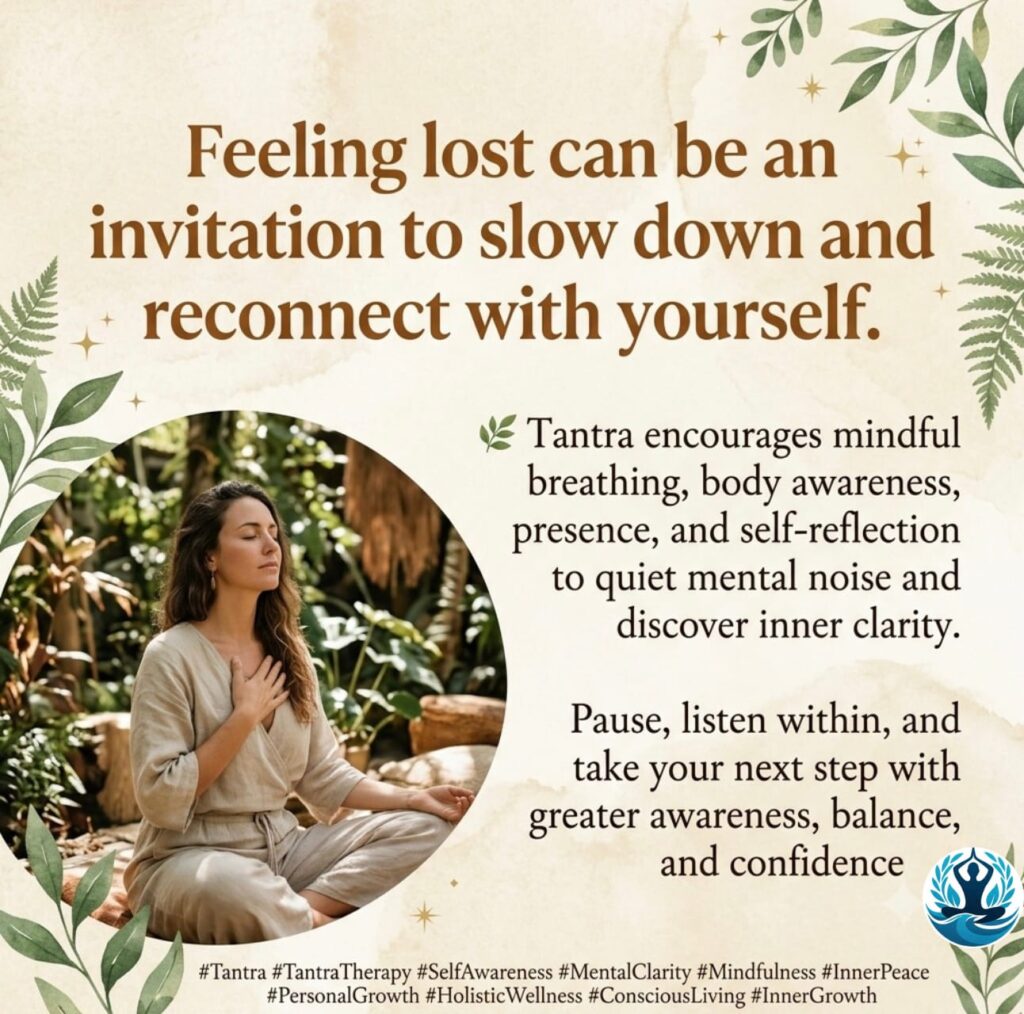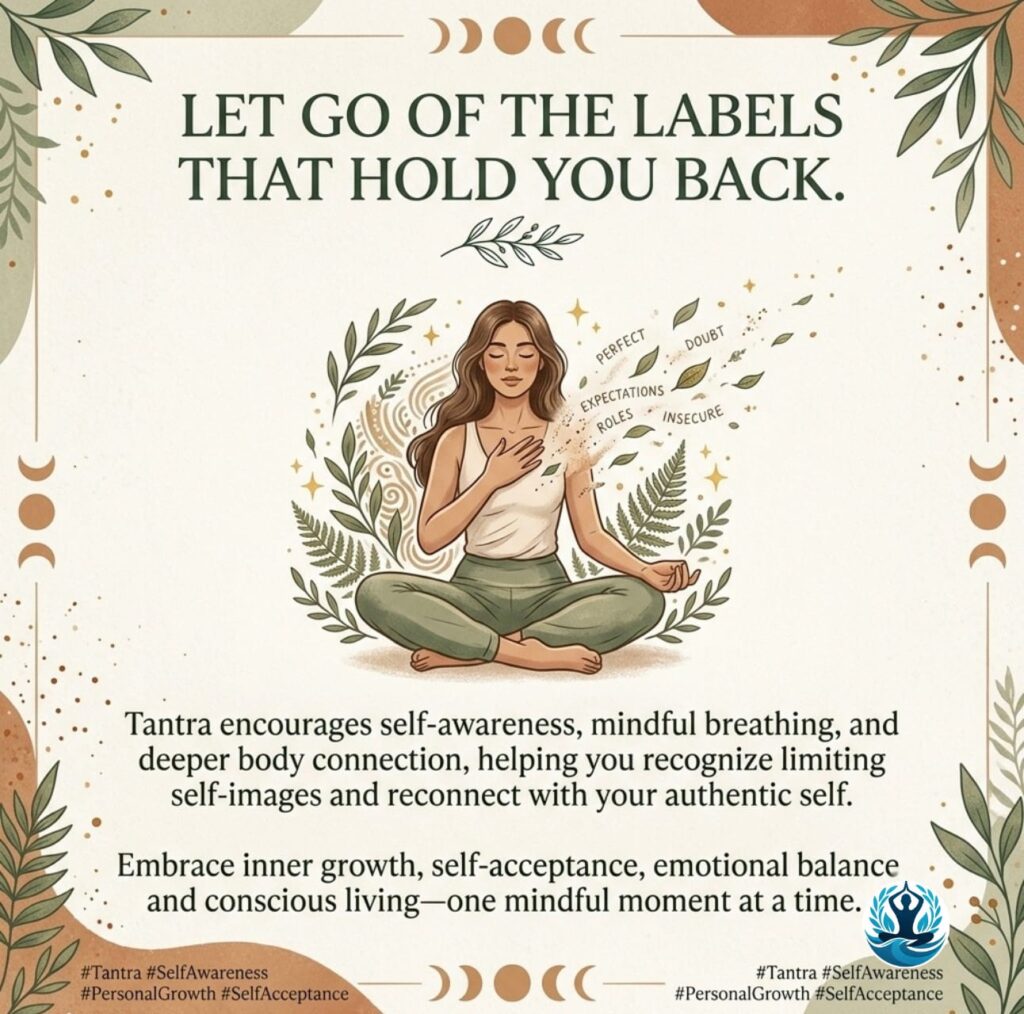


Tantra for Breaking Free From the Habit of Constant Self-Judgment

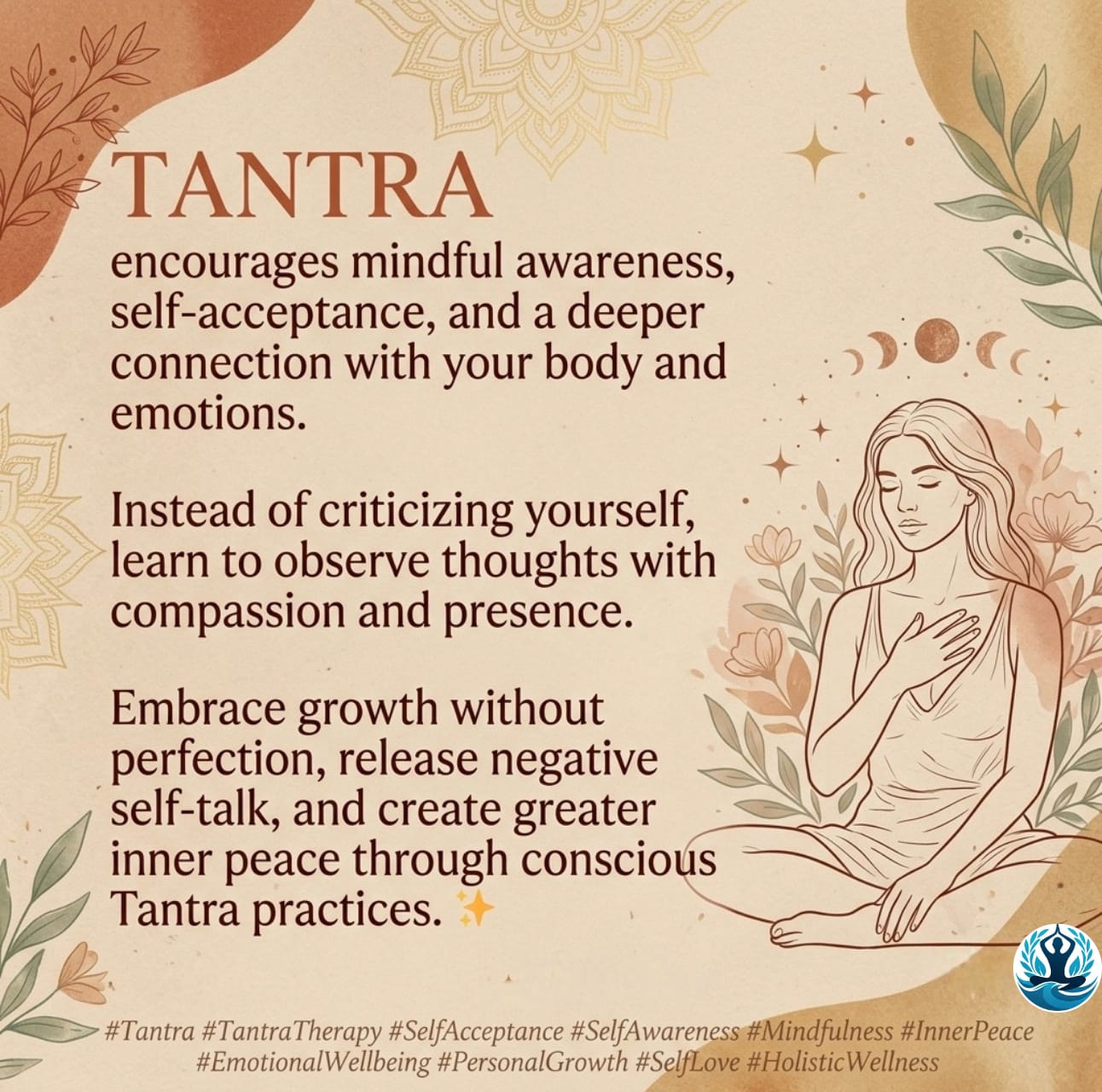
Many people move through daily life with an invisible inner critic constantly commenting on what they do, how they look, what they say, and whether they are doing enough. A small mistake can become a reason for harsh self-criticism. A difficult conversation may lead to hours of replaying what happened. Even achievements can sometimes be followed by thoughts about what could have been better.
This habit of constant self-judgment can gradually affect confidence, emotional wellbeing, relationships, and the ability to experience the present moment.
Tantra for breaking free from the habit of constant self-judgment offers a different perspective. Rather than encouraging people to fight, suppress, or reject uncomfortable thoughts and emotions, Tantra traditionally emphasizes awareness and a more integrated relationship with the body, mind, breath, emotions, and experience.
From a modern wellness perspective, Tantra-inspired practices can be used as tools for mindful self-observation. Instead of immediately labeling an experience as good or bad, the practitioner learns to notice it with greater curiosity.
The goal is not to become perfect or eliminate every critical thought. The goal is to develop enough awareness to recognize self-judgment without automatically believing or following it.
What Is Self-Judgment?
Self-judgment is the tendency to evaluate yourself harshly based on your perceived behavior, appearance, abilities, emotions, choices, or achievements.
It can sound like:
- “I am not good enough.”
- “I should have done better.”
- “Everyone else is ahead of me.”
- “Why did I say that?”
- “I always make mistakes.”
- “I should be more confident.”
- “I am not successful enough.”
- “Something is wrong with me.”
Occasional self-evaluation can be useful. It can help a person recognize mistakes and make constructive changes.
The problem develops when evaluation becomes constant criticism.
Instead of asking, “What can I learn from this?”, the mind may ask, “What is wrong with me?”
That distinction is important.
Healthy reflection focuses on behavior and learning. Excessive self-judgment often turns a specific experience into a negative conclusion about the entire self.
Why Constant Self-Judgment Can Become a Habit
Self-judgment rarely develops overnight. It can become a learned mental pattern through repeated comparison, perfectionism, criticism, unrealistic expectations, social pressure, or fear of failure.
Over time, the brain can become accustomed to scanning for perceived shortcomings.
For example:
You make a small mistake.
You notice it.
You criticize yourself.
You feel disappointed.
You think about the mistake repeatedly.
The emotional discomfort reinforces the importance of the event.
Eventually, similar situations can automatically trigger the same critical response.
This creates a cycle:
Experience → judgment → emotional discomfort → overthinking → more judgment
Breaking this cycle requires awareness.
This is where Tantra-inspired mindfulness can provide a useful framework.
Tantra and the Practice of Awareness
One of the important principles associated with many Tantric traditions is the cultivation of awareness rather than unconscious rejection of experience.
Instead of dividing life into experiences that are acceptable and unacceptable, Tantra can encourage a more conscious relationship with what is happening.
For someone struggling with self-judgment, this can mean learning to observe thoughts without immediately identifying with them.
For example, instead of:
“I am a failure.”
A more aware observation becomes:
“I am noticing the thought that I failed.”
The difference may appear small, but it creates psychological space.
The first statement identifies the person with the judgment.
The second recognizes the judgment as an experience occurring within awareness.
This shift can be valuable in developing greater self-understanding.
Tantra for Breaking Free From Self-Judgment
Tantra-inspired practices can support this process through several interconnected areas: awareness, breath, body consciousness, emotional acceptance, presence, and self-observation.
1. Developing Witness Consciousness
A central practice in many contemplative traditions is observing thoughts without becoming completely absorbed in them.
Imagine sitting quietly and noticing thoughts about yourself.
You may hear:
“I am behind.”
“I should be better.”
“I made a mistake.”
Instead of arguing with these thoughts, simply notice them.
You can mentally say:
“This is a thought.”
Then return attention to your breath or bodily sensations.
With consistent practice, you may begin to recognize that thoughts are experiences you have—not necessarily definitions of who you are.
This does not mean ignoring problems. It means creating enough awareness to respond to them consciously.
2. Using Breath to Create Space
Breathing is an accessible way to return attention to the present moment.
When self-judgment becomes intense, attention often moves into the past or future.
You may replay something that already happened or worry about something that has not happened yet.
Conscious breathing brings attention back to the present.
Try this simple practice:
- Sit comfortably.
- Relax your shoulders.
- Notice your natural breathing.
- Feel the movement of the abdomen or chest.
- Avoid trying to control the breath aggressively.
- When a critical thought appears, notice it.
- Gently return your attention to breathing.
The purpose is not to force the mind to become empty.
The purpose is to practice returning.
Every return strengthens awareness.
3. Reconnecting With the Body
Self-judgment is often experienced mentally, but it can also have a physical dimension.
You may notice:
- Tight shoulders
- Jaw tension
- A heavy chest
- Restlessness
- Shallow breathing
- Stomach discomfort
- Fatigue
Tantra places significant emphasis on embodied awareness.
Instead of immediately asking, “Why am I thinking this?”, you can sometimes ask:
“Where do I feel this experience in my body?”
This shifts attention from mental analysis toward direct observation.
For example, after making a mistake, you may notice tightness in your chest.
Rather than criticizing yourself for feeling anxious, simply observe the sensation.
Notice its location, intensity, movement, and changes over time.
This can encourage a more compassionate relationship with your internal experience.
4. Replacing Judgment With Curiosity
Curiosity is one of the most useful alternatives to self-criticism.
Instead of saying:
“Why am I like this?”
Try:
“What is happening inside me right now?”
Instead of:
“Why can’t I do anything properly?”
Try:
“What made this situation difficult for me?”
Instead of:
“I shouldn’t feel this way.”
Try:
“What might this emotion be showing me?”
Curiosity does not mean approving every behavior.
It creates room to understand before reacting.
This is particularly valuable when working with emotions that feel uncomfortable.
5. Learning to Observe Emotions Without Rejecting Them
Many people judge themselves for experiencing emotions such as anger, sadness, jealousy, fear, insecurity, or frustration.
The emotion becomes a second problem.
For example:
First experience: “I feel anxious.”
Second judgment: “I shouldn’t be anxious.”
Now there are two layers of discomfort.
Tantra-inspired awareness can encourage observing the emotion directly.
Ask:
- What does this emotion feel like?
- Where is it present in my body?
- Does it change when I breathe?
- What thoughts accompany it?
- Can I allow myself to experience it without immediately labeling myself?
The aim is not to act on every emotion.
It is to recognize that experiencing an emotion does not automatically make you a bad or inadequate person.
6. Moving Beyond Perfectionism
Constant self-judgment is often connected with perfectionistic expectations.
Perfectionism can create an internal rule that says:
“If I cannot do something perfectly, I am not good enough.”
Tantra offers a more experiential orientation.
Rather than constantly asking whether you are performing perfectly, you can pay attention to the experience itself.
During meditation, for example, the mind may wander.
Instead of saying:
“I am terrible at meditation.”
You can notice:
“My attention wandered. I noticed it. Now I return.”
That return is part of the practice.
Progress is not necessarily the absence of distraction.
Progress can be the growing ability to notice distraction without harsh self-judgment.
7. Practicing Self-Acceptance
Self-acceptance does not mean refusing to improve.
It means recognizing your present experience without requiring yourself to become someone else before you deserve respect.
A useful distinction is:
Self-acceptance: “This is where I am right now.”
Self-improvement: “Here is what I would like to develop.”
These two ideas can coexist.
You can acknowledge your limitations while still working toward positive change.
This approach removes some of the unnecessary conflict created by believing that you must first become perfect before accepting yourself.
8. Tantra and Present-Moment Awareness
Self-judgment frequently pulls attention away from the present.
The mind may become occupied with:
- Past mistakes
- Future expectations
- Social comparison
- Imagined criticism
- Personal insecurities
Mindful Tantra practices can encourage attention toward immediate experience.
Notice:
- Your breathing
- The feeling of your feet touching the ground
- Sounds around you
- The movement of your body
- Your posture
- Your emotions
- The sensations created by everyday activities
When attention becomes more grounded in direct experience, there may be less space for repetitive internal criticism.
9. Understanding the Difference Between Reflection and Judgment
One of the most important steps is learning to distinguish constructive reflection from destructive self-criticism.
Constructive reflection
“I interrupted someone during the conversation. Next time, I can listen more carefully.”
Destructive judgment
“I always ruin conversations. I am terrible with people.”
The first statement identifies behavior and creates an opportunity for learning.
The second turns one event into a broad identity statement.
Tantra-inspired awareness can help you notice this difference.
When a critical thought appears, ask:
“Is this helping me understand my experience, or is it simply attacking me?”
That question can interrupt automatic thinking.
A Simple Tantra-Inspired Practice for Self-Judgment
You can create a short daily practice around awareness and self-acceptance.
Step 1: Sit quietly
Choose a comfortable place where you can remain undisturbed for a few minutes.
Step 2: Connect with your breathing
Notice the natural rhythm of your breath.
Do not force it.
Step 3: Observe your body
Notice areas of tension or relaxation.
Step 4: Notice your thoughts
Allow thoughts to appear without trying to control them.
Step 5: Recognize self-judgment
If a critical thought appears, silently acknowledge:
“I notice self-judgment.”
Step 6: Create distance
Instead of “I am not good enough,” recognize:
“I am experiencing the thought that I am not good enough.”
Step 7: Return to the body
Feel your breathing, posture, hands, feet, or contact with the floor.
Step 8: End with a neutral statement
You might say:
“I can learn without attacking myself.”
The practice does not need to be complicated.
Consistency is often more useful than intensity.
How Tantra Can Support a Healthier Inner Dialogue
The internal voice we use with ourselves can influence how we experience everyday challenges.
Constant criticism creates an environment of internal conflict.
A more conscious inner dialogue creates room for learning.
Instead of:
“I failed.”
Try:
“That did not go as I hoped. What can I learn?”
Instead of:
“I am behind everyone.”
Try:
“I am comparing myself right now. Can I return to my own path?”
Instead of:
“I should not feel this.”
Try:
“This feeling is here. What can I understand from it?”
This does not require forced positivity.
The goal is a more balanced relationship with yourself.
Tantra, Self-Awareness, and Personal Growth
Self-awareness is not about endlessly analyzing yourself.
It is about recognizing your patterns clearly enough to make conscious choices.
When you become aware of how self-judgment operates, you can begin identifying its triggers.
Perhaps it appears when:
- You compare yourself with others.
- Someone gives you feedback.
- You make a mistake.
- You feel uncertain.
- You experience rejection.
- You are tired.
- You believe you are not progressing quickly enough.
Once a pattern becomes visible, you have more opportunity to respond differently.
Awareness creates a pause between trigger and reaction.
That pause can become the foundation for personal growth.
The Role of Mindful Movement
Tantra is not limited to sitting meditation.
Mindful movement can also support body awareness.
Simple practices such as slow stretching, conscious walking, gentle movement, or yoga-inspired exercises can help bring attention into the body.
Rather than judging how the movement looks, focus on how it feels.
Notice:
- Muscle engagement
- Breathing
- Balance
- Posture
- Movement quality
- Areas of tension
- Areas of ease
This can help shift attention from external performance to internal experience.
For people who frequently criticize their appearance or physical abilities, this change in attention can be especially meaningful.
Creating a Daily Self-Judgment Awareness Ritual
A short ritual can help integrate these principles into everyday life.
Morning
Before starting your day, take three slow, comfortable breaths.
Ask:
“How do I want to relate to myself today?”
Choose an intention such as:
“I will notice without immediately judging.”
During the day
Whenever you catch yourself criticizing yourself, pause.
Take one breath.
Notice the thought.
Ask:
“What would a constructive response look like?”
Evening
Spend a few minutes reflecting on the day.
Ask:
- What triggered self-judgment today?
- What did I learn?
- Where was I unnecessarily hard on myself?
- What could I approach differently tomorrow?
This turns self-awareness into a practical habit.
Common Obstacles When Practicing Self-Acceptance
Breaking a long-established habit takes time.
You may still experience:
“I know I shouldn’t judge myself, but I keep doing it.”
That is normal. Awareness does not immediately erase a habit.
Every time you notice the pattern, you are practicing awareness.
“If I stop criticizing myself, I will become lazy.”
Self-criticism is not the only source of motivation.
People can grow through curiosity, values, discipline, responsibility, and meaningful goals.
“I have made real mistakes.”
Acknowledging mistakes is different from attacking yourself.
Take responsibility where necessary, repair what you can, learn, and continue.
“I compare myself automatically.”
Comparison is a common mental habit.
When you notice it, return attention to your own experience, values, and next practical step.
Tantra for Developing Inner Compassion
Compassion is not weakness.
It means responding to difficulty with understanding rather than unnecessary hostility.
A compassionate approach might sound like:
“This is difficult for me right now.”
“I made a mistake, but I can learn from it.”
“I am still developing.”
“I can acknowledge what needs to change without rejecting myself.”
This type of inner dialogue can coexist with accountability.
The goal is not to convince yourself that everything you do is perfect.
The goal is to create a healthier environment in which learning can occur.
Tantra and the Journey Toward Inner Wholeness
Constant self-judgment often creates an internal division:
One part of you becomes the critic.
Another part becomes the person being criticized.
Tantra’s holistic orientation can offer another perspective: instead of treating uncomfortable parts of yourself as enemies, explore them with awareness.
Your uncertainty, ambition, fear, sensitivity, strength, mistakes, and aspirations can all become objects of conscious observation.
Wholeness does not necessarily mean having no contradictions.
It can mean developing the awareness to hold different aspects of yourself without immediately rejecting one of them.
Benefits of Practicing Tantra-Inspired Awareness
Consistent mindfulness and self-awareness practices may support:
- Greater awareness of thought patterns
- Improved emotional regulation skills
- More present-moment attention
- A kinder internal dialogue
- Better recognition of personal triggers
- Reduced tendency toward repetitive self-criticism
- Greater body awareness
- More conscious responses to difficult situations
- Increased self-understanding
- A stronger sense of personal authenticity
These should be understood as potential wellness benefits rather than guaranteed outcomes.
Tantra should not be presented as a replacement for professional mental-health care when someone is experiencing significant psychological distress.
How to Make the Practice Sustainable
The most effective practice is often the one you can realistically maintain.
Start small.
You might begin with five minutes of mindful breathing each day.
Then add body awareness.
Later, incorporate mindful movement or reflective journaling.
Avoid turning self-awareness itself into another reason to criticize yourself.
You do not need to perform the practice perfectly.
If you miss a day, begin again.
If your mind wanders, return.
If you become frustrated, notice the frustration.
The practice itself becomes an opportunity to observe how quickly the inner critic appears.
Conclusion
Tantra for breaking free from the habit of constant self-judgment is ultimately about changing your relationship with yourself.
The objective is not to eliminate every critical thought. Human minds naturally evaluate, compare, remember, and anticipate.
The deeper practice is learning to recognize these mental patterns without automatically accepting them as the truth about who you are.
Through mindful breathing, body awareness, meditation, conscious movement, emotional observation, and present-moment awareness, Tantra-inspired practices can encourage a more spacious relationship with thoughts and feelings.
You can learn from mistakes without defining yourself by them.
You can pursue growth without believing you are fundamentally inadequate.
You can acknowledge difficult emotions without rejecting yourself for having them.
And you can move toward personal transformation without constantly fighting the person you are today.
Breaking free from self-judgment is not about becoming a different person overnight.
It is about becoming more aware of the person you already are—and learning to meet yourself with greater presence, honesty, and compassion.