

Tantra for Releasing the Pressure to Have Everything Figured Out

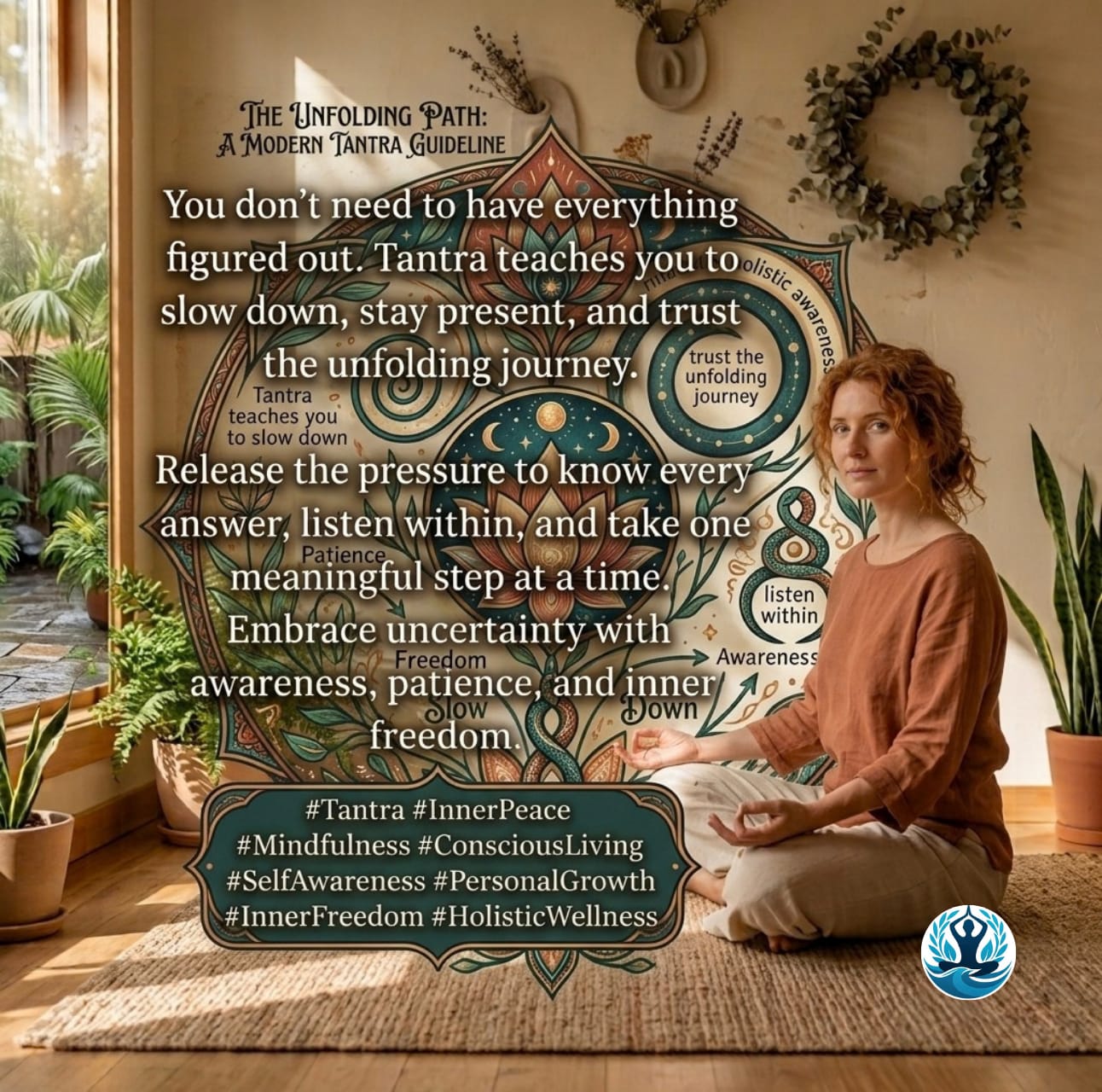
Modern life often creates an invisible expectation that we should always know what comes next. We are encouraged to have a clear career path, defined relationships, financial plans, personal goals, and answers about our future. When life feels uncertain, it can be easy to believe that something is wrong with us because we do not have everything figured out.
But life is rarely a straight line.
People change. Priorities evolve. Relationships transform. Careers take unexpected turns. New experiences reshape what we value. Sometimes, the path becomes clear only after we begin walking it.
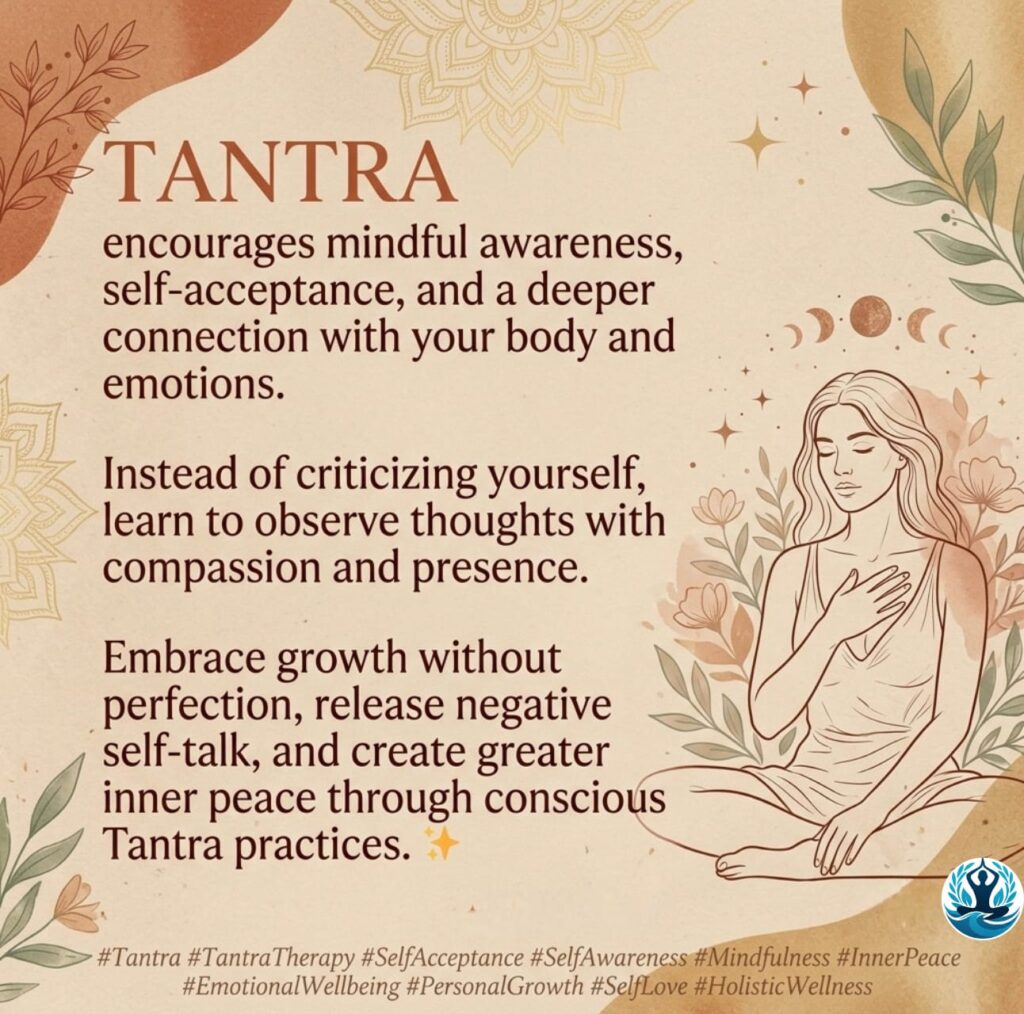
Tantra offers a different way of relating to uncertainty. Rather than demanding complete control or immediate answers, a Tantric approach encourages awareness, presence, acceptance, and deeper connection with the experiences unfolding in the present moment.
Tantra for releasing the pressure to have everything figured out is not about giving up on goals or becoming passive. Instead, it is about creating enough inner space to move through uncertainty without constantly fighting against it.
When we stop demanding that life provide all the answers immediately, we may become more receptive to learning, intuition, experience, and transformation.
Understanding the Pressure to Have Everything Figured Out
The pressure to know exactly what we are doing can come from many directions.
Family expectations may influence our choices. Social media can make other people’s lives appear perfectly organized. Professional culture can encourage constant achievement. Friends may seem to know exactly where their lives are going.
Over time, these influences can create an internal question:
“Why don’t I have my life figured out yet?”
This question can become a source of stress.
Instead of experiencing life as an unfolding journey, we may begin treating it like a problem that must be solved.
We may constantly analyze:
- Am I on the right career path?
- Am I making the right decisions?
- Should I be further ahead?
- What should I do next?
- Where will I be in five years?
- Am I wasting my potential?
- Why don’t I feel completely certain?
While reflection can be valuable, excessive pressure can turn self-awareness into constant self-questioning.
Tantra encourages us to notice this pattern without immediately judging ourselves for having it.
What Does Tantra Teach About Uncertainty?
Tantra is a broad spiritual and philosophical tradition with diverse practices and interpretations. In contemporary wellness contexts, Tantric principles are often used to cultivate greater awareness of the body, breath, emotions, thoughts, relationships, and present experience.
One important principle is presence.
Instead of constantly living in an imagined future, we can learn to become more aware of what is happening now.
This does not mean ignoring the future. It means recognizing that the future cannot be completely controlled or known.
Tantric awareness invites us to experience the present more fully while allowing life to unfold.
This shift can be powerful:
From: “I need to know exactly where my life is going.”
Toward: “I can become more aware of where I am and take the next meaningful step.”
That change can reduce unnecessary mental pressure and create greater inner spaciousness.
Tantra and the Art of Not Knowing
Not knowing is often uncomfortable.
The mind naturally looks for certainty because certainty can feel safe. When we do not know what will happen, the mind may create endless scenarios.
We imagine possible problems.
We replay past decisions.
We predict future outcomes.
We compare ourselves with others.
We search for reassurance.
Yet uncertainty is an unavoidable part of human life.
Tantra can encourage us to develop a more conscious relationship with this uncertainty.
Instead of immediately trying to eliminate the feeling of not knowing, we can observe it.
Where do we feel uncertainty in the body?
Does the chest feel tight?
Does the stomach contract?
Does the breathing become shallow?
Do thoughts become faster?
Simply noticing these experiences can create a small space between ourselves and our reactions.
That space can become the beginning of greater inner freedom.
Releasing the Need for Immediate Answers
One of the most useful aspects of a Tantric approach is learning to slow down our relationship with answers.
We often believe that every important question requires an immediate decision.
But some questions need time.
Some answers emerge through experience rather than analysis.
Some decisions become clearer after we understand ourselves more deeply.
For example, instead of repeatedly asking:
“What should I do with my life?”
we might explore:
- What gives me energy?
- What consistently drains me?
- What experiences feel meaningful?
- What values matter most to me?
- What kind of environment helps me thrive?
- What am I curious about?
- What am I learning about myself?
These questions move attention away from pressure and toward awareness.
The Role of Present-Moment Awareness
Present-moment awareness is central to many contemplative practices.
When we are worried about having everything figured out, our attention often moves into the future.
We imagine what might happen.
We worry about possible mistakes.
We compare today’s reality with an imagined ideal future.
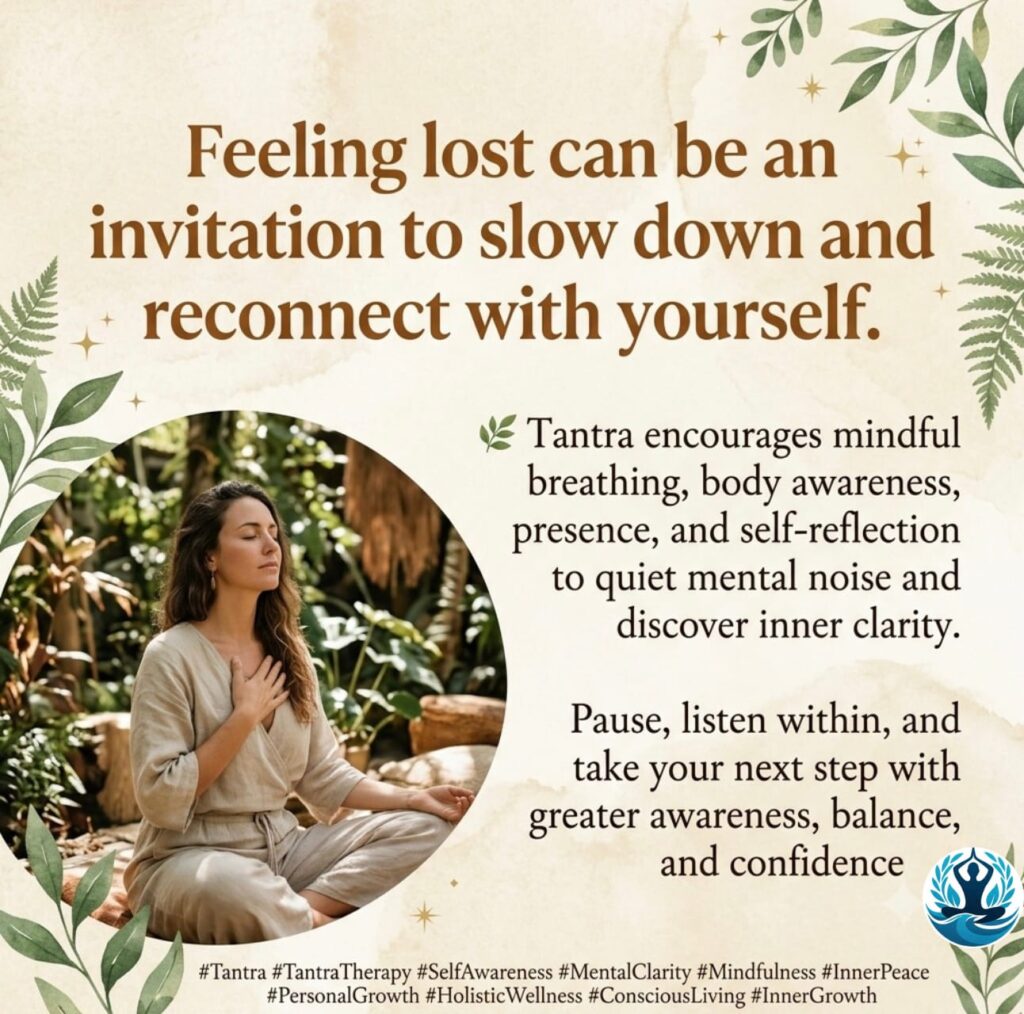
Tantric mindfulness can help bring attention back to the immediate experience.
You might pause and notice:
Breath.
Body.
Thoughts.
Emotions.
Environment.
Sensations.
You do not need to solve anything during this pause.
The purpose is simply to become present.
With regular practice, this can help reduce the habit of living entirely inside future-oriented thinking.
Tantra for Releasing Comparison
Comparison can intensify the pressure to have life figured out.
Someone may appear successful at thirty.
Someone else may have a stable relationship.
Another person may have built a successful business.
Someone may seem spiritually fulfilled.
Social media can make these snapshots appear like complete stories.
But we rarely see the uncertainty behind another person’s public image.
Tantra encourages a return to one’s own experience.
Instead of asking:
“Am I where they are?”
we can ask:
“Am I becoming more aware of who I am and what I genuinely value?”
This does not eliminate ambition.
It changes the foundation from comparison to self-awareness.
Learning to Trust the Process
Trust does not mean believing that everything will automatically work out exactly as we want.
A more grounded form of trust means recognizing that we can respond to what life presents.
We may not know the entire path.
But we can develop the ability to take the next step.
This is especially useful during transitions.
A person changing careers may not know exactly where they will be in several years.
Someone beginning a new relationship may not know its eventual direction.
Someone exploring personal growth may not know what they will discover.
Instead of demanding certainty, we can develop curiosity.
What can this moment teach me?
That question can transform uncertainty from an enemy into an opportunity for awareness.
Tantra and Conscious Decision-Making
Releasing pressure does not mean avoiding decisions.
Tantra can support more conscious decision-making by encouraging us to slow down enough to notice what is happening internally.
Before making a major decision, consider creating a quiet space.
Take several slow breaths.
Notice your body’s sensations.
Observe your emotions.
Identify the thoughts influencing you.
Then ask:
- Am I acting from fear?
- Am I acting from social pressure?
- Am I trying to prove something?
- Am I responding to my genuine values?
- What information do I still need?
- What is the next practical step?
This process does not guarantee a perfect decision.
Instead, it can help create a more conscious relationship with decision-making.
The Body as a Source of Awareness
Modern life often emphasizes intellectual problem-solving.
We think about what we should do.
We analyze options.
We search for advice.
But the body is also continuously communicating.
Stress may appear as:
- muscle tension
- shallow breathing
- restlessness
- fatigue
- digestive discomfort
- difficulty relaxing
Tantric practices often emphasize awareness of embodied experience.
A simple body-awareness practice can involve sitting quietly and observing physical sensations without immediately trying to change them.
Notice your shoulders.
Notice your jaw.
Notice your chest.
Notice your abdomen.
Notice your breathing.
This does not mean treating bodily sensations as infallible instructions. Rather, body awareness provides additional information about how we are experiencing a situation.
A Simple Tantric Practice for Uncertainty
Try this short practice when you feel pressure to have everything figured out.
Step 1: Pause
Stop what you are doing for a few moments.
Sit comfortably.
Allow yourself to become still.
Step 2: Breathe
Take several natural, comfortable breaths.
Do not force the breathing.
Simply notice the movement of the breath.
Step 3: Observe
Ask yourself:
“What am I feeling right now?”
Notice emotions without immediately labeling them as good or bad.
Step 4: Feel the Body
Notice where uncertainty appears physically.
Perhaps there is tension in the chest, shoulders, stomach, or face.
Simply observe.
Step 5: Release the Demand
Silently remind yourself:
“I do not need to know everything right now.”
Allow the statement to create a little space.
Step 6: Ask One Question
Instead of asking what your entire future should look like, ask:
“What is the next meaningful step available to me?”
Step 7: Return to the Present
Take another breath.
Notice your surroundings.
Continue with your day.
The practice is simple, but repeating it can help interrupt the habit of demanding immediate certainty.
Moving From Control to Conscious Participation
There is a difference between controlling life and participating consciously in it.
Control says:
“Everything must happen according to my plan.”
Conscious participation says:
“I will make thoughtful choices while remaining open to what I cannot control.”
This distinction can transform the way we approach uncertainty.
We can still make plans.
We can still work toward goals.
We can still build careers, relationships, businesses, and meaningful lives.
But we do not have to make certainty a requirement for moving forward.
Tantra for Reducing Future Anxiety
Future-oriented thinking can become exhausting when it turns into constant mental rehearsal.
The mind may repeatedly ask:
“What if something goes wrong?”
“What if I choose incorrectly?”
“What if I regret this?”
“What if I am falling behind?”
Tantric awareness can help us recognize these thoughts as experiences rather than unquestionable truths.
A thought is something we experience.
It does not automatically represent reality.
When a future-oriented thought appears, try noticing it:
“I am having a thought about the future.”
Then return attention to the breath or body.
This small shift can create psychological distance from repetitive thinking.
Embracing Life as an Unfolding Experience
One of the deeper lessons of releasing pressure is recognizing that life does not need to be completely understood before it can be lived.
Many meaningful discoveries happen unexpectedly.
A conversation may change our perspective.
A new experience may reveal an interest.
A challenge may teach resilience.
A period of uncertainty may help clarify our values.
If we insist on having everything figured out before moving forward, we may miss experiences that could help us discover the answer.
Tantra encourages engagement with experience.
Instead of waiting for complete certainty, we can remain present enough to learn.
Releasing the “I Should Be Further Ahead” Mindset
A particularly powerful source of pressure is the belief that we should already be somewhere else.
“I should have achieved more.”
“I should know what I want.”
“I should have a better career.”
“I should be more successful.”
“I should be more confident.”
The word should can create an imaginary timeline against which we constantly judge ourselves.
Tantric self-awareness can help us recognize these internal expectations.
Ask:
“Whose timeline am I following?”
This question can reveal whether a goal genuinely reflects our values or simply an expectation we absorbed from society.
Creating Inner Spaciousness
When we stop demanding immediate certainty, something interesting can happen: the mind gains space.
Instead of constantly searching for answers, we become more receptive.
Instead of reacting immediately, we pause.
Instead of judging ourselves, we observe.
Instead of trying to control every outcome, we focus on what we can influence.
This inner spaciousness can support creativity, reflection, emotional balance, and clearer decision-making.
The goal is not to eliminate uncertainty.
The goal is to become more comfortable living consciously alongside it.
Tantra and Personal Growth
Personal growth does not always happen through achievement.
Sometimes growth means becoming more patient.
Sometimes it means learning to listen.
Sometimes it means changing a long-standing belief.
Sometimes it means accepting that we have outgrown an old identity.
Tantra encourages awareness of transformation as an ongoing process.
We do not need to become a completely different person overnight.
Small moments of awareness can gradually change how we relate to ourselves and the world.
Practical Ways to Apply Tantra in Everyday Life
You do not need to create a complicated spiritual routine.
Consider integrating small practices into ordinary activities.
Morning Awareness
Before checking your phone, take a few moments to notice your breathing and physical state.
Ask:
“How am I arriving into this day?”
Conscious Transitions
Before moving from work into personal time, pause for one minute.
Take a few breaths and notice the transition.
Mindful Walking
Walk without constantly looking at your phone.
Notice your feet, breathing, surroundings, and movement.
Evening Reflection
Before sleeping, ask:
- What did I learn today?
- What felt meaningful?
- What created unnecessary pressure?
- What can I release tonight?
One-Step Planning
Instead of planning your entire future every day, identify one meaningful next step.
This creates movement without demanding certainty.
Common Misunderstandings About Releasing Pressure
Releasing pressure does not mean:
- abandoning your goals
- avoiding responsibility
- refusing to plan
- ignoring important decisions
- becoming passive
- accepting unhealthy circumstances
Instead, it means developing a healthier relationship with uncertainty.
You can be ambitious without being consumed by achievement.
You can plan without demanding guarantees.
You can make decisions without needing perfect certainty.
You can pursue growth without constantly believing you are behind.
The Balance Between Intention and Surrender
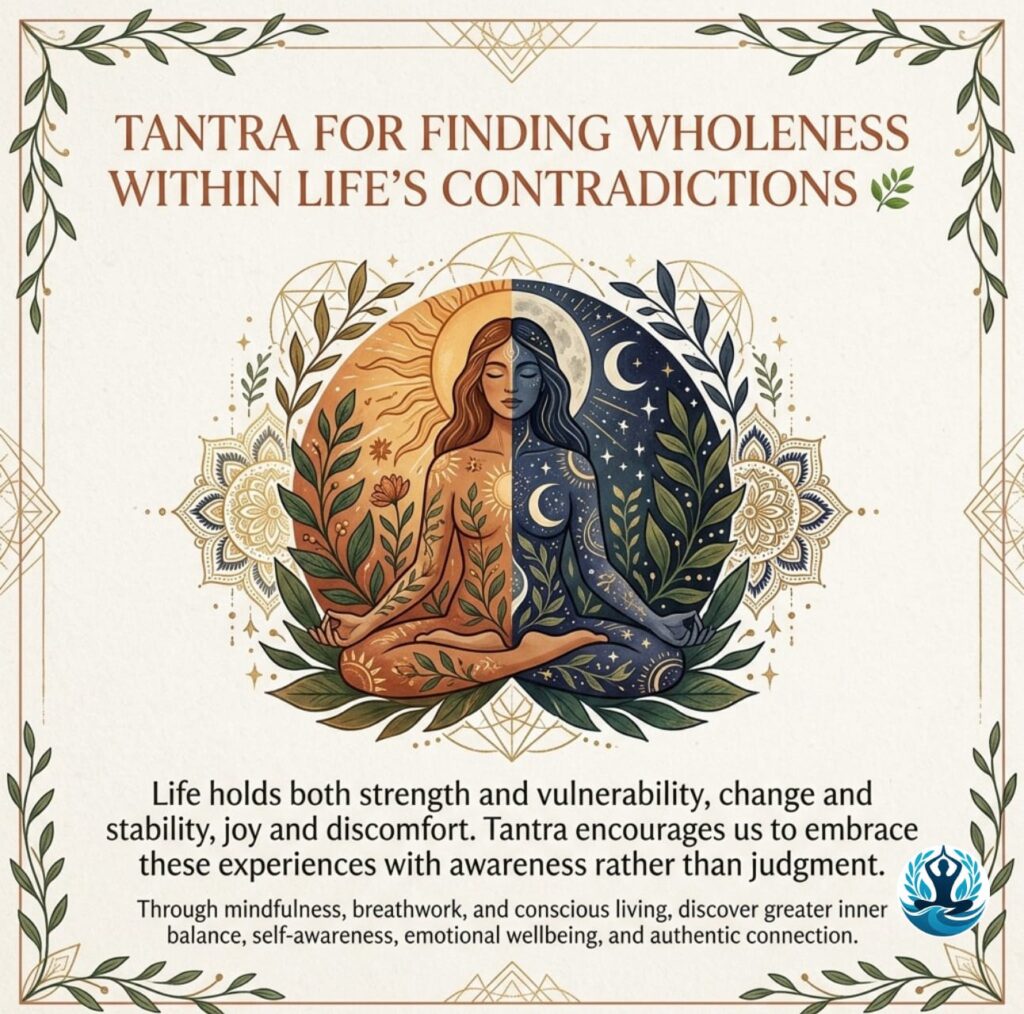
Tantric philosophy can be understood, in many modern interpretations, as holding seemingly opposite qualities together.
Intention and openness.
Effort and ease.
Awareness and acceptance.
Planning and flexibility.
We need intention to move forward.
We need openness to respond to reality.
Too much control can create rigidity.
Too little direction can create confusion.
The middle path is conscious participation.
Set intentions.
Take action.
Pay attention.
Learn.
Adjust.
Continue.
When You Don’t Know What Comes Next
There may be periods when you genuinely do not know what comes next.
Instead of immediately treating this as a problem, consider seeing it as a transitional space.
You might not have the final answer.
But perhaps you can identify:
What matters today?
What needs attention now?
What can I learn?
What small action can I take?
These questions bring the future back into manageable pieces.
Life becomes less about solving the entire journey and more about participating in the step currently available.
Conclusion
The pressure to have everything figured out can quietly take away our ability to experience life as it is.
We may become so focused on finding the right answer that we stop listening to ourselves.
Tantra offers a different perspective: presence before certainty, awareness before reaction, and conscious participation instead of constant control.
Releasing the pressure to know everything does not mean giving up on direction or purpose. It means understanding that clarity can develop through experience.
You can make plans while remaining flexible.
You can have goals without defining your entire identity through them.
You can move forward without knowing every detail of the destination.
And you can allow yourself to be a person who is still discovering.
Perhaps the most important question is not:
“Do I have everything figured out?”
It is:
“Can I remain present, aware, and open as life continues to unfold?”
That shift can create more inner freedom, greater self-awareness, and a more peaceful relationship with uncertainty.