

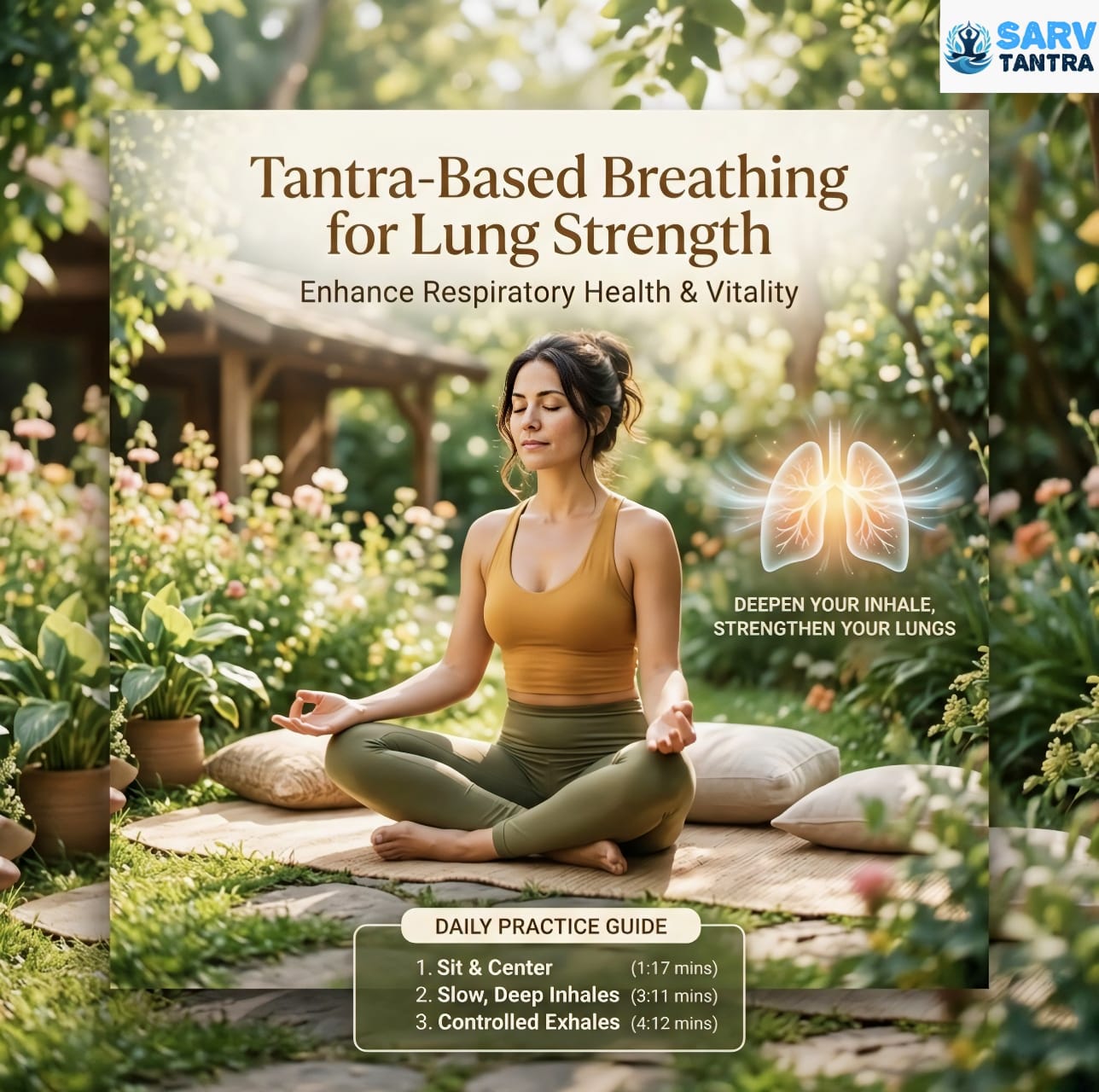
Tantra-Based Breathing for Lung Strength

In today’s fast-paced world, where stress, pollution, and sedentary lifestyles dominate, our lungs often work under constant strain. Most people breathe shallowly without even realizing it, limiting oxygen intake and reducing overall vitality. Strong lungs are not just about survival—they are the foundation of energy, mental clarity, endurance, and emotional balance.
This is where tantra-based breathing offers a powerful solution. Rooted in ancient wisdom, tantra is not only about spirituality but also about conscious awareness of the body, breath, and energy. By integrating specific breathing techniques, tantra helps expand lung capacity, improve oxygen exchange, and strengthen respiratory function naturally.
Unlike conventional breathing exercises, tantra-based breathing focuses on awareness, rhythm, and energy flow, making it a holistic approach to lung health.
What Is Tantra-Based Breathing?
Tantra-based breathing is a mindful practice that combines controlled breath patterns with deep awareness. It emphasizes slow, rhythmic breathing that engages the diaphragm, lungs, and nervous system simultaneously.
At its core, tantra sees breath as life force (prana). When breathing becomes conscious, it enhances the flow of energy throughout the body, leading to improved physical and mental health.
Key Principles of Tantra Breathing
- Conscious inhalation and exhalation
- Deep diaphragmatic breathing
- Synchronization of breath with awareness
- Relaxation of the nervous system
- Energy circulation throughout the body
The Science Behind Breathing and Lung Strength
Your lungs are made up of millions of tiny air sacs called alveoli, where oxygen enters the bloodstream. Shallow breathing only uses a small portion of these sacs, reducing oxygen intake.
Tantra-based breathing works by:
- Expanding lung capacity
- Improving oxygen-carbon dioxide exchange
- Activating the diaphragm
- Strengthening respiratory muscles
Benefits Supported by Science
- Increased oxygen saturation
- Improved lung elasticity
- Better endurance and stamina
- Reduced respiratory stress
How Tantra-Based Breathing Strengthens the Lungs
1. Expands Lung Capacity
Slow, deep breathing fills the lungs completely, training them to hold more air over time.
2. Strengthens Respiratory Muscles
Controlled breathing engages the diaphragm and intercostal muscles, improving their strength.
3. Improves Oxygen Efficiency
Tantric breathing ensures oxygen is fully absorbed and utilized by the body.
4. Clears Stagnant Air
Deep exhalation removes trapped air and toxins from the lungs.
5. Enhances Nervous System Balance
It activates the parasympathetic nervous system, promoting relaxation and better breathing patterns.
Top Tantra-Based Breathing Techniques for Lung Strength
1. Deep Diaphragmatic Breathing
Also known as belly breathing, this technique ensures maximum oxygen intake.
How to Practice:
- Sit comfortably with a straight spine
- Place one hand on your chest and one on your abdomen
- Inhale deeply through the nose, expanding your belly
- Exhale slowly, contracting the abdomen
- Repeat for 10–15 minutes
Benefits:
- Improves lung expansion
- Reduces shallow breathing habits
- Enhances oxygen flow
2. Rhythmic Tantric Breathing
This technique focuses on equal inhalation and exhalation.
Steps:
- Inhale for 4 seconds
- Hold for 2 seconds
- Exhale for 4 seconds
- Repeat in a smooth rhythm
Benefits:
- Improves breath control
- Builds lung endurance
- Calms the mind
3. Alternate Nostril Breathing (Nadi Balance)
A classic tantra-inspired technique for balancing energy channels.
Steps:
- Close the right nostril and inhale through the left
- Close the left nostril and exhale through the right
- Repeat in alternating cycles
Benefits:
- Enhances lung coordination
- Balances oxygen intake
- Improves respiratory efficiency
4. Breath Retention (Kumbhaka)
Holding the breath increases lung strength and capacity.
Steps:
- Inhale deeply
- Hold the breath comfortably
- Exhale slowly
Benefits:
- Strengthens lung tissues
- Improves oxygen absorption
- Builds breath awareness
5. Wave Breathing (Full Yogic Breath)
This technique uses the entire lung capacity.
Steps:
- Inhale into the belly
- Expand into the ribs
- Fill the chest
- Exhale in reverse order
Benefits:
- Maximizes lung usage
- Improves breathing efficiency
- Enhances relaxation
Daily Practice Routine for Best Results
To see real improvement in lung strength, consistency is key.
Beginner Routine (15–20 Minutes)
- 5 minutes diaphragmatic breathing
- 5 minutes rhythmic breathing
- 5 minutes alternate nostril breathing
Advanced Routine (30 Minutes)
- 10 minutes deep breathing
- 10 minutes breath retention
- 10 minutes wave breathing
Benefits Beyond Lung Strength
1. Improved Energy Levels
More oxygen means more energy for daily activities.
2. Better Mental Clarity
Oxygen-rich blood enhances brain function.
3. Reduced Stress and Anxiety
Slow breathing calms the nervous system.
4. Enhanced Physical Performance
Stronger lungs improve stamina and endurance.
5. Detoxification
Efficient breathing helps remove toxins from the body.
Tantra Breathing vs Traditional Breathing Exercises
| Aspect | Tantra-Based Breathing | Traditional Breathing |
|---|---|---|
| Focus | Awareness + Energy | Physical technique |
| Approach | Holistic | Mechanical |
| Benefits | Mind + Body + Energy | Mainly physical |
| Experience | Meditative | Functional |
Common Mistakes to Avoid
- Breathing too fast
- Forcing the breath
- Ignoring posture
- Practicing inconsistently
- Holding breath beyond comfort
Tips for Maximizing Lung Strength
- Practice in fresh air
- Maintain a straight spine
- Stay hydrated
- Avoid smoking and pollutants
- Be consistent daily
Who Can Benefit from Tantra-Based Breathing?
- People with weak lung capacity
- Individuals experiencing stress or anxiety
- Athletes seeking better endurance
- Professionals with sedentary lifestyles
- Anyone wanting holistic health improvement
Precautions and Safety Tips
While tantra-based breathing is generally safe, consider:
- Avoid overexertion
- Consult a doctor if you have respiratory conditions
- Practice gently and gradually
The Future of Breathwork and Tantra
As modern science continues to explore breathwork, tantra-based breathing is gaining recognition as a powerful tool for health optimization. With rising awareness about holistic wellness, these ancient practices are becoming part of mainstream health routines.
Conclusion: Breathe Better, Live Stronger
Tantra-based breathing is more than just a technique—it is a way of reconnecting with your body and enhancing your natural capacity to breathe deeply and fully. By practicing regularly, you can strengthen your lungs, improve oxygen efficiency, and unlock a new level of vitality.
In a world where stress and shallow breathing are common, conscious breathing offers a simple yet profound solution. Start today, and experience the transformation that begins with a single breath.