

Tantra and Emotional Freedom: Learning to Respond, Not React

Emotions are an essential part of being human. Happiness, anger, fear, sadness, excitement, frustration, love, disappointment, and countless other feelings influence how we experience ourselves and the world around us. Emotions are not inherently good or bad. They provide information about our experiences, needs, expectations, boundaries, and relationships.
However, difficulties can arise when we automatically react to emotions instead of becoming aware of them.
A stressful message can immediately create anger. Criticism can trigger defensiveness. A disagreement can lead to words we later regret. Fear can cause avoidance, while frustration may result in impulsive decisions. In these moments, there is often very little space between feeling something and acting upon it.
This is where the idea of Tantra and emotional freedom becomes particularly meaningful.
Tantra, understood in its broader contemplative sense, emphasizes awareness, presence, embodiment, and conscious engagement with life. Rather than encouraging people to suppress their experiences, many Tantric approaches emphasize becoming more aware of what is happening within the body and mind.
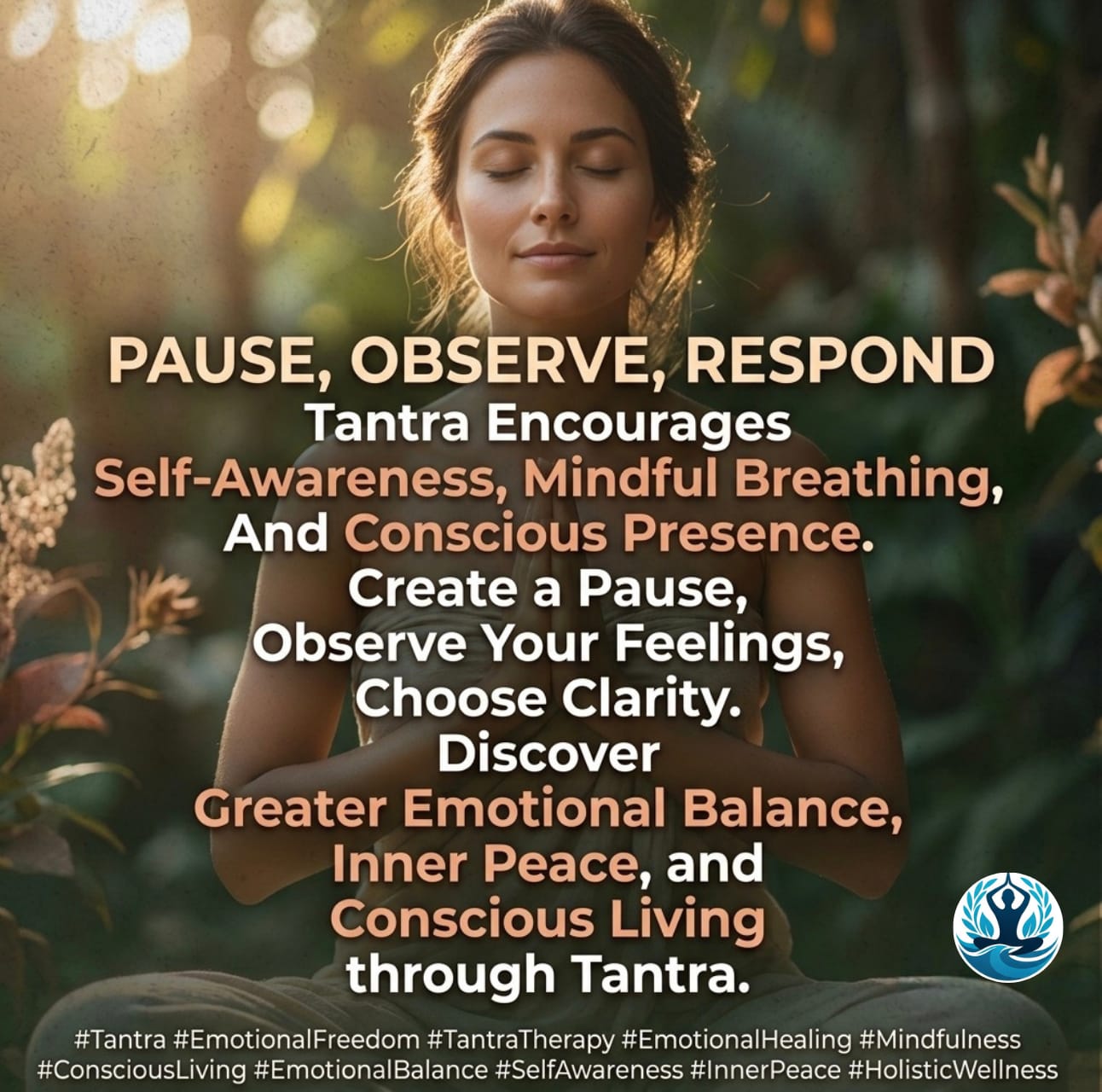
This awareness can create an important pause between stimulus and response.
Instead of immediately reacting, you can begin to observe.
Instead of suppressing an emotion, you can learn to understand it.
Instead of being controlled by every emotional impulse, you can develop the freedom to choose how you respond.
Emotional freedom does not mean never experiencing anger, sadness, fear, or frustration. It means developing a healthier relationship with those experiences.
This article explores how Tantra can be viewed as a pathway toward emotional awareness and conscious responding, while discussing practical principles that may support greater emotional balance in everyday life.
What Is Emotional Freedom?
Emotional freedom does not mean living without difficult emotions.
Every person experiences uncomfortable feelings. Even people who practice meditation, mindfulness, yoga, or other contemplative traditions can experience anger, grief, anxiety, frustration, or disappointment.
Emotional freedom is better understood as the ability to experience emotions without automatically becoming controlled by them.
For example, imagine receiving criticism at work.
A reactive response might be:
- Becoming defensive
- Raising your voice
- Blaming another person
- Sending an angry message
- Immediately assuming the criticism is personal
A conscious response might look different.
You notice the initial discomfort.
You recognize that your body has become tense.
You take a breath.
You allow yourself a moment before speaking.
You consider whether the feedback contains something useful.
Then you decide how you want to respond.
The emotion has not necessarily disappeared. What has changed is your relationship with it.
That space is an important part of emotional freedom.
Reaction vs. Response: What Is the Difference?
The difference between reacting and responding can be subtle but powerful.
Reaction
A reaction is often automatic.
Something happens, an emotion appears, and behavior follows almost immediately.
For example:
Trigger → Emotion → Automatic behavior
A person feels insulted and immediately argues.
A person feels rejected and immediately withdraws.
A person feels anxious and immediately avoids the situation.
A person feels angry and immediately sends an aggressive message.
Response
A response includes awareness and choice.
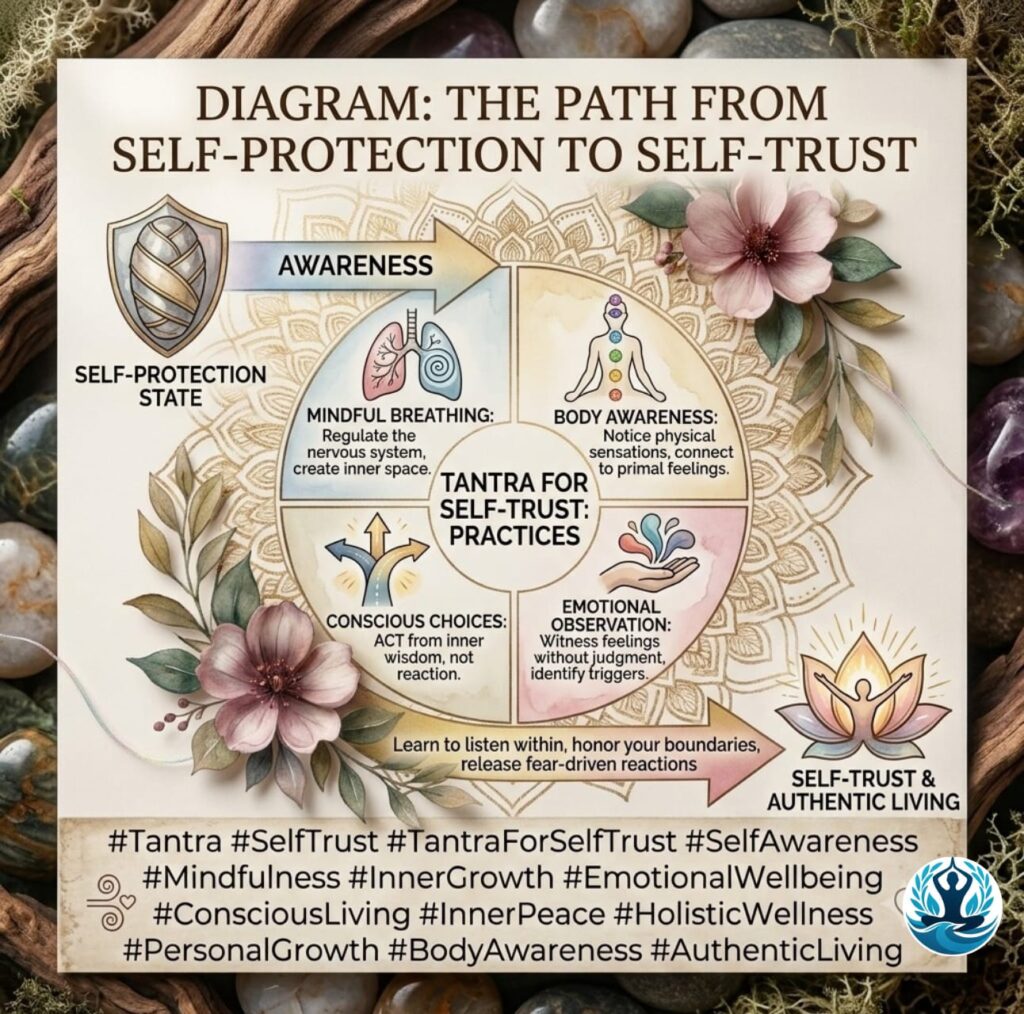
Trigger → Awareness → Pause → Choice → Action
The emotion may still appear, but awareness creates a small amount of space.
That space allows you to ask:
- What am I feeling?
- Where do I feel it in my body?
- What triggered this emotion?
- What story am I telling myself?
- Do I need to act immediately?
- What response reflects my values?
Tantric awareness can encourage this movement from unconscious reaction toward conscious participation.
How Tantra Relates to Emotional Awareness
Tantra is a broad and diverse set of spiritual and philosophical traditions rather than a single technique. Different Tantric traditions use different practices and concepts.
However, many contemporary interpretations emphasize presence, awareness, embodiment, breath, meditation, and conscious experience.
These principles can be relevant to emotional wellbeing because emotions are not merely thoughts.
They are experienced through the whole person.
When you become angry, for example, you may notice:
- Faster breathing
- Muscle tension
- Increased heart rate
- Tightness in the jaw
- Heat in the body
- Restlessness
- Rapid thoughts
When you become afraid, you might notice:
- A tight chest
- Shallow breathing
- Stomach discomfort
- Muscle contraction
- An urge to escape
Learning to recognize these sensations can help you notice emotional activation earlier.
The goal is not to eliminate the emotion.
The goal is to become aware of it before it automatically determines your behavior.
1. Tantra Encourages Present-Moment Awareness
One of the most important foundations for emotional freedom is presence.
Many emotional reactions become stronger because the mind is focused on the past or future.
You may replay an argument from yesterday.
You may imagine what someone might say tomorrow.
You may repeatedly analyze something that has already happened.
The body, however, is always experiencing the present moment.
Tantric mindfulness practices can encourage you to return attention to immediate experience.
You might notice:
Breathing.
Body sensations.
Sounds.
Thoughts.
Emotions.
The environment around you.
This simple awareness can interrupt automatic mental patterns.
When you become present, you may notice an emotion before it becomes a full behavioral reaction.
2. Learning to Observe Emotions Without Immediately Acting
A powerful principle of emotional freedom is observation.
Suppose you feel anger.
Instead of immediately asking:
“How do I get rid of this anger?”
you might ask:
“What is happening inside me right now?”
You can observe:
- The physical sensations
- The thoughts associated with the emotion
- The impulse to act
- The intensity of the feeling
- The circumstances that triggered it
This does not mean tolerating harmful behavior from yourself or others.
It simply means creating enough awareness to choose your next action.
Observation creates distance between you and the emotion.
You are experiencing anger, but you do not have to define yourself entirely through anger.
You can say:
“I am feeling angry.”
rather than:
“I am an angry person.”
That distinction can support greater psychological flexibility.
3. The Role of Breath in Emotional Regulation
Breathing is closely connected with our physical state.
When people become stressed or emotionally activated, breathing can become faster or shallower. Deliberately slowing and deepening the breath can encourage a sense of calm and bodily awareness for many people.
Breath-focused practices are found in many contemplative traditions, including various Tantric practices.
A simple practice is to pause during emotional activation and bring gentle attention to your breathing.
Try:
- Stop for a moment.
- Relax your shoulders if possible.
- Notice your natural breath.
- Take a comfortable, slow inhalation.
- Allow a gentle exhalation.
- Repeat several times without forcing the breath.
- Notice what has changed in your body.
The purpose is not to force yourself to become calm instantly.
The purpose is to reconnect with your body before deciding what to do next.
4. Tantra and the Wisdom of the Body
Modern life can encourage people to live primarily through their thoughts.
We analyze.
We plan.
We compare.
We worry.
We consume information.
We make decisions.
But emotional experiences also occur in the body.
You might know that you are uncomfortable before you can explain why.
You may feel your stomach tighten during an argument.
You may notice your chest becoming heavy when discussing something painful.
You may feel relaxed around certain people and tense around others.
Developing body awareness can help you recognize these signals.
This is one reason embodiment is an important concept when discussing Tantra and emotional freedom.
Instead of ignoring the body, you learn to listen to it.
5. Tantra Can Help Develop a Pause Before Reacting
The pause is one of the simplest and most valuable emotional skills.
Imagine someone says something that hurts you.
Your first impulse may be to respond immediately.
Instead, pause.
Take one breath.
Feel your feet on the floor.
Notice the sensations in your body.
Then ask:
“What do I actually want to communicate?”
That tiny pause can completely change a conversation.
You may still decide to express anger.
You may still set a firm boundary.
You may still disagree.
But your action becomes more deliberate.
The goal is not passive behavior.
It is conscious behavior.
6. Emotional Freedom Does Not Mean Emotional Suppression
One of the biggest misunderstandings about emotional wellbeing is that calmness means eliminating negative emotions.
It does not.
Trying to suppress emotions can sometimes make them more difficult to process.
For example, repeatedly telling yourself:
“I shouldn’t be angry.”
does not necessarily make anger disappear.
A more conscious approach may be:
“Anger is present. What is it telling me?”
Perhaps your boundary was crossed.
Perhaps you are exhausted.
Perhaps you feel unheard.
Perhaps an old emotional pattern was triggered.
Perhaps the current situation is genuinely unfair.
The emotion provides information, but it does not automatically determine what you should do.
This is where emotional awareness becomes emotional freedom.
7. Understanding Emotional Triggers
Everyone has emotional triggers.
A trigger is an experience that produces a strong emotional reaction.
Triggers can include:
- Criticism
- Rejection
- Feeling ignored
- Conflict
- Failure
- Uncertainty
- Feeling controlled
- Comparison
- Disrespect
- Abandonment
- Pressure
- Unrealistic expectations
A conscious Tantra-inspired approach can involve observing these triggers without immediately judging yourself.
Ask:
“Why did this situation affect me so strongly?”
The answer may reveal a deeper pattern.
For example:
Someone who becomes extremely defensive when receiving feedback may discover that criticism has historically been associated with feelings of inadequacy.
Someone who becomes anxious when another person does not respond immediately may discover a strong fear of rejection.
Awareness does not erase these patterns overnight, but recognizing them can be the first step toward changing how you respond.
8. Tantra and Self-Awareness
Emotional freedom begins with knowing yourself.
Without self-awareness, it is difficult to recognize why you behave in particular ways.
Regular mindfulness, meditation, breath awareness, and reflective practices can help you notice recurring patterns.
You might discover:
- “I become impatient when I am tired.”
- “I become defensive when I feel judged.”
- “I avoid conversations when I am afraid of conflict.”
- “I overthink when I feel uncertain.”
- “I seek approval when I doubt myself.”
These observations are valuable.
They transform vague emotional experiences into recognizable patterns.
Once a pattern becomes visible, you have more opportunity to work with it consciously.
9. Responding Instead of Reacting in Relationships
Relationships provide some of the strongest emotional triggers.
A partner, friend, family member, or colleague can unintentionally activate deep feelings.
Instead of immediately assigning blame, conscious awareness encourages curiosity.
For example, instead of saying:
“You always ignore me!”
you might communicate:
“I felt disconnected when I didn’t hear from you, and I would like to understand what happened.”
The second approach does not mean suppressing your needs.
It communicates them more consciously.
Emotional freedom can therefore support healthier communication.
10. Tantra for Emotional Resilience
Emotional resilience is the ability to move through difficult experiences without becoming completely overwhelmed by them.
Resilience does not mean being emotionally unaffected.
It means developing the capacity to experience difficulty, recover, learn, and continue.
Practices involving awareness, breath, meditation, conscious movement, and reflection may help create regular moments of self-observation.
Over time, this can encourage you to recognize emotional activation earlier.
Instead of waiting until stress reaches its peak, you may notice the first signs:
“My shoulders are tense.”
“My thoughts are becoming faster.”
“I am becoming impatient.”
“I need a moment before continuing this conversation.”
Early awareness gives you more choices.
11. A Simple Tantra-Inspired Practice for Emotional Freedom
You can create a short daily practice centered on awareness.
Step 1: Sit comfortably
Find a quiet place where you can sit without interruption for several minutes.
Step 2: Notice your body
Feel your feet, hands, shoulders, chest, and abdomen.
Do not try to change anything.
Simply observe.
Step 3: Observe your breathing
Notice the natural rhythm of inhalation and exhalation.
Step 4: Identify your emotional state
Ask:
“What am I feeling right now?”
You do not need a perfect answer.
Perhaps you feel calm, tired, irritated, happy, restless, or uncertain.
Step 5: Locate the emotion in the body
Ask:
“Where do I feel this emotion?”
Maybe there is tightness in your chest or tension in your stomach.
Step 6: Observe the impulse
Ask:
“What does this emotion make me want to do?”
You may want to argue, withdraw, seek reassurance, escape, or control the situation.
Step 7: Create space
Take a few comfortable breaths.
Remind yourself:
“I can feel this emotion without immediately acting on it.”
Step 8: Choose your response
Finally ask:
“What action would be most aligned with the person I want to be?”
This is the heart of conscious responding.
12. Bringing Emotional Awareness Into Everyday Life
You do not need to spend hours meditating to practice emotional awareness.
Everyday situations can become opportunities for conscious observation.
During an argument
Pause before answering.
While receiving criticism
Notice your initial defensiveness.
When feeling overwhelmed
Return attention to your breathing.
When experiencing jealousy
Observe the underlying insecurity or fear.
When feeling rejected
Allow yourself to experience the emotion without immediately seeking validation.
When feeling angry
Notice your body before choosing your words.
When making an important decision
Give yourself enough space to distinguish emotional impulse from thoughtful choice.
These small moments can gradually change your relationship with emotions.
13. Tantra and the Release of Emotional Tension
Emotional tension can sometimes be accompanied by physical tension.
People may unconsciously tighten their:
- Jaw
- Neck
- Shoulders
- Hands
- Abdomen
- Facial muscles
Conscious movement and relaxation can help bring attention to these areas.
Gentle movement can be combined with breathing and mindful observation.
For example, you might slowly roll your shoulders while noticing tension.
You might stretch gently while observing your breath.
You might walk slowly while feeling the movement of your feet.
The objective is not athletic performance.
It is awareness.
This embodiment can help you reconnect with physical sensations that are often overlooked during stressful periods.
14. Moving Beyond the Need to Control Every Emotion
Many people try to control their internal world.
They want to feel happy all the time.
They want to eliminate anxiety.
They want to avoid sadness.
They want to remain calm regardless of circumstances.
But emotional freedom can involve accepting that emotions naturally change.
You cannot always choose what you feel.
You can often influence how you relate to what you feel.
This is a significant distinction.
Instead of asking:
“How can I control every emotion?”
ask:
“How can I meet this emotion with awareness?”
That shift can reduce the internal struggle against normal human experiences.
15. Emotional Freedom and Personal Growth
Self-awareness can become a foundation for personal growth.
When you understand your emotional patterns, you can begin making different choices.
You may become better at:
- Communicating boundaries
- Managing conflict
- Recognizing stress
- Practicing self-compassion
- Listening to your body
- Taking intentional breaks
- Making thoughtful decisions
- Understanding your needs
- Building healthier relationships
Growth is not about becoming a completely different person.
It is about becoming more conscious of who you already are.
16. Common Misconceptions About Tantra and Emotional Freedom
Misconception 1: Tantra means suppressing emotions
Tantra should not be reduced to emotional suppression. Awareness is fundamentally different from avoidance.
Misconception 2: Emotional freedom means always being calm
A person can experience strong emotions while still responding consciously.
Misconception 3: Tantra is only about sexuality
Tantra encompasses diverse philosophical and spiritual traditions. Reducing it exclusively to sexuality overlooks its broader contemplative dimensions.
Misconception 4: One practice will solve every emotional problem
Personal growth generally requires consistency and, when needed, appropriate professional support.
Misconception 5: Awareness means tolerating harmful behavior
Being conscious does not mean accepting abuse, disrespect, or unsafe situations. Healthy boundaries remain important.
17. Building a Daily Practice
Consistency matters more than intensity.
A simple routine could include:
Morning:
Spend five minutes observing your breath and body.
During the day:
Pause before responding to emotionally charged situations.
Evening:
Reflect on one situation in which you reacted and one situation in which you responded consciously.
Ask:
- What triggered me?
- What did I feel?
- What happened in my body?
- What did I want to do?
- What did I actually do?
- What could I do differently next time?
This type of reflection can gradually strengthen self-awareness.
18. When Professional Support May Be Helpful
Tantra-inspired mindfulness and awareness practices may complement a person’s broader wellbeing routine, but they should not be treated as a replacement for professional mental-health care when someone is dealing with significant psychological distress.
If emotional reactions are severely affecting relationships, work, daily functioning, or personal safety, speaking with a qualified mental-health professional can be an important step.
There is no failure in asking for support.
Emotional freedom is not about doing everything alone.
It is about developing a healthier relationship with yourself and your experiences.
Conclusion: From Automatic Reaction to Conscious Response
The journey toward emotional freedom begins with awareness.
You may not be able to control every situation.
You may not be able to prevent every difficult emotion.
You may not always respond perfectly.
But you can develop greater awareness of what happens inside you.
You can notice the tightening of your body.
You can recognize your emotional triggers.
You can observe your thoughts.
You can breathe before speaking.
You can create a pause between stimulus and action.
And within that pause, you may discover something valuable:
choice.
This is the deeper potential of exploring Tantra and emotional freedom.
Rather than treating emotions as enemies, you can learn to listen to them.
Rather than allowing every feeling to dictate your behavior, you can acknowledge the feeling and consciously choose your response.
Over time, this can support greater self-awareness, emotional balance, resilience, and presence.
The goal is not to become emotionless.
The goal is to become more conscious.
To feel without being overwhelmed.
To observe without immediately judging.
To pause without suppressing.
And ultimately, to respond to life with greater awareness rather than simply reacting to it.
Tantra and emotional freedom are therefore not about escaping emotions—they are about developing a more conscious relationship with the emotional life you already have.