

Tantra and the Five Elements (Pancha Mahabhutas): Understanding the Foundation of Life and Consciousness

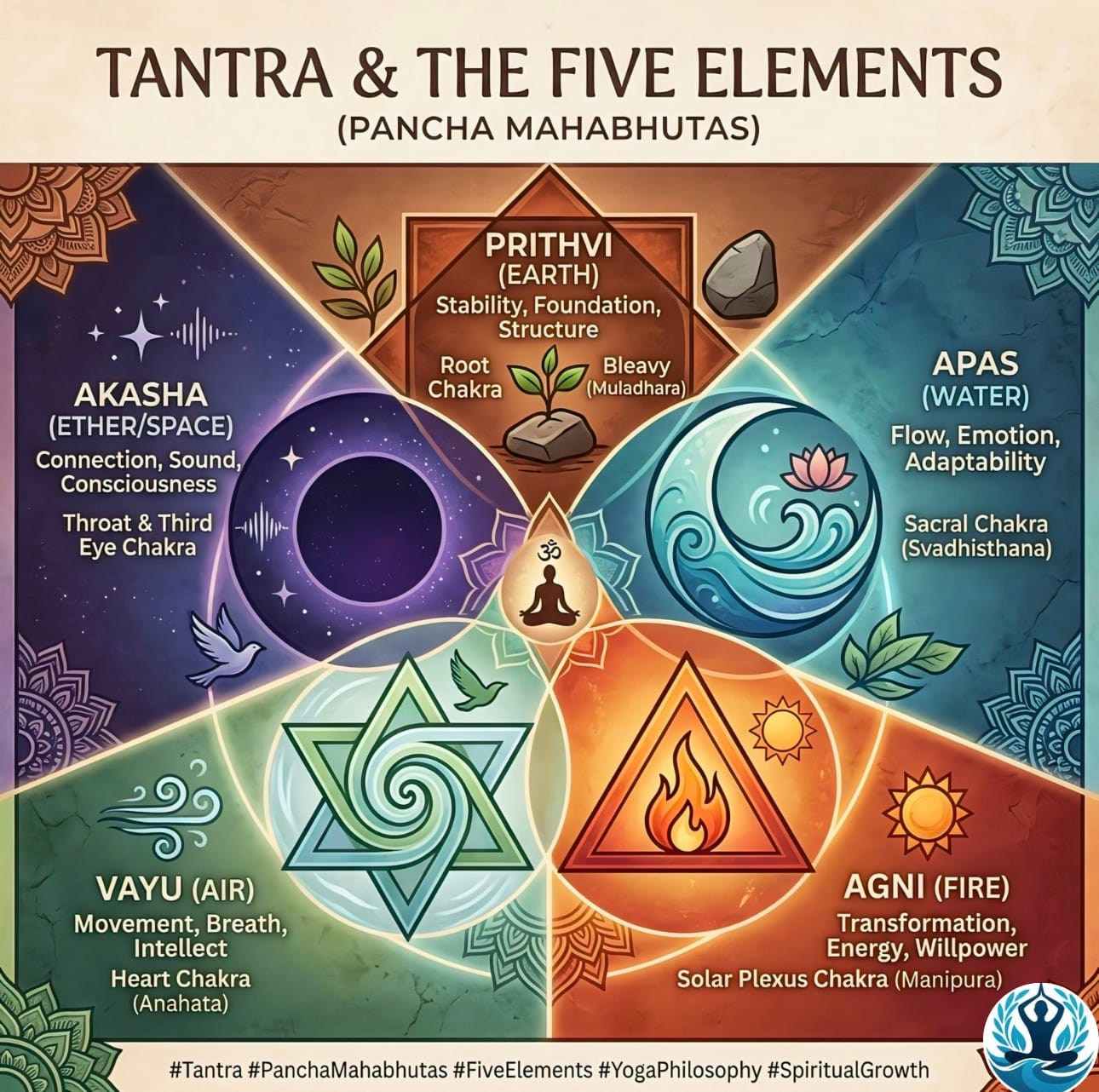
The ancient wisdom of Tantra offers a profound understanding of the universe and human existence. At the heart of this sacred tradition lies the concept of the Pancha Mahabhutas, or the Five Great Elements: Earth (Prithvi), Water (Jala), Fire (Agni), Air (Vayu), and Ether (Akasha). These elements are believed to form the foundation of all creation, including the human body, mind, and spirit.
Traditional Tantra teaches that understanding and balancing these five elements can lead to greater harmony, vitality, and spiritual awakening. Rather than viewing the world as separate from ourselves, Tantra sees the individual and the cosmos as interconnected expressions of the same universal energy.
In this guide, we will explore the significance of the Five Elements in Tantra, their qualities, their influence on daily life, and how Tantric practices help cultivate balance and self-awareness.
What Are the Pancha Mahabhutas?
The Sanskrit term Pancha Mahabhutas translates to “Five Great Elements.” According to Tantric philosophy, everything in existence emerges from these elemental forces.
The Five Elements are:
- Prithvi (Earth)
- Jala (Water)
- Agni (Fire)
- Vayu (Air)
- Akasha (Ether or Space)
These elements are not merely physical substances but fundamental energies that shape reality. They exist within nature and within every human being.
When these elements are balanced, individuals experience health, emotional stability, clarity, and spiritual growth. Imbalances may lead to physical discomfort, emotional disturbances, or a sense of disconnection.
The Role of the Five Elements in Tantra
Tantra views the universe as a manifestation of divine consciousness. The Five Elements serve as building blocks through which this consciousness expresses itself.
In Tantric teachings:
- The body is composed of elemental energies.
- The mind reflects elemental qualities.
- Spiritual evolution involves harmonizing these energies.
- Meditation and rituals help restore elemental balance.
- Nature is regarded as a sacred expression of the elements.
Understanding the Pancha Mahabhutas allows practitioners to cultivate deeper awareness of themselves and the world around them.
Earth Element (Prithvi): Stability and Grounding
Understanding the Earth Element
The Earth element represents solidity, structure, and stability. It is associated with the physical body and the material world.
Qualities of Earth include:
- Strength
- Stability
- Endurance
- Security
- Patience
In nature, mountains, rocks, soil, and trees embody the Earth element.
Earth Element in the Human Body
According to Tantric philosophy, Earth governs:
- Bones
- Muscles
- Teeth
- Skin
- Physical structure
A balanced Earth element contributes to:
- Physical strength
- Emotional steadiness
- Confidence
- Grounded thinking
Signs of Earth Imbalance
Excess Earth may result in:
- Rigidity
- Stubbornness
- Resistance to change
Deficient Earth may cause:
- Anxiety
- Instability
- Lack of focus
- Feeling disconnected
Tantric Practices for Earth Balance
Traditional practices include:
- Walking barefoot on natural ground
- Meditation in nature
- Root chakra contemplation
- Mindful breathing
- Sacred rituals involving soil and flowers
These practices help restore stability and connection.
Water Element (Jala): Flow and Emotion
Understanding the Water Element
Water symbolizes fluidity, adaptability, and emotional expression.
Its qualities include:
- Flexibility
- Sensitivity
- Creativity
- Compassion
- Intuition
Water teaches the Tantric principle of moving with life’s natural rhythms.
Water Element in the Human Body
Water governs:
- Blood
- Lymph
- Bodily fluids
- Reproductive systems
It also influences emotional experiences and relationships.
A balanced Water element encourages:
- Healthy emotional expression
- Adaptability
- Empathy
- Creativity
Signs of Water Imbalance
Excess Water may manifest as:
- Emotional overwhelm
- Dependency
- Mood swings
Insufficient Water may lead to:
- Emotional numbness
- Lack of creativity
- Difficulty connecting with others
Tantric Practices for Water Balance
Methods include:
- Meditation near rivers or oceans
- Ritual bathing
- Chanting sacred mantras
- Mindful emotional awareness
- Devotional practices
These techniques encourage emotional flow and harmony.
Fire Element (Agni): Transformation and Power
Understanding the Fire Element
Fire represents transformation, energy, and illumination.
Its qualities include:
- Passion
- Courage
- Determination
- Vitality
- Intelligence
Fire is central to growth because transformation requires energy.
Fire Element in the Human Body
Fire governs:
- Digestion
- Metabolism
- Body temperature
- Mental clarity
Balanced Fire contributes to:
- Motivation
- Confidence
- Healthy ambition
- Clear decision-making
Signs of Fire Imbalance
Excess Fire may create:
- Anger
- Irritability
- Aggression
- Burnout
Deficient Fire may result in:
- Low motivation
- Fatigue
- Lack of direction
Tantric Practices for Fire Balance
Traditional approaches include:
- Candle meditation
- Sun salutations
- Breathwork practices
- Fire ceremonies (Homa)
- Visualization techniques
These practices cultivate healthy transformation and vitality.
Air Element (Vayu): Movement and Freedom
Understanding the Air Element
Air symbolizes movement, communication, and expansion.
Its qualities include:
- Freedom
- Inspiration
- Curiosity
- Lightness
- Creativity
Air is the force behind motion and change.
Air Element in the Human Body
Air governs:
- Breathing
- Circulation
- Nervous system functions
- Mental activity
A balanced Air element supports:
- Clear communication
- Mental flexibility
- Creativity
- Emotional openness
Signs of Air Imbalance
Excess Air may cause:
- Restlessness
- Anxiety
- Overthinking
Insufficient Air may result in:
- Mental stagnation
- Lack of inspiration
- Difficulty expressing thoughts
Tantric Practices for Air Balance
Helpful practices include:
- Conscious breathing
- Pranayama
- Meditation
- Chanting
- Gentle movement practices
These methods encourage mental clarity and balance.
Ether Element (Akasha): Space and Consciousness
Understanding the Ether Element
Ether, also known as Space, is the most subtle of the Five Elements.
It represents:
- Infinite potential
- Consciousness
- Awareness
- Spiritual connection
- Expansion
Akasha is considered the field within which all other elements exist.
Ether Element in the Human Body
Ether is associated with:
- Inner awareness
- Intuition
- Spiritual perception
- Higher consciousness
A balanced Ether element promotes:
- Peace
- Wisdom
- Presence
- Spiritual insight
Signs of Ether Imbalance
Excess Ether may lead to:
- Detachment from reality
- Lack of grounding
Deficient Ether may cause:
- Spiritual disconnection
- Narrow thinking
- Limited awareness
Tantric Practices for Ether Balance
Traditional methods include:
- Silent meditation
- Mantra repetition
- Contemplation
- Sacred sound practices
- Spiritual study
These practices expand consciousness and inner awareness.
The Five Elements and the Chakra System
In Tantra, the Five Elements are closely connected to the chakras.
| Element | Chakra | Quality |
|---|---|---|
| Earth | Root Chakra | Stability |
| Water | Sacral Chakra | Creativity |
| Fire | Solar Plexus Chakra | Power |
| Air | Heart Chakra | Love |
| Ether | Throat Chakra | Expression |
Balancing the chakras often involves balancing the corresponding element.
This integrated approach supports physical, emotional, and spiritual wellbeing.
Tantra’s Holistic View of Elemental Balance
One of Tantra’s unique teachings is that no element exists independently.
For example:
- Fire requires Air to burn.
- Water shapes Earth.
- Ether contains all elements.
- Air moves Water.
- Earth provides stability to all.
Likewise, human wellbeing depends upon the harmonious interaction of all elemental forces.
True balance does not mean eliminating one element but ensuring that each element functions appropriately.
Daily Practices to Honor the Five Elements
Earth
- Spend time in nature.
- Practice grounding meditation.
- Eat nourishing foods.
Water
- Stay hydrated.
- Engage in creative activities.
- Allow emotions to flow naturally.
Fire
- Exercise regularly.
- Set meaningful goals.
- Cultivate motivation.
Air
- Practice breath awareness.
- Spend time outdoors.
- Encourage open communication.
Ether
- Meditate daily.
- Create moments of silence.
- Reflect on spiritual teachings.
These simple habits can strengthen awareness of the elemental energies present in everyday life.
The Spiritual Significance of the Five Elements
In traditional Tantra, the journey toward enlightenment involves recognizing that the elements are expressions of divine consciousness.
As awareness deepens:
- Earth becomes sacred stability.
- Water becomes sacred flow.
- Fire becomes sacred transformation.
- Air becomes sacred freedom.
- Ether becomes sacred presence.
Through meditation, ritual, and self-inquiry, practitioners gradually move beyond identification with the physical world and recognize the deeper unity underlying all existence.
This realization is considered one of the highest goals of Tantric practice.
Applying Elemental Wisdom in Modern Life
Although the teachings of Tantra are ancient, their relevance remains timeless.
Modern life often creates elemental imbalances through:
- Chronic stress
- Overstimulation
- Sedentary habits
- Emotional suppression
- Disconnection from nature
By consciously engaging with the Five Elements, individuals can cultivate:
- Greater resilience
- Emotional wellbeing
- Mental clarity
- Physical vitality
- Spiritual awareness
The wisdom of the Pancha Mahabhutas offers a practical framework for navigating modern challenges while remaining connected to deeper dimensions of life.
Conclusion
The Pancha Mahabhutas, or Five Great Elements, form a cornerstone of traditional Tantric philosophy. Earth, Water, Fire, Air, and Ether are not merely aspects of nature but living energies that influence every dimension of human experience.
Tantra teaches that by understanding and harmonizing these elemental forces, we can create greater balance within ourselves and align more deeply with the natural rhythms of the universe. Through meditation, breathwork, ritual, self-awareness, and conscious living, the Five Elements become powerful guides on the path of personal growth and spiritual awakening.
Ultimately, the study of Tantra and the Five Elements reveals a profound truth: the same forces that shape the cosmos also live within us. By honoring them, we cultivate harmony, wisdom, and a deeper connection to life itself.