

How Tantra Can Help You Slow Down and Feel More Present

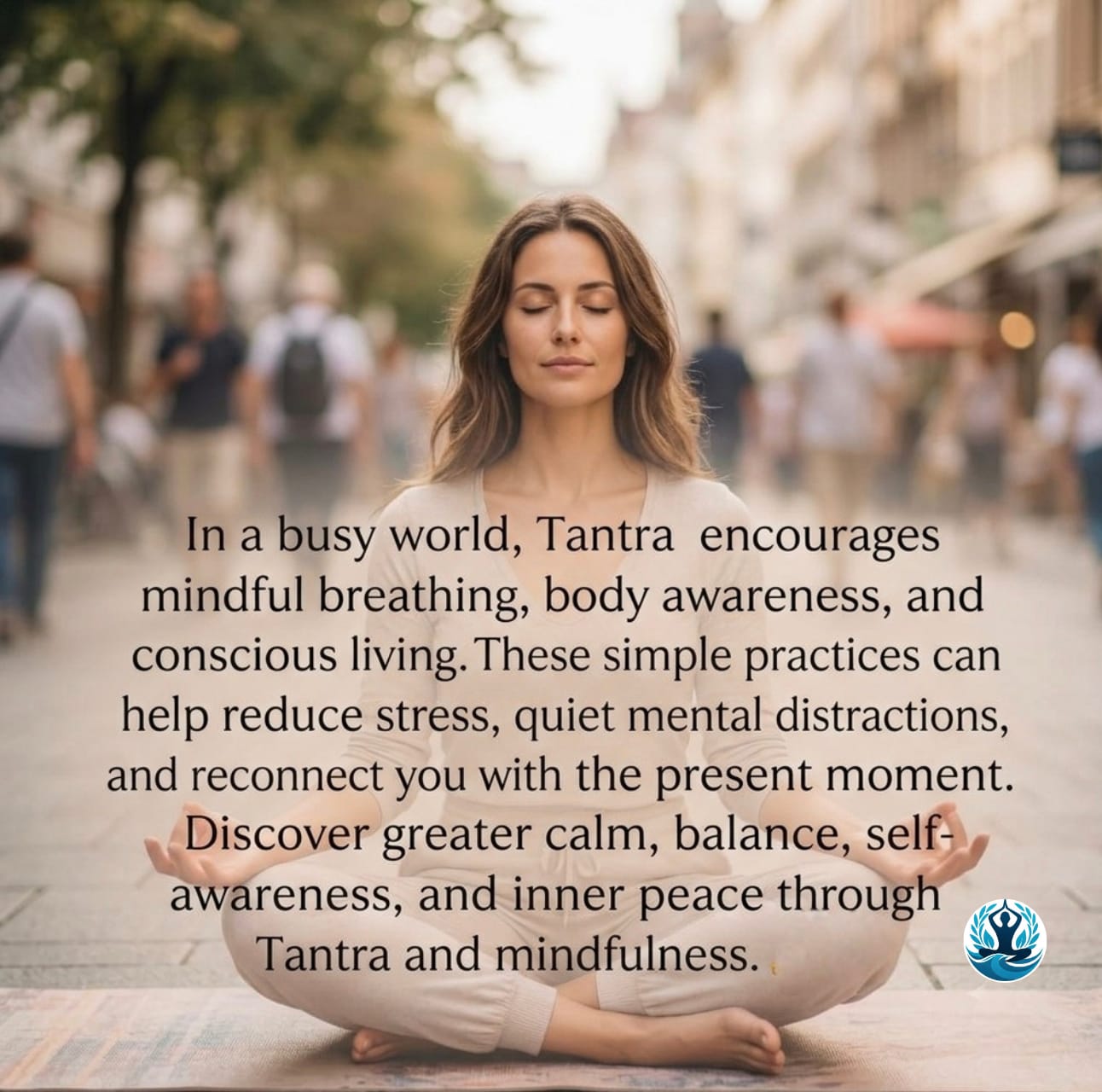
Modern life often feels like a race against time. Between work, responsibilities, technology, social commitments, and constant notifications, it can be difficult to slow down and simply experience the present moment. Even when the body is resting, the mind may still be thinking about the past or planning what needs to happen next.
This constant mental activity can contribute to stress, emotional tension, restlessness, and a feeling of being disconnected from ourselves.
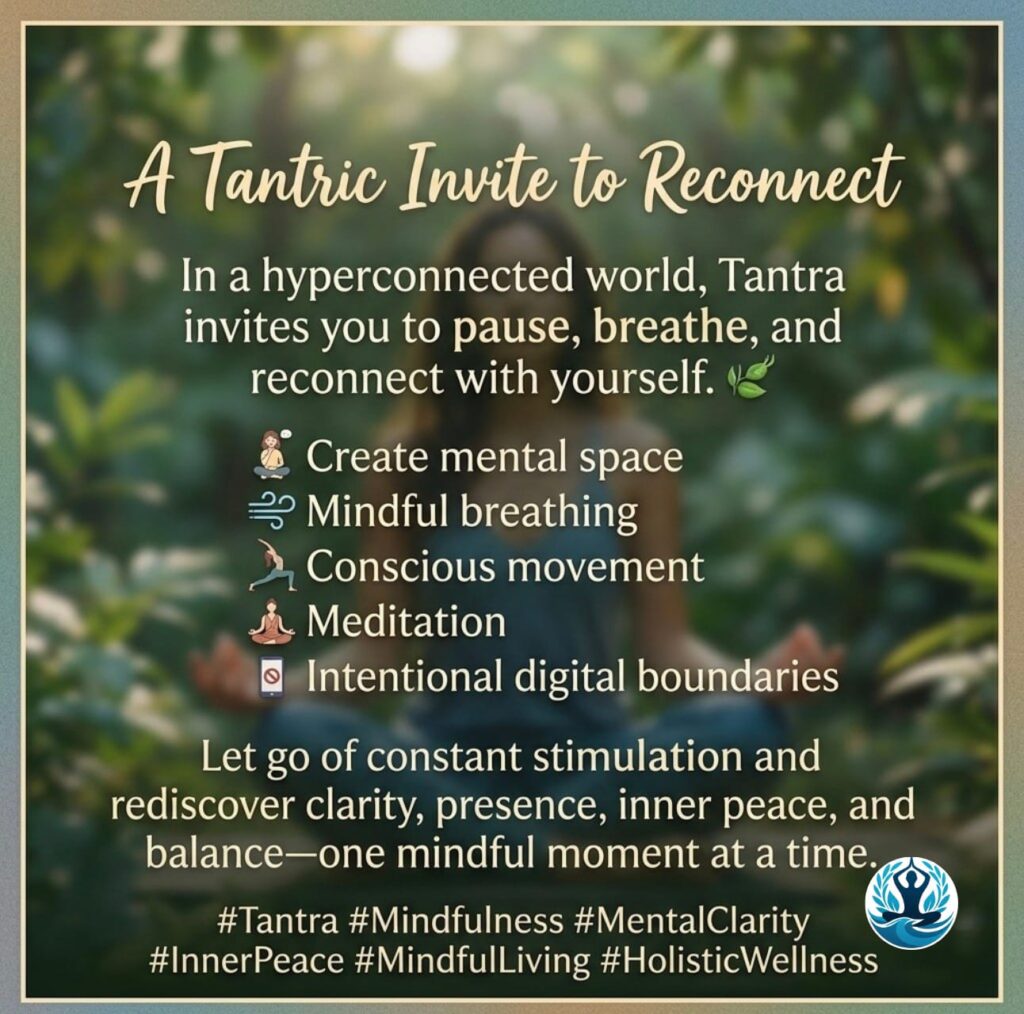
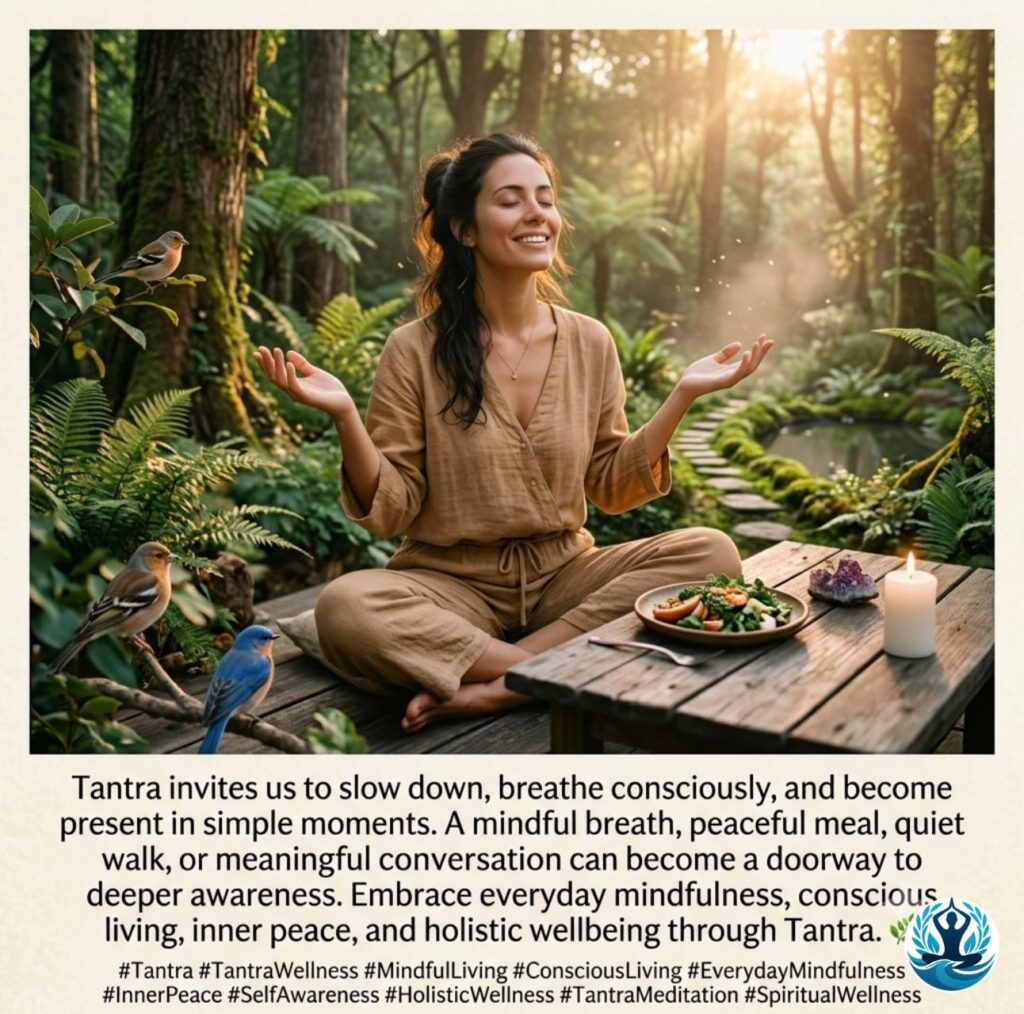
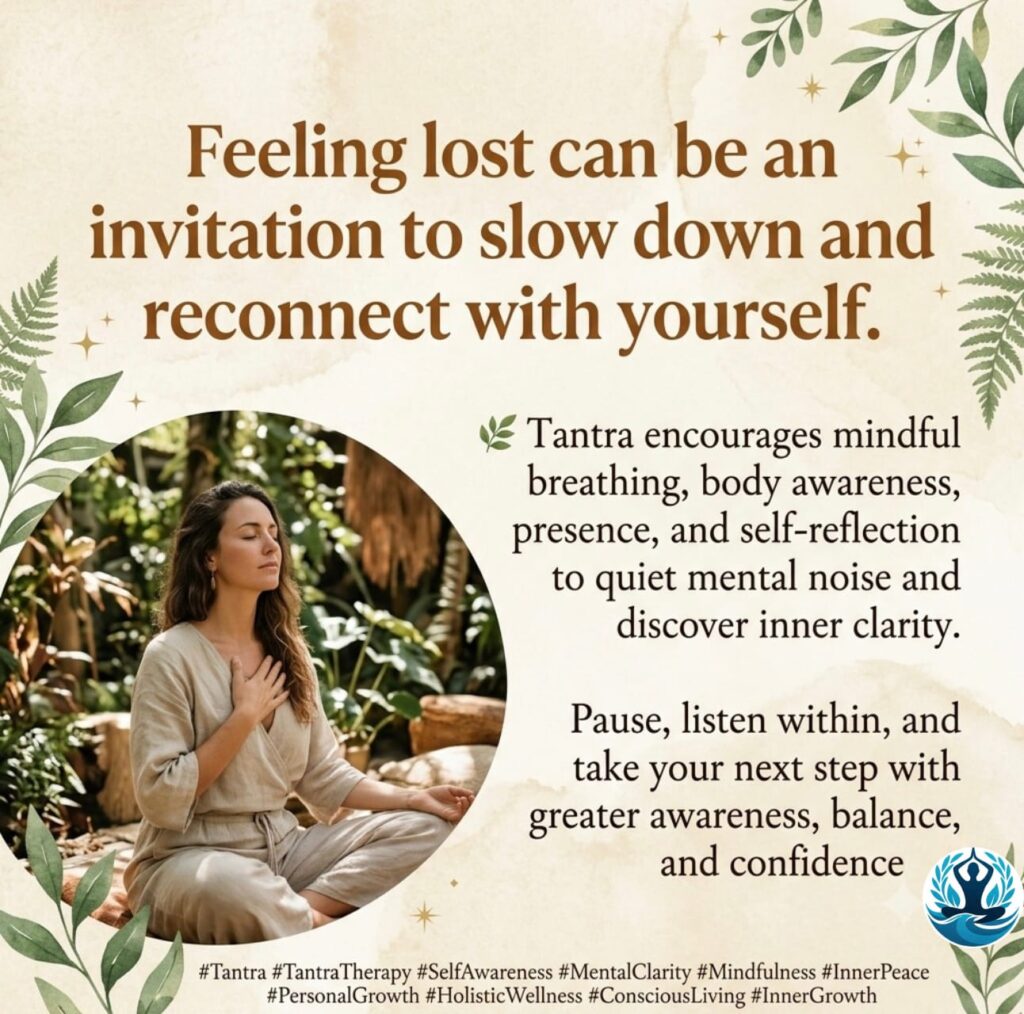
Tantra for feeling more present offers a holistic approach to slowing down and reconnecting with the body, breath, emotions, and awareness. Rather than encouraging us to escape everyday life, Tantra teaches us to become more conscious of the life we are already living.
Through mindful breathing, meditation, body awareness, conscious movement, sensory awareness, and intentional daily practices, Tantra can encourage a slower and more attentive way of living.
The goal is not necessarily to make life move more slowly. Instead, it is to learn how to become more present within the pace of life.
What Is Tantra?
Tantra is a broad spiritual and philosophical tradition with roots in South Asian traditions. Although modern wellness culture sometimes associates Tantra primarily with sexuality, traditional Tantra encompasses much more.
It can include meditation, breath practices, visualization, mantra, ritual, awareness practices, energy work, and methods for cultivating greater consciousness.
At its heart, many Tantric approaches emphasize awareness and presence.
Instead of automatically moving through daily experiences, practitioners are encouraged to observe what is happening within and around them.
This can mean noticing:
- How the body feels
- How the breath moves
- What emotions are present
- What thoughts are occurring
- How the senses respond to the environment
- Where tension is held in the body
- How we react to everyday situations
This awareness can help create a small but meaningful space between experiencing something and immediately reacting to it.
That space can become an important part of mindful living.
Why Do We Struggle to Stay Present?
Before exploring how Tantra may support presence, it is helpful to understand why being present can be difficult.
1. Constant Mental Activity
The mind naturally thinks, plans, remembers, compares, and anticipates.
You may be eating breakfast while thinking about work. You may be working while thinking about an upcoming appointment. You may be talking to someone while checking your phone.
The body may be in one place while the mind is somewhere else.
2. Digital Distractions
Phones, social media, emails, messages, and notifications constantly compete for attention.
Frequent interruptions can make sustained attention more difficult and may encourage a habit of constantly shifting focus.
3. Stress and Overload
When life becomes overwhelming, the mind can remain focused on problems and responsibilities.
Instead of experiencing the present moment, we may spend much of our time thinking about what needs to be fixed.
4. Habitual Rushing
Many people develop the habit of rushing even when rushing is unnecessary.
We eat quickly, walk quickly, speak quickly, and move from one task to another without taking time to pause.
5. Difficulty Connecting With the Body
Stress can encourage us to live primarily in our thoughts.
Tantra brings attention back toward the body, helping us notice physical sensations, breathing patterns, movement, and areas of tension.
How Tantra Can Help You Slow Down
Tantra can help you slow down by encouraging conscious awareness rather than automatic living.
It does not necessarily require withdrawing from everyday responsibilities.
Instead, Tantra can be practiced while performing ordinary activities.
You can bring awareness to breathing while working, notice sensations while walking, practice mindful eating, or take a few conscious breaths before responding to a stressful situation.
This transforms ordinary moments into opportunities for presence.
1. Breath Awareness Encourages Presence
The breath is one of the simplest ways to reconnect with the present moment.
You cannot breathe yesterday’s breath or tomorrow’s breath.
You can only experience the breath happening now.
Tantric and contemplative practices often use breath awareness to cultivate attention.
A simple practice is to pause for a few moments and observe your natural breathing.
Notice:
- The movement of the abdomen
- The expansion of the chest
- The sensation of air entering the nostrils
- The length of the inhalation
- The length of the exhalation
- The natural pauses between breaths
There is no need to force the breath.
Simply observe.
This practice can provide an anchor when the mind becomes distracted.
Simple Breath Practice
Sit comfortably.
Relax the shoulders.
Close your eyes if comfortable.
Take a natural breath in.
Slowly notice the sensation of breathing out.
Continue observing the breath for two to five minutes.
Whenever your mind wanders, gently return your attention to the breath.
The purpose is not to stop thinking.
The purpose is to notice when attention wanders and consciously return to the present.
2. Tantra Encourages Body Awareness
Another important aspect of Tantra for feeling more present is developing awareness of the body.
Many people spend most of their day focused on thoughts.
They may not notice that their shoulders are tense, their jaw is clenched, or their breathing has become shallow until they finally stop.
Body awareness can help change this pattern.
Try taking a few moments throughout the day to ask:
“What am I feeling in my body right now?”
You might notice warmth, tension, relaxation, heaviness, movement, pressure, or subtle sensations.
There is no need to judge these sensations.
Simply notice them.
This can help you become more connected with your physical experience.
3. Conscious Movement Can Slow the Mind
Movement does not always have to be fast or performance-focused.
Slow, conscious movement can become a form of meditation.
You can practice this through gentle stretching, mindful walking, yoga-inspired movements, or simple body movements performed with awareness.
Instead of thinking about completing the movement, focus on experiencing it.
Notice how your body shifts.
Feel your feet touching the ground.
Observe the movement of your arms.
Notice your breathing.
Feel the muscles engaging and releasing.
The movement becomes less about reaching a destination and more about experiencing the process.
4. Tantra Can Help You Become More Aware of Your Senses
The senses provide a direct connection to the present.
When you consciously listen, see, smell, taste, and feel, your attention naturally moves toward the current moment.
For example, during a meal, instead of eating while scrolling through your phone, pause and notice the food.
Observe its appearance.
Notice its aroma.
Feel its texture.
Taste it slowly.
Pay attention to the flavors.
This simple practice can turn an ordinary meal into a mindful experience.
The same principle can be applied to other activities.
While walking, notice sounds.
While drinking tea, notice warmth.
While sitting outside, observe the movement of air.
Presence can be cultivated through ordinary sensory experiences.
5. Tantra Encourages Conscious Pausing
One of the most useful habits for modern life is learning to pause.
A pause does not need to take twenty minutes.
Sometimes a few seconds are enough.
Before answering a difficult message, pause.
Before starting another task, pause.
Before reacting to criticism, pause.
Before reaching for your phone, pause.
Take one conscious breath.
Notice your body.
Then choose your next action.
This small space can help reduce automatic reactions and create more intentional behavior.
6. Tantra Can Support Mindful Communication
Presence is not only an individual practice.
It can also improve how we relate to other people.
When someone is speaking, try listening without immediately preparing your response.
Notice their words.
Observe their tone.
Remain aware of your own reactions.
Allow yourself to listen fully.
This type of conscious communication can help create deeper connections.
Instead of simply waiting for your turn to speak, you are actually experiencing the interaction.
Presence can make conversations more meaningful.
7. Slowing Down Does Not Mean Doing Nothing
A common misconception is that slowing down means becoming less productive.
In reality, slowing down can mean becoming more intentional.
When you constantly switch between tasks, you may feel busy without necessarily being effective.
A slower approach can involve focusing on one task at a time.
For example:
Instead of:
Working while checking messages, social media, and email.
Try:
Working on one important task for a focused period before checking other notifications.
This creates greater mental space.
Tantric awareness can be integrated into productivity by encouraging conscious attention to whatever you are doing.
8. Tantra Can Help You Notice Stress Earlier
Stress often builds gradually.
You may ignore small signs until they become overwhelming.
Greater body awareness can help you recognize early signals.
You might notice:
- Tight shoulders
- Faster breathing
- Restlessness
- Jaw tension
- Irritability
- Mental fatigue
- Difficulty concentrating
- Feeling disconnected
When you notice these signals earlier, you can intentionally pause.
You might take a few slow breaths, stretch, walk outside, or simply step away from the task for a moment.
This does not eliminate every source of stress, but it can encourage a more conscious response.
9. Tantra and Meditation
Meditation is an important tool for cultivating presence.
Tantric meditation practices can take many forms depending on the tradition and teacher.
Some approaches may involve breath awareness, mantra, visualization, concentration, sensory awareness, or observing thoughts without attachment.
A simple mindfulness-based meditation can be practiced by sitting quietly and observing your experience.
You might notice thoughts appearing.
Instead of following every thought, acknowledge it and return to your chosen point of focus.
Over time, this can help you become more familiar with the movement of your mind.
The objective is not to create a completely empty mind.
The objective is to develop awareness.
10. Tantra Encourages Acceptance of the Present Moment
Sometimes we struggle with presence because we are constantly trying to make the current moment different.
We think:
“I should be somewhere else.”
“I should feel different.”
“This moment should be better.”
Tantric approaches can encourage awareness of what is actually happening.
This does not mean accepting unhealthy circumstances or giving up on personal growth.
Instead, it means beginning with honest awareness.
If you feel tired, notice tiredness.
If you feel stressed, acknowledge stress.
If you feel peaceful, experience peace.
If your mind is busy, notice that your mind is busy.
Awareness comes before meaningful change.
Daily Tantra Practices for Feeling More Present
You do not need to completely change your lifestyle to develop greater presence.
Small practices can be integrated into your existing routine.
Morning Presence Practice
Before checking your phone in the morning, take a few conscious breaths.
Notice your body.
Notice how you feel.
Set a simple intention such as:
“Today, I will return to the present whenever I notice myself rushing.”
This can create a mindful beginning to the day.
Mindful Walking
During a short walk, put your phone away if possible.
Feel your feet touching the ground.
Notice your surroundings.
Listen to the sounds around you.
Observe your breathing.
Allow the walk to become an opportunity to experience your environment.
Conscious Eating
Choose one meal each day to eat without screens.
Slow down.
Notice the food.
Chew attentively.
Experience the flavors.
Pay attention to when you begin to feel satisfied.
This simple practice can strengthen sensory awareness.
Evening Reflection
Before going to sleep, spend a few minutes reflecting on your day.
Ask yourself:
- When was I fully present today?
- When did I feel rushed?
- What triggered stress?
- What helped me feel calm?
- What can I do differently tomorrow?
The purpose is not self-criticism.
It is awareness.
A Five-Minute Tantra-Inspired Presence Practice
If you are new to these practices, start with just five minutes.
Minute 1: Arrive
Sit comfortably.
Notice where your body is touching the chair or floor.
Minute 2: Breathe
Observe your natural breathing.
Do not force it.
Minute 3: Feel
Bring attention to physical sensations.
Notice areas of tension and relaxation.
Minute 4: Listen
Pay attention to sounds around you.
Let them come and go without judging them.
Minute 5: Observe
Notice thoughts and emotions.
You do not need to change them.
Simply observe.
Finish with one slow, comfortable breath.
This short practice can become a daily reminder to slow down.
Benefits of Feeling More Present
Cultivating presence through Tantra-inspired practices may support several aspects of wellbeing.
Greater Mindfulness
You may become more aware of your thoughts, emotions, physical sensations, and surroundings.
Better Emotional Awareness
Recognizing emotions as they arise can help you respond more consciously.
Reduced Mental Overload
Regular pauses can create moments of mental space during busy days.
Improved Relaxation
Breath and body awareness can encourage a calmer relationship with physical tension.
Deeper Relationships
Being fully present during conversations can improve the quality of connection.
Greater Self-Awareness
Observing your internal experience can help you understand patterns, habits, and reactions.
More Meaningful Everyday Experiences
Ordinary activities can become opportunities for awareness rather than tasks to rush through.
Tantra for Modern Stress Management
Modern stress is often connected to the feeling that there is never enough time.
We move from one responsibility to another.
Tantra offers a different perspective.
Instead of constantly trying to escape the present moment, we can learn to experience it more consciously.
A few mindful breaths during a busy workday can become a moment of presence.
A conscious meal can become a moment of nourishment.
A walk can become a moment of connection.
A conversation can become a moment of genuine attention.
This approach does not require abandoning modern life.
It encourages us to bring awareness into modern life.
How to Build a Consistent Tantra Practice
Consistency is often more valuable than intensity.
You do not need to practice for an hour every day.
Start with five minutes.
Choose a specific time.
For example:
Morning: 5 minutes of breath awareness.
Afternoon: 1-minute conscious pause.
Evening: 5 minutes of reflection.
As the habit develops, you can gradually explore additional practices.
The most important element is regular awareness.
Common Mistakes to Avoid
Trying Too Hard
Presence should not become another performance goal.
If you become frustrated because your mind wanders, remember that noticing distraction is itself an act of awareness.
Expecting Instant Results
Mindfulness develops gradually.
Give yourself time to build the habit.
Forcing the Breath
Natural breathing is often the best starting point for beginners.
Avoid aggressive breath practices unless you have learned them properly from a qualified teacher.
Turning Every Moment Into a Practice
Mindfulness should support life, not create pressure.
Allow yourself to enjoy ordinary activities naturally.
Confusing Tantra With Only Sexual Practices
Tantra is a diverse spiritual and philosophical tradition. Its practices can include meditation, breath awareness, ritual, visualization, mantra, body awareness, and other contemplative methods.
Tantra and the Art of Living More Slowly
Slowing down is not simply about reducing the number of things you do.
It is about changing how you experience what you do.
You can walk slowly but still be mentally distracted.
You can work quickly while remaining completely focused.
Therefore, presence is not necessarily measured by physical speed.
It is measured by the quality of attention you bring to the moment.
This is one reason Tantra for feeling more present can be valuable for modern wellbeing.
It invites you to experience your body instead of constantly living in your thoughts.
It encourages you to breathe consciously rather than rushing through every moment.
It teaches you to notice rather than automatically react.
It encourages you to experience rather than constantly consume.
Final Thoughts
In a busy world, slowing down can feel difficult.
There will always be another message, another responsibility, another appointment, or another task waiting for your attention.
You may not be able to control the pace of the world around you.
But you can develop a different relationship with that pace.
Tantra can help you slow down and feel more present by cultivating awareness of the breath, body, senses, emotions, thoughts, and everyday experiences.
You do not need to escape your responsibilities.
You do not need to stop being productive.
You simply need to create moments where you consciously return to yourself.
Take a breath.
Feel your body.
Notice where you are.
Listen.
Observe.
Be here.
Presence is not something you have to find somewhere else. It is something you can practice experiencing right now.
Frequently Asked Questions
1. Can Tantra help with stress management?
Tantra-inspired practices such as breath awareness, meditation, body awareness, and mindful movement may support relaxation and greater awareness of stress responses.
2. How can Tantra help me feel more present?
Tantra encourages attention to the breath, body, senses, emotions, and thoughts. These practices can help you return your attention to the current experience.
3. Do I need to meditate for a long time?
No. Beginners can start with five minutes of mindful breathing or body awareness and gradually build a consistent practice.
4. Is Tantra only about sexuality?
No. Tantra is a broad collection of spiritual and philosophical traditions. Depending on the tradition, practices can include meditation, mantra, visualization, breathwork, ritual, and awareness practices.
5. Can I practice Tantra while living a busy lifestyle?
Yes. Simple awareness practices can be incorporated into everyday activities such as walking, eating, working, resting, and communicating.
6. How long does it take to feel more present?
There is no universal timeline. Some people notice a sense of calm during individual practices, while developing a lasting habit of mindfulness generally takes regular practice.